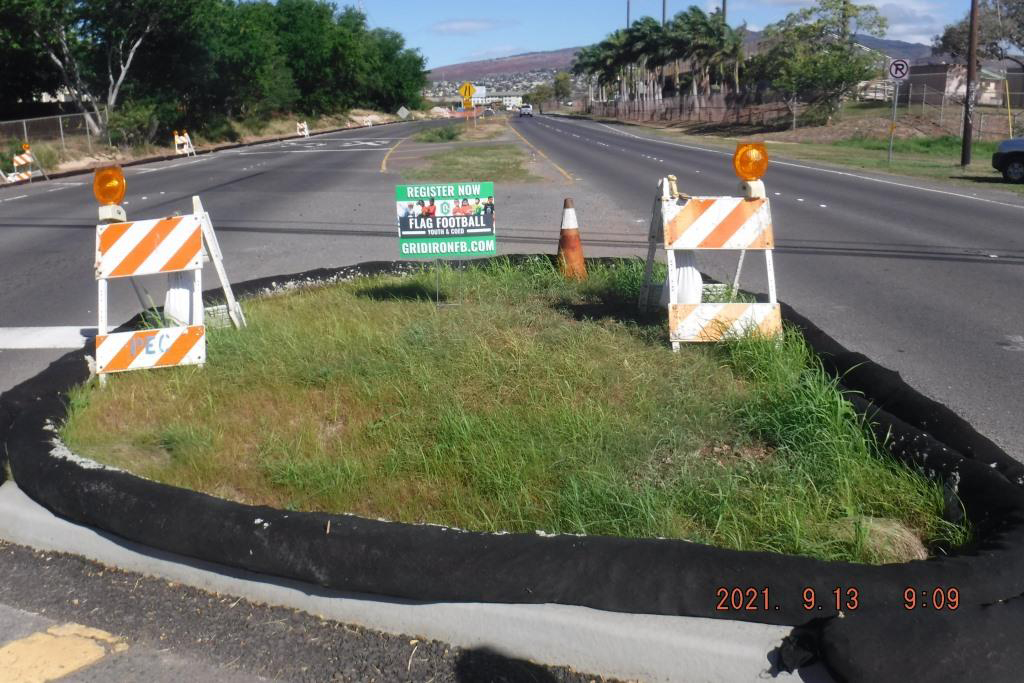

Description
Practices and procedures to provide ground cover for temporary or permanent stabilization of soil.
Applications
Soil stabilization during or after the construction phase applies to the following site conditions:
- Graded/cleared areas upon temporary or permanent cessation of earth-disturbing activities
- Open space and fill areas
- Steep slopes
- Spoil piles or temporary stockpile of fill material
- Vegetated swales
- Landscape corridors
- Stream banks
Installation and Implementation Requirements
- Coordinate temporary vegetative stabilization with permanent vegetative stabilization.
- Restrict vehicle/equipment use in areas where vegetative stabilization will be used to avoid soil compaction.
- A licensed landscape architect should review the proposed vegetation to be used for the project.
- Condition the soil to promote vegetative growth prior to planting in areas where vehicle/equipment use cannot be avoided.
- Contractor shall keep records of application dates, type(s), amount of fertilizer used, and the areas covered.
- Plant vegetation immediately after Engineer approval.
- Minimize the amount of exposed soil during construction activity by phasing disturbances.
- Preserve native topsoil and vegetation where practicable.
- Use of invasive species is prohibited.
SEEDING AND PLANTING APPLICATION CONSIDERATIONS
- Type of vegetation
- Site and seedbed preparation
- Seasonal planting times
- Fertilizers
- Water
GRASSES
- Ground preparation requires fertilization, scarification, and mechanical stabilization of the soil.
- Can tolerate short-term temperature extremes and waterlogged soil conditions.
- Appropriate soil conditions include a shallow soil base, good drainage, and 2:1 (H:V) or flatter slope.
- Quickly develops from seeds.
- Vigorous grass growth depended on mowing, irrigating, and fertilizing.
- Immediately after seeding or planting the area to be vegetatively stabilized, to the extent necessary to prevent erosion on the seeded or planted area, install non-vegetative erosion controls that provide cover (e.g., mulch, rolled erosion control products) to the area while vegetation is becoming established.
TREES AND SHRUBS
- Selection dependent on vigor, species, size, shape, and potential wildlife food source.
- Consider wind/exposure and irrigation requirements.
- Plant indigenous species where possible.
VINES AND GROUND COVER
- Lime and fertilizer required for ground preparation.
- Use appropriate seeding rates.
- Consider requirements for drainage, acidity, and ground slope.
- Plant indigenous species where possible.
- Avoid species that require irrigation.
FERTILIZER USE
- Do not apply fertilizers or pesticides during or just before a rain event.
- Do not apply to storm water conveyance channels with flowing water.
- Comply with fertilizer and pesticide manufacturer’s recommended usage and disposal instructions. Do not over apply.
- Apply fertilizers at the appropriate time of year for the location, and preferably as closely as possible to the period of maximum vegetation uptake and growth.
- Where possible, till fertilizer into soil rather than surface spreading or spraying on steep slopes.
- Minimize discharges of fertilizers containing nitrogen or phosphorus.
- Store fertilizer in original container with proper labeling, sealed, and under cover or covered with secondary containment.
- Follow federal, state, and local laws regarding fertilizer application.
WATERING
- Quantity and frequency of watering may vary depending on type of vegetation, type of soil, location, frequency of rainfall, and slope.
- Regulate quantity of water to prevent erosion and formation of gullies.
- Temporary irrigation may be required for initial establishment of vegetation and sustained growth.
- Permanent water supply source may be required for certain types of vegetation.
STABILIZATION
- Initiate soil stabilization measures immediately whenever earth-disturbing activities have permanently or will/has temporarily ceased for 14 or more calendar days on any portion of the site to prevent erosion.
- Types of activities that constitute initiation of stabilization include the following:
- Prepping the soil for vegetative or non-vegetative stabilization.
- Applying mulch or other non-vegetative product to the exposed area.
- Seeding or planting the exposed area.
- Starting any activities listed above on a portion of the area to be stabilized, but not on the entire area.
- Finalizing arrangements to have stabilization product fully installed in compliance with the deadline for completing initial stabilization activities.
- Types of activities that constitute initiation of stabilization include the following:
- Stabilization activities must be completed as soon as practicable, but no later than 14 days after the initiation of soil stabilization measures. If area drains to impaired waters, stabilization activities must be completed as soon as practicable, but no later than 7 days after the initiation of soil stabilization measures. Refer to the Hawaii Administrative Rules (HAR) Title 11, Chapter 55, Appendix C for more information.
- Types of activities that constitute completion of initial stabilization activities include the following:
- For vegetative stabilization, all activities necessary to initially seed or plant the area to be stabilized.
- For non-vegetative stabilization, the installation or application of all such non-vegetative measures.
- Types of activities that constitute completion of initial stabilization activities include the following:
- Vegetative coverage must be perennial.
- Establish uniform vegetation, which provides 70% of coverage that was provided by vegetation prior to commencing earth-disturbing activities.
- The contractor should take pictures of the area being used prior to installing
BMPs. This will provide evidence of the amount of vegetation in the area prior to commencing earth-disturbing activities. - Immediately after seeding the area the contractor shall install non-vegetative erosion controls, to the extent necessary, to provide cover to the area while vegetation is becoming established.
- Install perimeter controls around exposed areas where vegetation is becoming established to prevent sediment-laden runoff from entering storm drain systems and open waterbodies.
- Remove non-vegetative erosion controls once the area is deemed stabilized by the Engineer.
Considerations
- During dry periods without irrigation, permanent and temporary vegetation may not grow.
- Improper application of fertilizer may contribute to storm water pollution.
- Vegetative coverage must be perennial for final stabilization.
- Lack of dedicated water supply may require a temporary water source.
- Rainwater can wash away seeds and fertilizer from areas being restabilized.
- It is common for topsoil to be lost from grading, which causes the soil to lack nutrients for seeds to germinate.
- Disturbed areas may be difficult to stabilize if soil has been compacted.
What to Inspect
- Is vegetation growing?
- Is there evidence of erosion?
- Are fertilizers being properly stored and handled?
- Are fertilizers being over applied or applied in an improper area?
- Is there at least 70% vegetative coverage?
- Are temporary non-vegetative stabilization devices installed?
- Has soil been conditioned?
- Are native plants being used?
- Has the contractor initiated vegetative stabilization within the required timeframe?
Maintenance
- Water, fertilize, mow, weed, and/or prune the grasses/plants as needed.
- Repair broken or leaking water lines, sprinklers, or valves used for irrigation.
- Mow temporary plantings as needed to prevent signage/site obstructions, fire hazards, or nuisances to the public.
- Replace plants that fail to develop healthy growth, become injured, or die.
- Remove invasive species.
- Reseed areas where the grass did not grow and/or any areas affected by erosion.
BMP Examples
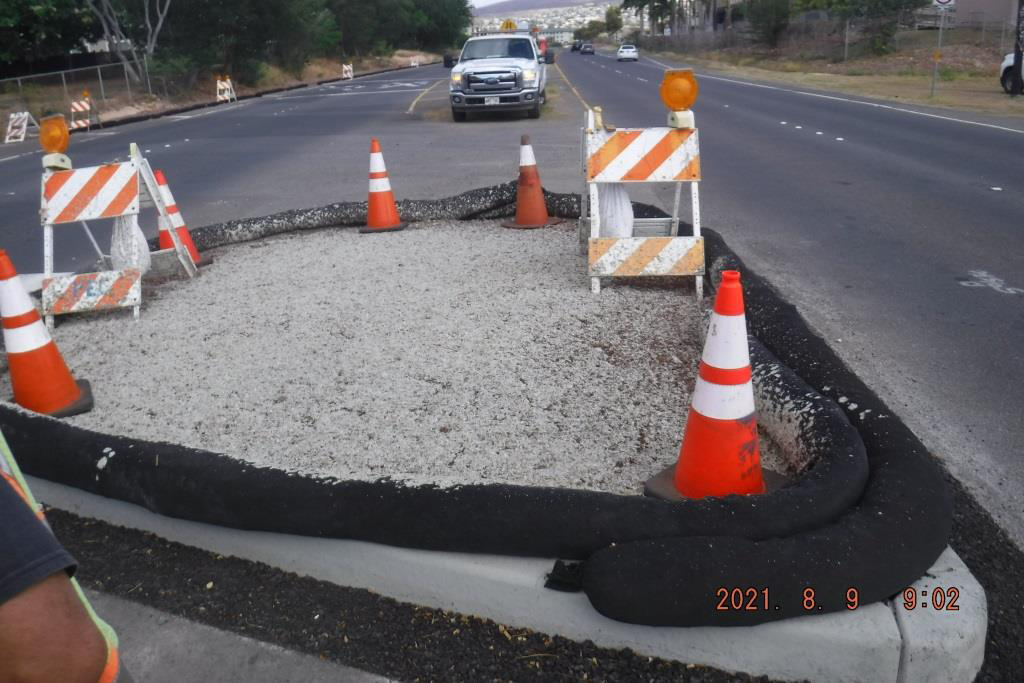
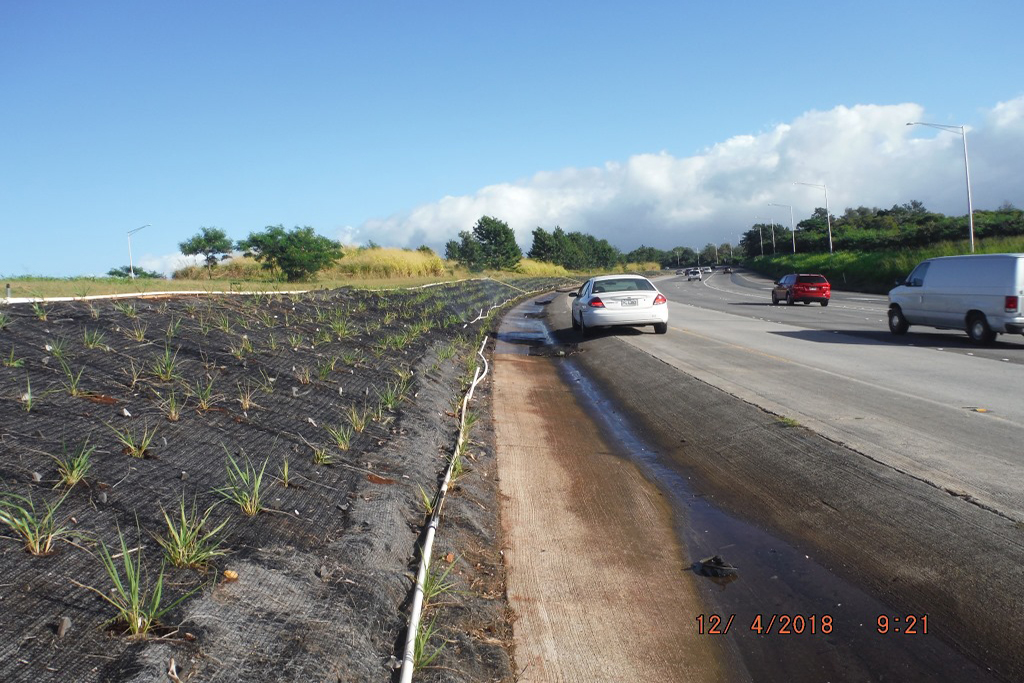
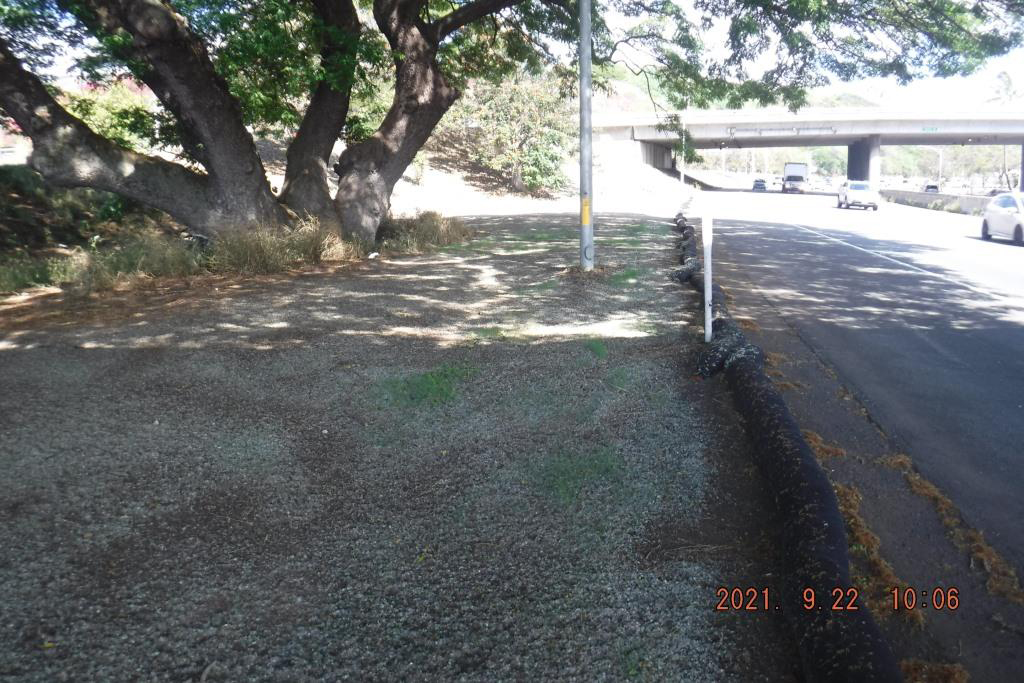
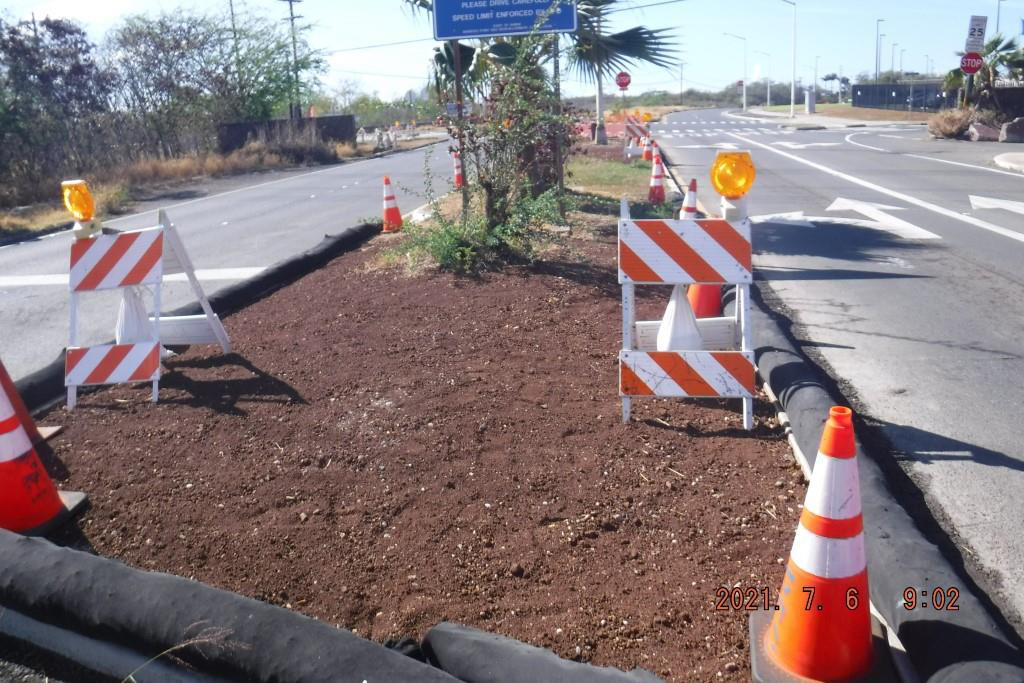
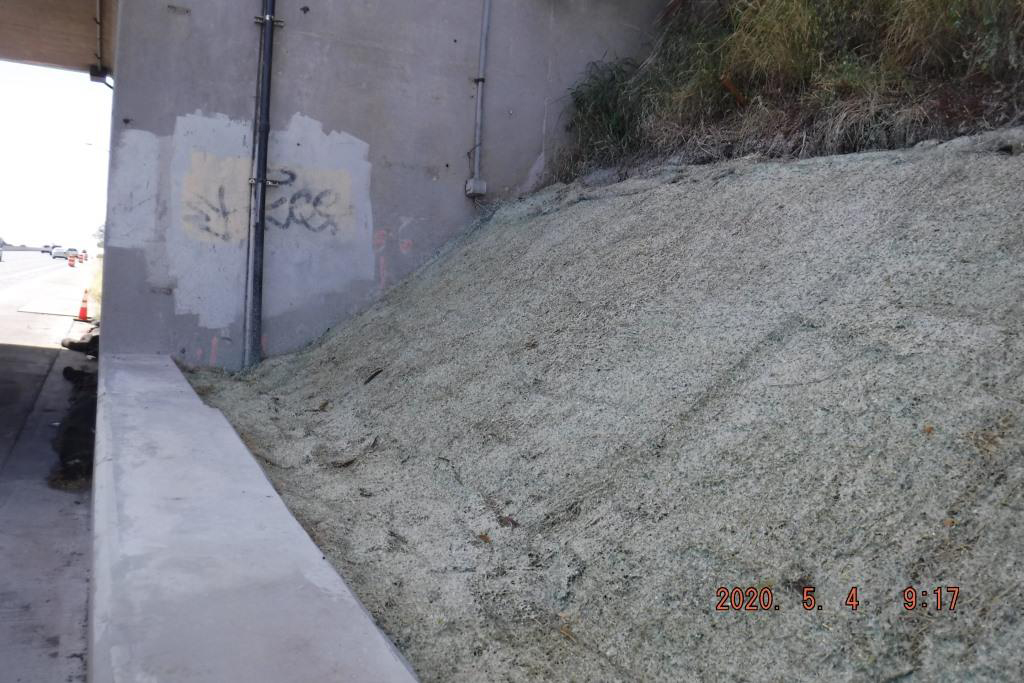
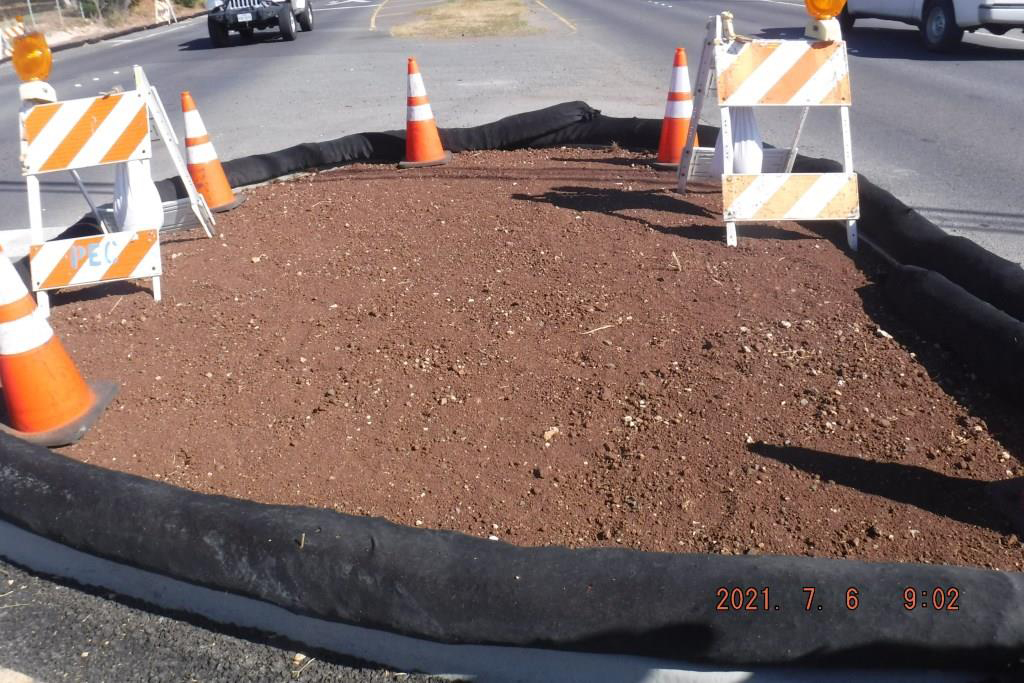
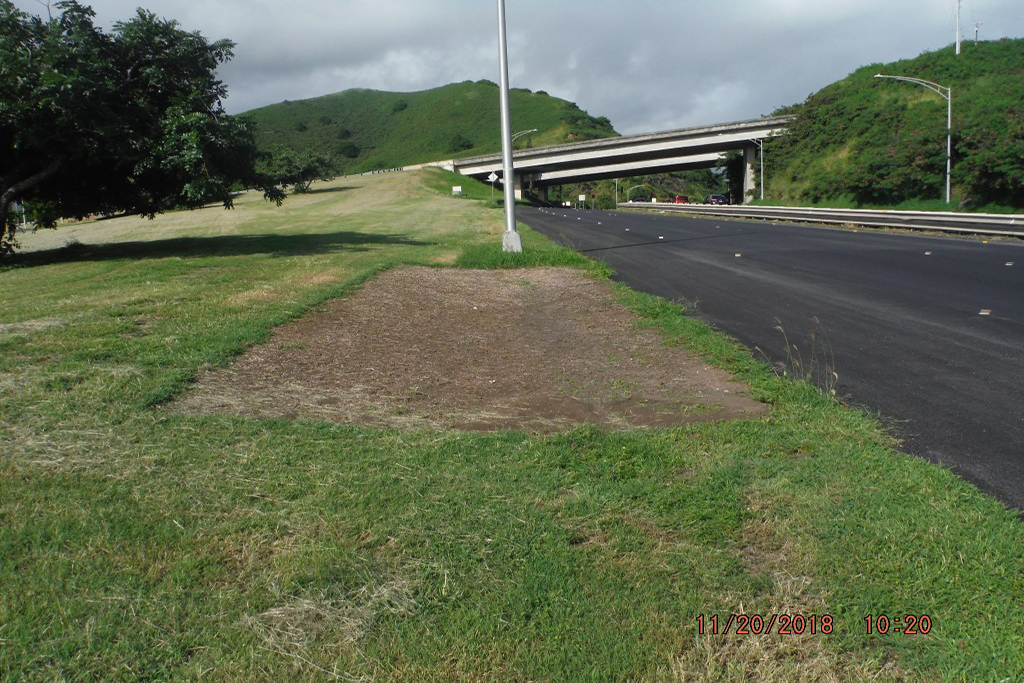
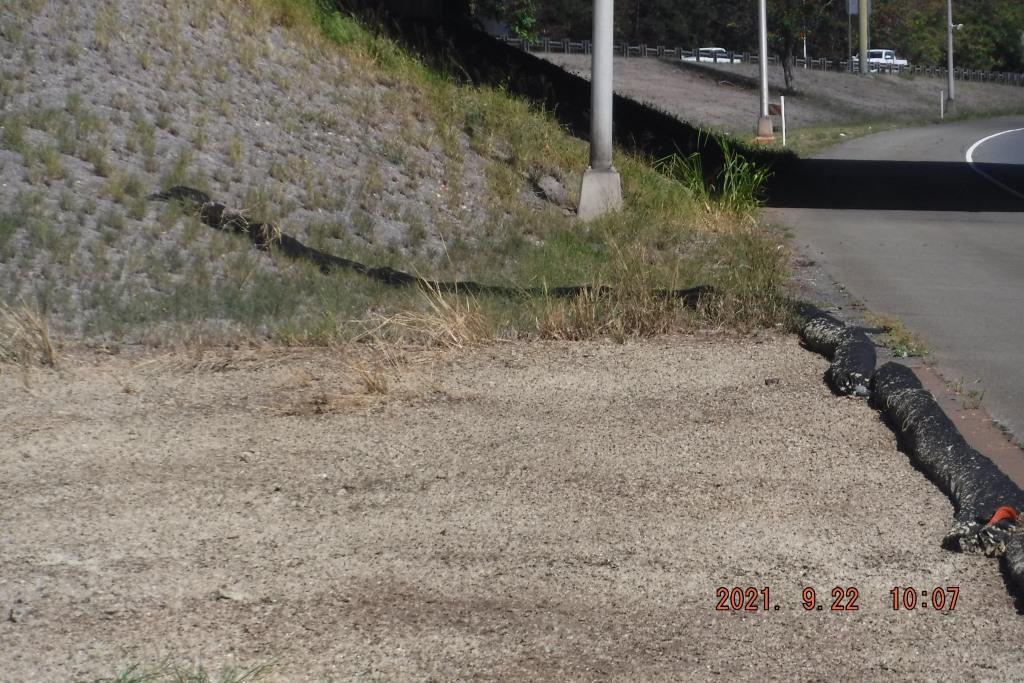
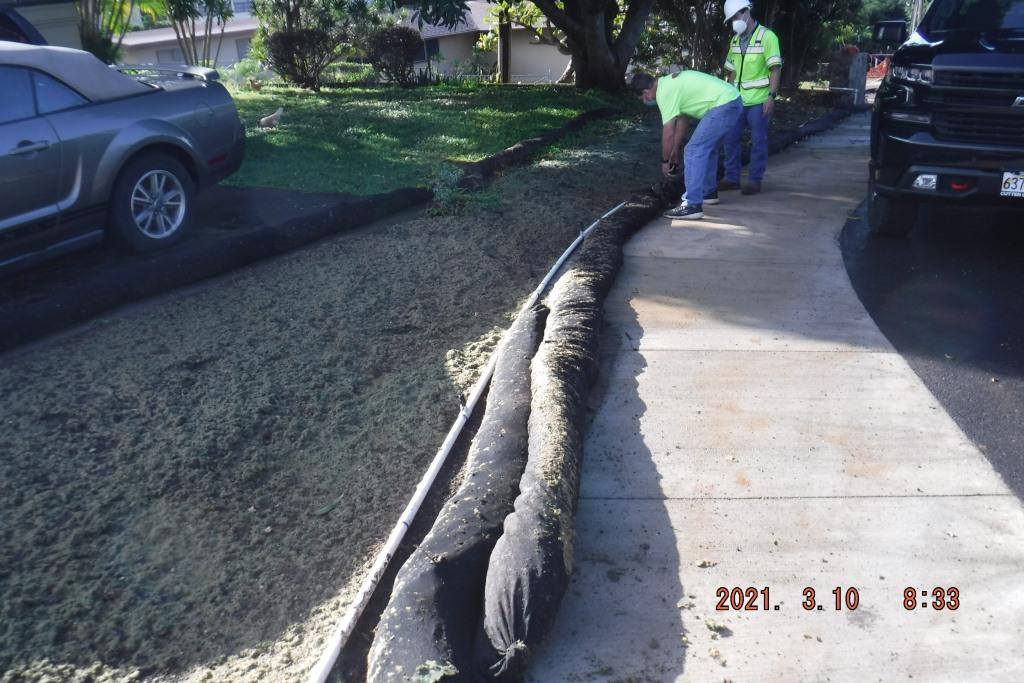
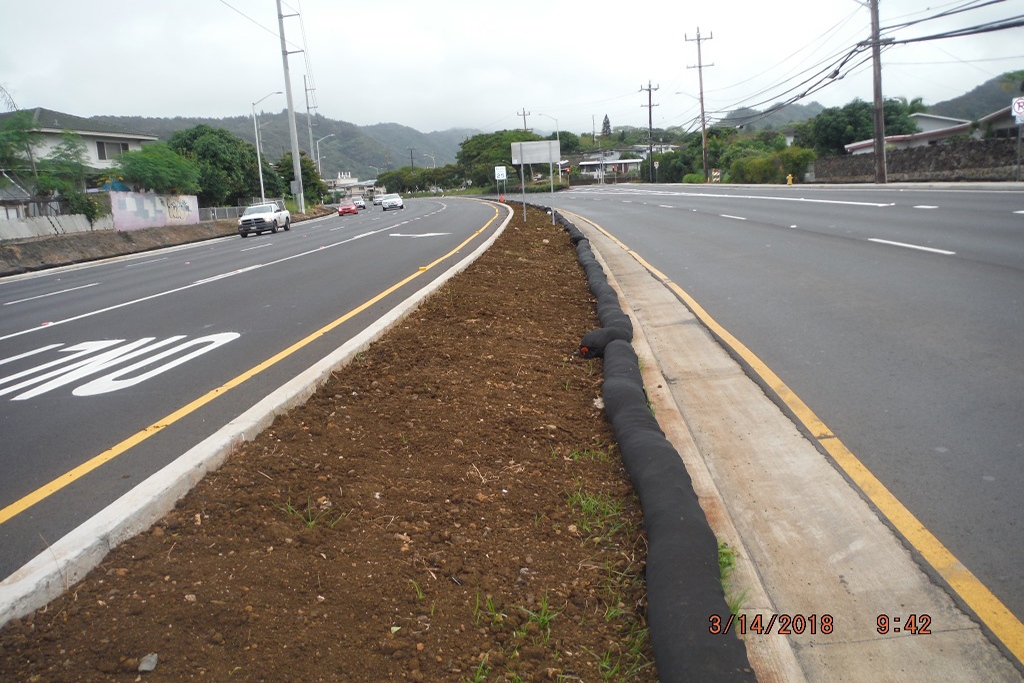
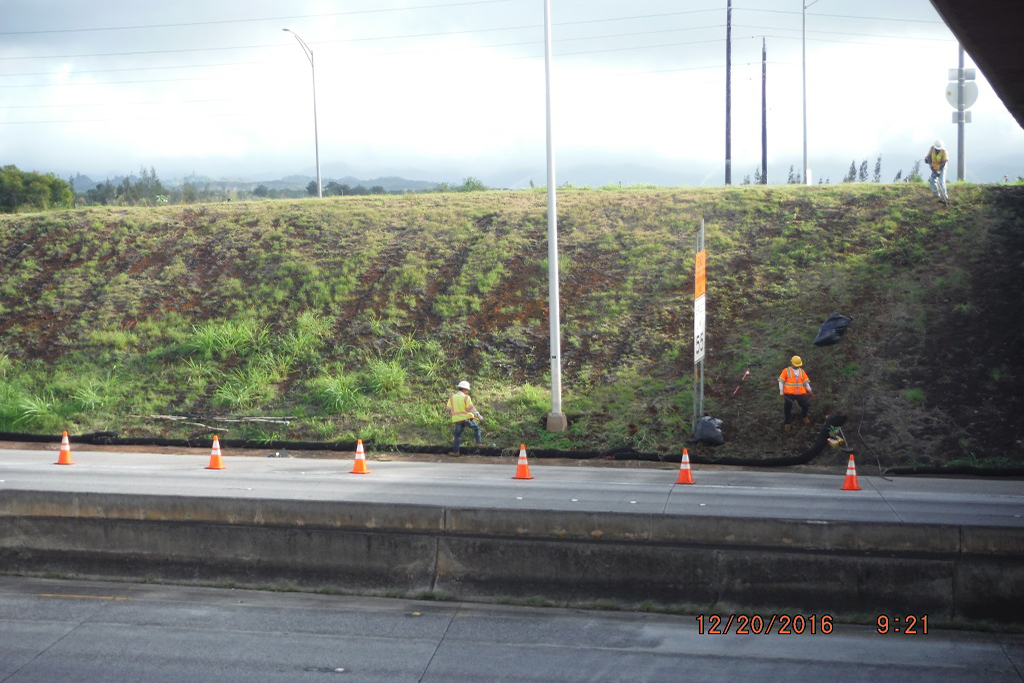
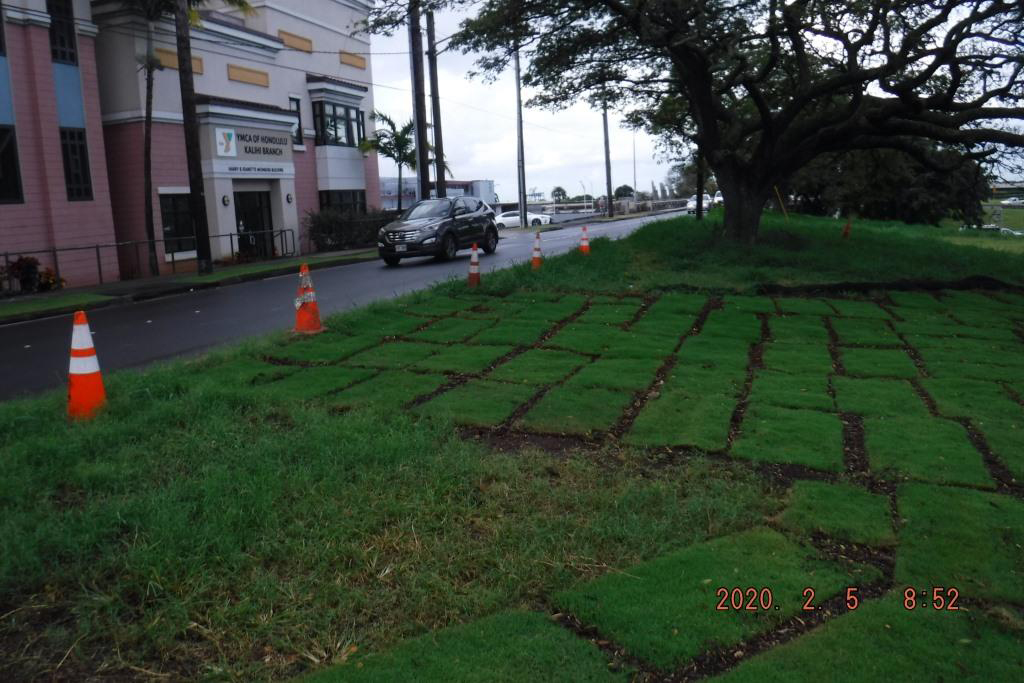
Are adequate BMPs installed to prevent the discharge of pollutants from the project site? Hover over each photo for an explanation of the situation presented and if BMPs have been installed properly.