
Description
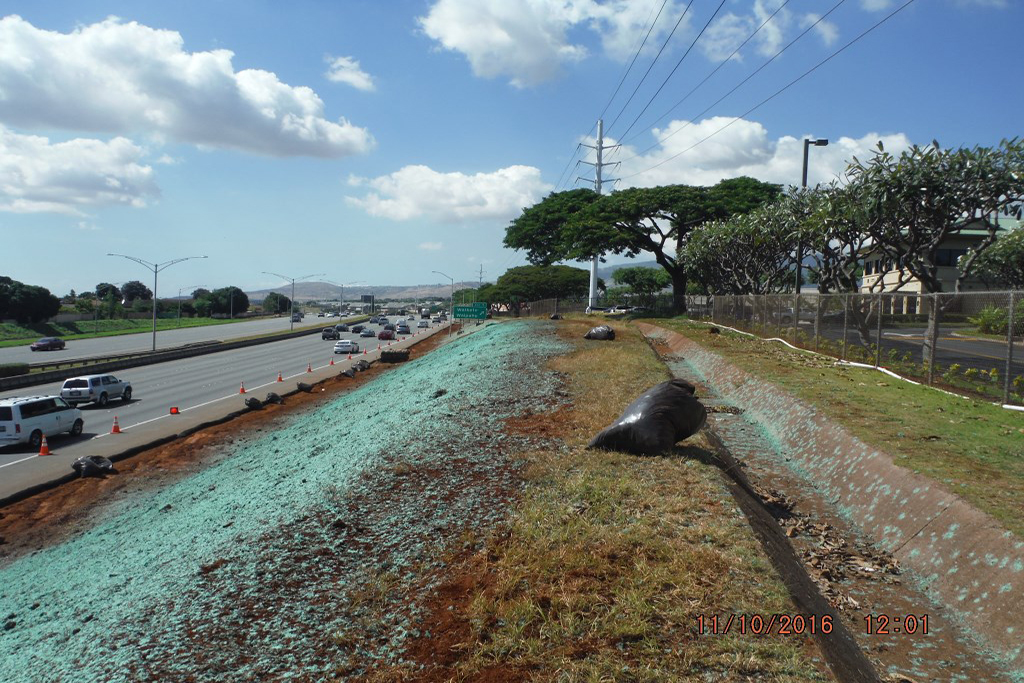
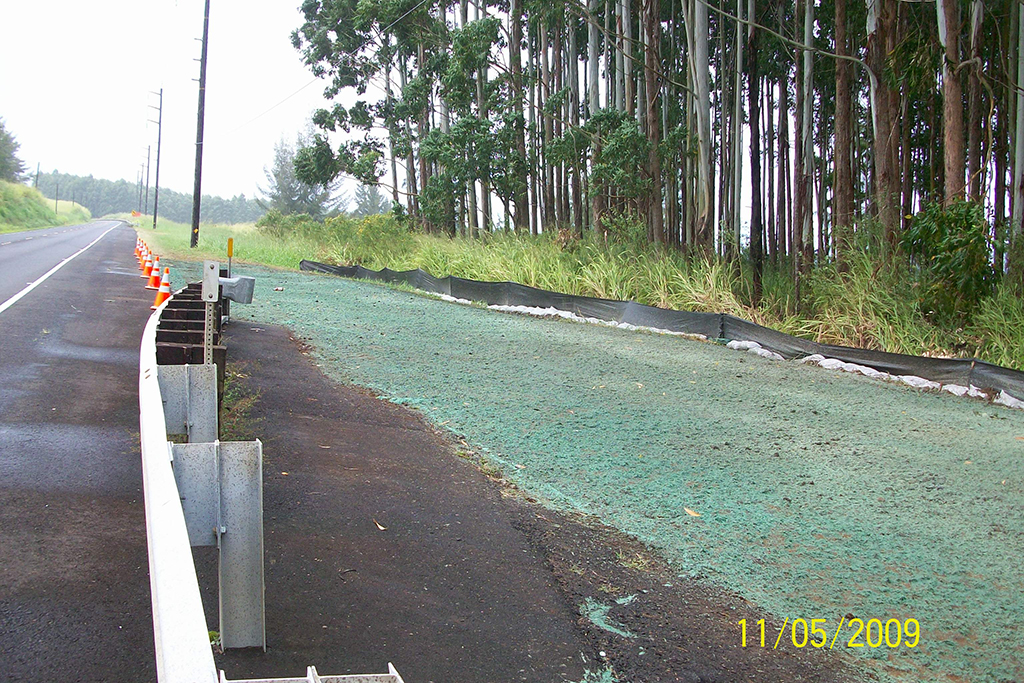
Application of loose bulk material to stabilize disturbed soil by protecting bare soil, increasing infiltration, and reducing runoff. Materials used for mulching include hydraulic matrices, hydraulic mulches of recycled paper or wood fiber.
Applications
- Temporary ground cover until permanent vegetation has been established.
- Method used in combination with temporary or permanent seeding to enhance plant growth.
- Areas requiring soil moisture retention to prevent cracking of the soil.
- Ground cover for exposed soil between trees or shrubs.
- Mulch should be used in conjunction with other BMPs for optimal erosion control, especially on slopes.
Installation and Implementation Requirements
HYDRAULIC MULCHES OF RECYCLED PAPER
- Consists of recycled newsprint, magazines, and other wastepaper sources.
- May be applied with or without tackifiers.
- Hydraulic mulch materials shall conform to 2005 Hawaii Standard Specifications for Road and Bridge Construction, Standard Specifications & Special Provisions Sections 209, 619 & 641, as in effect.
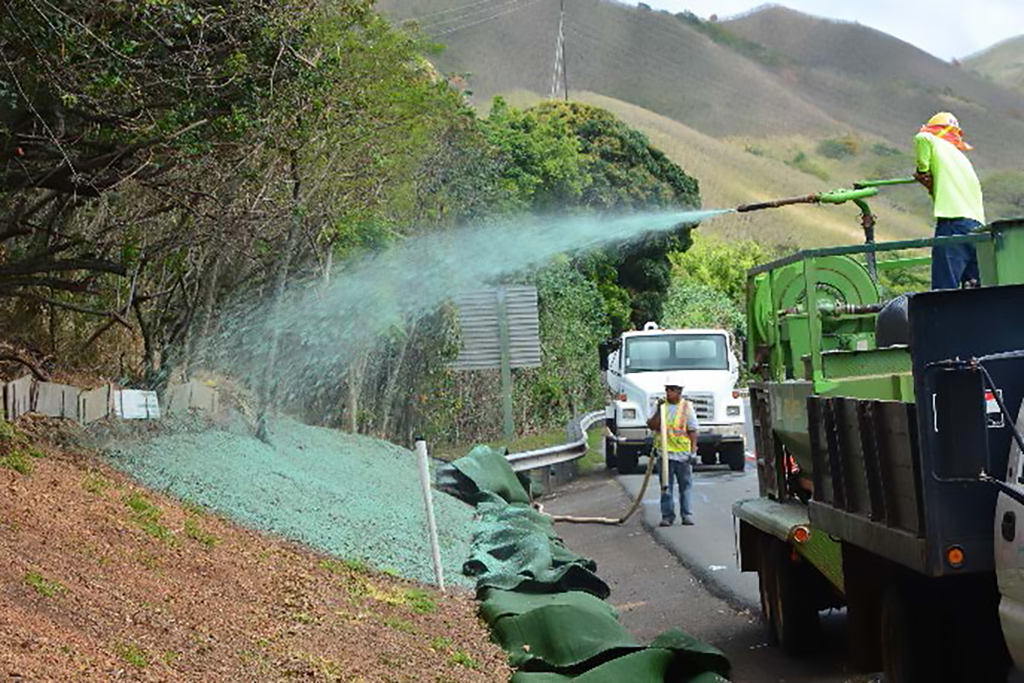
- Mix mulch in a hydraulic application machine (hydroseeder) and apply as a liquid slurry.
- May be sprayed from a cannon up to 200 feet or from a hose up to 1,500 feet away from the application area.
- Mix mulch with seed and fertilizer as specified by the manufacturer. Apply mulch at the manufacturer’s recommended rate to ensure uniform and effective coverage.
- Mulch used as temporary ground cover shall be reapplied to bare areas until permanent vegetation has been established.
- Avoid spraying mulch onto sidewalks, lined
drainage channels (i.e., concrete swales and concrete culverts), travelway areas, and existing vegetation.
- Avoid spraying mulch onto sidewalks, lined
HYDRAULIC MULCHES OF WOOD FIBER:
- Consists of wood waste from lumber mills or urban sources.
- May be manufactured with or without a tackifier.
- Hydraulic mulch shall conform to 2005 Hawaii Standard Specifications for Road and Bridge Construction, Standard Specifications & Special Provisions Sections 209, 619, & 641, as in effect. Mix mulch in a hydraulic application machine (hydroseeder) and apply as a liquid slurry.
- Mix mulch with seed and fertilizer as specified by the manufacturer.
- Apply mulch at the manufacturer’s recommended rate to ensure uniform and complete coverage.
HYDRAULIC MATRICES
- Hydraulic slurries consisting of wood fiber, paper fiber, or a combination of wood and paper fiber mixed with a binder system.
- Exceeds erosion control performance of blankets due to close contact with soil.
- Apply as an aqueous slurry (with seed) using standard hydroseeding equipment.
- Applications rates vary for different combinations of conditions and products.
BONDED FIBER MATRIX (BFM) CONSISTING OF PREMIXED FIBER AND BINDERS
- After application and upon drying, BFM shall adhere to soil and form a 100% cover. The cover shall be biodegradable, promote vegetation, and prevent soil erosion.
- Are composed of long strand, thermally produced wood fibers (>88% of total volume by weight), held together by organic tackifiers (10%) and mineral bonding agents (<2%), which become insoluble and non-dispersible upon drying. Composition of BFM varies based on supplier.
- Perform a free liquid quality control test on the liquid slurry.
- Binder shall not dissolve or disperse upon watering.
- Upon applications to the soil, holes in the matrix shall not exceed 0.04 inches in size.
- There shall not be any gaps between the matrix and the soil.
- Minimum water holding capacity of the matrix shall be 1.2 gallons per pound matrix.
- The matrix shall be free of germination of growth inhibiting factors and shall not form a water-resistant crust.
- Materials used for the matrix shall be 100% biodegradable and 100% beneficial to plant growth.
- Testing and evaluation of the matrix by an independent research laboratory shall have been conducted to verify reported erosion control performance.
- A trained and manufacturer certified applicator with knowledge of proper mixing and product application shall install the BFM.
- Typical BFM application rates range from 3,000 to 8,000 pounds per acre per recommendations from various manufacturers.
- BFM shall not be applied 24 hours before an anticipated rain event, during a rainfall event, or immediately after a rainfall event to ensure a drying time of 24 hours after installation.
Considerations
HYDRAULIC MULCHES OF RECYCLED PAPER
- Limited erosion control effectiveness due to short fiber length and absence of a tackifier.
- Limited moisture and soil temperature moderation.
- Residual inks within mulches may be undesirable in environmentally sensitive areas.
- Significant decrease in longevity compared with wood fiber mulch.
- Difficulty budgeting for this product due to volatile prices for recycled paper products.
HYDRAULIC MULCHES OF WOOD FIBER
- Limited erosion control effectiveness.
- Short-term use of 1 growing season.
HYDRAULIC MATRICES
- Avoid applying mulch 24 hours before an anticipated rainfall event, during a rainfall event, or immediately after a rainfall event.
- Hydromulch requires a drying time of 24 hours.
- To ensure complete coverage over roughen terrain, hydromulch may have to be applied from multiple angles and sides.
What to Inspect
- Is mulch applied to areas which will be regraded and/or revegetated?
- Is there uniform and complete coverage?
- Was the application rate sufficient for the disturbed area?
- Is there evidence of rill or gullies?
Maintenance
- Mulches applied to seeded areas may be disturbed due to wind or runoff. Recover exposed areas until permanent vegetation has been established.
- Replace ornamental and landscape mulches of bark or wood chips if soil is visible in more than 75% of the designated area.
- If erosion has occurred, additional mulch may be required.
BMP Examples
Are adequate BMPs installed to prevent the discharge of pollutants from the project site? Hover over each photo for an explanation of the situation presented and if BMPs have been installed properly.