
Description
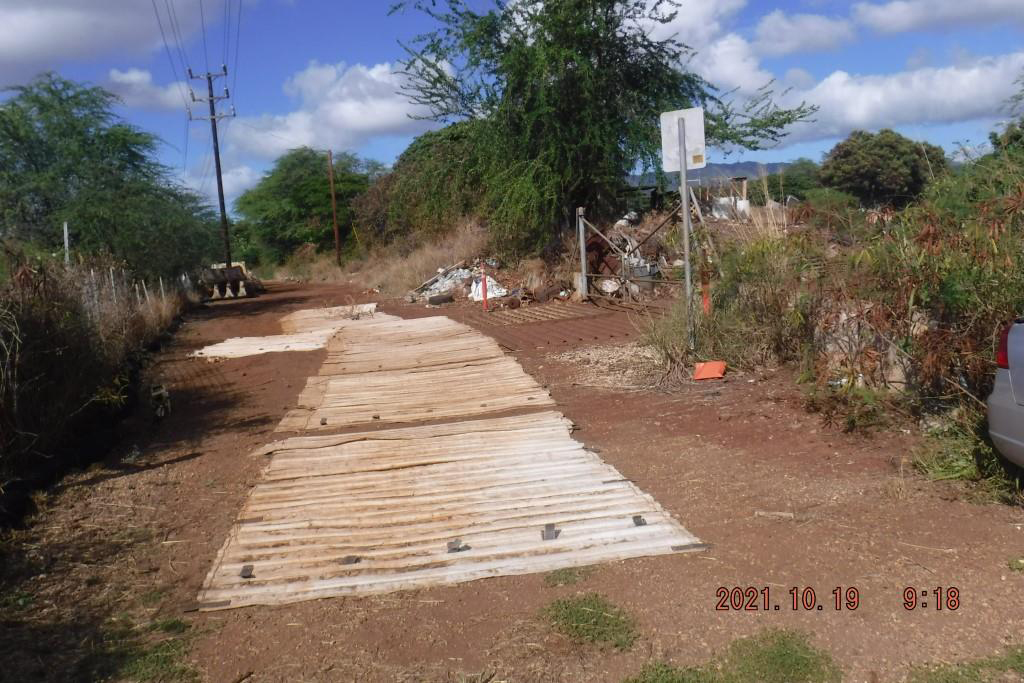
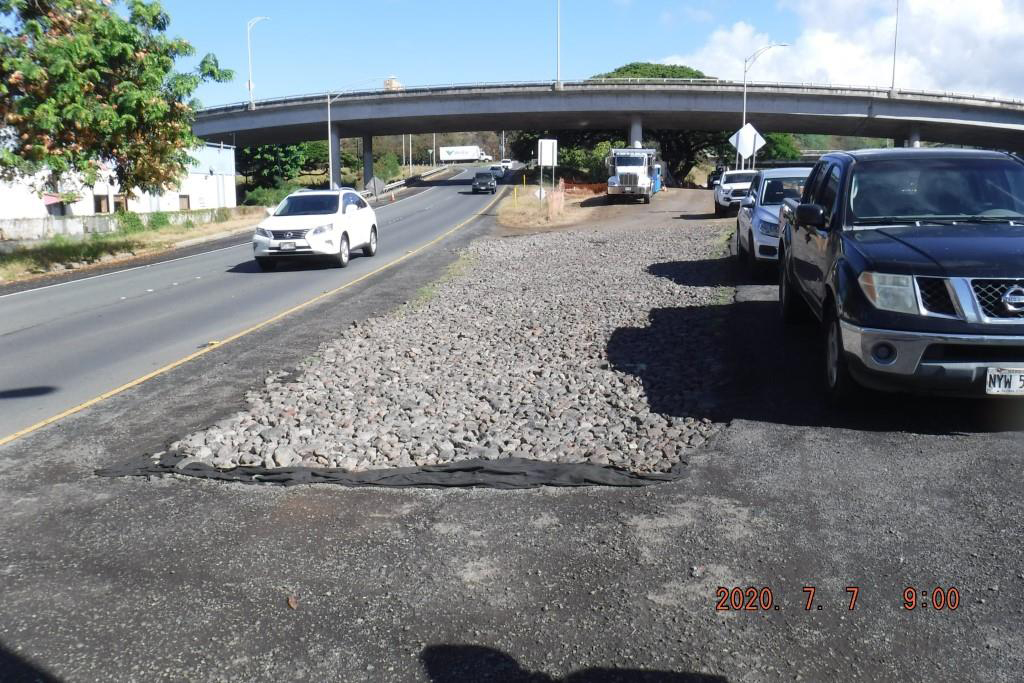
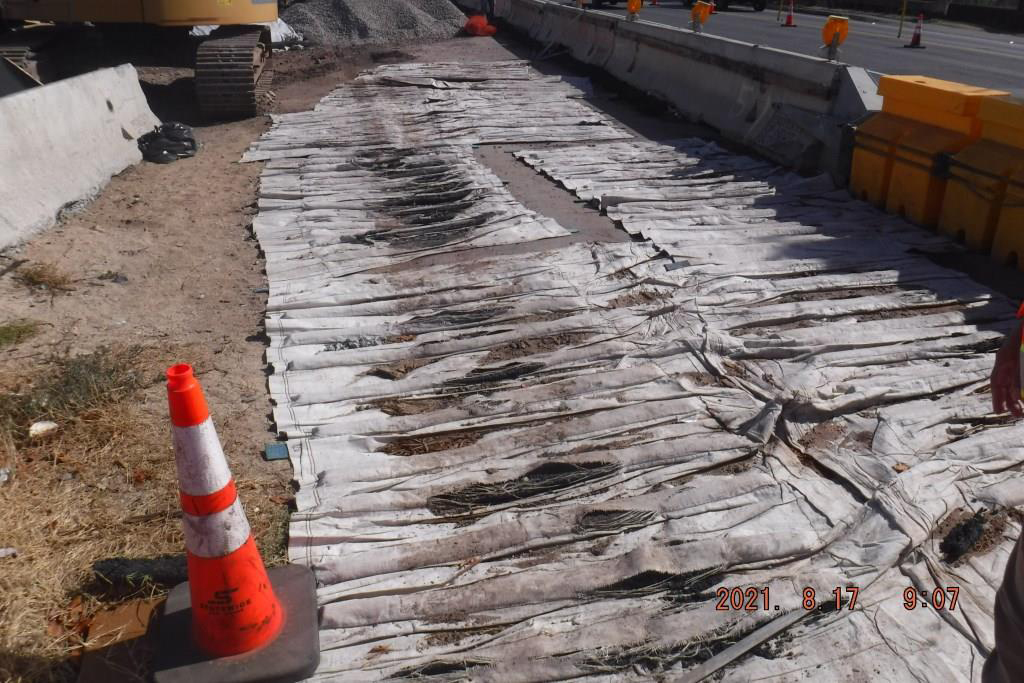
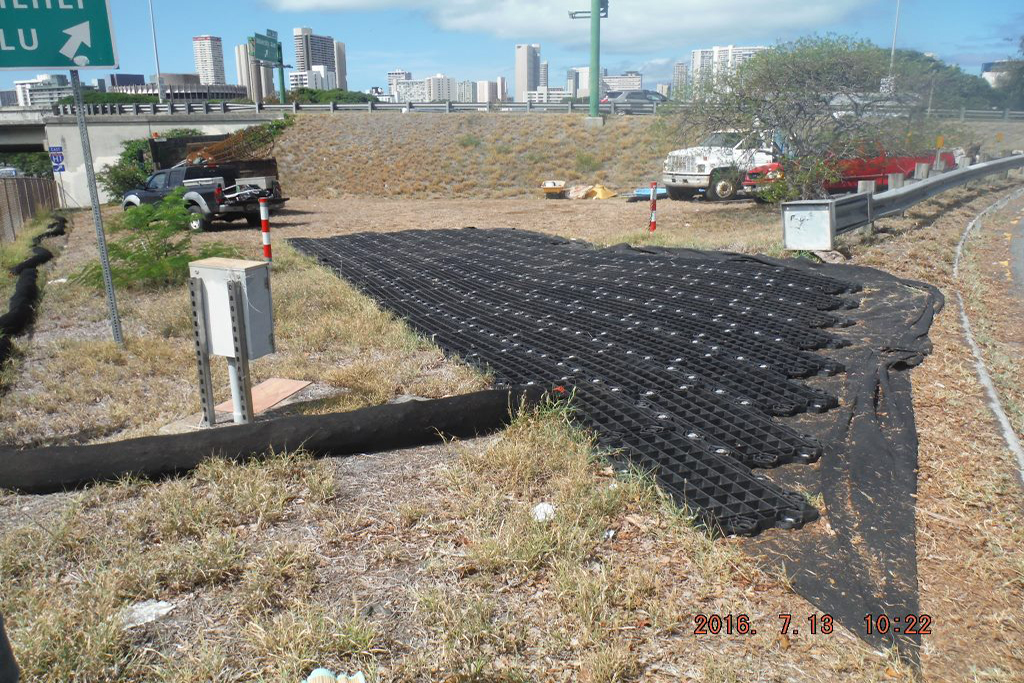
Designated areas for entry and/or exit from a construction site to reduce the amount of sediment tracked off-site by construction vehicles.
Applications
- Stabilized construction entrances/exits shall be used at all points where access to a construction site from paved roads is required.
Installation and Implementation Requirements
- Restrict vehicle use to properly designated entrance/exit points.
- Grade the stabilized entrance/exit to prevent runoff from discharging off-site. Construct stabilized entrance/exit on level ground where possible.
- Provide ample turning radii, when applicable.
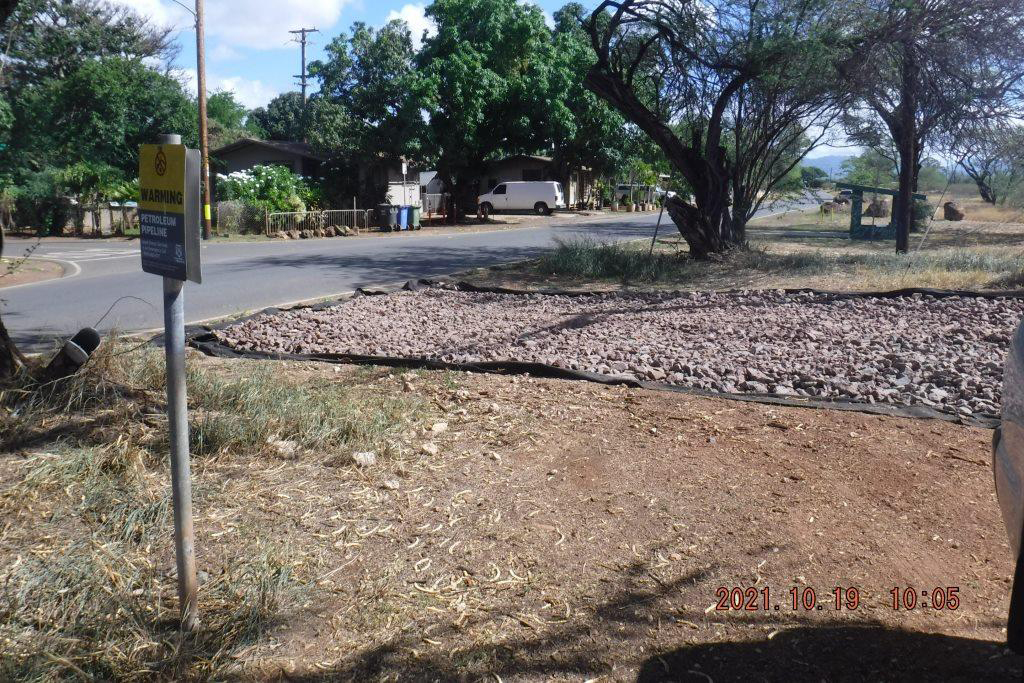
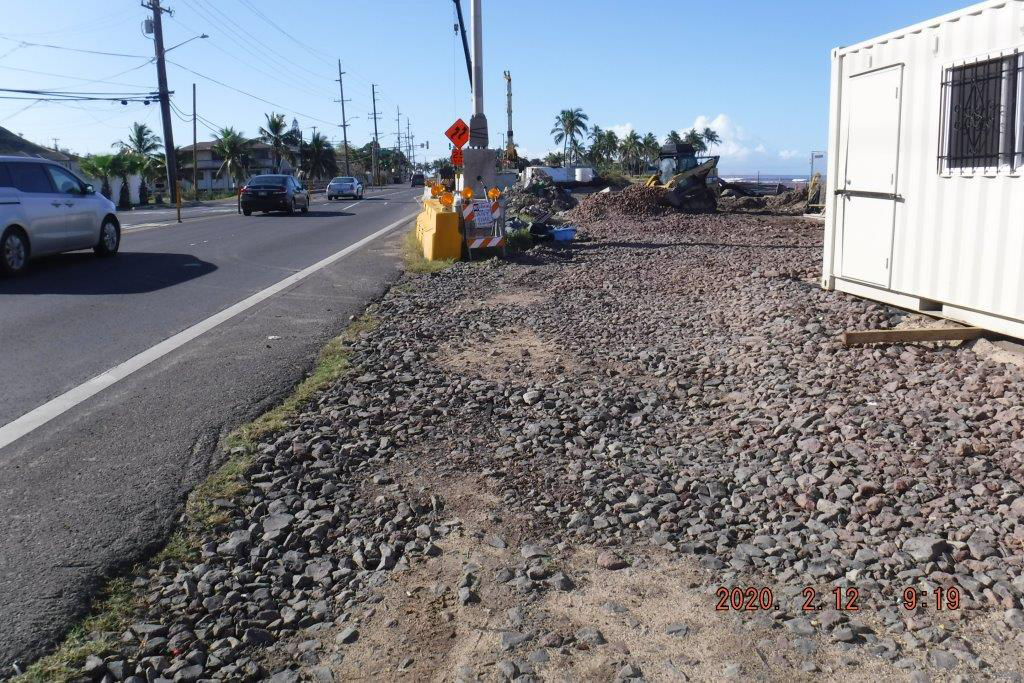
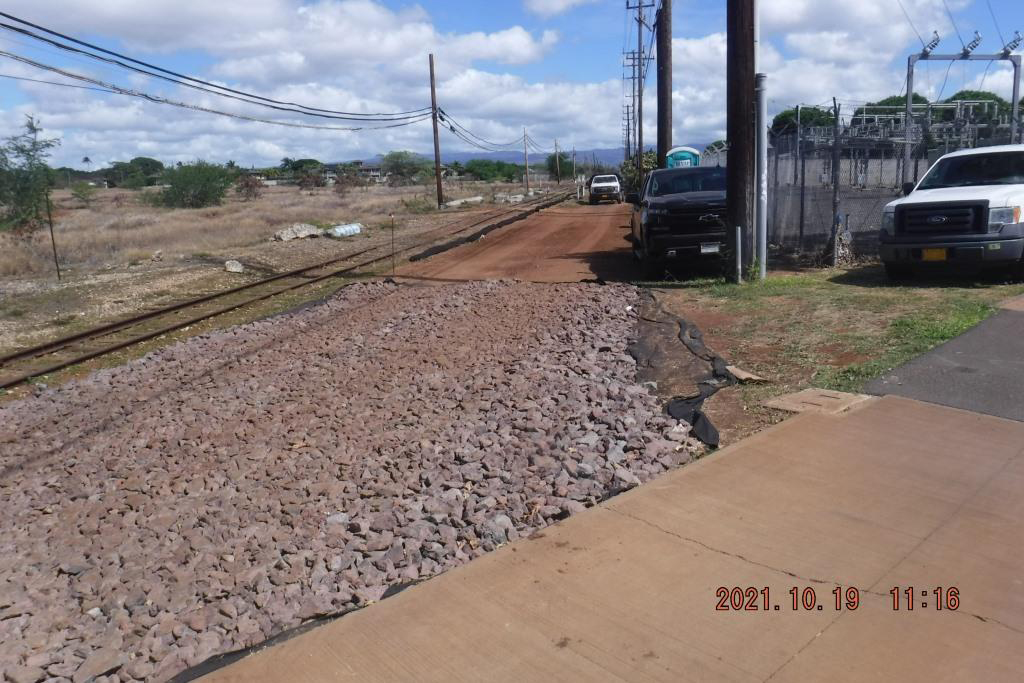
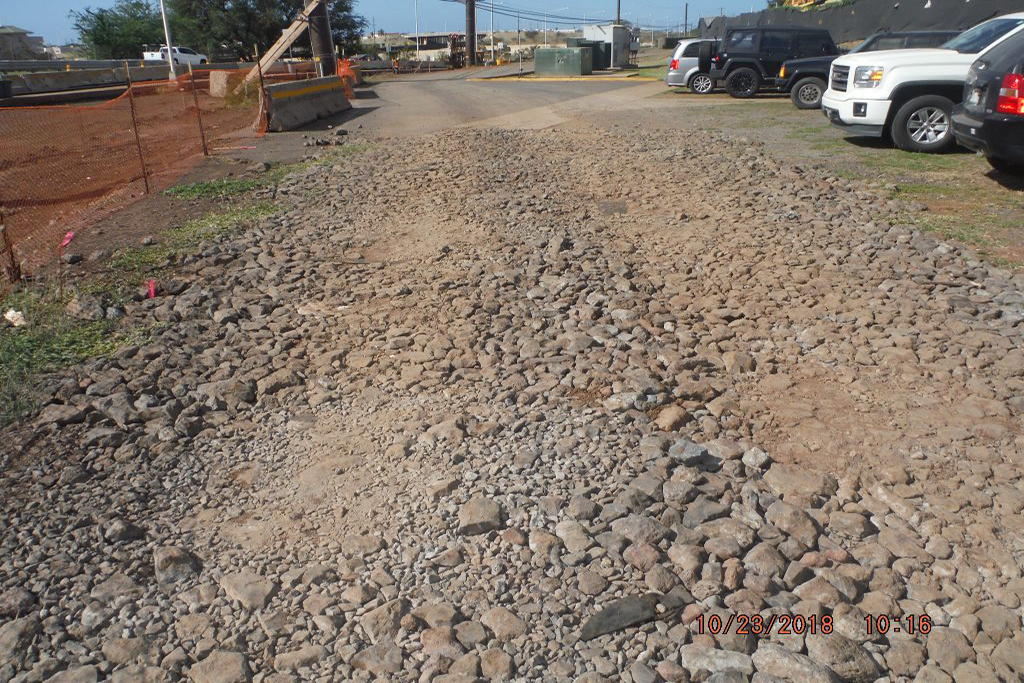
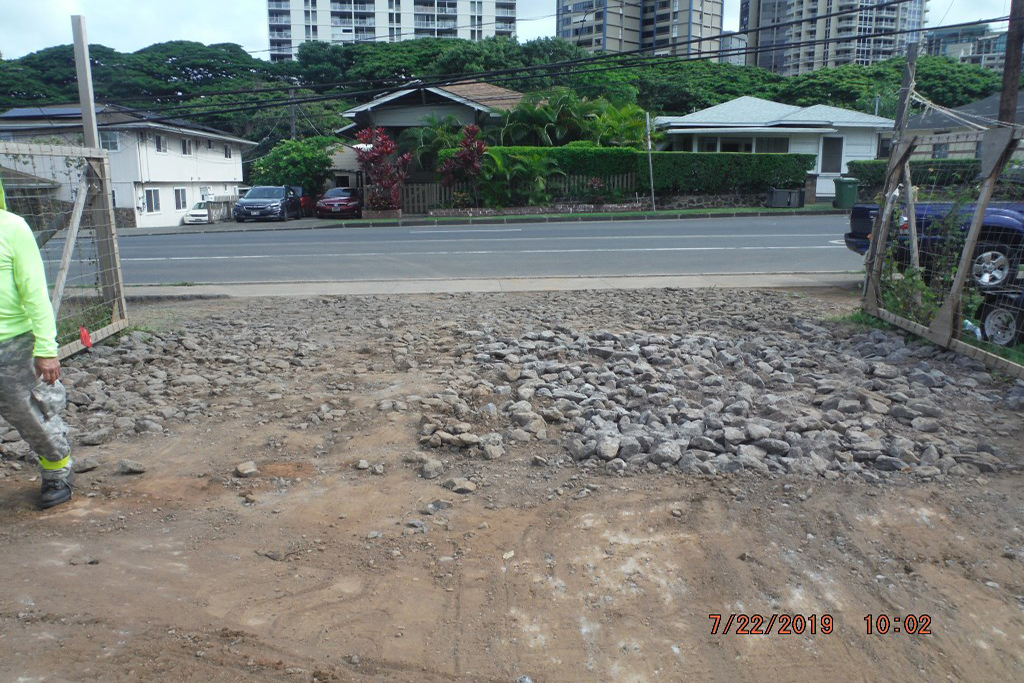
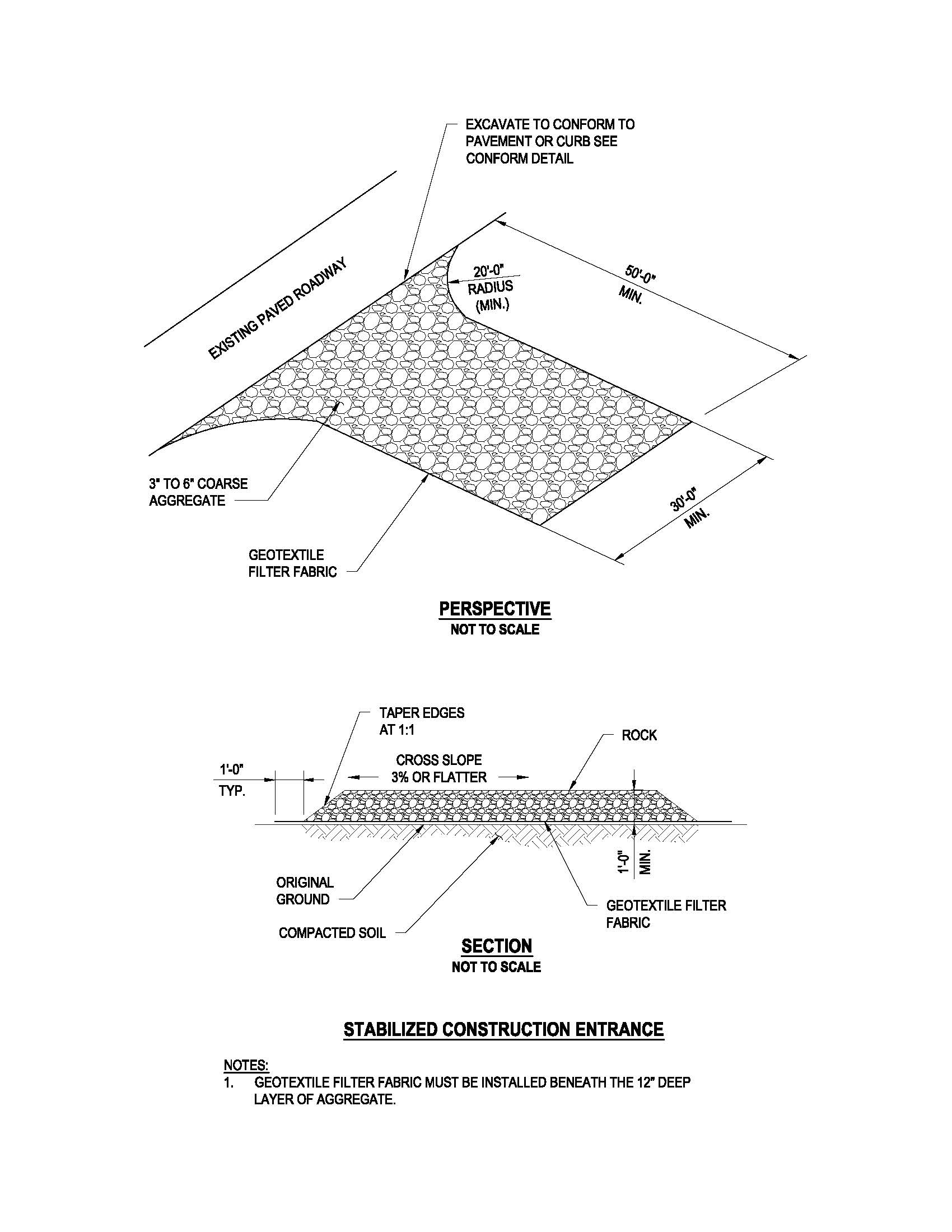
- Coarse aggregate, that are free of fine material, shall be 3 to 6 inches in diameter. The use of crushed concrete and asphalt concrete millings/grindings are not allowed.
- Depth of aggregate shall be 12 inches or as recommended by the Soils Engineer. Contractor is responsible to design stabilized construction entrance/exit to support heaviest vehicles and equipment that will use it.
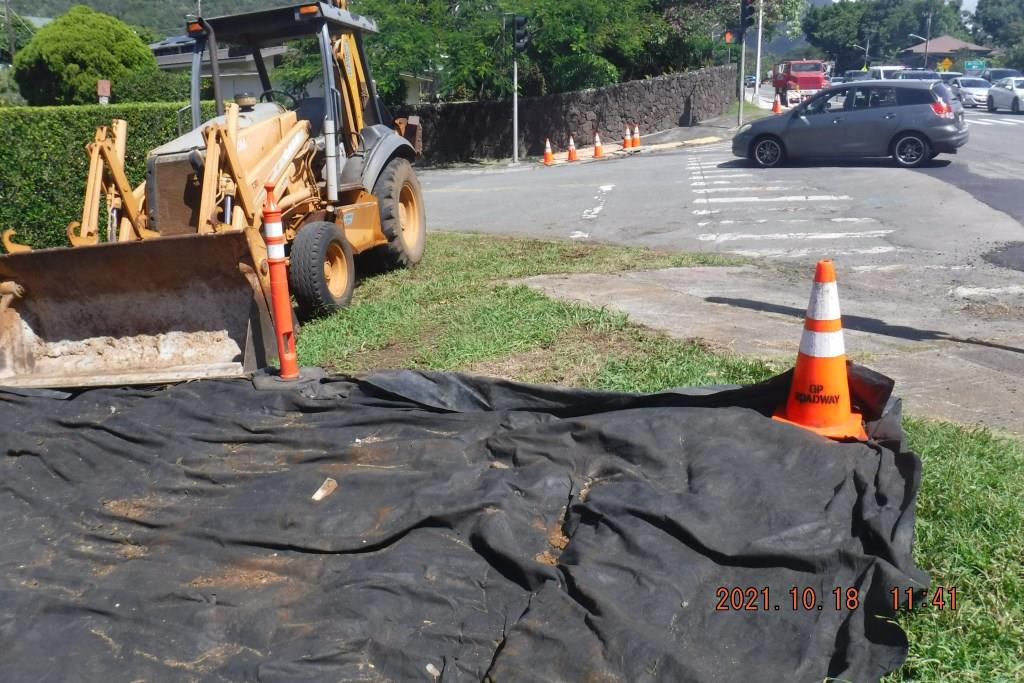
- Place geotextile filter fabric beneath the 12-inch-deep layer of aggregate.
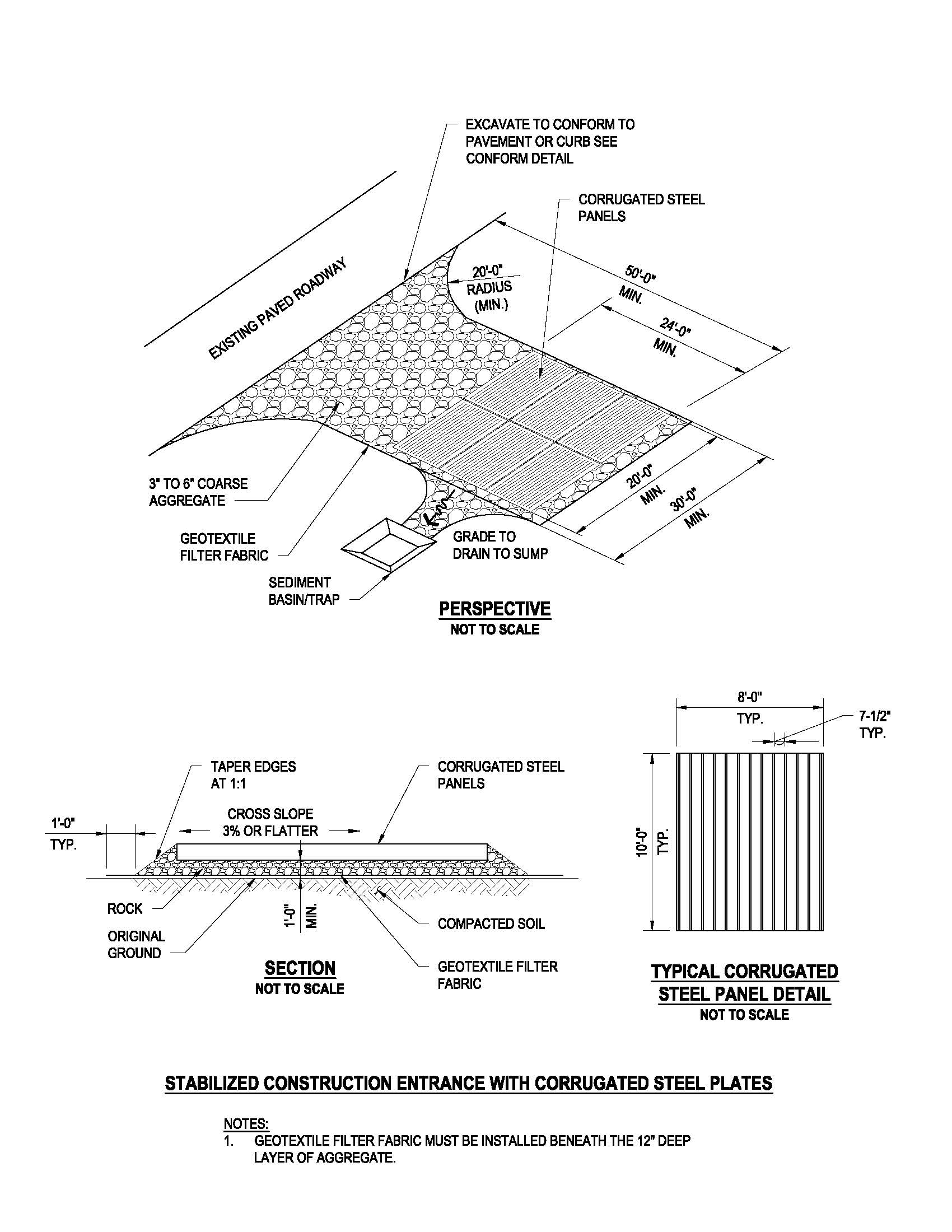
- Dimensions shall be a minimum of 50 feet in length and 30 feet in width. If project site layout will not accommodate minimum dimensions, install additional BMPs to remove sediment from the vehicles prior to entering/exiting the site.
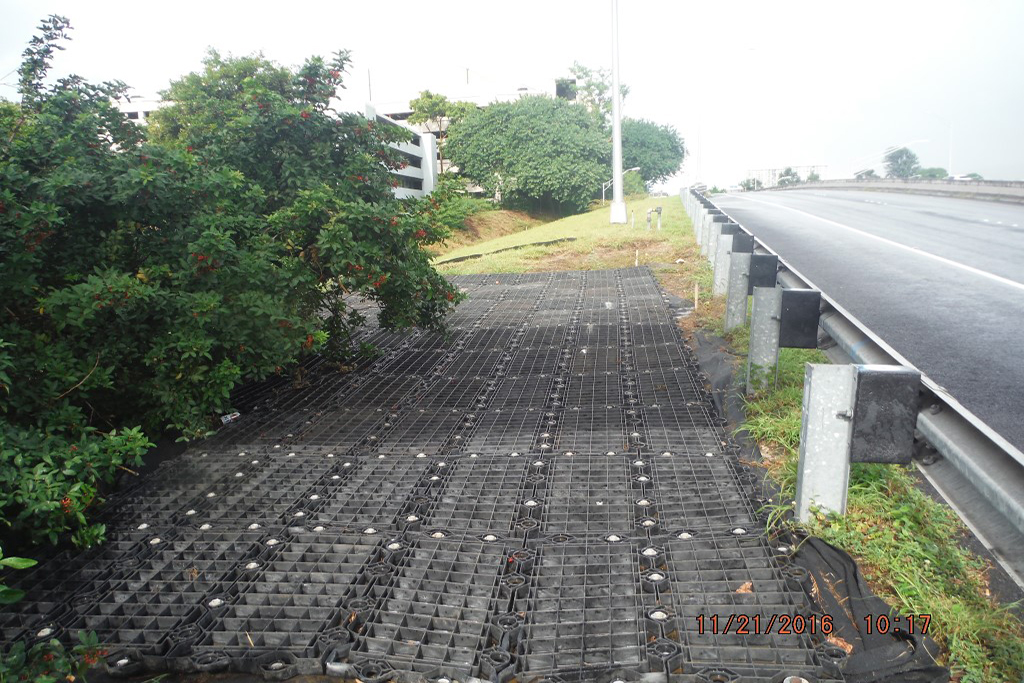
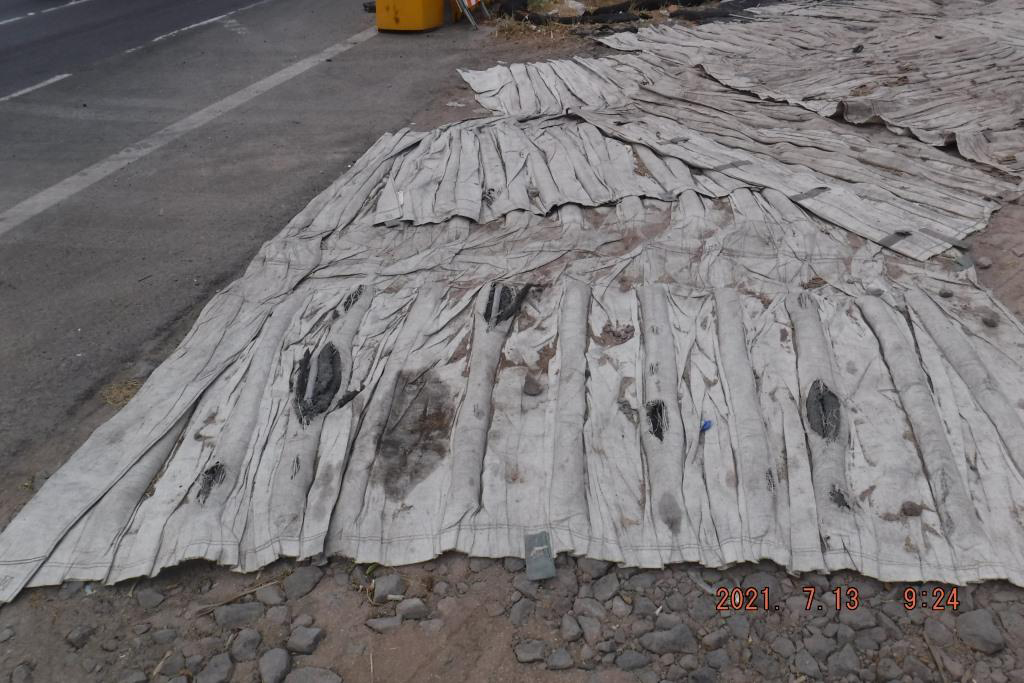
- Alternative commercial construction entrance/exit products may be used in lieu of aggregate if approved by the Engineer and installed per manufacturer’s specifications.
- Installation of a stabilized entrance/exit is required if ground-disturbing activity will occur and exiting the construction site onto paved roads and
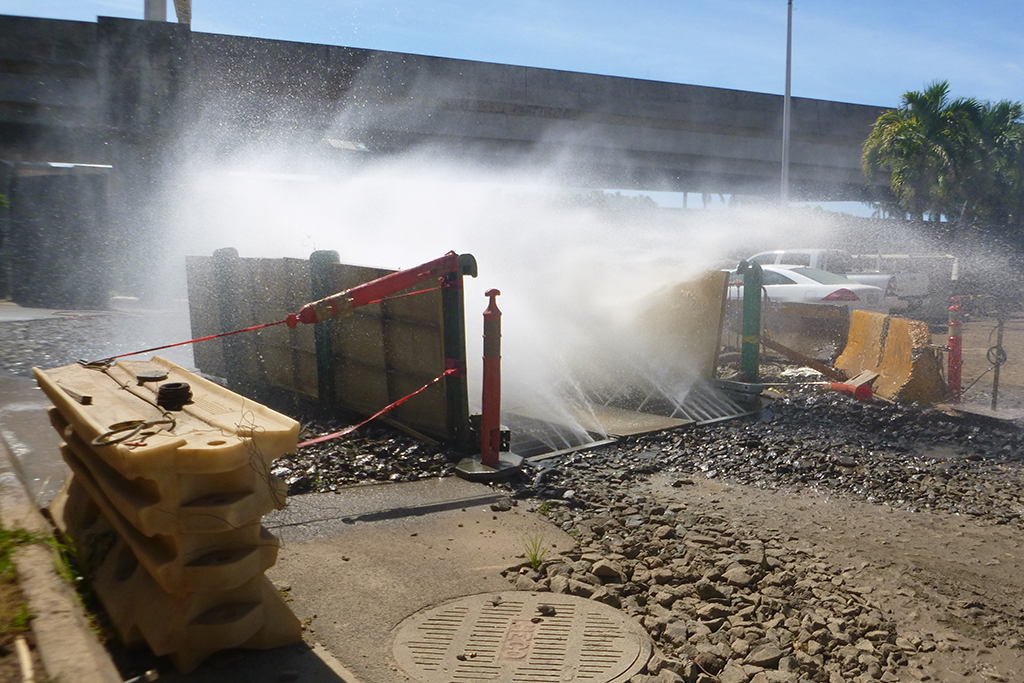
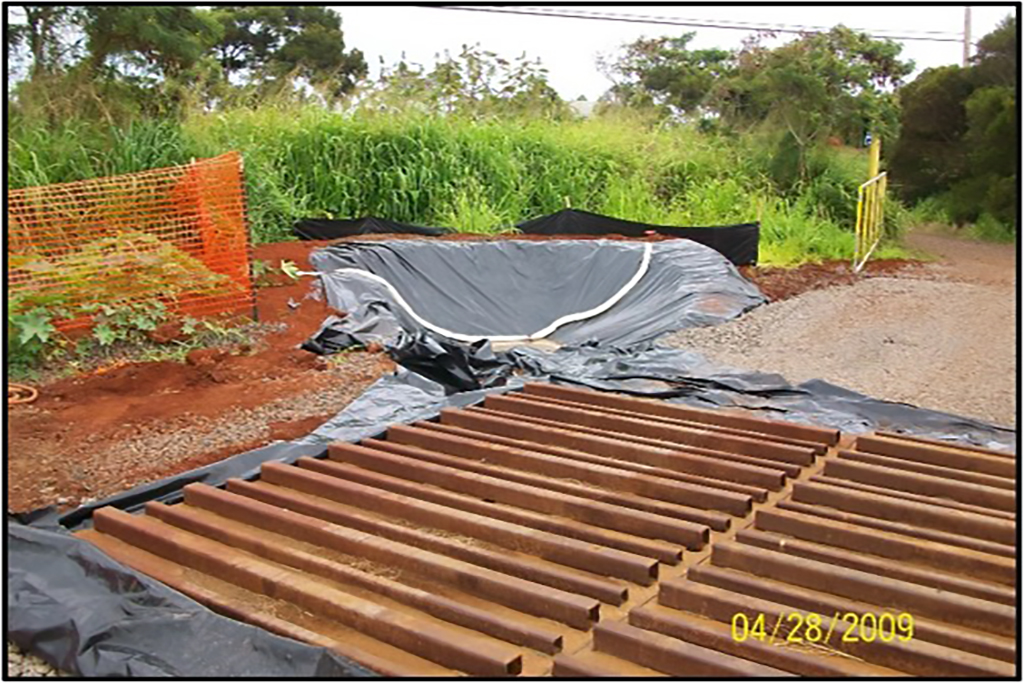
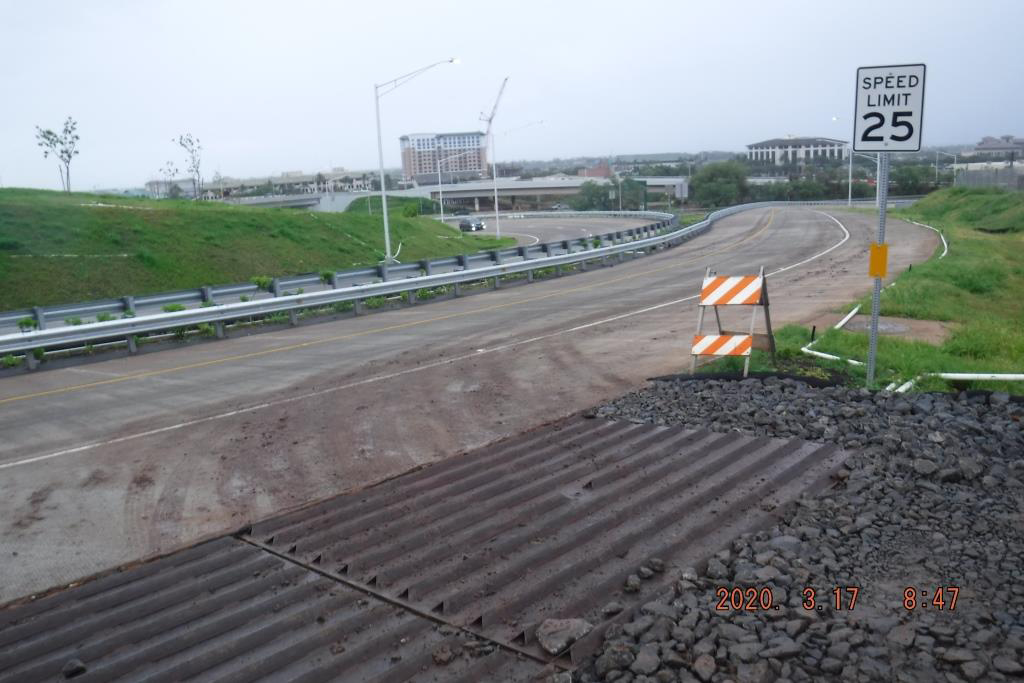
sidewalks is needed. - A tire wash can be incorporated with a stabilized construction entrance/exit to assist with the removal of sediment from construction vehicles.
- The tire wash must be designed for the anticipated traffic load and located a minimum of 50 feet from a state water.
- Automatic shutoff nozzles must be used to avoid wasting water.
- The wash waters must be retained on the project site and drain to a properly constructed sediment trap or similar device.
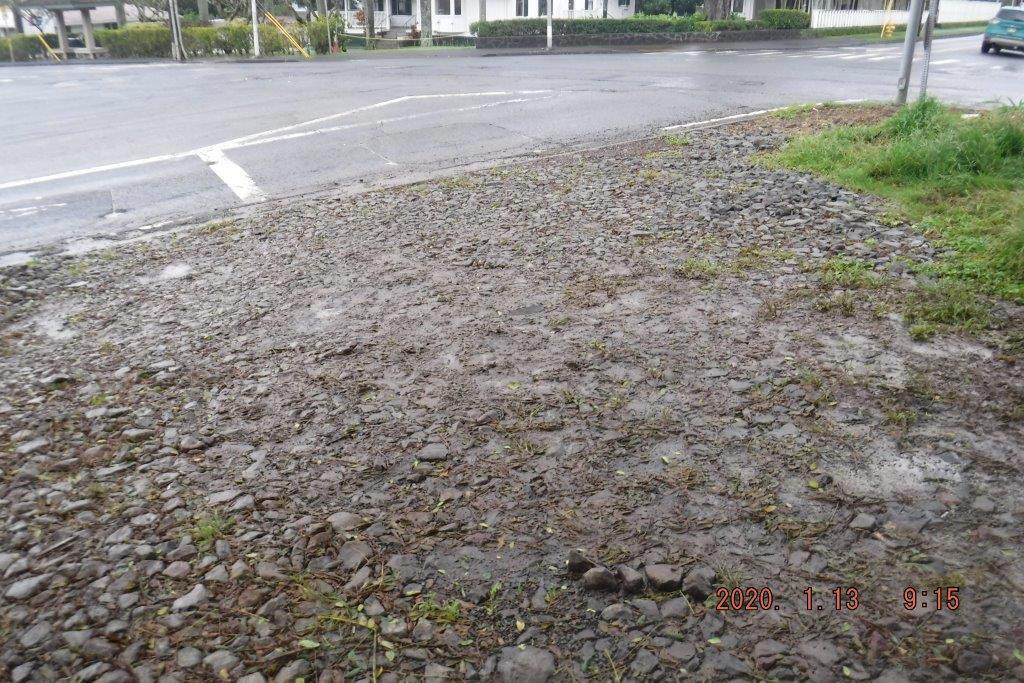
- Sediment tracked onto adjacent roadways or paved areas shall be removed by the end of the same day that the tracking occurred or immediately when sediment is tracked more than 50 feet from the construction entrance/exit, whichever occurs sooner.
- Use dry methods to remove the sediment from the adjacent roadways or paved areas. This includes, but is not limited to, mechanical street sweepers, brooms, shovels, vacuums, or other similarly effective methods. The sediment collected shall be removed or stabilized on-site.
- The pavement shall not be cleaned by washing down the street into any storm water conveyance (unless it’s connected to a sediment basin, sediment trap, or similarly effective control), storm drain inlet, or state water.
- Limit points of entry onto the construction site to minimize possible areas of tracking.
Considerations
- Surface aggregate shall be periodically replenished.
- If the construction exit is not preventing sediment from being tracked onto the pavement, consider increasing the dimensions of the entrance, and/or installing a tire wash.
- A sediment trapping device is required if a tire wash is used in conjunction with the stabilized construction entrance/exit.
- The speed of the construction truck through the tire wash is crucial to the effectiveness of the cleaning. The slower the truck moves through the wash, the better the cleaning.
- A turnout or doublewide exit is required to prevent entering vehicles from driving through the tire wash area.
- Sediment accumulates between the aggregate and reduces the effectiveness of the construction entrance/exit.
What to Inspect
- Is sediment buildup evident within aggregate?
- Are commercial products being maintained to maximize effectiveness?
- Is there evidence of tracking onto paved roads?
- Is proper size and type of aggregate used?
- Is there geotextile installed beneath aggregate?
- Is the construction entrance/exit the correct dimensions?
- Is runoff leaving site?
- Is clean water being used for tire washing?
Maintenance
- Clean dirt, mud, or other material tracked onto the road, sidewalk, or other paved area by the end of the same day in which the trackout occurs.
- Remove aggregate, separate and dispose of sediment, when no longer in use.
- Perform street sweeping as needed. Washing of the roads to address sediment trackout is not permitted.
- Adjust street sweeping schedule as needed.
- Replenish surface aggregate periodically.
BMP Examples
Are adequate BMPs installed to prevent the discharge of pollutants from the project site? Hover over each photo for an explanation of the situation presented and if BMPs have been installed properly.