Description
Practices and procedures to prevent the discharge of pollutants from equipment and vehicle cleaning activities from entering the drainage system or adjacent waterbodies.
Applications
- Construction or maintenance activities involving cleaning of vehicles and equipment.
Installation and Implementation Requirements
- Use off-site vehicle wash racks or commercial washing facilities when practical. Off-site cleaning facilities may be better equipped to properly handle and dispose of wash waters.
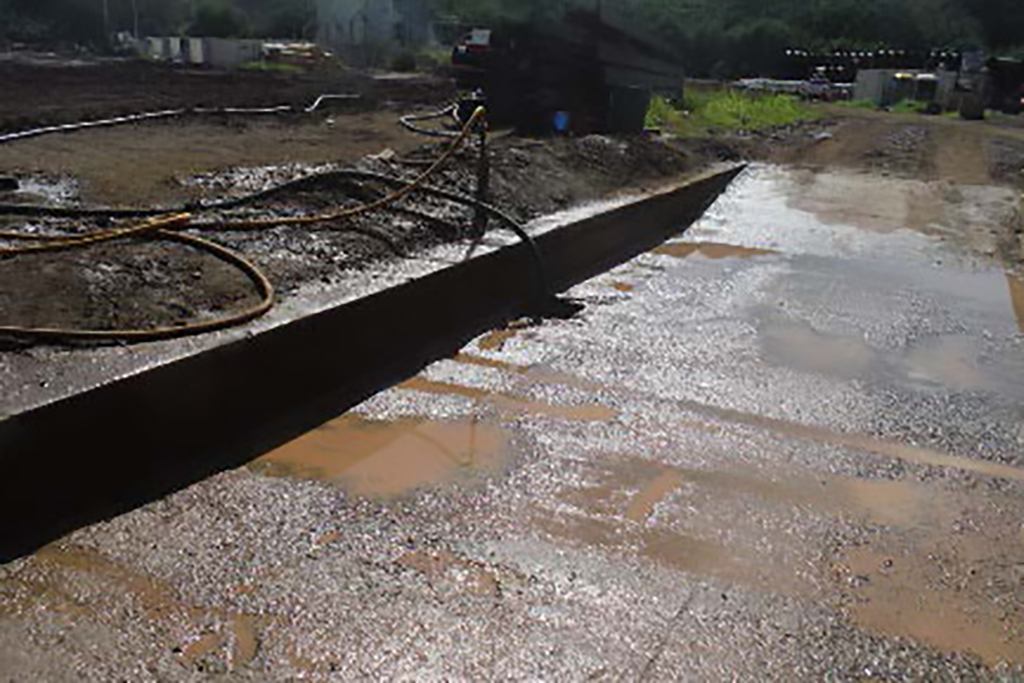
- If on-site cleaning is necessary, designate a paved surface and bermed wash area for cleaning activities. The wash area may be sloped to facilitate collection of wash water and evaporative drying. Water must be contained in the bermed wash area.
- Use a positive shutoff valve when cleaning vehicles and equipment to minimize water usage.
- Removal of sediment or soil from vehicles and equipment, except for contaminated media, can be done on pervious areas as long as they are cleaned through dry cleanup measures (e.g., tire sweeping, vacuuming, etc.) only.
- Do not allow wash water to enter the storm drainage system or open waterbodies.
- Minimize the amount of water being used to clean vehicles and equipment.
- Vehicle and equipment cleaning using soaps, solvents, or detergents are only allowed in an impervious area where water can be captured and either treated (i.e., oil/water separator) or disposed of properly (off-site).
- Properly store soaps, detergents, and solvents. See section SM-2 Material Storage and Handling for more information.
- Only use phosphate-free, biodegradable soaps.
- Do not discharge wash water directly into the storm drainage system or open waterbodies.
- Minimize water use to avoid the need for erosion and sediment controls for the wash area.
- If vehicles and equipment are cleaned off in the field, ensure waste is collected and disposed of properly.
- Do not store hazardous material in the wash area.
- Cover the wash area when it is not in use to prevent contact with storm water.
- Train employees on pollution prevention measures.
- Do not wash personal vehicles on-site.
- Steam cleaning shall not occur in uncontained areas. Significant pollutant concentrations may be generated from steam cleaning.
- Remove the wash area and stabilize disturbed areas once the project is complete.
What to Inspect
- Are pollution prevention controls (i.e., berms, sumps, oil/water separators, etc.) properly functioning?
- Are soaps, detergents, and solvents properly stored?
- Are there traces of soap and solvents in pervious wash areas?
- Is there a presence of pollutants (i.e., concrete, oils, etc.) observed in the wash area?
- Are all wash areas located in impervious areas?
- Is wash water being captured?
- Is there evidence of prohibited discharge?
Maintenance
- Any sediment or other potential pollutants removed from vehicles and equipment during cleaning activities should be managed and/or disposed of appropriately.
- Repair/replace pollution prevention controls (i.e., berm, sump, etc.) if not operating per design.
- Wash water containing soaps, detergents, and solvents should be routinely disposed of.
BMP Examples
Are adequate BMPs installed to prevent the discharge of pollutants from the project site? Hover over each photo for an explanation of the situation presented and if BMPs have been installed properly.