
Description
Practices and procedures to prevent or reduce the discharge of pollutants in non-storm water and accumulated precipitation from areas requiring dewatering activities so construction activity may proceed.
Applications
- Construction sites requiring the removal of non-storm water to create a dry work area or to remove the accumulation of non-storm water from a work area.
Installation and Implementation Requirements
- Dewatering non-storm water into storm drains and open bodies of water is prohibited without approval from the State of Hawaii Department of Health, Clean Water Branch (CWB).
- The Engineer must submit a complete Notice of Intent for Hawaii Administrative Rules (HAR) Title 11, Chapter 55, Appendix G, NPDES General Permit Coverage Authorizing Discharges Associated with Construction Activity Dewatering, no later than 30 days before the proposed starting date of the discharge or 30 days before the expiration date of the applicable notice of general permit coverage.
- The permittee shall comply with all requirements from HAR Title 11, Chapter 55, Appendix G and Appendix A, Standard General Permit Conditions. In case of conflict between the conditions listed in Appendix G and Appendix A, the more stringent conditions shall apply.
TYPES OF POLLUTANTS FROM DEWATERING DISCHARGES
- Sediment
- Toxics and petroleum products
- Due to the nature of dewatering operations, high sediment content is common. Toxics and petroleum products, however, are not prevalent unless heavy industrial activities or groundwater contamination occurred in the surrounding area.
SEDIMENT REMOVAL
- Use sediment controls such as a sediment trap to remove sediment from dewatering discharges. See section SC-4 Sediment Trap for more information.
- Apply filtration methods to remove sediment from the sediment trap. These include:
- Sump pit combined with a perforated/slit standpipe, which is wrapped in geotextile filter fabric. As water collects in the pit, stones placed around the standpipe filter the water, which collects in the pit prior to being pumped out. Due to the wrapped standpipe, an increased suction inlet area may be required to prevent clogging and unacceptable pump operation.
- Floating suction hose, which allows cleaner surface water to be pumped out.
TOXICS AND PETROLEUM PRODUCTS REMOVAL
- Areas of known or suspected groundwater contamination shall be tested by a certified laboratory for known or suspected pollutants using methods detailed in 40 CFR Part 136. The laboratory shall enforce a quality assurance/quality control measures program. Comply with the dewatering requirements in subsection 209.03 (D) of the 2005 Hawaii Standard Specifications for Road and Bridge Construction, Standard Specifications & Special Provisions, as in effect.
- Discharges to the sanitary sewer system shall receive approval from the State of Hawaii Department of Health (DOH) and the owner of the wastewater system. Additional testing and disposal requirements may be necessary.
- Testing of the dewatering effluent should be completed and the results identified prior to discharging to a receiving waterbody or storm drainage system.
Considerations
- Contaminated water may be an indication of contaminated soil. See section SM-8 Contaminated Soil Management for more information.
What to Inspect
- Is contaminated water evident in excavated areas?
- Is discoloration, oily sheen, or odor observed?
Maintenance
- Remove and properly dispose of sediment collected in sediment control devices.
BMP Examples
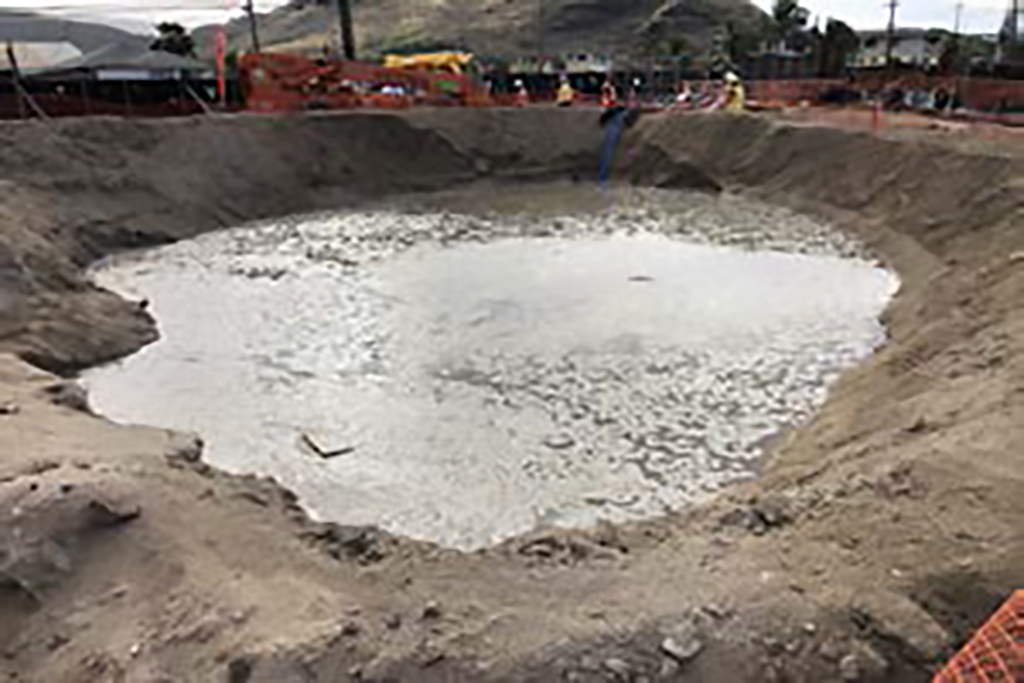
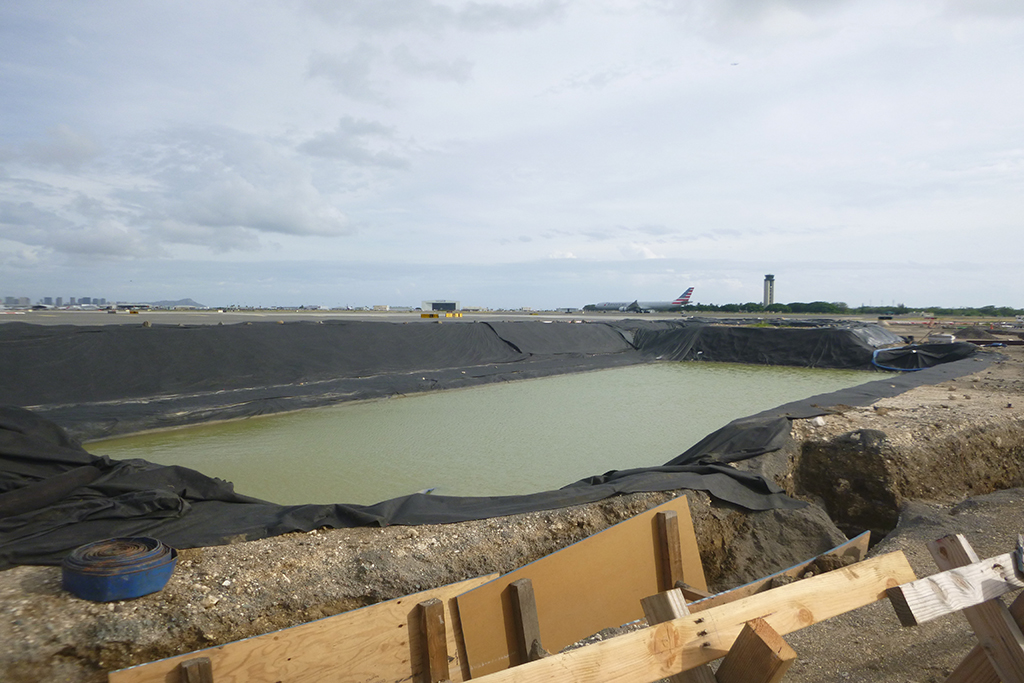
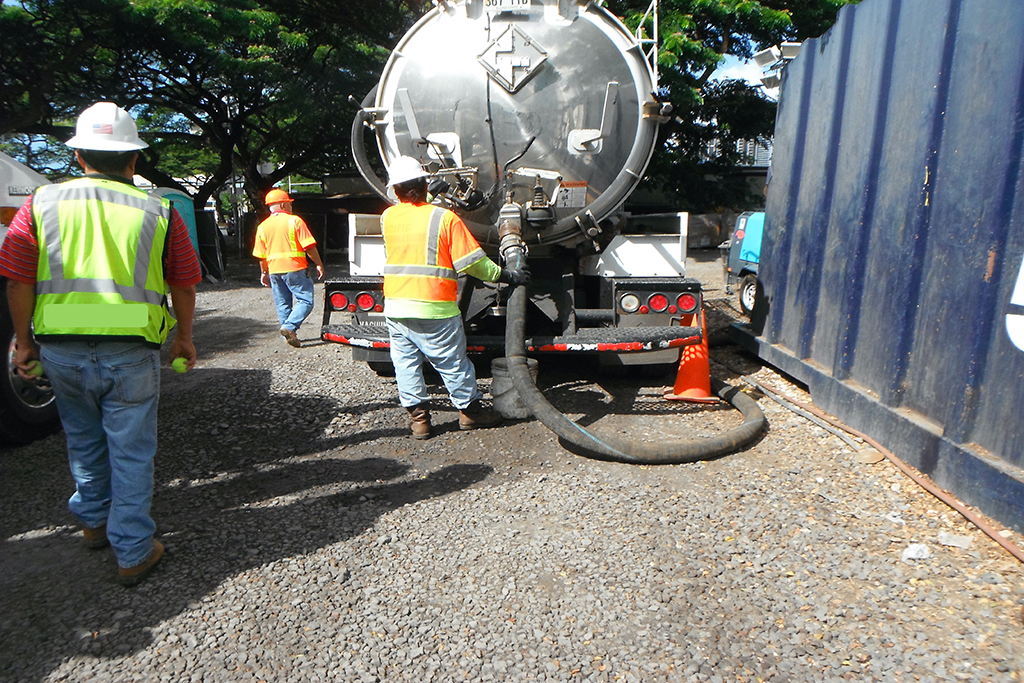
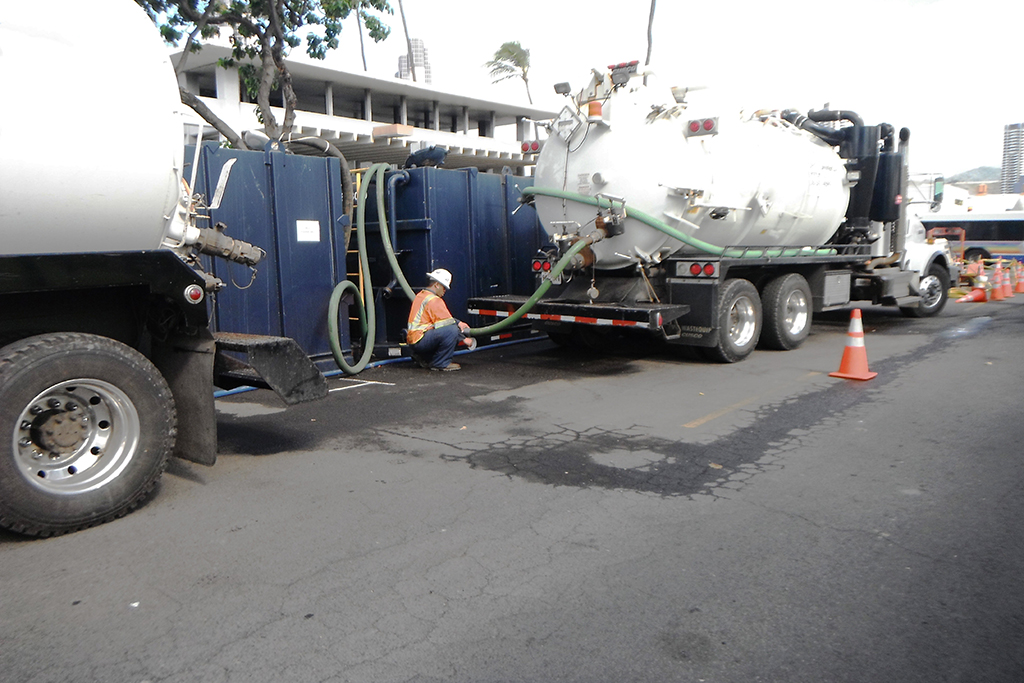
Are adequate BMPs installed to prevent the discharge of pollutants from the project site? Hover over each photo for an explanation of the situation presented and if BMPs have been installed properly.