
Description
Measures to minimize erosion and reduce the amount of dust generated by construction activities.
Applications
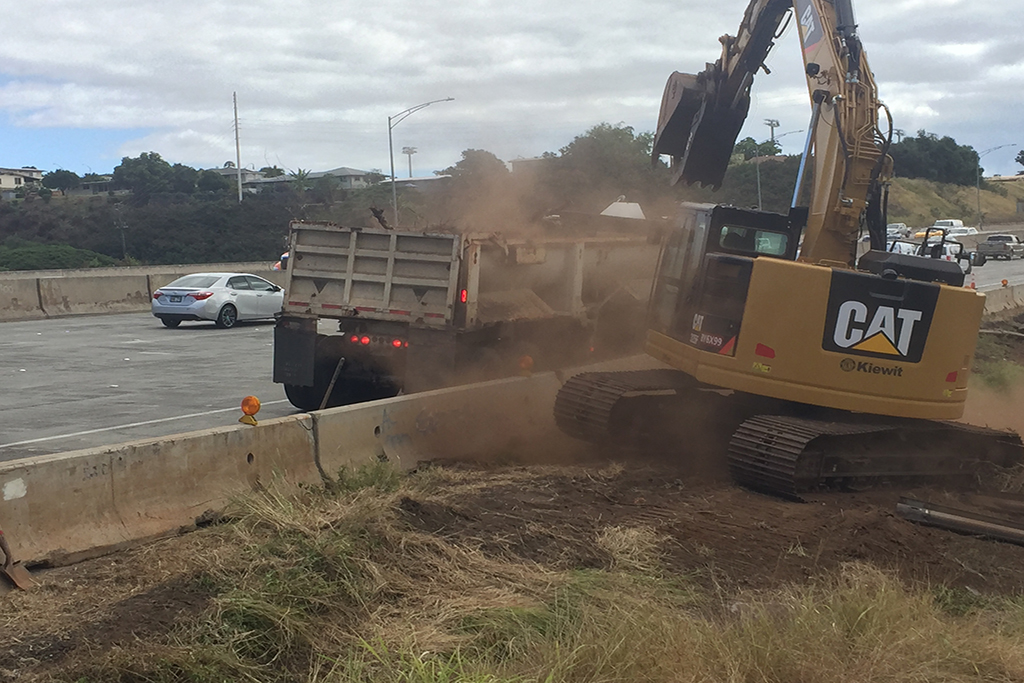
Dust control shall be used on all exposed soils or any construction activity generating dust. Dust control shall apply to the following:
- Clearing, grubbing, and grading
- Construction vehicular travel on unpaved roads
- Drilling and blasting
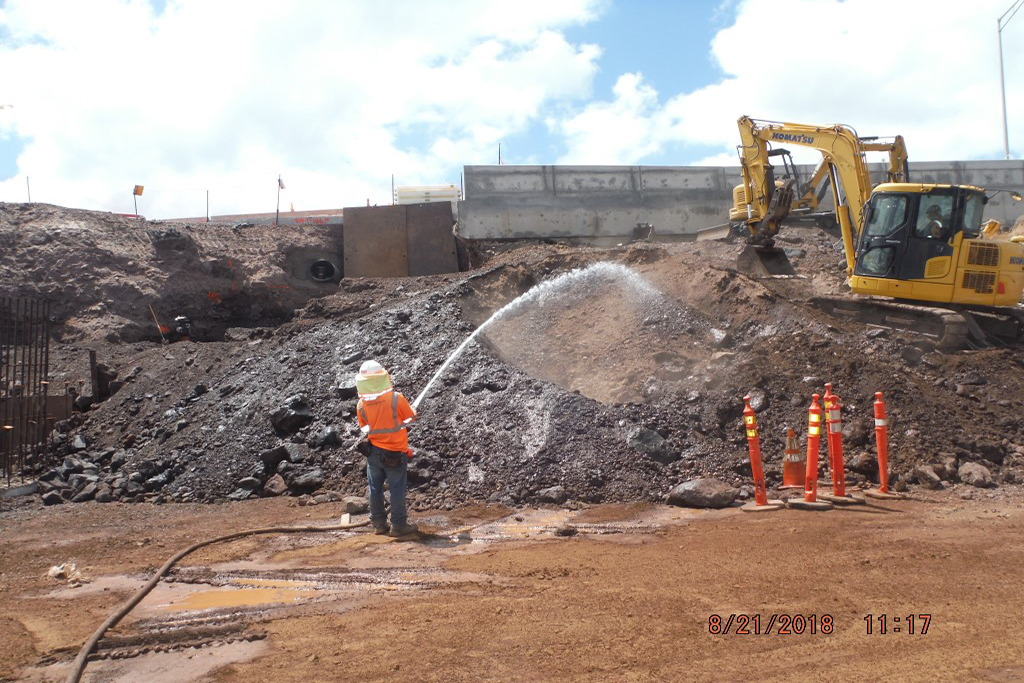
- Soil and debris stockpiles
- Excavation and handling of soil or aggregate from excavators, loaders, and backhoes
- Unstable soil areas
- Sawcutting, jack hammering and grinding
- Sifting operations
Installation and Implementation Requirements
- Minimize exposed areas through the schedule of construction activities.
- Anticipate the prevailing wind direction to determine BMP placement in order to minimize the amount of dust generated.
- Identify and stabilize primary entrances/exits prior to commencement of construction to prevent tracking and dust generation.
- Direct construction vehicular traffic to stabilized roadways.
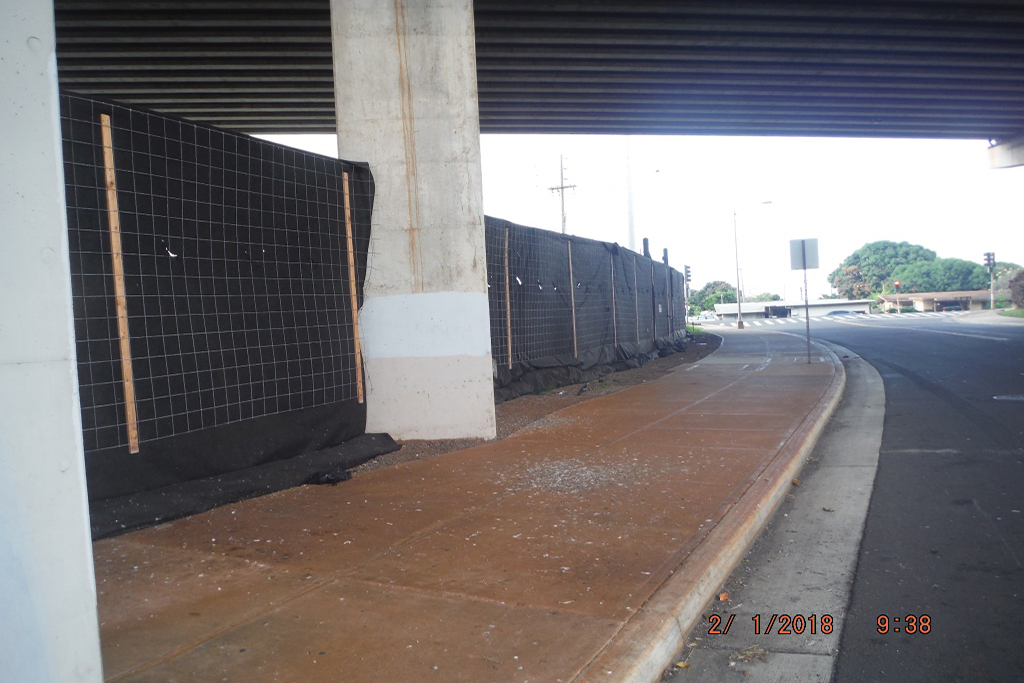
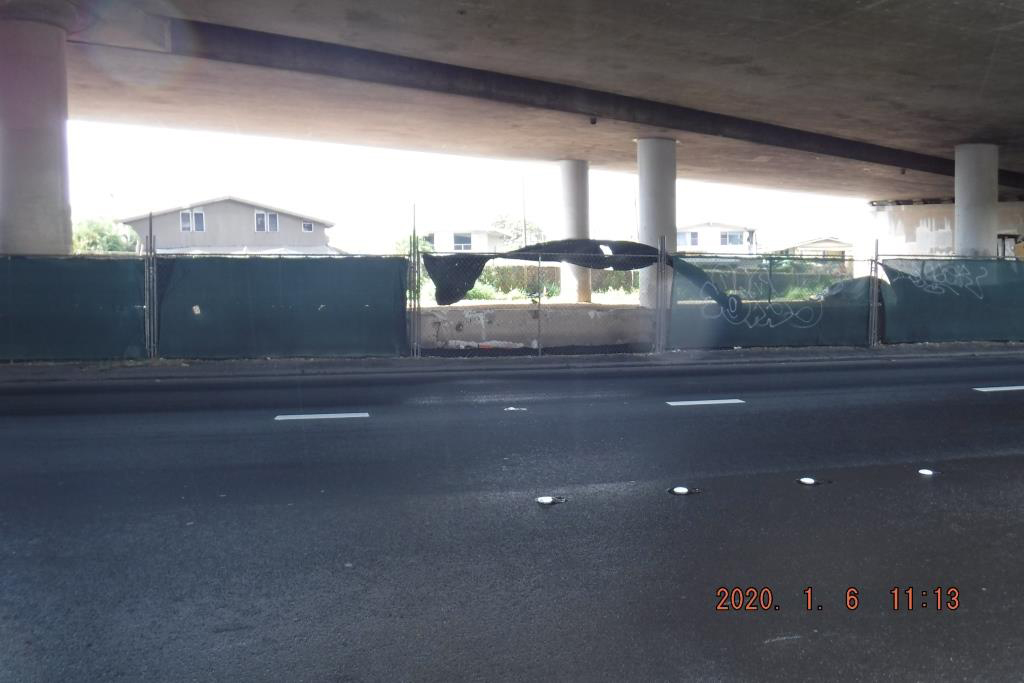
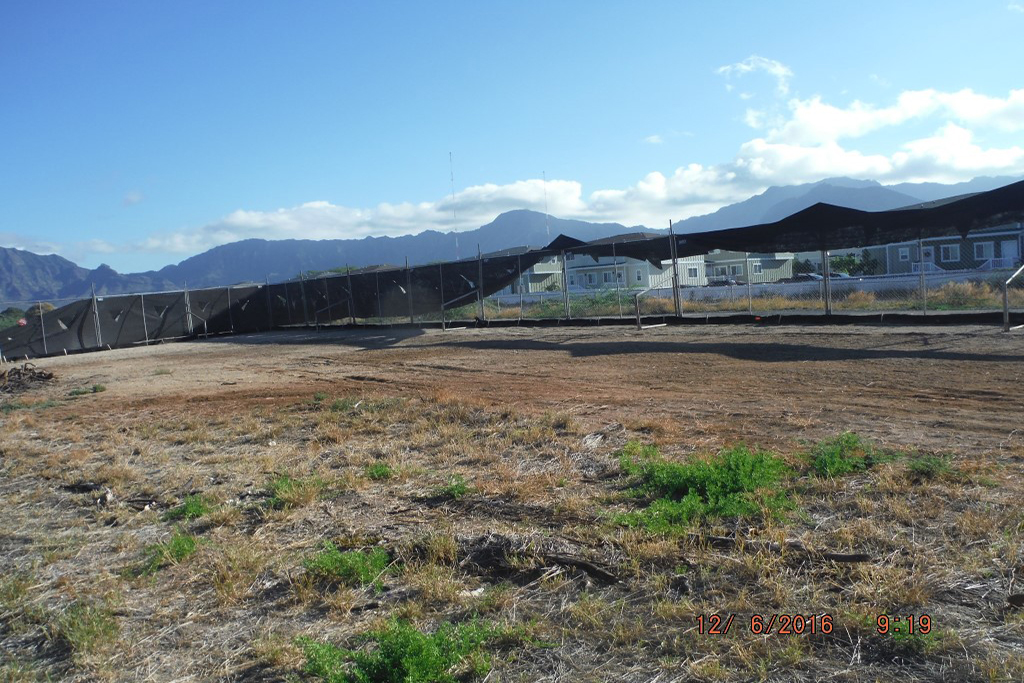
- Maintain dust screens until permanent ground cover has been established.
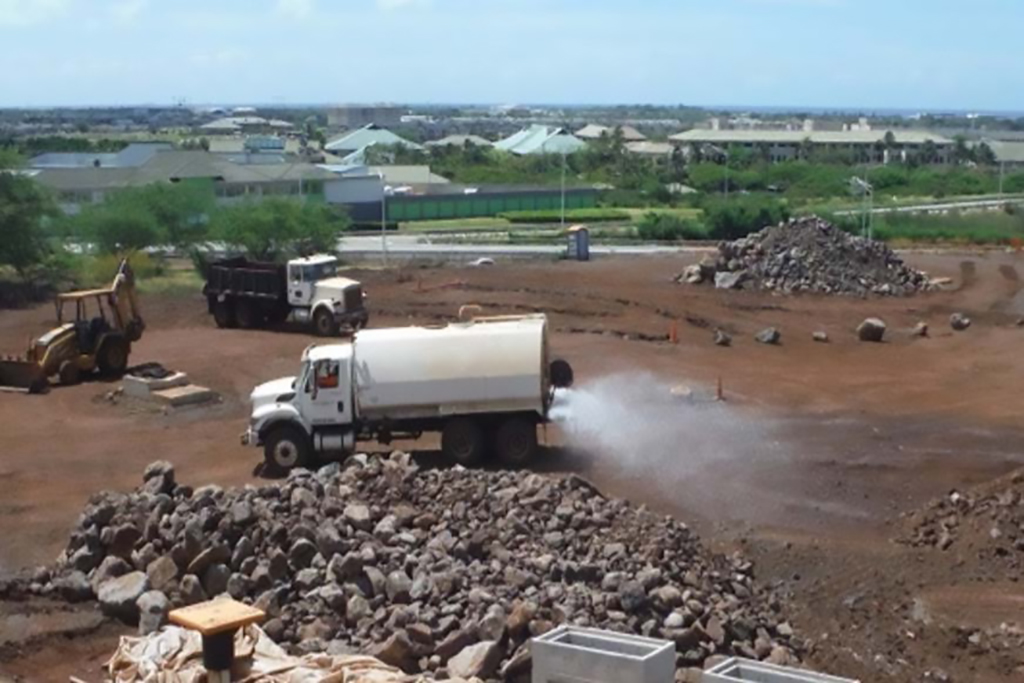
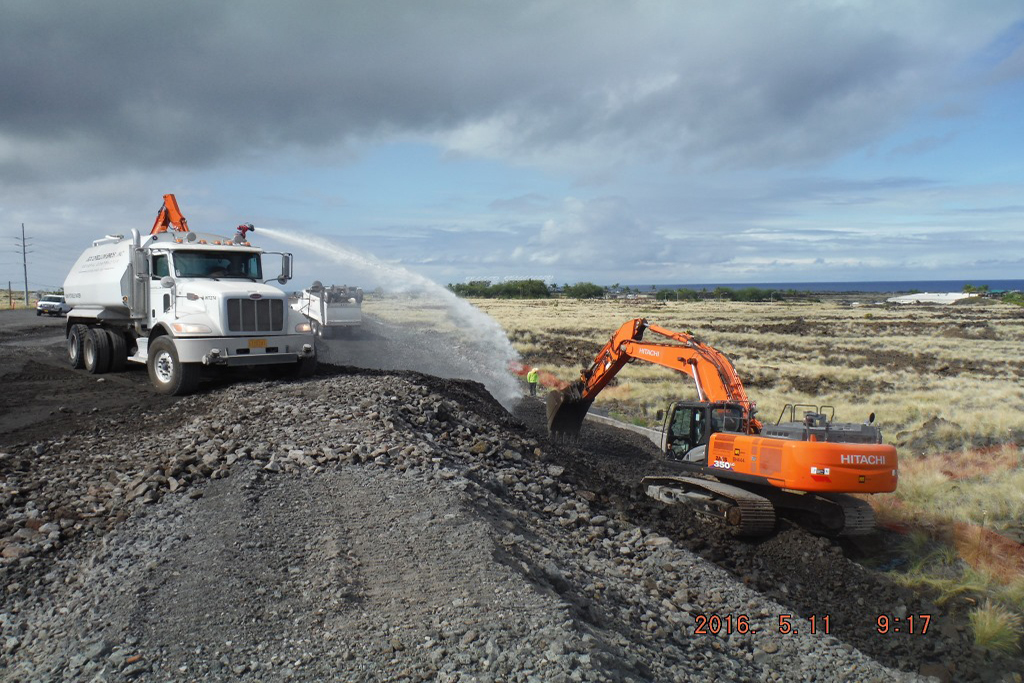
- Use methods to mitigate or eliminate the amount of dust produced, such as spraying water from water truck, using misters, chemical dust controlling agents, or combination thereof; hydromulching, keeping soil moist, and grassing.
- Light spray of water or use of vacuum can minimize dust when drilling, sawcutting, jack hammering or grinding.
- Do not overspray water for dust control purposes, which will result in runoff from the area.
- Prevent water from wetting vehicles, pedestrians, and existing pavements.
- Washing down of debris or dirt into drainage, sewage systems, or state waters is not allowed.
- Chemicals used as soil stabilizers for dust control must be approved by the Engineer before use.
- Large areas and stockpiles can be hydromulched with a tackifier (with or without seed) to prevent wind erosion/dust. See section SM-3 Stockpile Management for more information.
- Geobinders with surfactants may be used to minimize water consumption.
- Cover exposed surface of materials completely with tarpaulin or similar device when transporting aggregate, soil, excavated material or material that may be sources of fugitive dust.
- Utilize vegetation, mulching, sprinkling, and stone/gravel layering to quickly stabilize exposed soil.
- Comply with the 2005 Hawaii Standard Specifications for Road and Bridge Construction, Standard Specifications & Special Provisions Sections 209 and 619, as in effect.
Considerations
- Daily or more frequent applications of water may be necessary since water is a short-term dust preventative.
- Erosion may result from overwatering.
- Oil may not be used for dust control since the oil may discharge into a drainageway or seep into soil.
- Some dust suppression chemicals may cause soil to become water repellent resulting in increased runoff.
What to Inspect
- Is there evidence of off-site runoff?
- Is dust being suppressed during construction activity?
- Are dust screens properly maintained?
- Is dust from the construction site impeding public safety or health?
- Is water being oversprayed?
Maintenance
- Install, repair, or replace BMPs to cover bare ground or redirect off-site runoff.
- Apply water as conditions require.
- Repair water truck leaks immediately.
BMP Examples
Are adequate BMPs installed to prevent the discharge of pollutants from the project site? Hover over each photo for an explanation of the situation presented and if BMPs have been installed properly.