
Description
Practices and procedures to manage the reuse of native topsoil and other selected materials during revegetation activities. Salvaging, stockpiling, and reapplication of native topsoil is integral to successful revegetation efforts, especially for the reestablishment of native vegetation.
Applications
- Reestablishment of areas where vegetation with native plant species is desirable.
- Appropriate for sensitive habitat areas, floodplains, wetlands, and stream banks.
Installation and Implementation Requirements
- Preserve native topsoil where practicable.
- Conduct a site-specific soil survey of the area prior to soil-disturbing activities to assess the location, depth, and amount of soils suitable for salvaging.
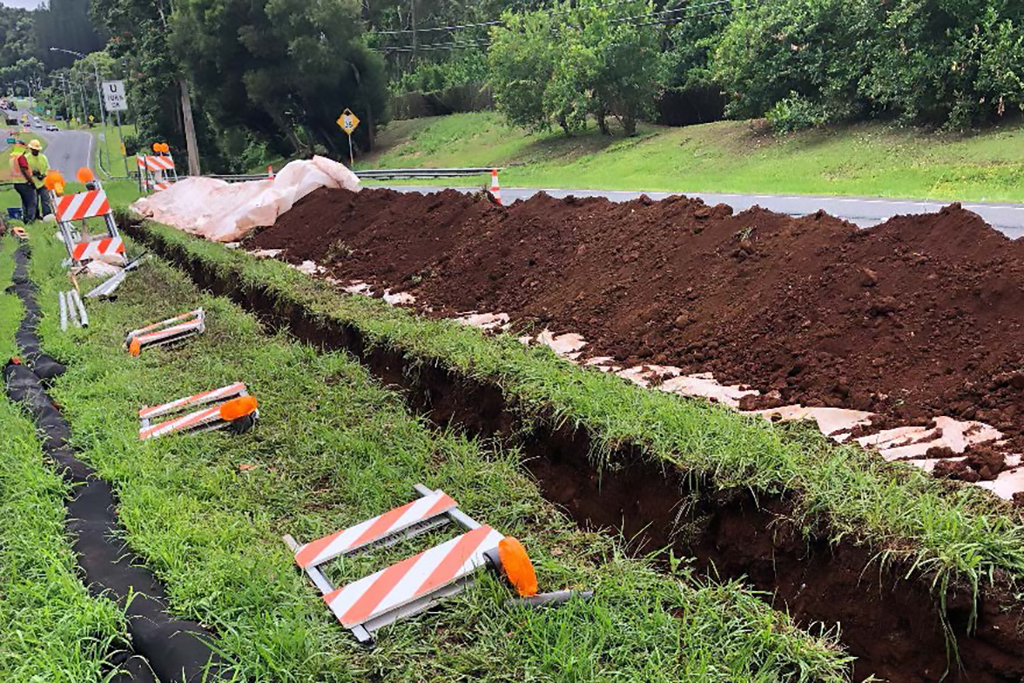
- Salvage and stockpile all suitable topsoil and other material for future use during revegetation of the area. See section SM-3 Stockpile Management for more information.
- Carefully remove shrubs suitable for revegetation and store with the roots covered with mulch or loose soil.
- Apply topsoil or growth medium directly to disturbed areas and seed once construction activity is complete. Water area daily until the area is stabilized. However, avoid over-watering which can create runoff and erosion.
- Restrict vehicle/equipment use in areas where vegetative stabilization will occur to avoid soil compaction.
- Soil replacement depths are determined by factors such as soil depth prior to disturbance, type of vegetation, and physical and/or chemical properties of the material to be covered. A deeper soil layer is required for soils with poor physical and chemical properties. Testing (nutrients, pH, and toxicity factors) of replacement soils and material to be covered shall be completed prior to reapplication.
TOPSOIL MANAGEMENT CONSIDERATIONS
- Quality and amount of native topsoil or growth medium.
- Area of surface disturbance to which topsoil or growth medium will be applied and the required depth of application.
- Methodology for salvaging topsoil or growth medium.
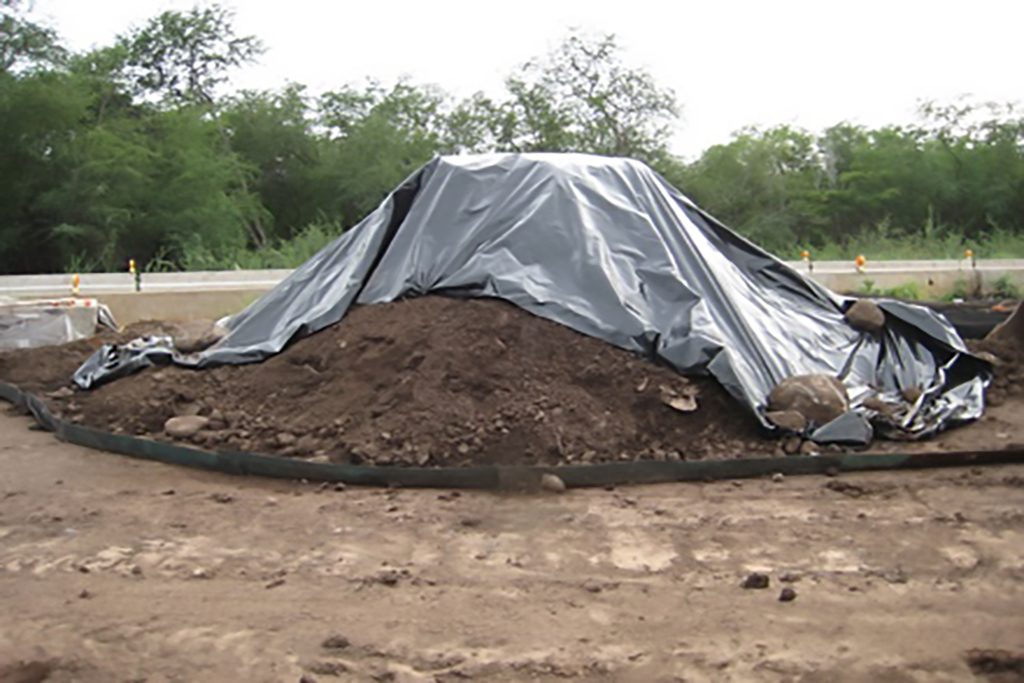
- Stockpile location, duration of storage, and required erosion control measures to protect stockpile.
- Feasibility of direct application of salvaged soils.
- Availability of other growth media to supplement topsoil reclamation.
Considerations
- Stockpiles may limit the area available for construction activity.
- Runoff from stockpiles may adversely impact water quality.
- Topsoil is contaminated prior to the start of construction activity.
- Avoid placement of topsoil prior to expected rain events.
What to Inspect
- Is topsoil effectively stockpiled?
- Are BMPs maintained to effectively prevent contact with storm water?
- Is dust originating from stockpiles?
Maintenance
- Adequately water plantings until they are established.
- Replace/repair damaged stockpile cover, as needed.
- Ensure that the plastic cover is in contact with the ground around the entire pile and properly anchored.
- Replace/repair damaged temporary perimeter sediment barrier.
- After the stockpile has been removed, revegetate the disturbed area, if applicable. Reapply temporary stabilization (i.e., hydromulch, tackifier, etc.), if needed.
BMP Examples
Are adequate BMPs installed to prevent the discharge of pollutants from the project site? Hover over each photo for an explanation of the situation presented and if BMPs have been installed properly.