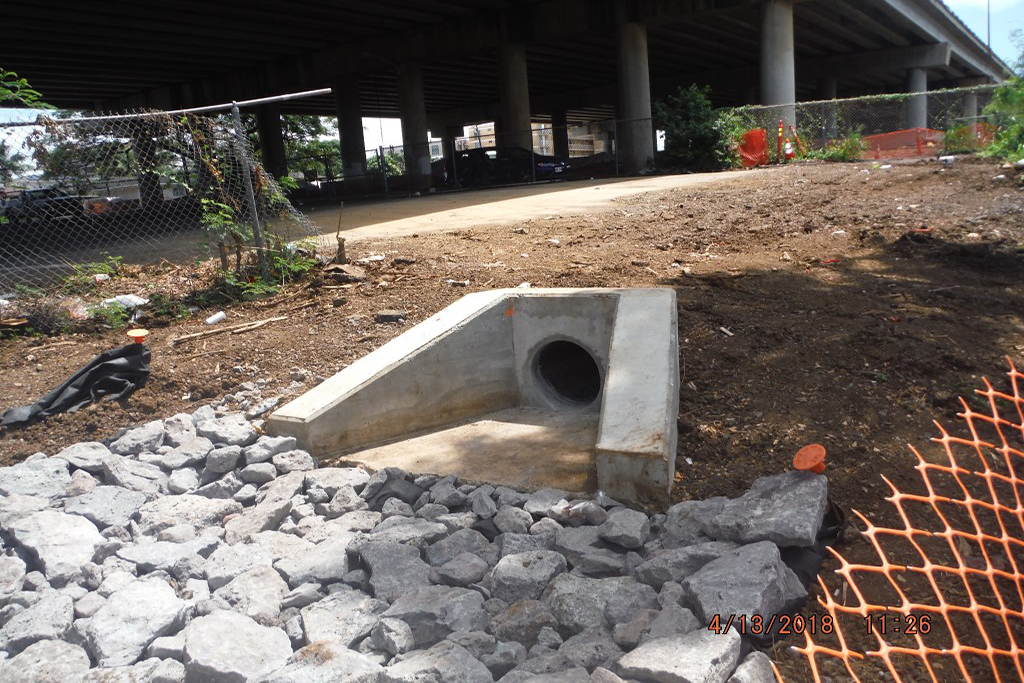

Description
Devices placed at outlets of pipes and channels to prevent or minimize scouring and erosion by reducing the velocity of storm water flow.
Applications
- Outlets with continuous flows.
- Outlets located at the bottom of slopes.
- Outlets subject to short, intense flows.
- Discharge points from lined conveyances to unlined conveyances.
- Inflow protection.
- Outlet protection that diverts runoff to a natural or manmade drainage element.
- In-stream/channel designed to prevent banks from erosion.
Installation and Implementation Requirements
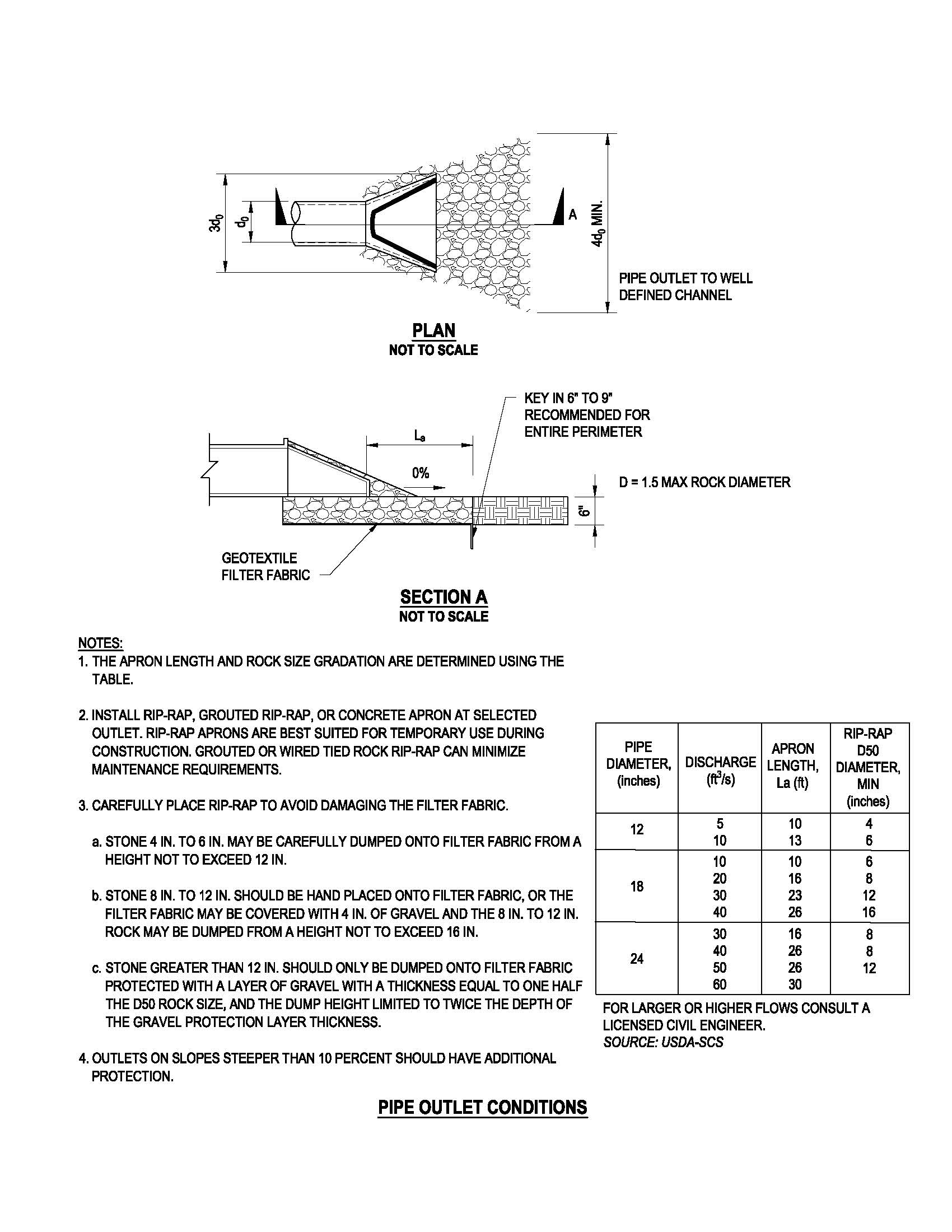
- Apron length shall be determined by outlet flow rate and tailwater level.
- Align apron with direction of flow and avoid curves in apron. If a curve is necessary, place it in the upper section of the apron.
- Protect the underlying geotextile filter fabric with a 4-inch minimum rock blanket if the rip-rap is 12 inches or larger.
- Increase rock size to counteract high flow velocities.
- Place geotextile filter fabric between aggregate and the underlying soil to prevent soil movement.
- Outlets on slopes steeper than 10% must have additional protection.
- Place and extend rip-rap downstream until stable conditions are met.
Considerations
- Potential for stones to wash away during high velocity flows.
- Break up of grouted rip-rap can result from hydrostatic pressure caused by water accumulation.
- It is difficult to repair underlying geotextile filter fabric without removing rip-rap.
- Larger stones are prone to damaging the geotextile filter fabric during installation when installing with a machine and may require installing by hand.
What to Inspect
- Is there scour evident beneath the rip-rap and around the outlet?
- Is accumulated sediment wedged in-between rip-rap?
- Can illicit discharge be found in the outlet?
- Is the proper size rock being used?
- Is there damage to underlying geotextile filter fabric?
Maintenance
- Immediately repair damaged slopes or underlying geotextile filter fabric with priorities based on highway safety and protection of Class AA and Class 1 waters, followed by erosion potential and possible damage to downslope areas.
- Replace displaced rip-rap.
- Remove accumulated sediment in aggregate.
BMP Examples
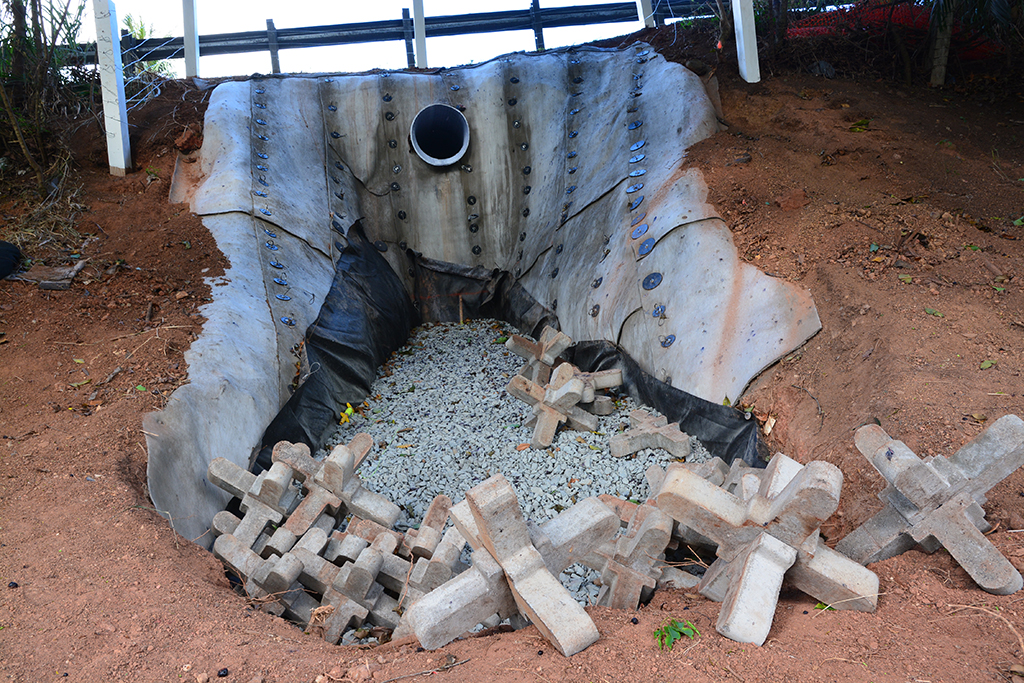
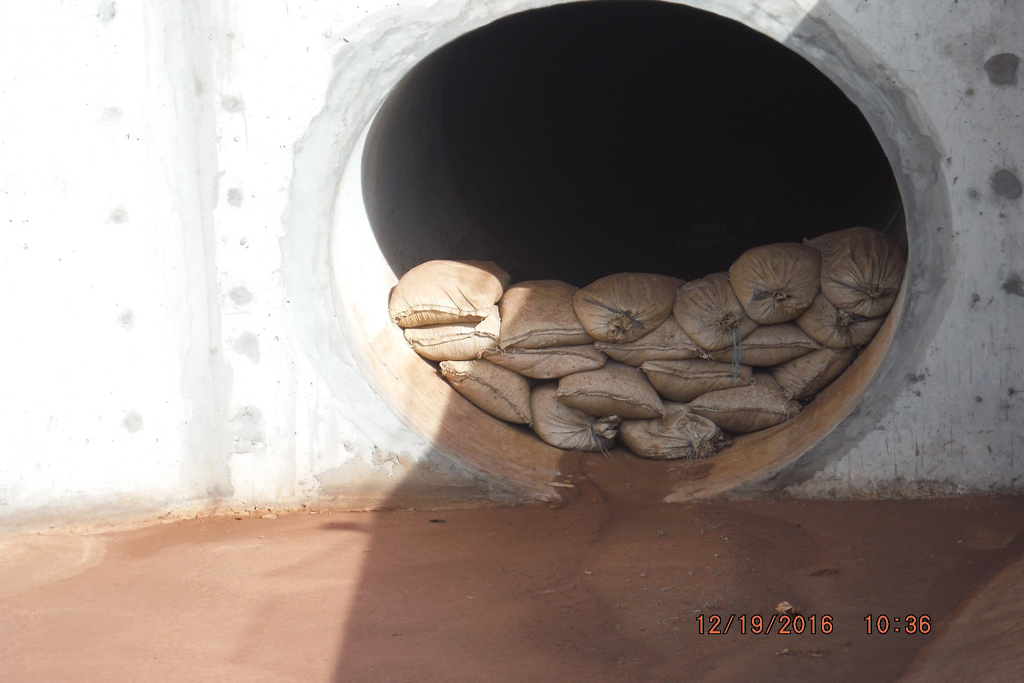
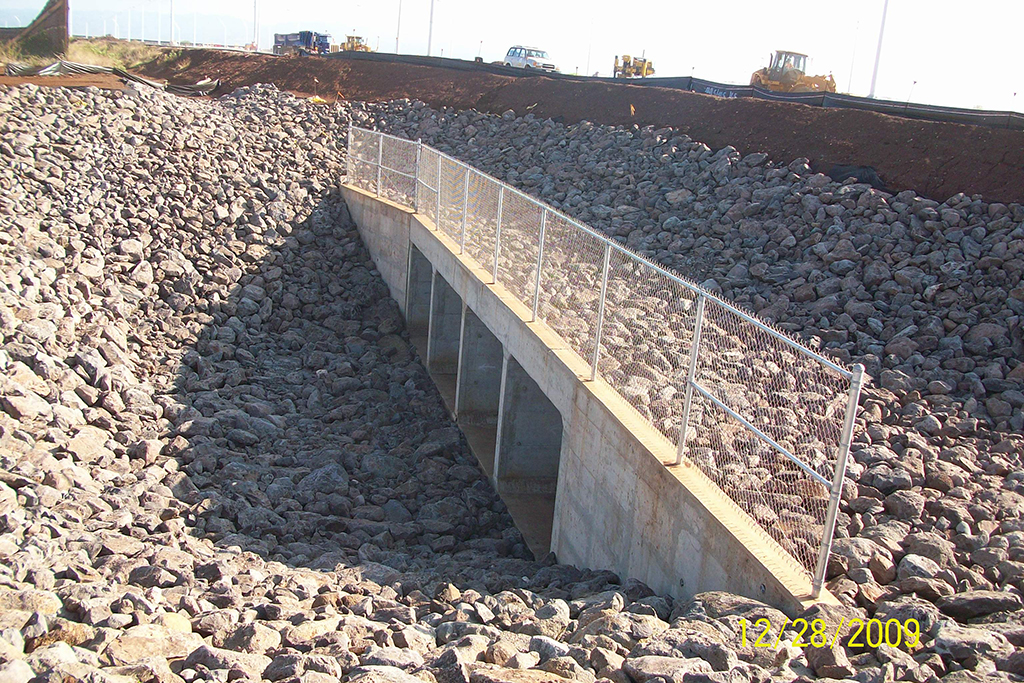
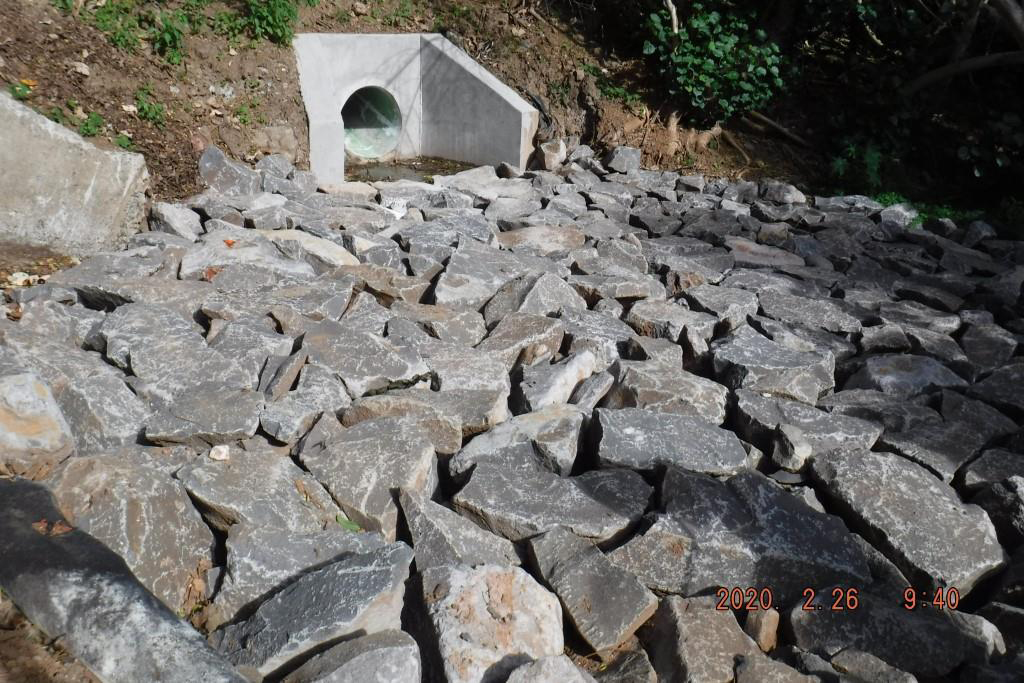
Are adequate BMPs installed to prevent the discharge of pollutants from the project site? Hover over each photo for an explanation of the situation presented and if BMPs have been installed properly.