
Description
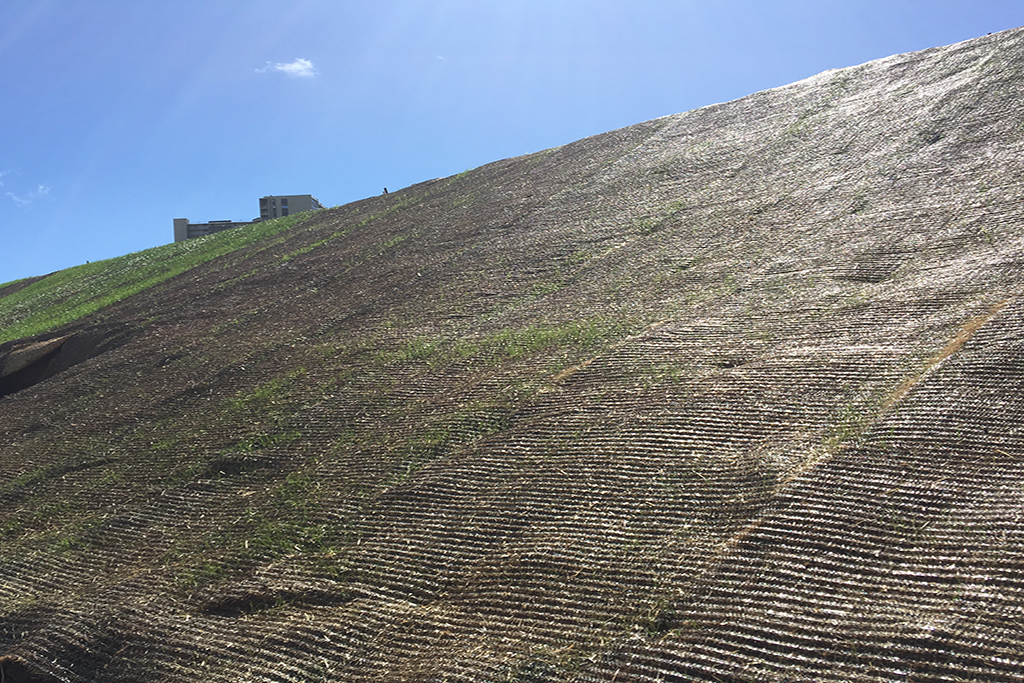
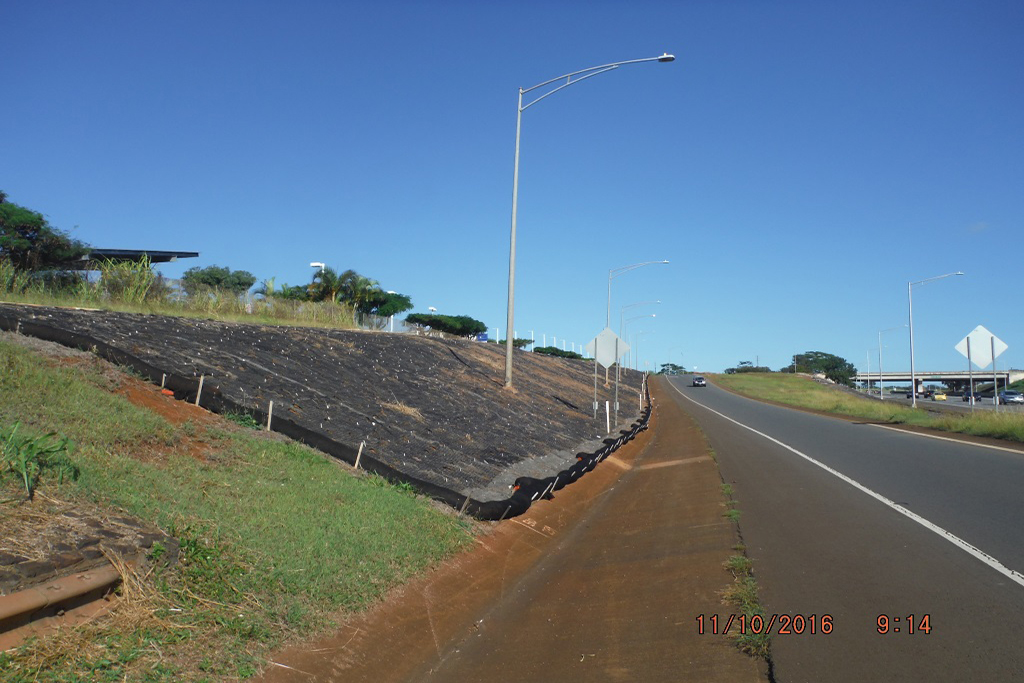
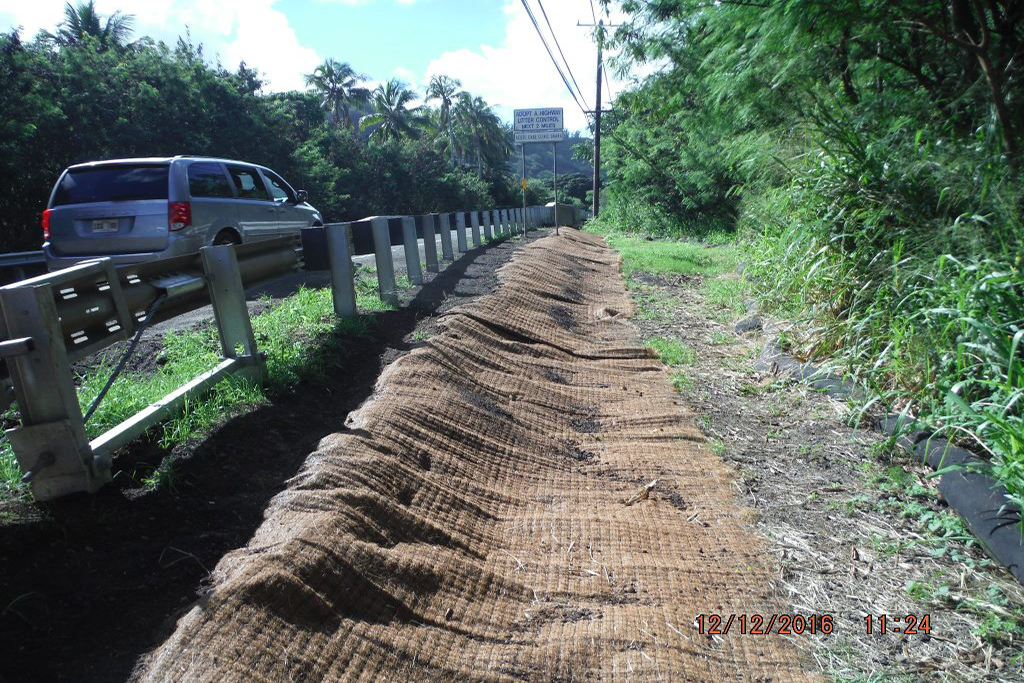
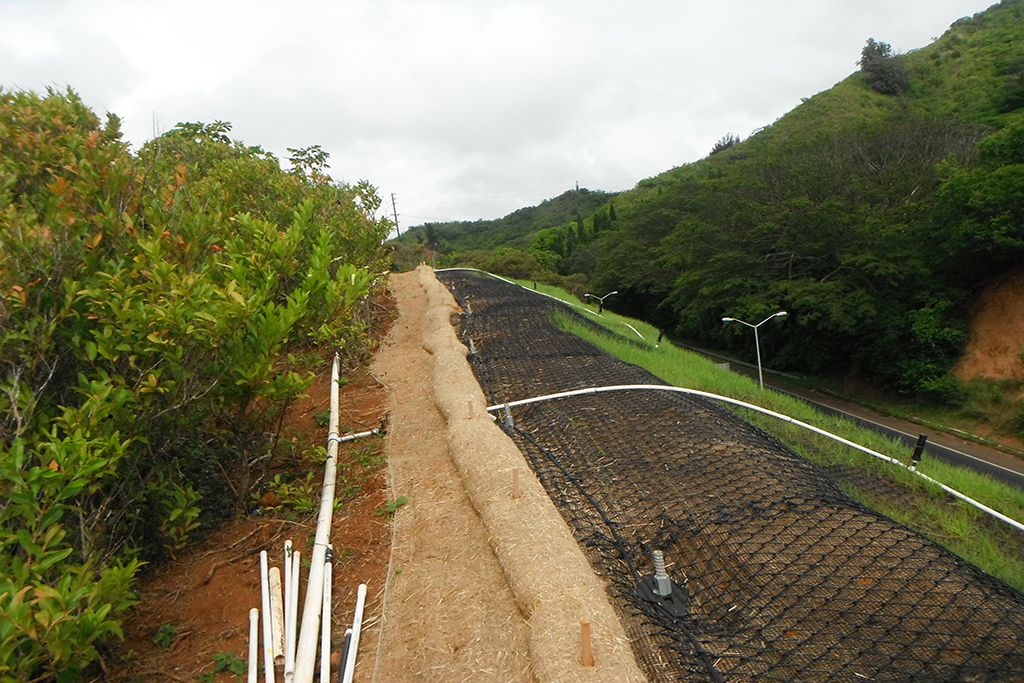
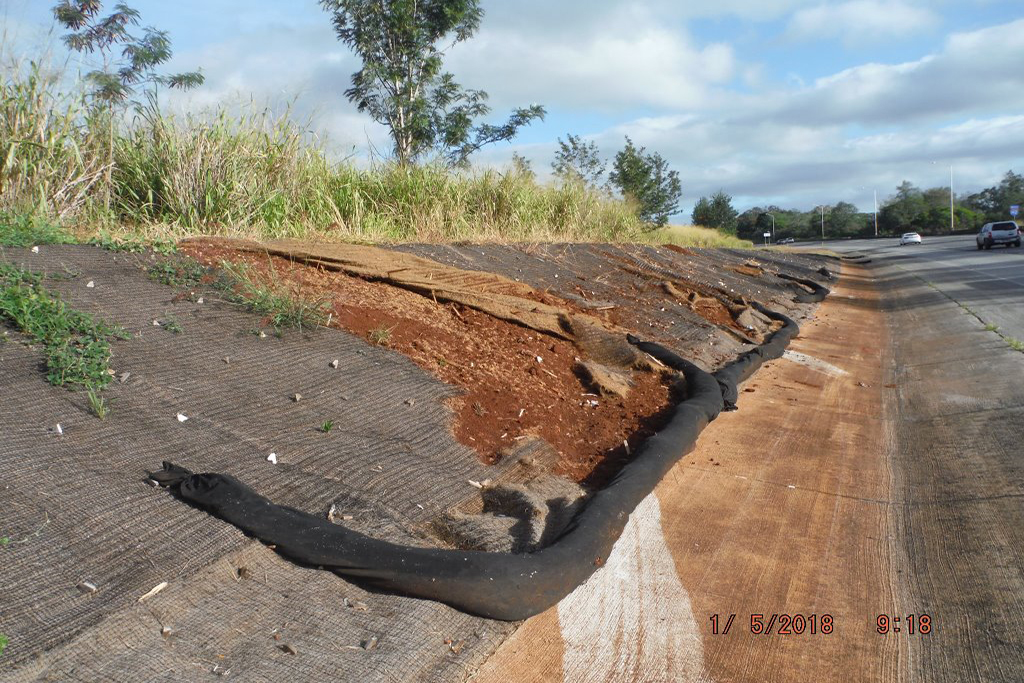
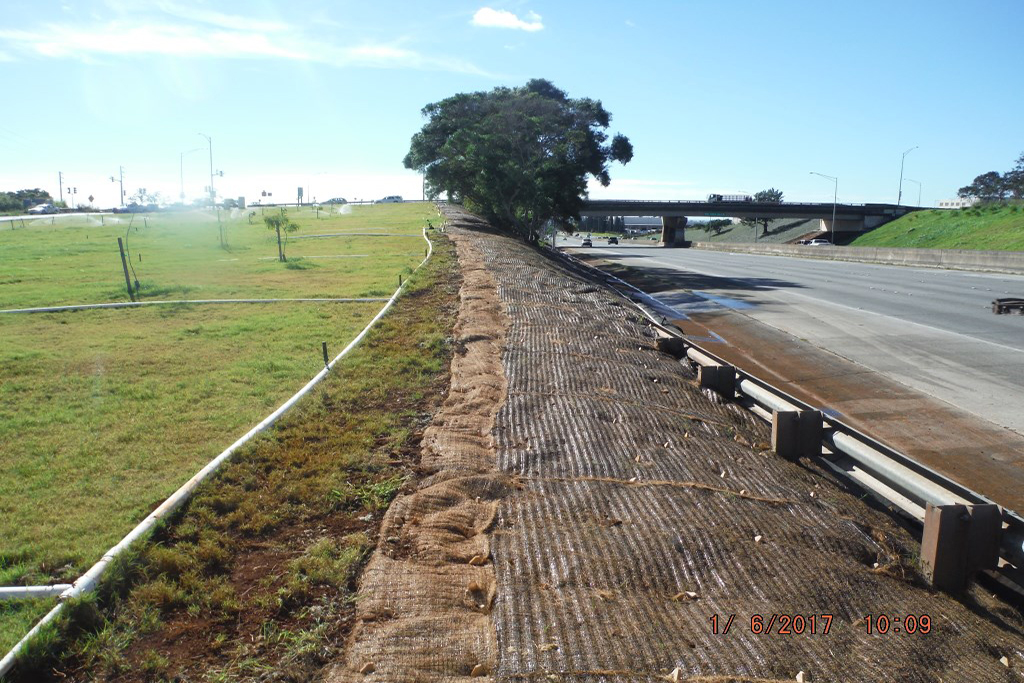
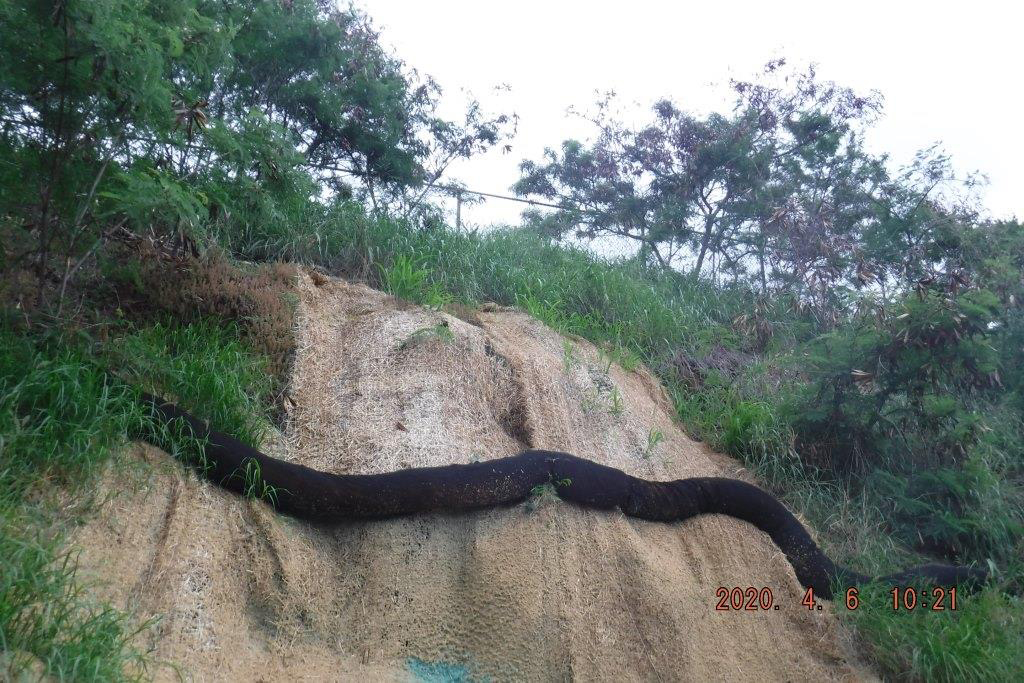
Natural or synthetic mats are roll-type materials used for temporary or permanent soil stabilization and protection from rain/wind erosion.
Applications
- Stabilize drainage ditches, channels, and stream banks.
- Stabilize steep slopes with high potential for erosion.
- Stabilize slope until vegetation is established.
- Hold water near surface to assist in vegetation growth.
- Protect stockpiles from wind erosion.
- Suppress weed growth.
- Provide temporary cover for bare areas that are idle.
Installation and Implementation Requirements
- Apply matting to disturbed soils and areas where vegetation has been removed.
- Install matting immediately after the area is seeded and fertilized.
- Minimize disturbance of slopes greater than 15% in grade.
- Phase disturbances and use stabilization techniques designed for steep grades if disturbance of steep slopes is unavoidable.
- Grade and shape disturbed slopes prior to installing geotextiles and/or erosion control matting.
- Prepare area by removing rocks, vegetation and other obstructions that will inhibit direct contact with soil.
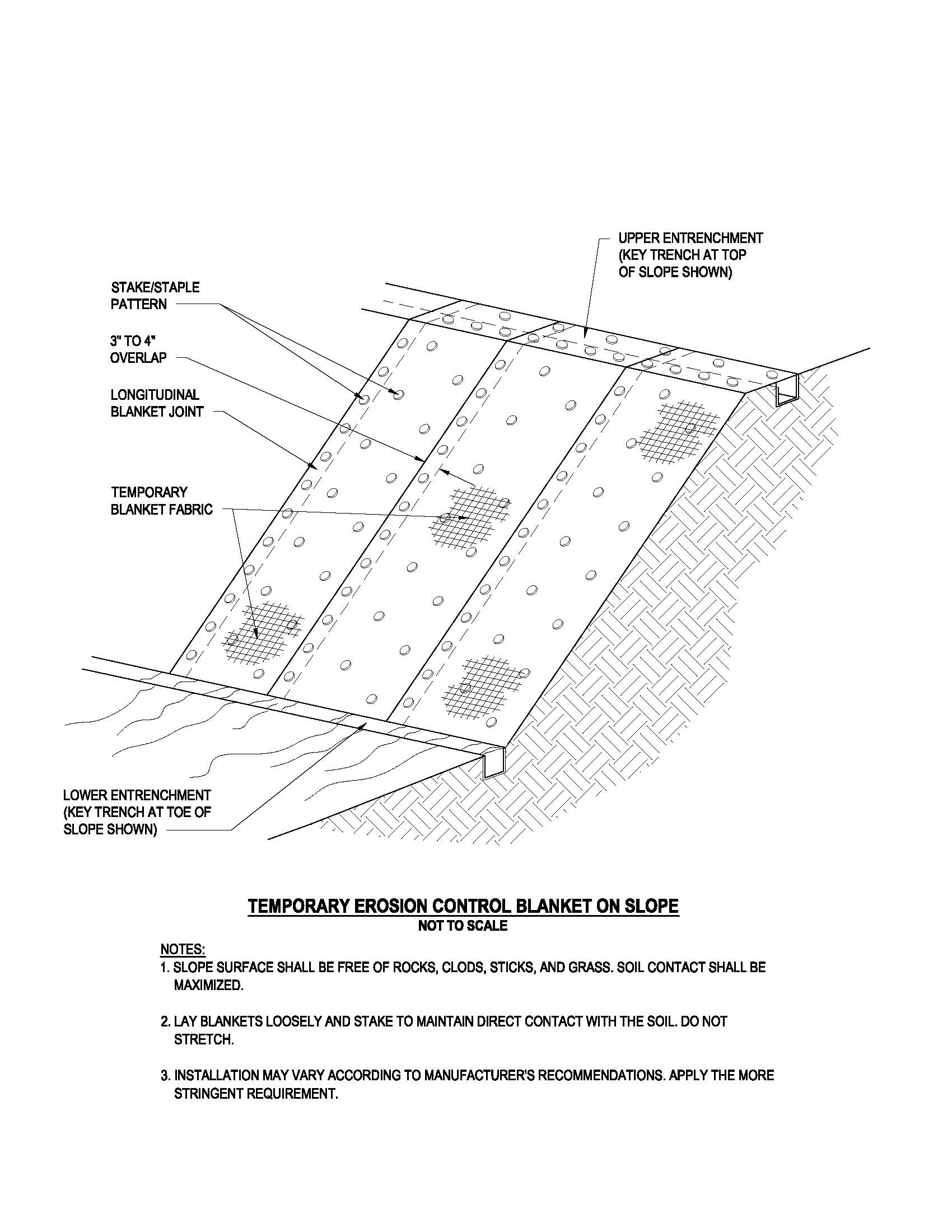
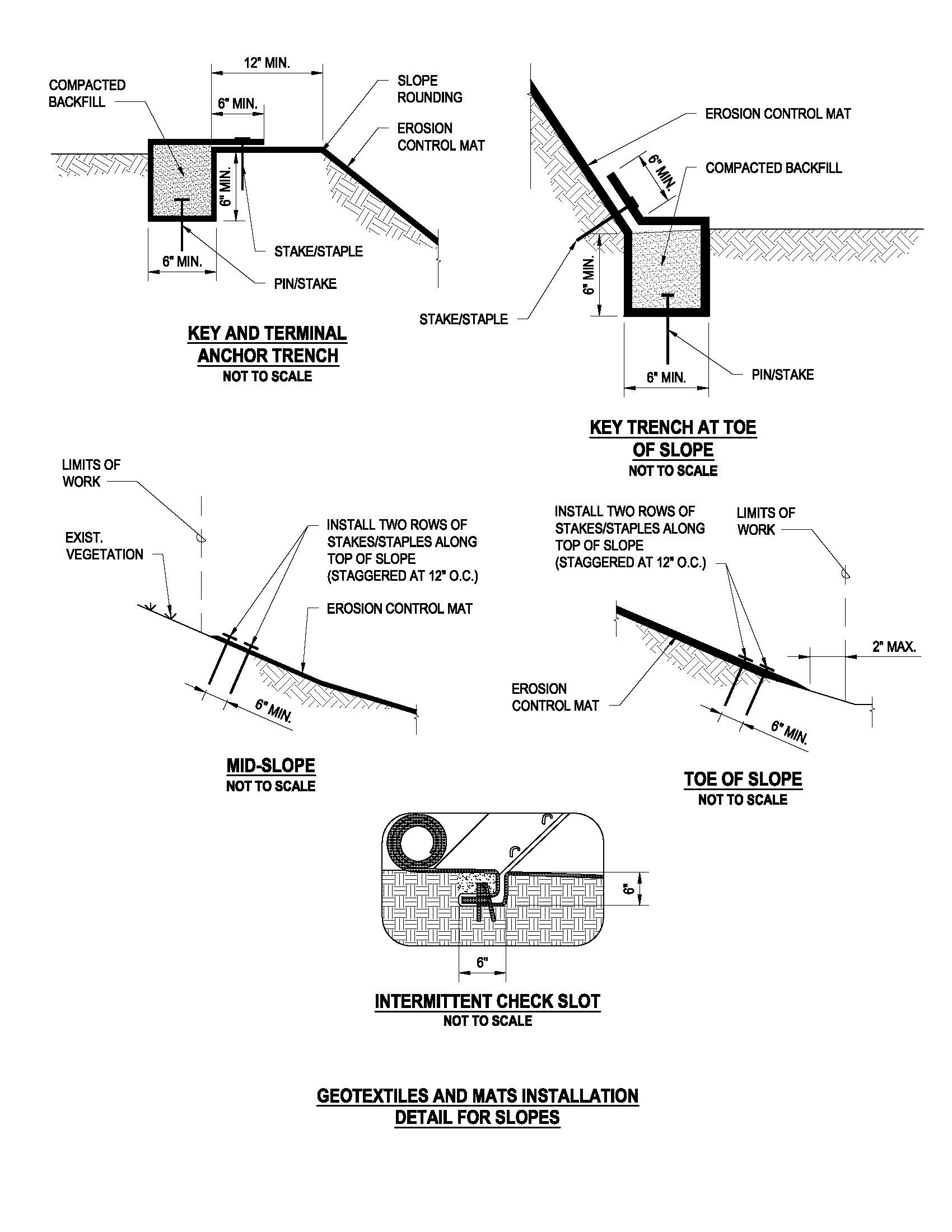
- Entrench or anchor material at the top and bottom of the slope in a 6-inch × 6-inch trench or per manufacturer’s specifications, whichever is more stringent. The trench should be placed a minimum of 12 inches from the top of the slope.
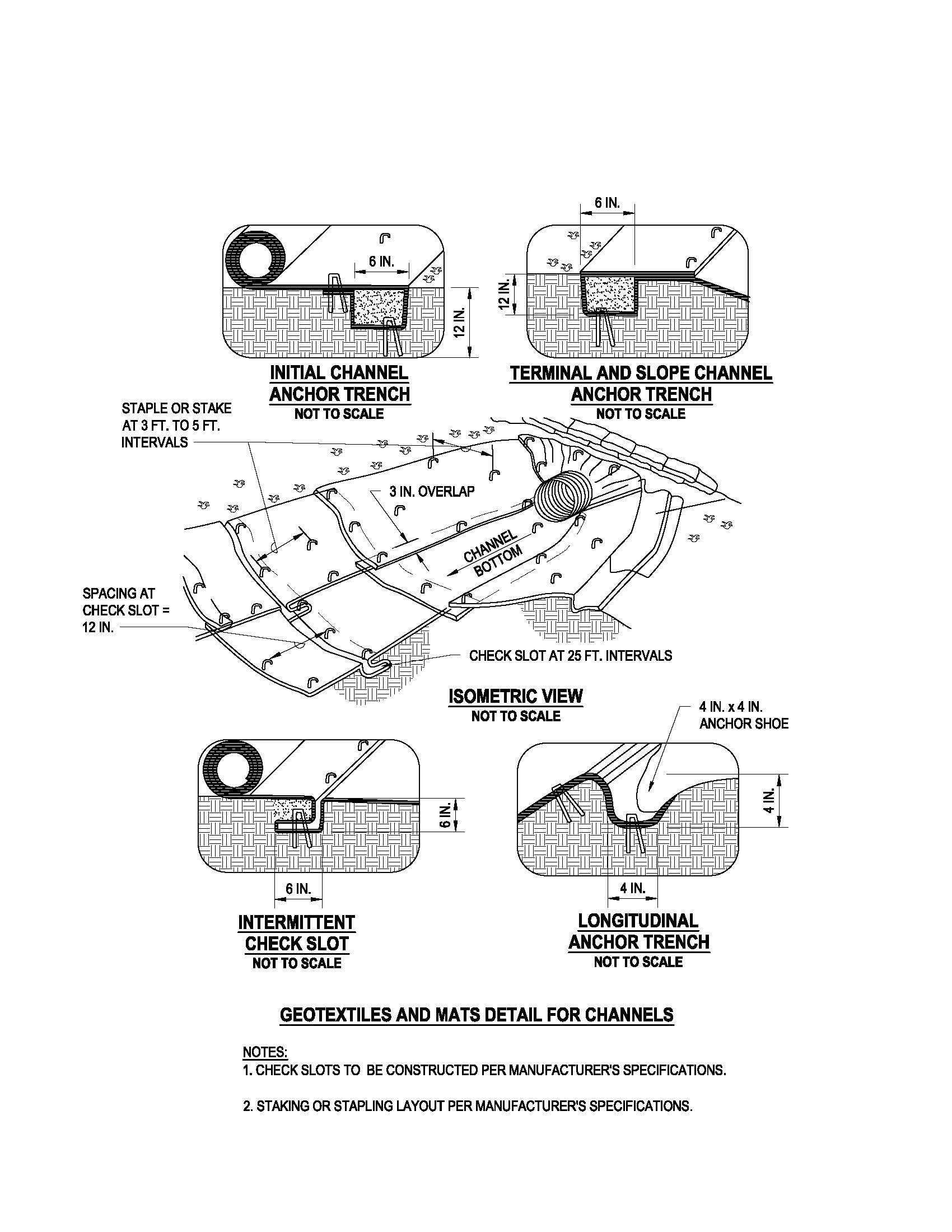
- Intermittent check slots can also be installed for large or long lengths of matted areas to increase stability of the area.
- Do not stretch matting. Maximize mat contact with soil by loosely laying blankets and securing to slope with stakes.
- Ensure matting maintains direct contact with soil to prevent rills, gullies, and undermining.
- Follow manufacturer’s specifications on overlapping and stake spacing requirements. Steep slopes may require additional staking requirements.
- If geotextile matting is to be installed on steep slopes greater than 15%, space stakes every 2 feet.
- Organic matting provides temporary protection until permanent vegetation has been established or construction activities recommence. Organic matting materials include the following:
- Jute matting
- Straw matting
- Synthetic matting provides temporary or post-construction soil stabilization in both vegetated and non-vegetated areas. Synthetic matting materials include the following:
- Excelsior™ matting
- Glass fiber matting
- Stakes
- Mulch netting
- Plastic sheeting/covering
- Key in temporary plastic sheeting at top of slope and weigh down by gravel bags no more than 6 feet apart.
- Install erosion control measures or devices at the top and toe of the slope to filter sediment-laden runoff and decrease storm water velocity.
- Other proprietary devices may be used and shall be installed per manufacturer’s recommendations.
- The contractor shall immediately initiate soil stabilization measures when earth-disturbing construction activities on exposed areas have been completed or will be temporarily inactive for 14 or more calendar days.
Considerations
- Minimize use of matting to areas where other erosion control measures are not applicable such as channels or steep slopes since matting is costly compared to other erosion control measures.
- Seed germination may be delayed due to decreased soil temperature.
- Extensive soil preparation is needed before installation for adequate contact with slope.
- Mats made of natural material have a limited life and low shear strength.
- High material cost and extensive manpower needed.
- Generally, the slope needs to be smooth and free of large rocks.
- Plastic sheeting results in 100% runoff and is easily torn/damaged.
What to Inspect
- Is there evidence of undercutting at the top of slope?
- Is the slope eroding beneath the blanket?
- Are blankets firmly anchored and trenched in at top and bottom of slope?
- Are blanket segments properly overlapped?
- Are stakes properly spaced and driven into the soil to prevent the blanket from lifting away from soil?
- Is matting free from any defects or tears?
- Are there areas not adequately growing vegetation?
Maintenance
- Repair undermining or erosion.
- Repair/replace damaged blankets.
- Replace stakes and sandbags as needed.
- Reseed and fertilize areas not adequately growing vegetation.
BMP Examples
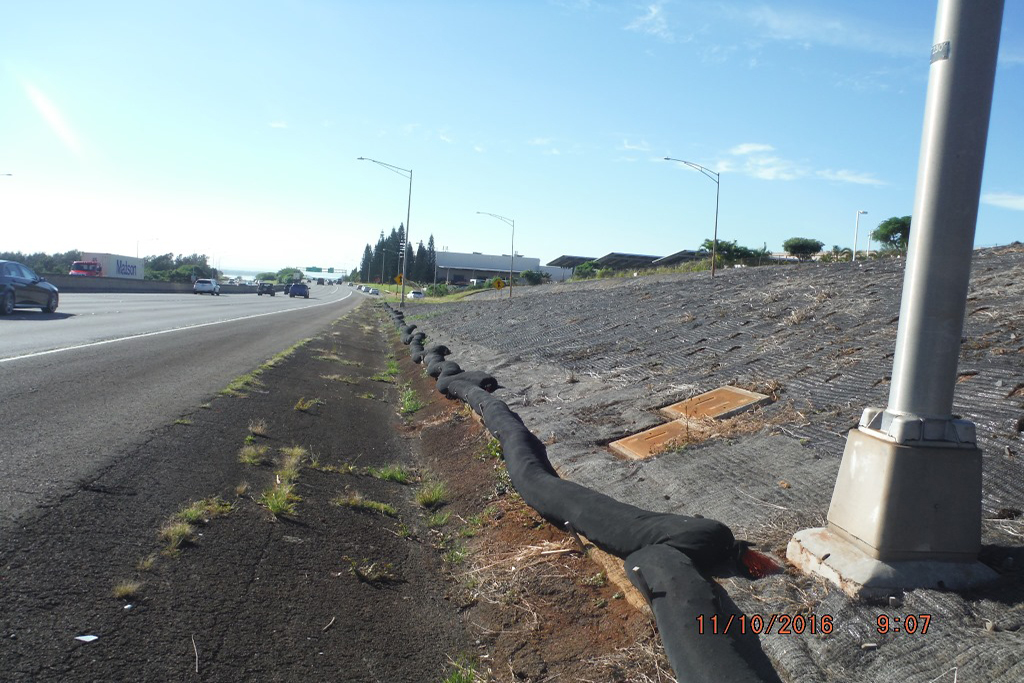
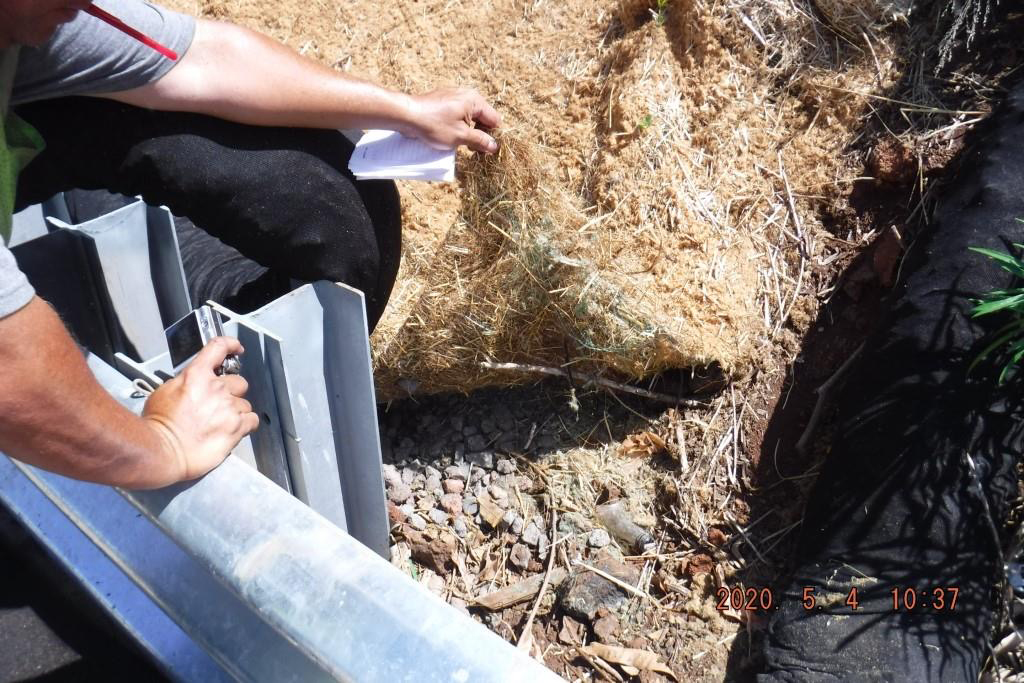
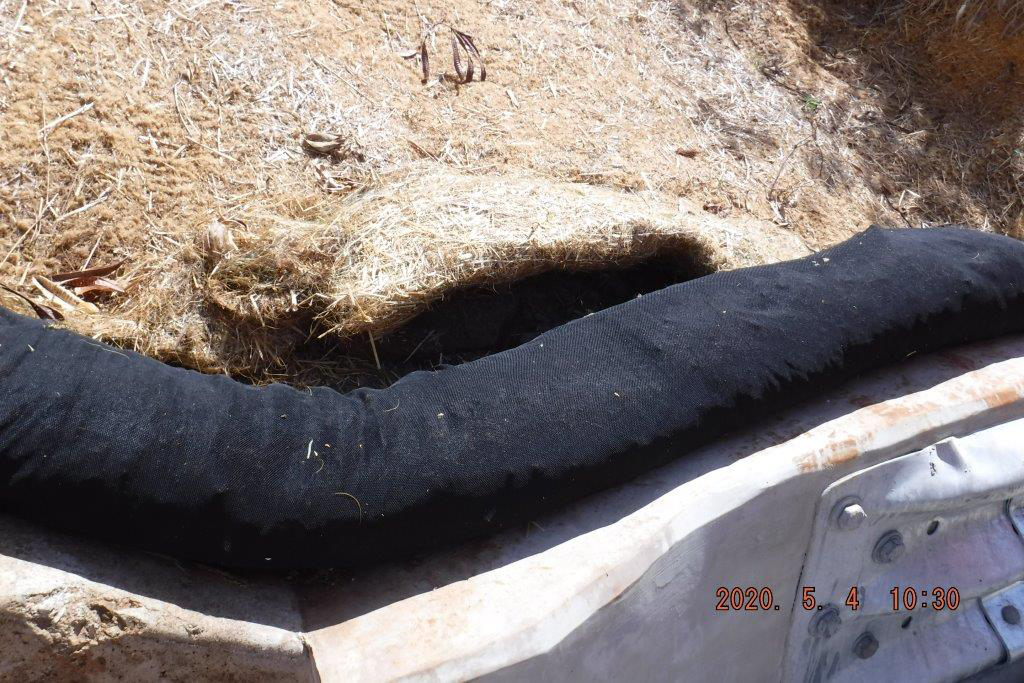
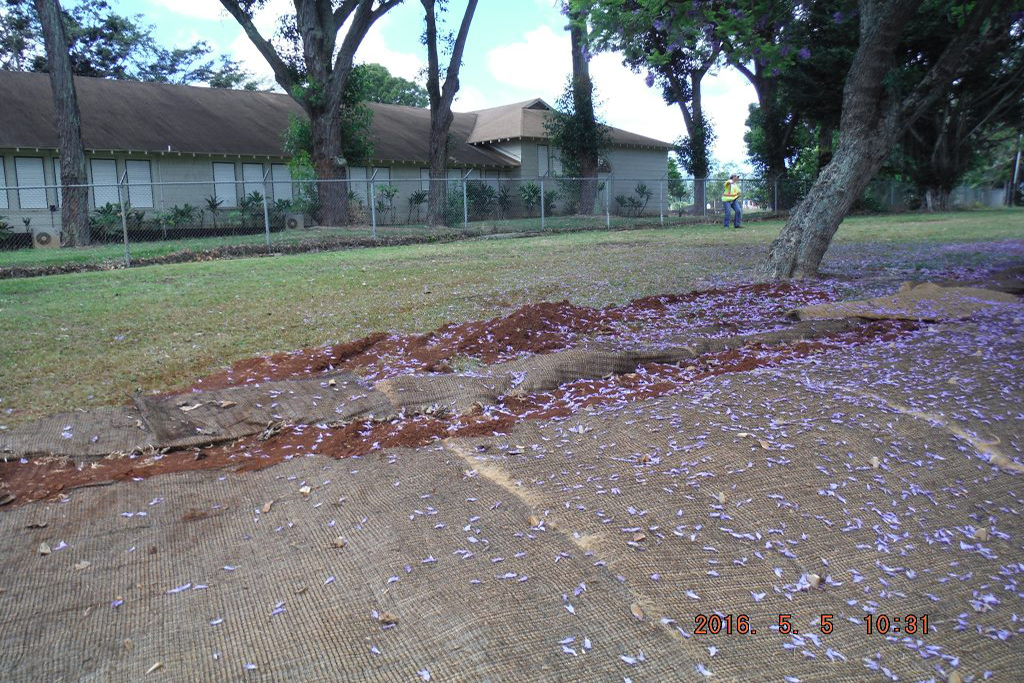
Are adequate BMPs installed to prevent the discharge of pollutants from the project site? Hover over each photo for an explanation of the situation presented and if BMPs have been installed properly.