
Description
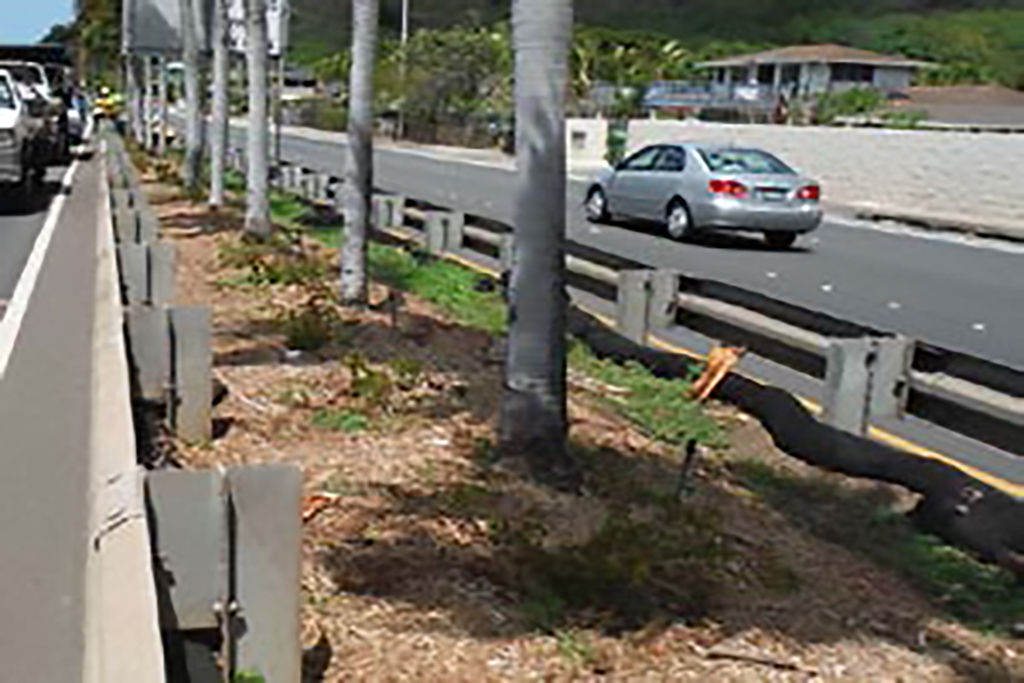
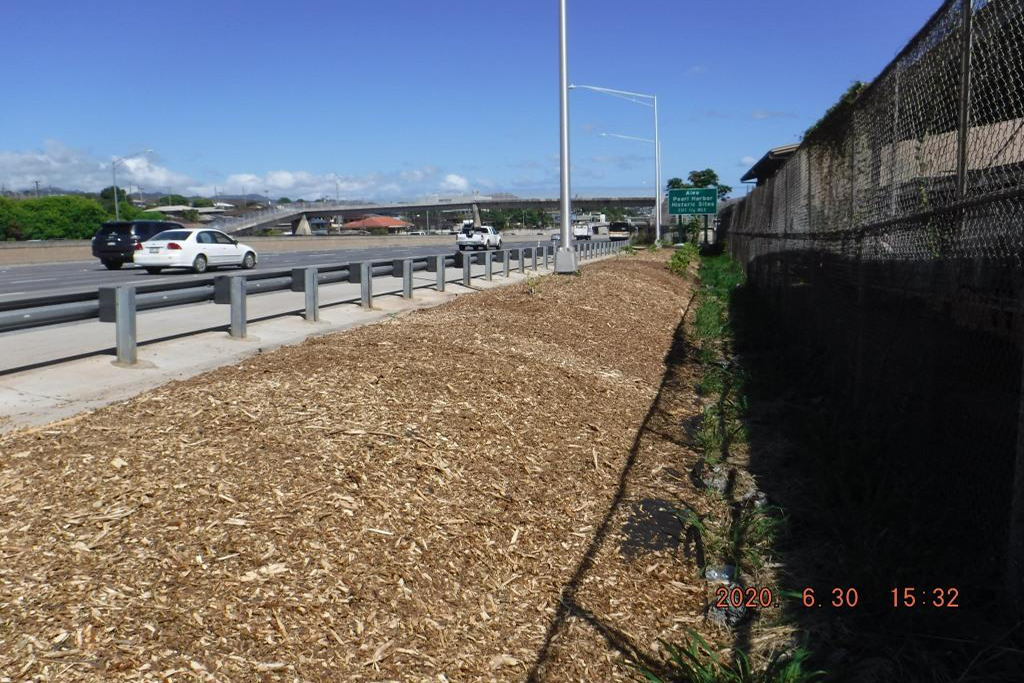
Application of loose bulk material to stabilize disturbed soil by protecting bare soil, increasing infiltration, and reducing runoff. Materials suitable for mulching include green material, vegetable fibers (hay or straw), and wood/bark chips.
Applications
- Temporary ground cover until permanent vegetation has been established.
- Method may be used in combination with temporary or permanent seeding to enhance plant growth.
- Areas requiring soil moisture retention to prevent cracking of the soil.
- Ground cover for exposed soil between trees or shrubs.
- Mulch should be used in conjunction with other BMPs for optimal erosion control, especially on slopes.
Installation and Implementation Requirements
VEGETABLE FIBERS (HAY OR STRAW)
- Loose hay or straw which may be used in combination with seeding. Mulching usually follows seeding and the process is described in the following:
- Apply seed and fertilizer to bare soil.
- Apply loose hay or straw over top of seed and fertilizer prior to seed germination. Apply at a rate of 2,000 pounds per acre by machine or hand distribution.
- Evenly distribute mulch on the soil surface to cover 80% to 90% of the ground.
- Maintain maximum fiber length. Average fiber length shall be greater than 6 inches.
- Use a tackifier, netting, or mechanical “punching” method to anchor mulch. “Punching” refers to the act of crimping or compressing to anchor to the ground. Methods depends on slope steepness, accessibility, soil conditions, and longevity.
- Punching straw or hay to anchor the mulch to the ground is the preferred method of anchoring mulch for the following conditions:
- Use a spade or shovel on small areas.
- Use a knife-blade roller or straight bladed
coulter (“crimper”) on slopes with soil, which can support construction equipment without undesirable compaction or instability. - Use plastic netting or jute on small areas and/or steep slopes. Geotextile pins, wooden stakes, or 11-gauge wire staples shall secure netting in place. This condition warrants consideration of the use of matting rather than mulch.
- Use tackifiers on steep slopes unable to support construction equipment or large application areas where use of nettings, straw, or hay is not cost-effective. Tackifiers glue vegetable fibers together and to the soil surface until the establishment of permanent vegetation.
GREEN MATERIAL
- Consists of recycled vegetation trimming such as grass and shredded shrubs and trees.
- Generally applied manually.
- Temporary ground cover with or without seedings.
- Evenly distribute green material on soil surface. Depth shall not exceed 4 inches.
- Anchor with a tackifier or netting on steep slopes or for areas with anticipated overland sheet flow. The condition warrants consideration of the use of matting rather than mulch.
WOOD/BARK CHIPS
- Suitable for areas which will not be mowed such as around trees, shrubs, and landscape plantings.
- Test soils prior to application. Add a minimum of 12 pounds of nitrogen per ton of mulch to counteract the effect of decomposing wood-based materials, which extract nitrogen from soil. Use a balanced, slow-release fertilizer or an organic source such as compost.
- Apply mulch manually.
- Evenly distribute wood/bark chips on soil surface and maintain a 2-inch mulch depth to tree basins and a 4-inch mulch depth to shrub beds.
Considerations
VEGETABLE FIBERS (HAY OR STRAW)
- Requires 3-step machinery.
- Labor intensive installation.
- For applications using straw blowers, the applicable area must be located within 150 feet of a road or surface capable of supporting loads from large vehicles. Use of straw is preferred, in lieu of hay, if available.
- Avoid applying fibers prior to an anticipated rain event.
GREEN MATERIAL
- Limited commercial availability.
- Variable quality.
- Application primarily uses manual labor.
- Unpredictable effectiveness as an erosion control measure. Requires overspray with a tackifying agent to increase effectiveness.
- Application of fertilizer may be required.
- Limit use to non-critical steep slopes and areas where alternative erosion control measures may be readily applied. A critical slope surface exists when a combination of soil and slope factors create a high potential for slope face failure and subsequent erosion, such as a slope greater than 2:1 (H:V) on freshly graded or disturbed slopes. Refer to Slope Face Stabilization for Critical Slope Surfaces at website – www.ccriindia.org/pdf/Object335PDFEnglish.pdf for more information on critical slopes.
WOOD/BARK CHIPS
- Poor erosion control effectiveness.
- Anchoring of chips onto sleep slopes is difficult due to potential movement from high winds.
- Subject to displacement from concentrated flows.
- Use of fertilizer with a high nitrogen content is required. This is to prevent nutrient deficiency in plants due to the decomposing wood-based materials, which extract nitrogen from soil. Improper fertilizer use may contribute to water quality pollution.
- Limit use to non-critical steep slopes and areas where alternative erosion control measures may be readily applied.
What to Inspect
- Is mulch applied to areas which will be regraded and/or revegetated?
- Is there uniform coverage of mulch?
- Was the application rate sufficient for the area?
- Is there evidence of rills or gullies?
Maintenance
- Mulches applied to seeded areas may be disturbed due to wind or runoff. Recover exposed areas until permanent vegetation has been established.
- Replace ornamental and landscape mulches of bark or wood chips if soil is visible in more than 75% of the designated area.
- If erosion has occurred, additional mulch may be required.
BMP Examples
Are adequate BMPs installed to prevent the discharge of pollutants from the project site? Hover over each photo for an explanation of the situation presented and if BMPs have been installed properly.