
Description
Practices and procedures to manage concrete/cementitious products, washout, and waste to prevent discharges to the ground, the drainage system, or adjacent waterbodies.
Applications
- Projects involving the use of concrete/cementitious products as construction materials.
- Demolition activities generating dust and debris.
- On-site wash areas used for concrete-coated vehicles or equipment.
- Activities such as sawcutting and grinding which result in the formation of slurries containing Portland cement.
- Activities generating fines from sawcutting, grinding, and demolition.
Commonly Used Cementitious Products |
|
Installation and Implementation Requirements
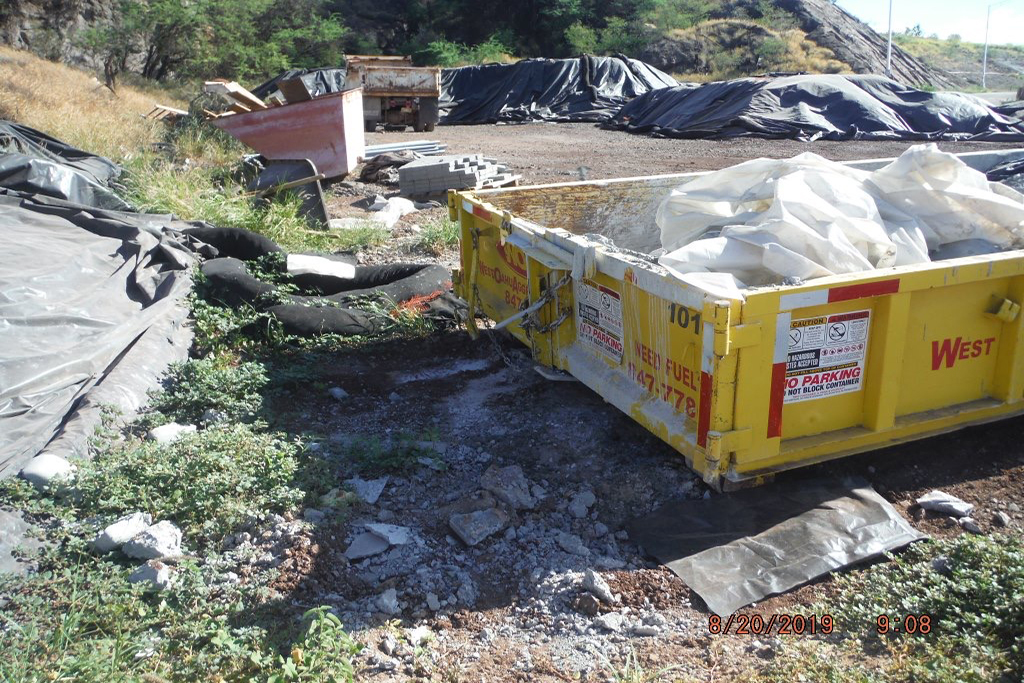
- Properly store cement-based materials under cover to prevent contact with storm water. The materials can be classified as waste if improperly stored.
- Designate areas for concrete waste and washout a minimum of 50 feet away, if practicable, from storm drain inlets, open drainage facilities, and waterbodies. If impracticable, per Hawaii Administrative Rules (HAR) Title 11, Chapter 55, Appendix C, 5.1.2.1.1.2, other measures, such as double sediment control (e.g., double perimeter control), must be employed to prevent wash water/waste concrete from reaching the storm drain inlets, open drainage facilities, and waterbodies.
- Avoid mixing excess concrete, if possible. Discard excess concrete in the designated area.
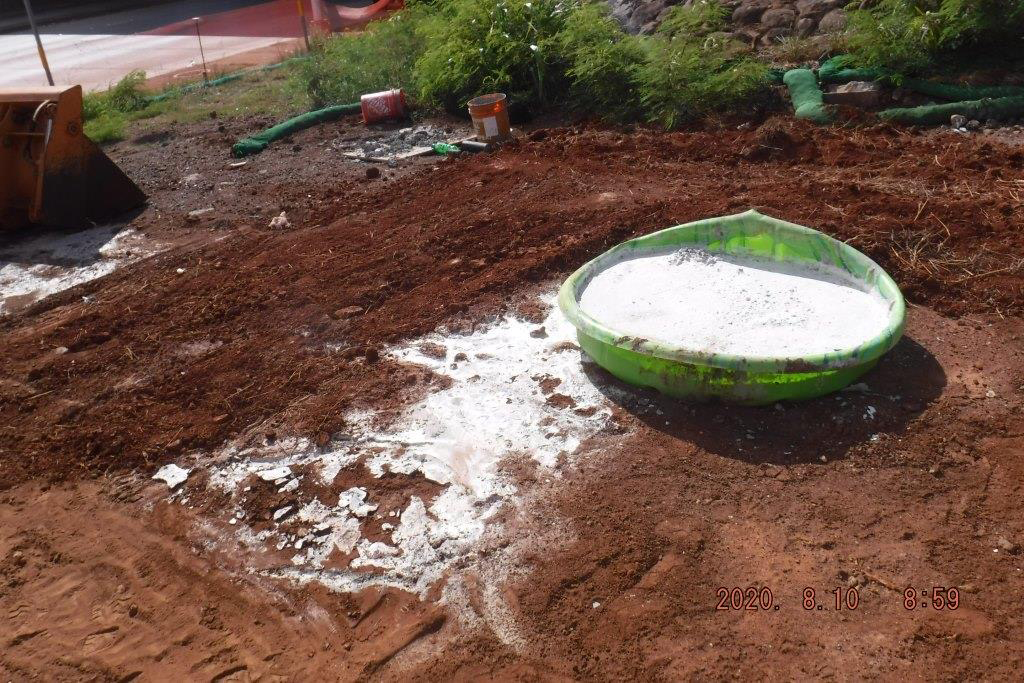
- Disposal of concrete washout via percolation is prohibited. Wash concrete-coated vehicles or equipment in the designated wash area or off-site.
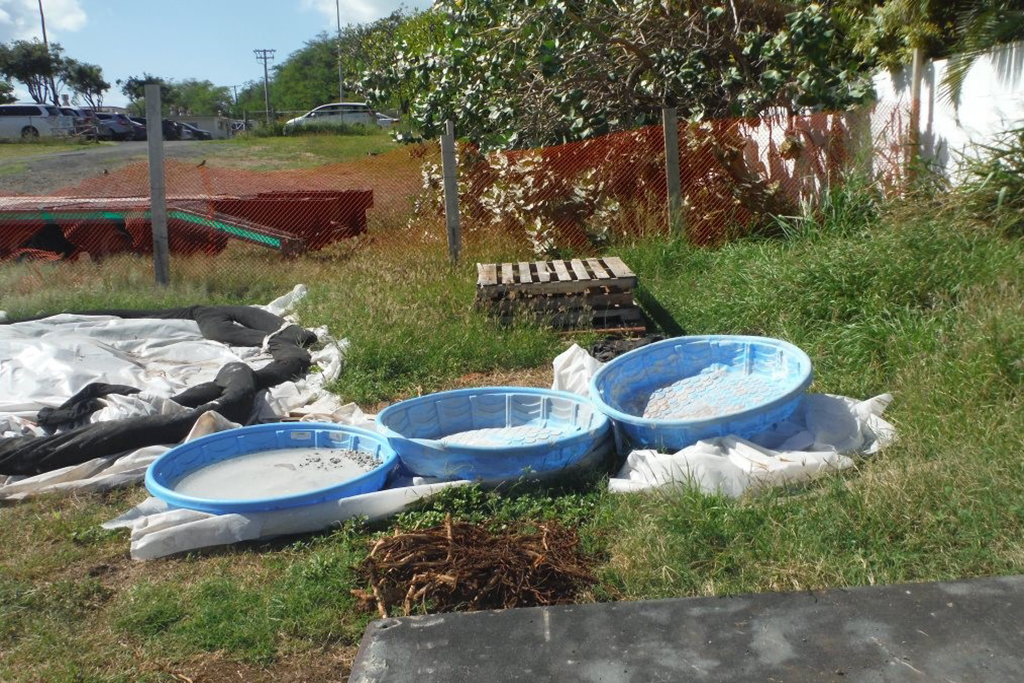
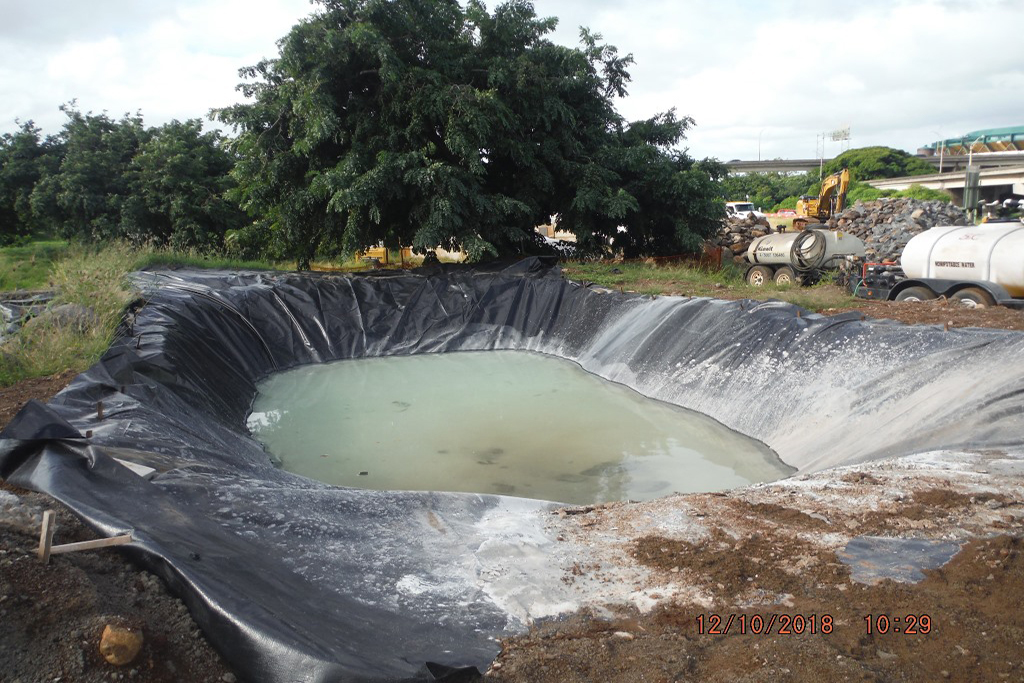
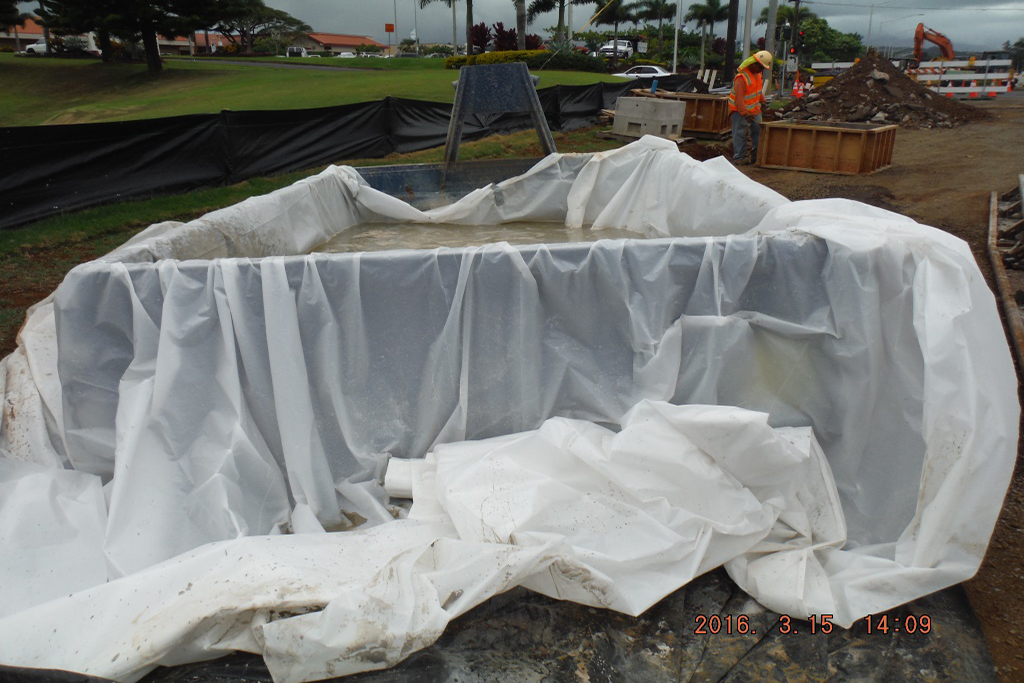
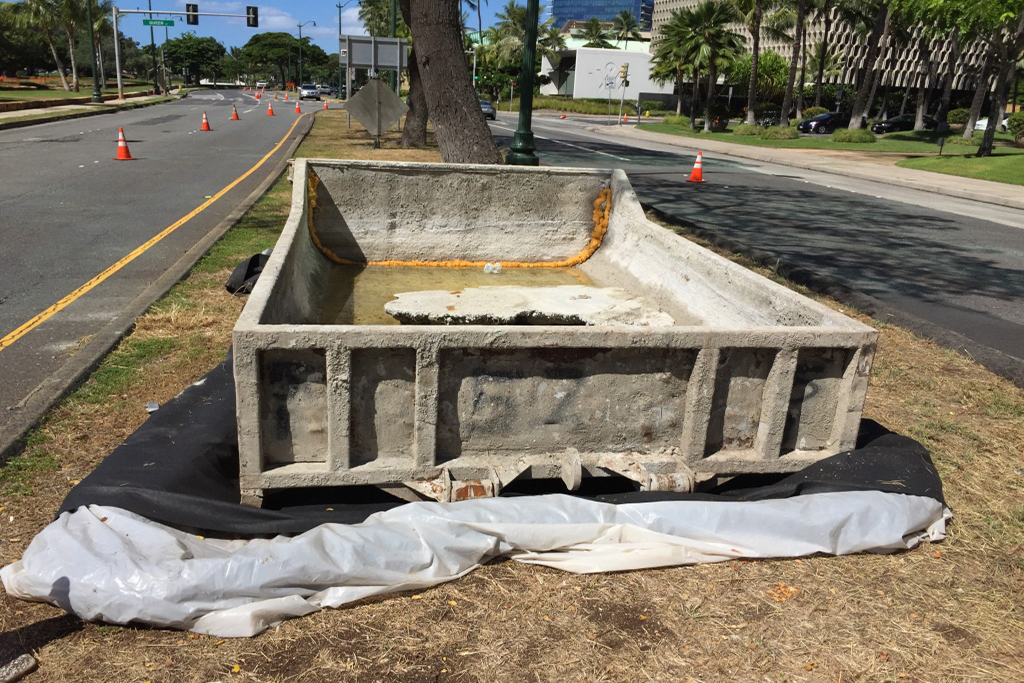
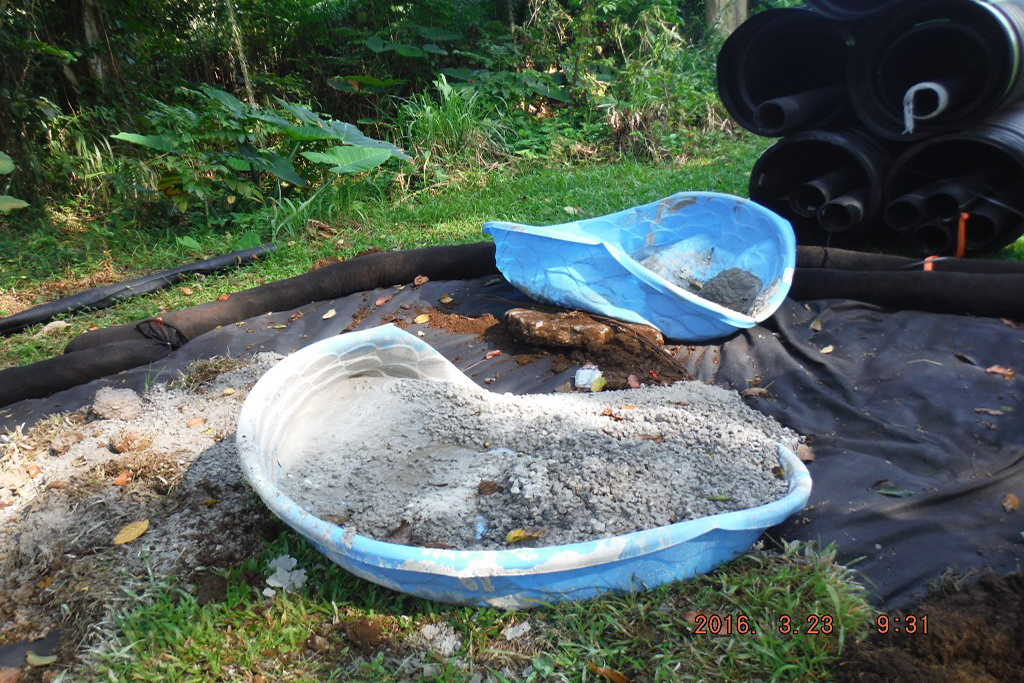
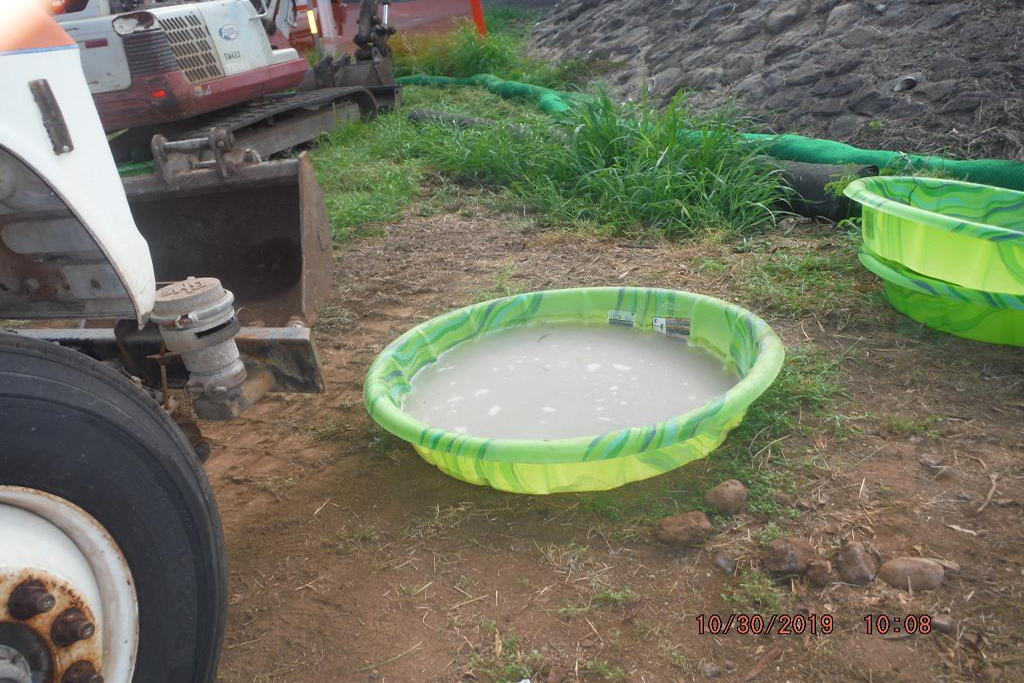
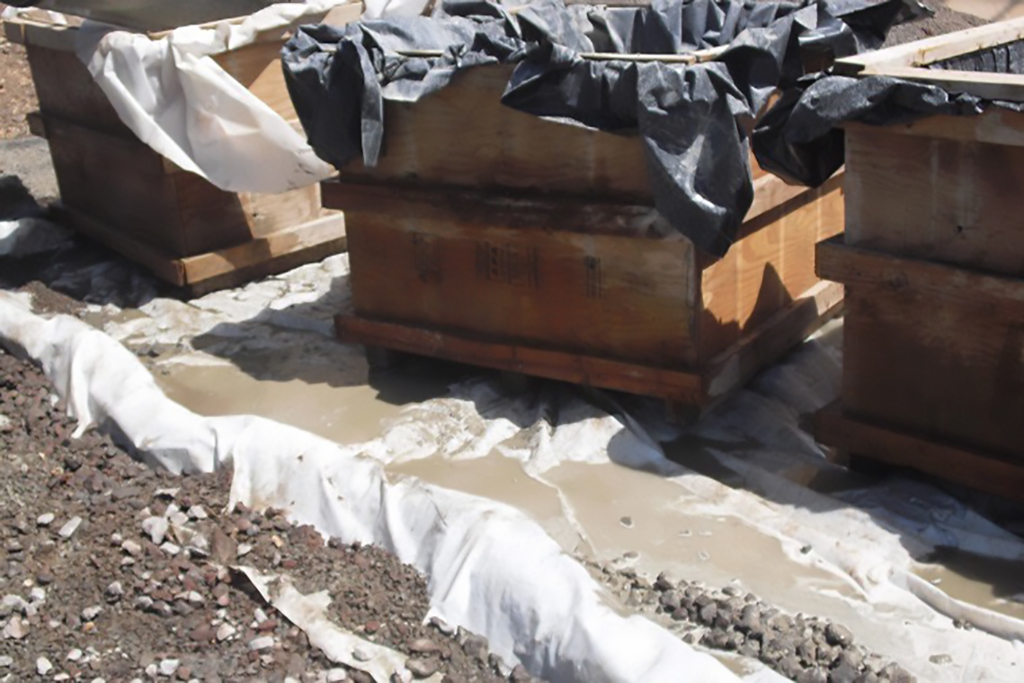
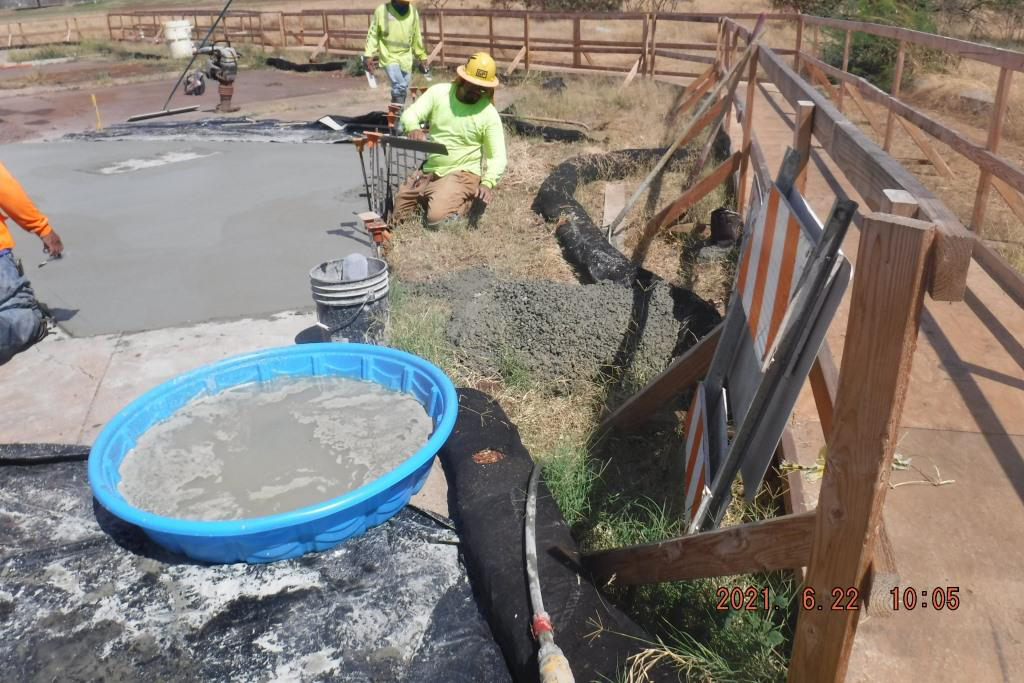
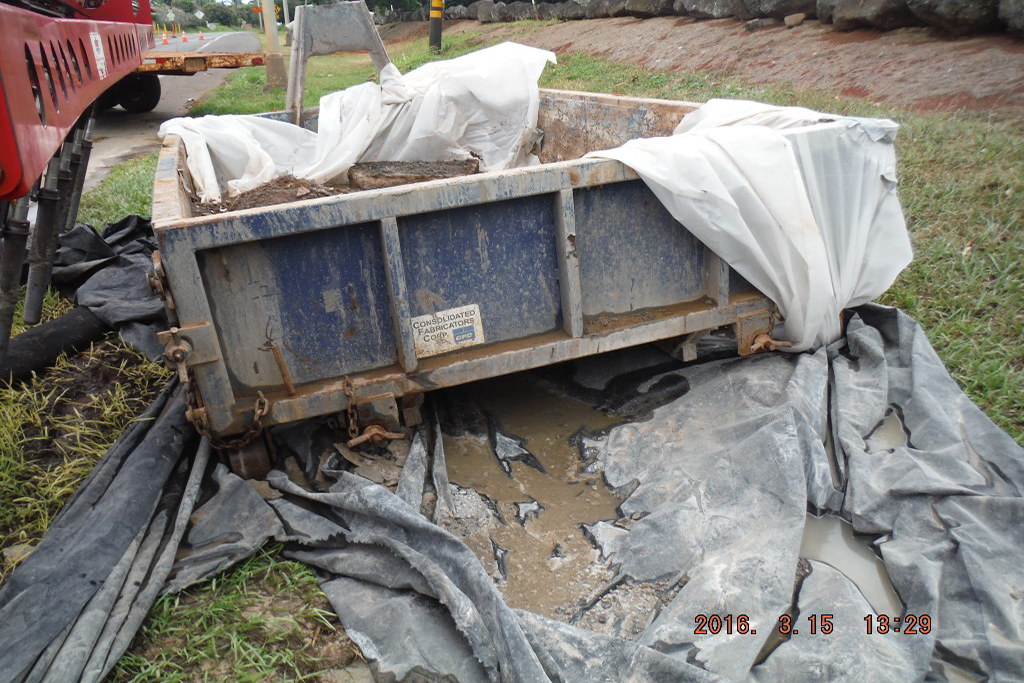
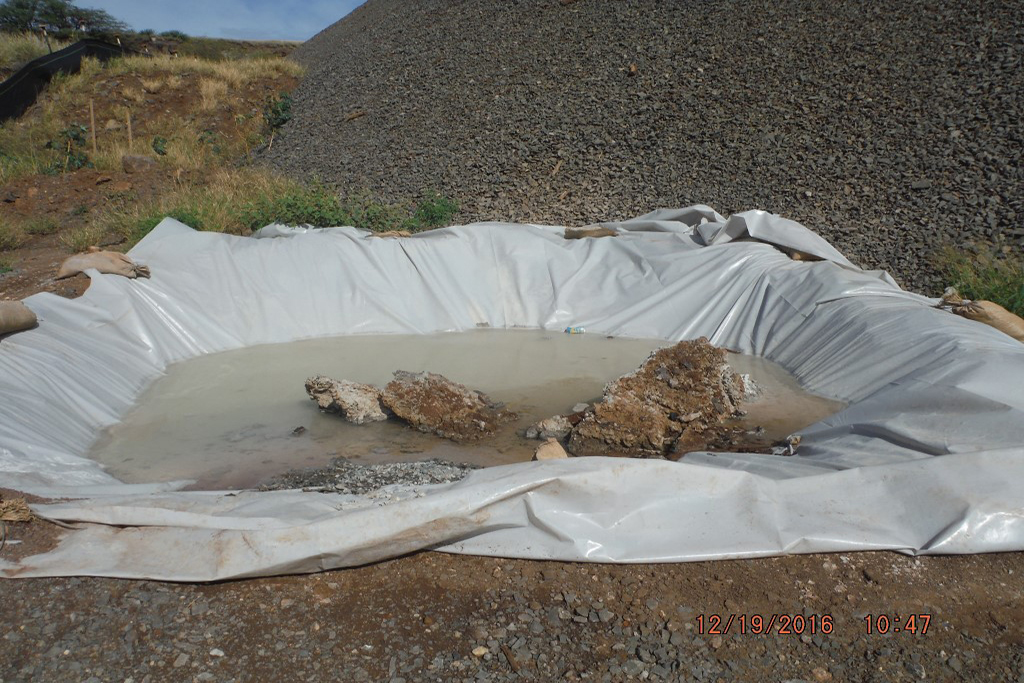
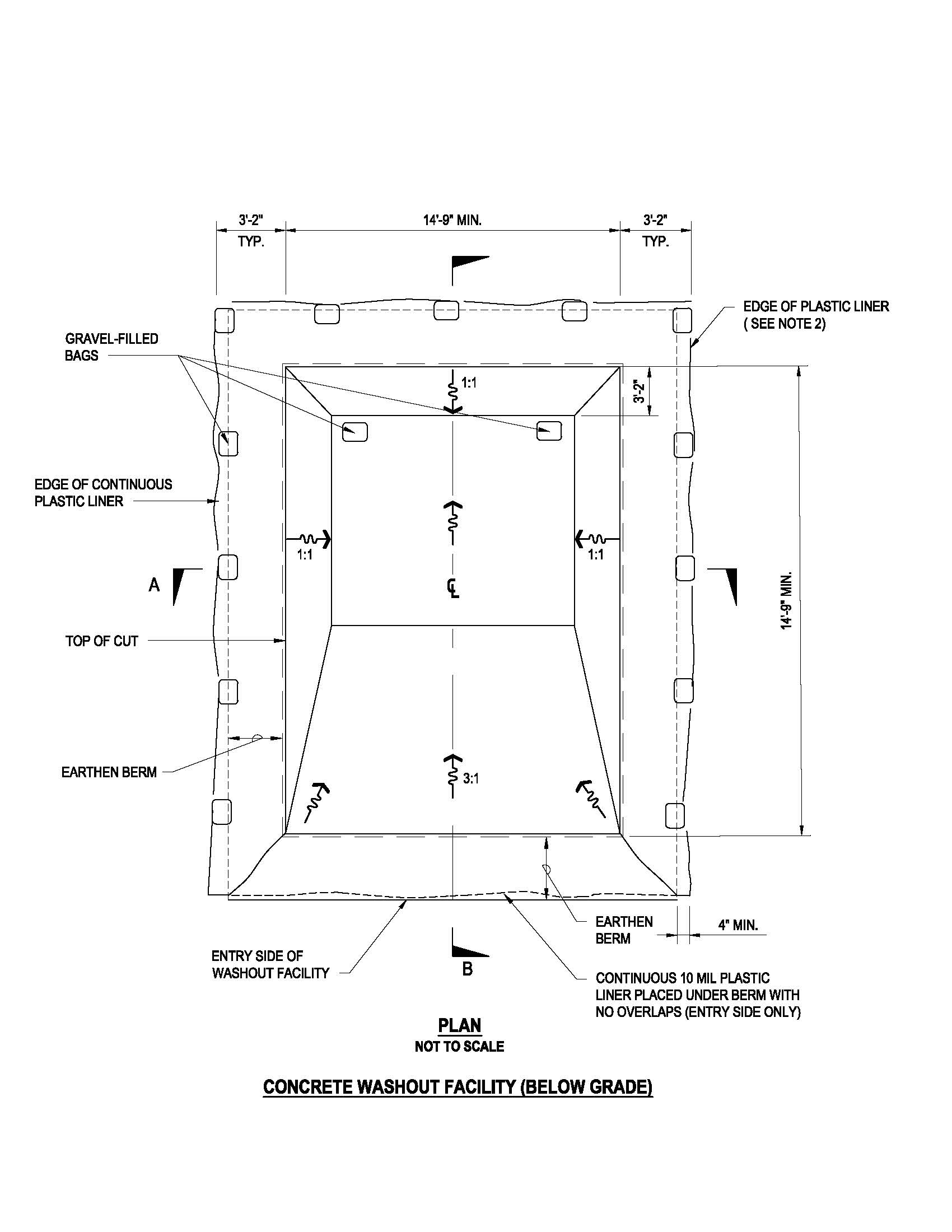
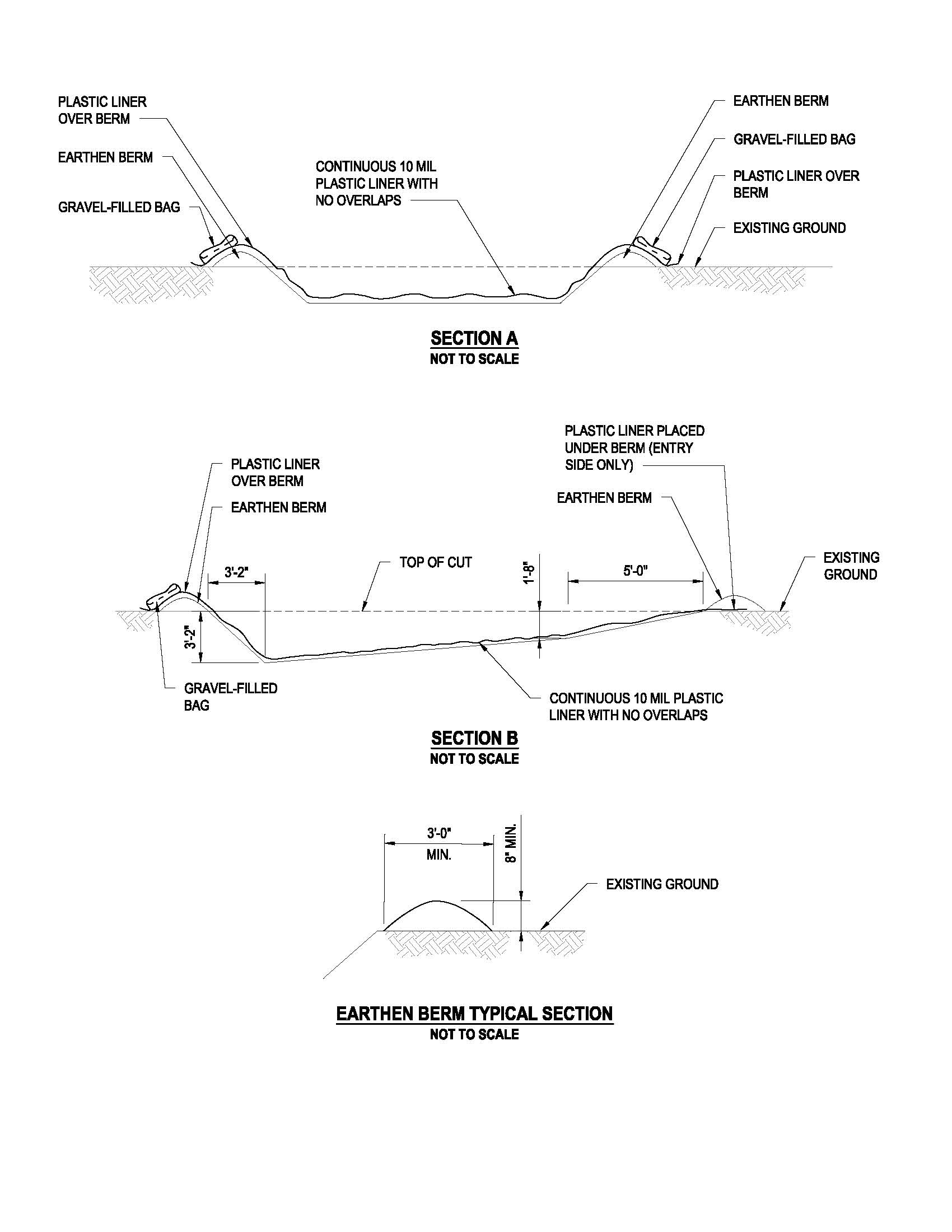
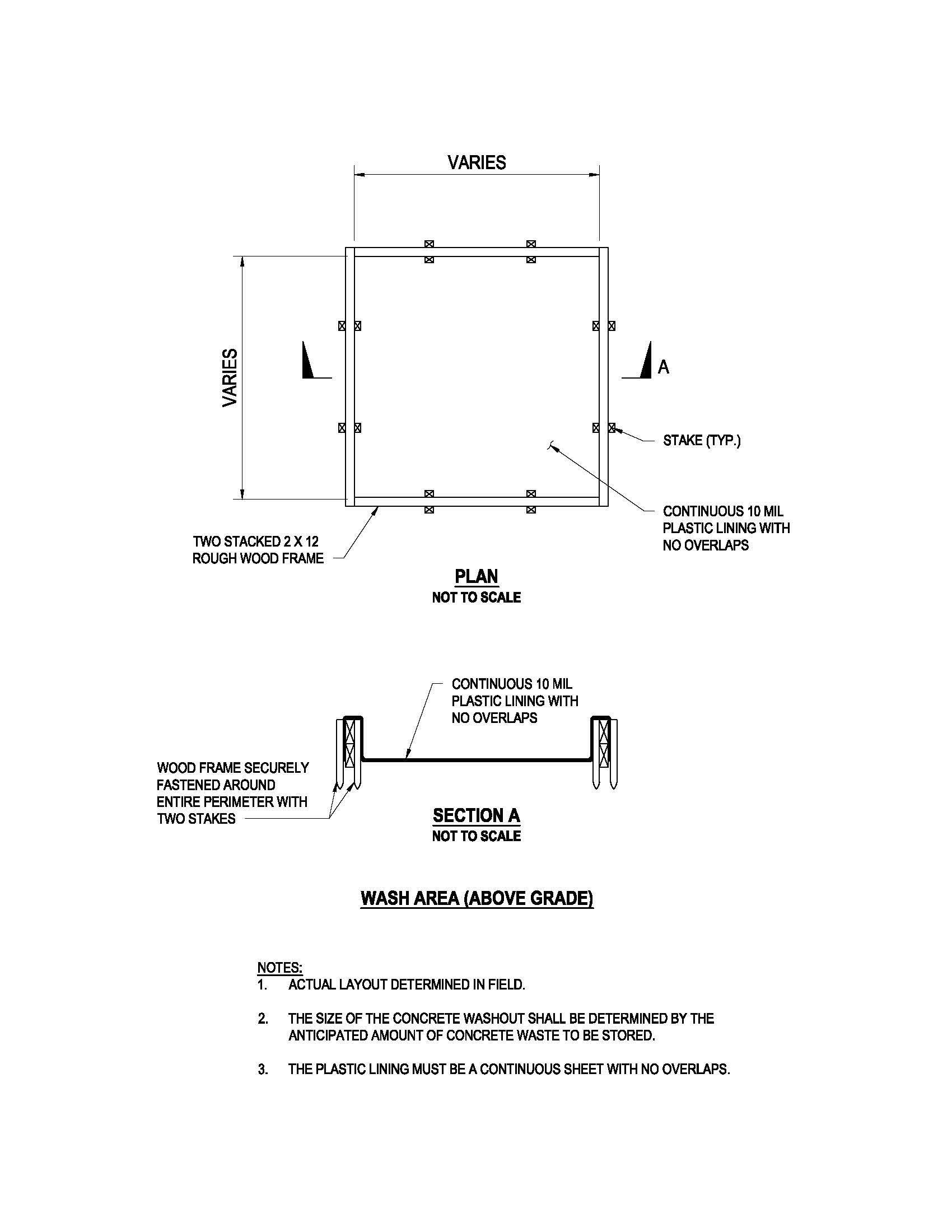
- The designated concrete washout area shall be a temporary pit (below grade), a level bermed area (above grade), or a commercially available system approved to capture concrete wash water.
- The washout should be sufficiently sized so that no overflow can occur due to inadequate sizing or precipitation.
- The washout area shall be lined with an impermeable material (i.e., plastic sheeting, Visqueen, polypropylene, etc.) to prevent seepage of washout into the ground. If plastic is used, it must be a minimum of 10 mil thick. The lining shall be seamless.
- Allow wash water to evaporate or contain the washout in an approved concrete washout system. Provide a minimum freeboard (height above the water mark) of 4 inches for concrete washouts to account for rain events. Washouts must be changed or not used after reaching 75% capacity or 4-inch freeboard, whichever is more stringent.
- If secondary containment is placed under the washout (recommended), it should be bermed under the plastic sheeting to create a secondary pooling area to catch any leaks or splashes.
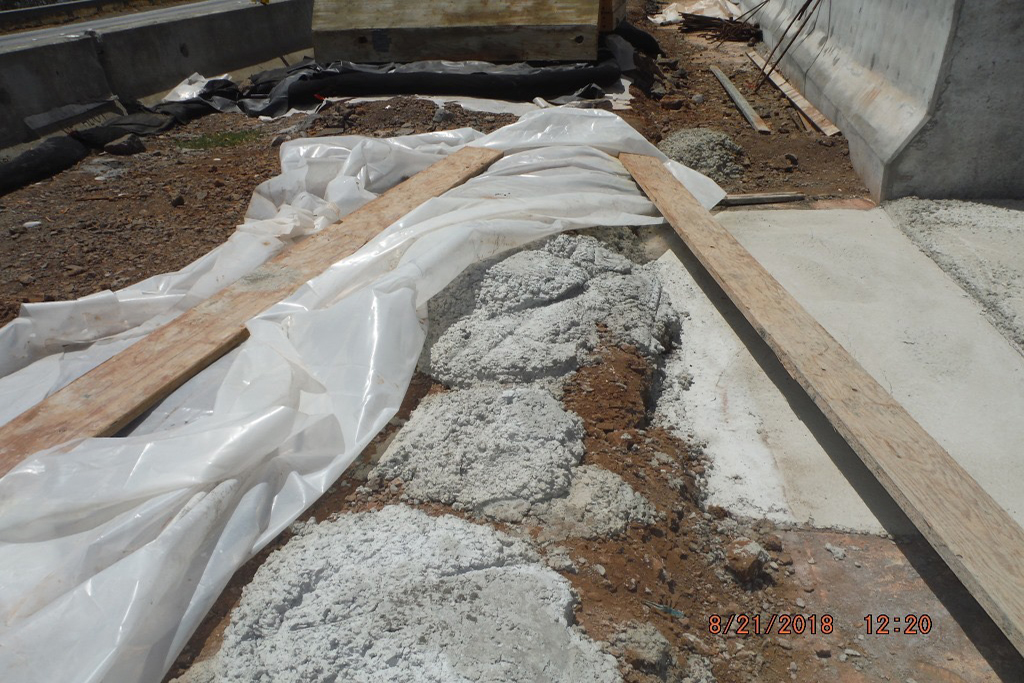
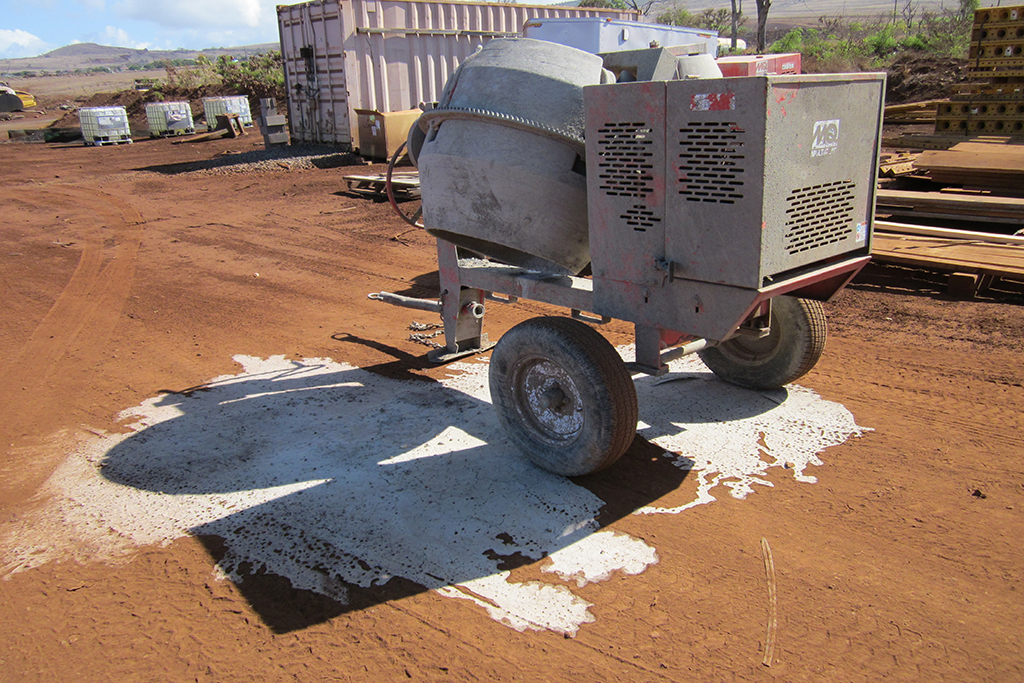
- Waste concrete shall not be allowed to harden on the bare ground and shall be removed while wet. Materials from the contractor’s spill kit can be used to clean up waste concrete.
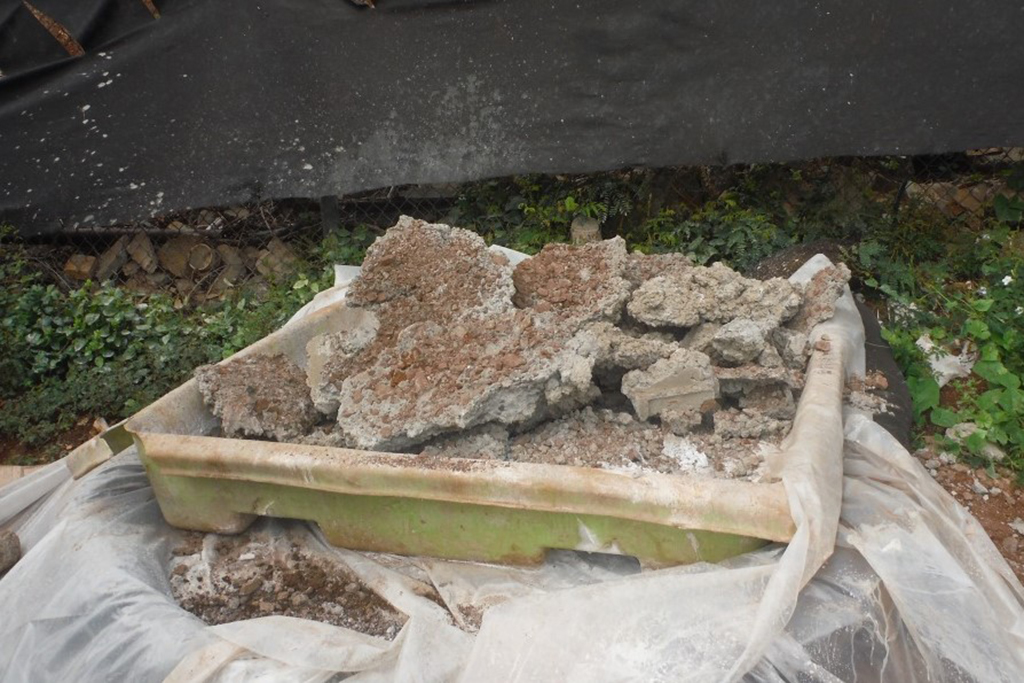
- Break up and store hardened concrete in the designated area.
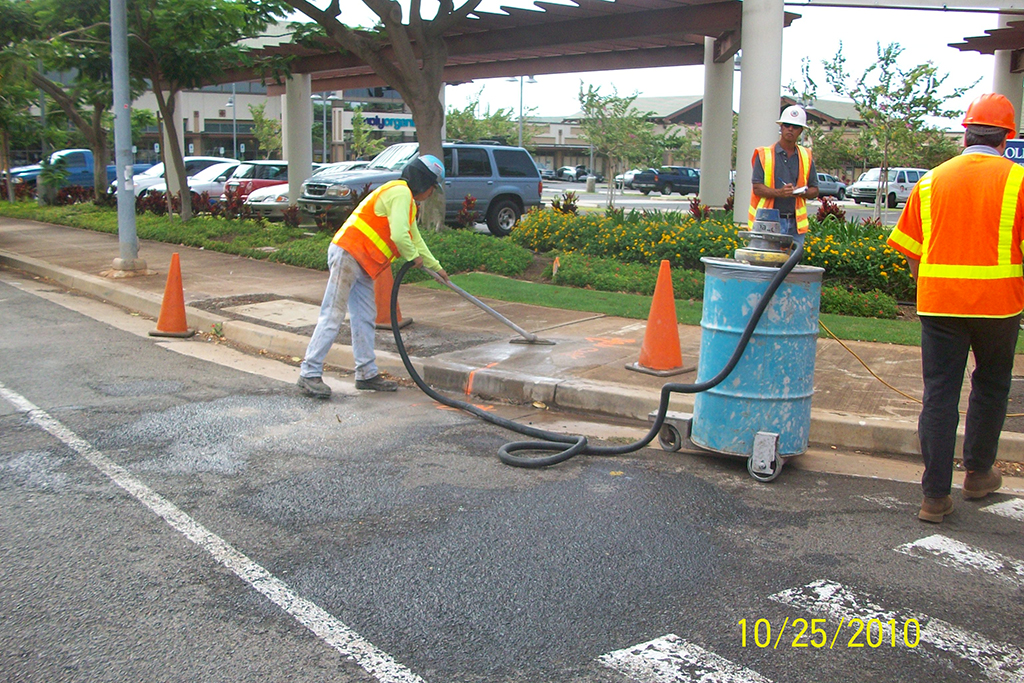
- Saw cut slurry shall be removed from the site by vacuuming.
- Provide storm drain inlet protection during sawcutting operations.
- When placing concrete in water environments or tremie pours and drill shafts, any water which is displaced or in contact with wet concrete, mortar, or grout is considered contaminated/concrete impacted.
- Remove concrete impacted water to a sealed containment area where it cannot contact or percolate into the ground. Holding tanks can be used where water is treated pending release/removal and concrete waste collected for disposal. If a pit is used, it must be sealed against possible leaks to the ground until the water evaporates. Overlapped plastic sheeting in the pit is not permitted.
- Concrete placement in drill shafts often result in water displacement and requires an over pour of concrete in the shaft. Displaced water must be considered contaminated/concrete impacted and treated as you would above. Any over pour of concrete in contact with the ground must be cleaned up while wet and placed in containment. Plastic sheeting lined pit areas at the drill shaft may also be constructed to catch over pour if adhered to the drill shaft.
- Do not allow concrete liquid wastes onto the ground, into the storm drainage systems, or into waterbodies.
- Collect and properly dispose of all concrete waste material at a HDOT approved solid waste permitted facility. Dispose of liquid and solid concrete wastes in accordance with solid waste regulations and HDOT policy, as well as other applicable federal, state, and local regulations.
- Provide concrete waste management training for employees and contractors.
Considerations
- Off-site concrete wash areas may be impracticable.
- Locating concrete washout areas a minimum of 50 feet away from drainage systems and open waterbodies may not be practicable.
- May need to allow washout to evaporate.
- Constructing washout areas may not be practicable. Manufactured concrete washout bins may be the only option.
- Rainwater can cause uncovered washout pits and containers to overflow.
What to Inspect
- Has the concrete washout been damaged?
- Is liner a continuous and seamless piece?
- Is the concrete washout area exceeding 75% capacity limits or minimum freeboard of 4 inches?
- Are leaks observed from the designated concrete washout area?
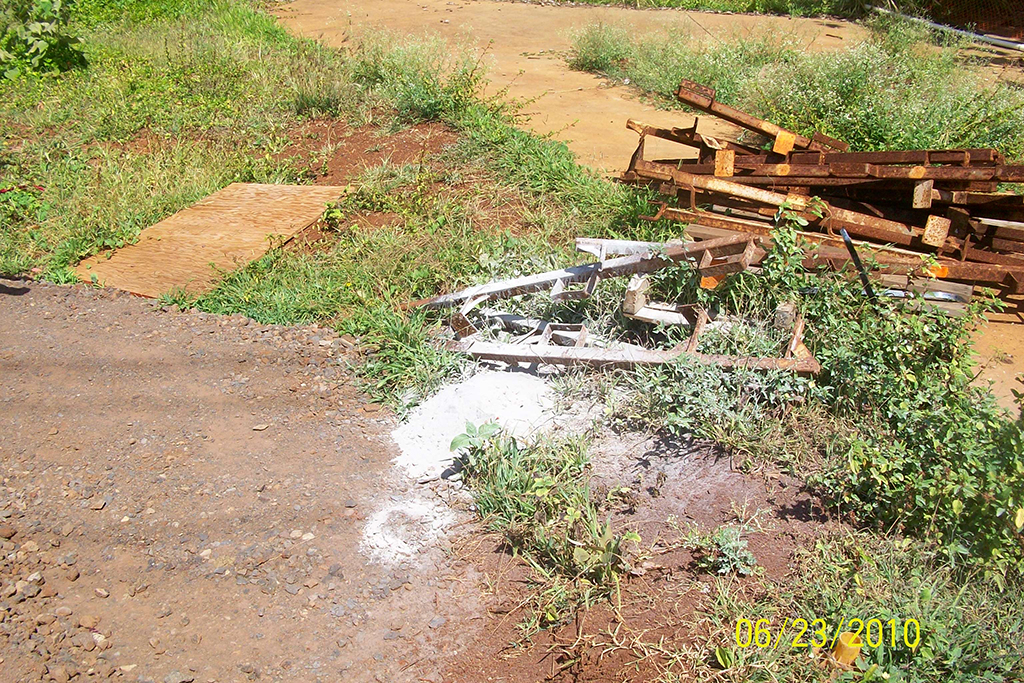
- Is there evidence of concrete waste on ground?
- Are contractors implementing proper concrete waste management measures?
Maintenance
- Regularly remove and dispose of hardened concrete in accordance with solid waste regulations and HDOT policy.
- Remove accumulated concrete washout materials when it reaches 75% capacity or exceeds the minimum 4-inch freeboard requirement.
- Cover temporary concrete washout, when not in use and at the end of the work day, to avoid overflow.
- Inspect concrete washout facilities daily and after heavy rains. Replace lining if damaged (i.e., torn, brittle, uv-degraded) before use.
- Immediately clean up concrete waste on bare ground or paved areas before it hardens.
- Vacuum concrete dust and slurry during and immediately after sawcutting activities with proper equipment to prevent/minimize concrete stains. Hosing or washing the area is not allowed.
- Sweep up debris when concrete work is completed for the day.
BMP Examples
Are adequate BMPs installed to prevent the discharge of pollutants from the project site? Hover over each photo for an explanation of the situation presented and if BMPs have been installed properly.