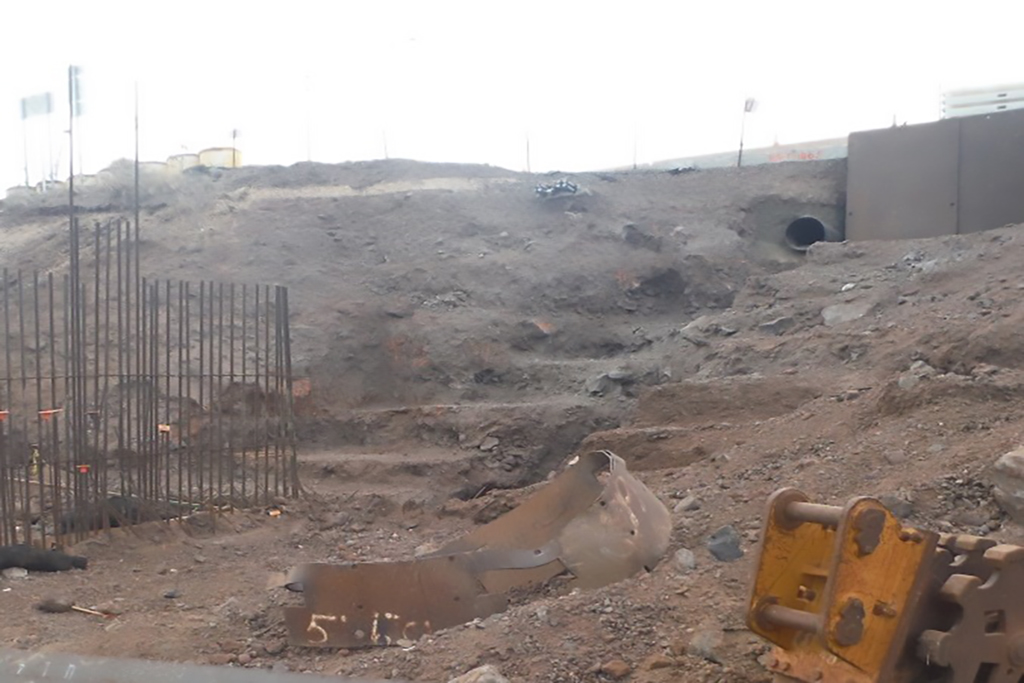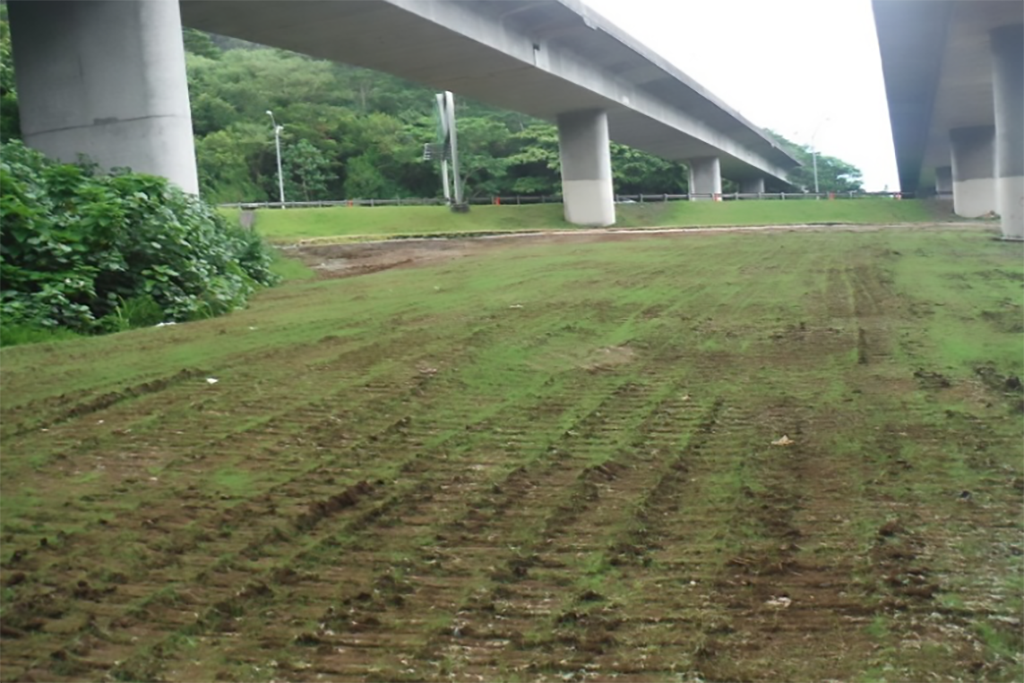

Description
Methods of slope grading to reduce potential erosion by decreasing runoff velocities, trapping sediment, shortening slope length, and increasing infiltration into the soil.
Applications
- Areas where seeding, planting, and mulching erosion control measures may be enhanced by roughening of the soil surface. Graded areas with smooth, hard surfaces.
- Areas requiring terracing to shorten the slope length.
- Locations where vegetation is not adequate erosion protection and is affecting construction activity.
Installation and Implementation Requirements
CUT SLOPE ROUGHENING
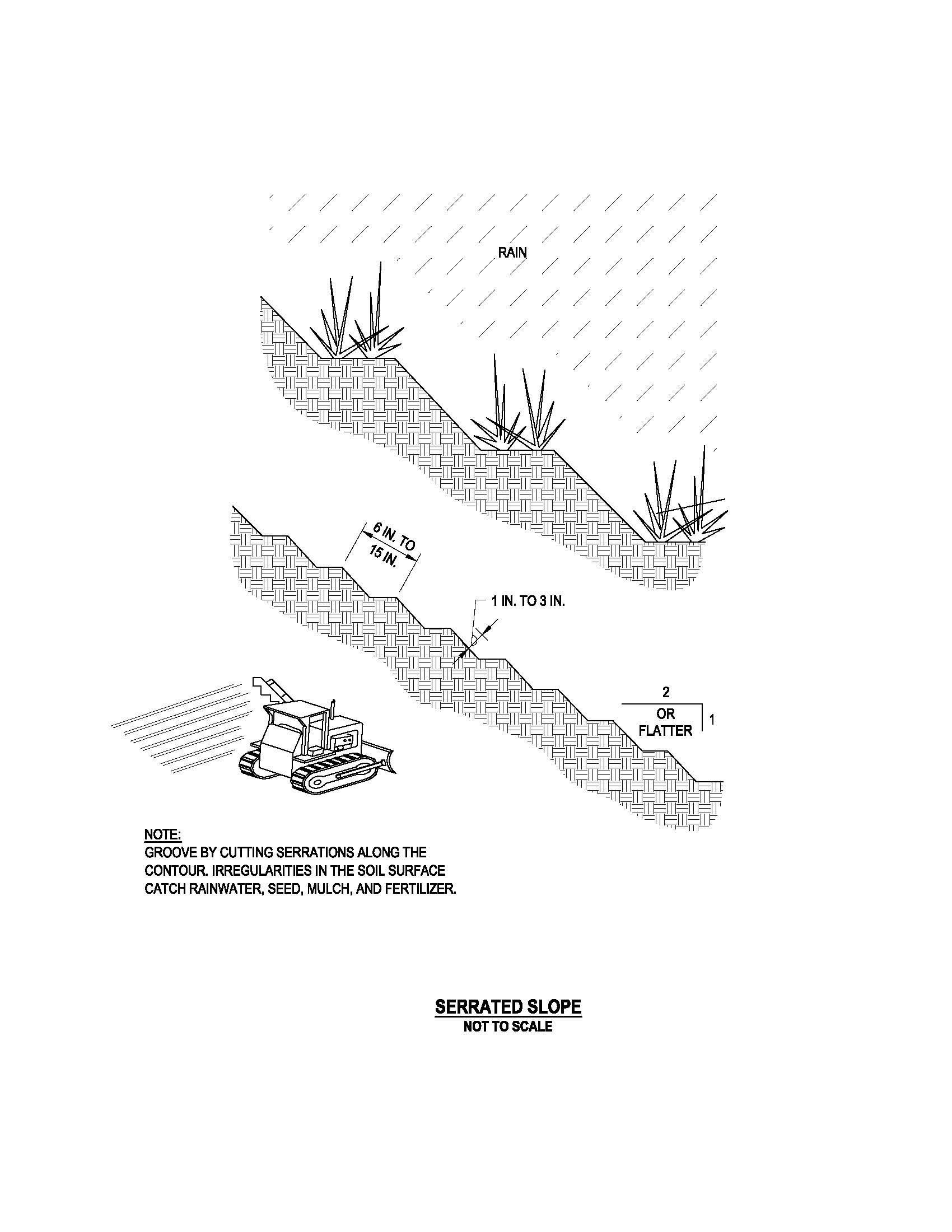
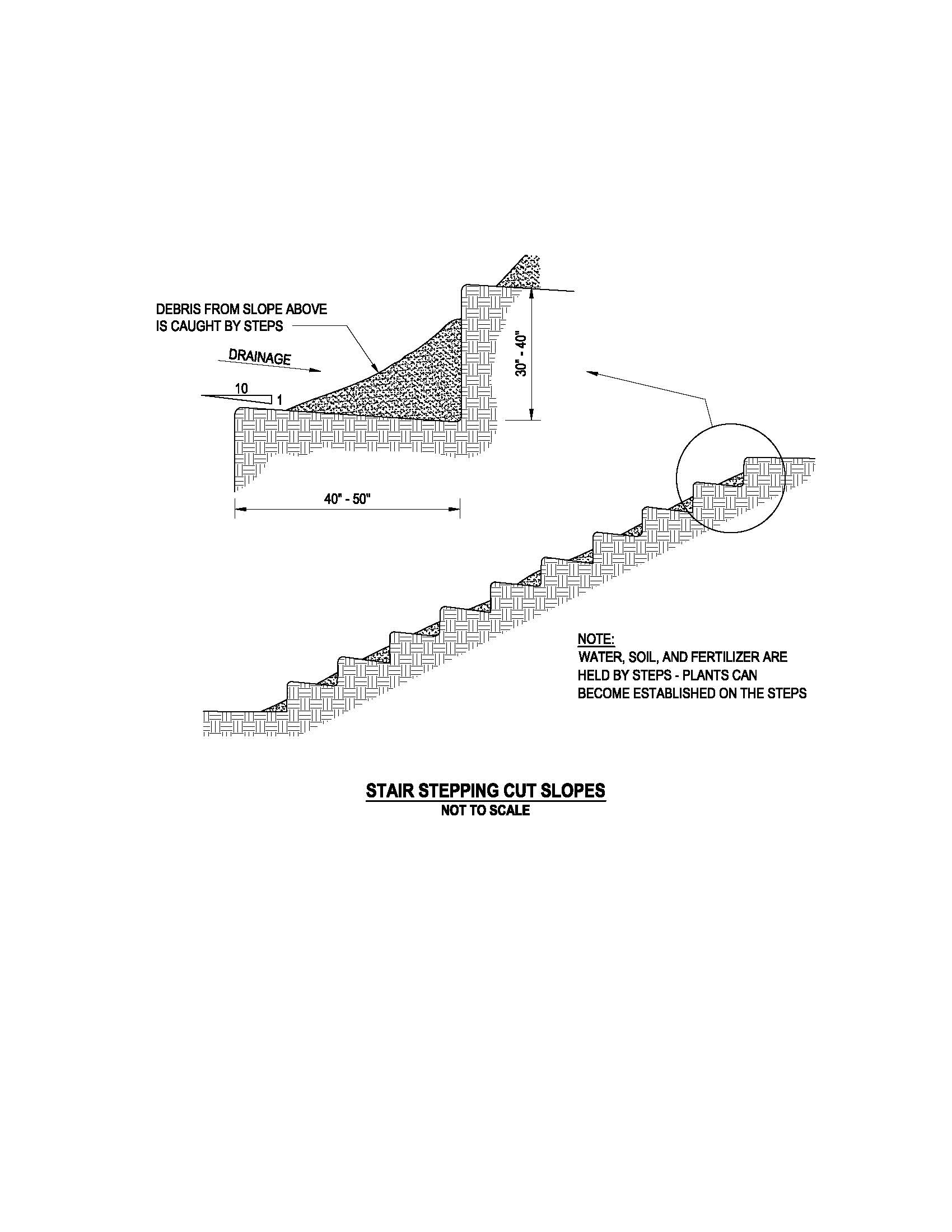
- Cut slopes steeper than 3:1 (H:V) shall use stair-step grading or furrows.
- Use stair-step grading on soft soils that may be ripped by a bulldozer. Stair-step grading is particularly suitable for slopes consisting of soft rock with some subsoil.
- The vertical cut shall not exceed 2 feet in soft materials and 3 feet in rocky material.
- The vertical cut must be shorter than the horizontal cut. The typical stair width is 1 to 2 feet.
- Slope the horizontal cut towards the face of the slope, so storm water drains towards the slope and allows time for sediment to settle.
- Create ridges and depressions along the slope contours using machinery.
FILL SLOPE ROUGHENING
- Fill slopes steeper than 3:1 (H:V) shall be placed in lifts not exceeding 9 inches. Each lift shall be properly compacted.
- Slope faces shall consist of 4 to 6 inches of loose and uncompacted soil.
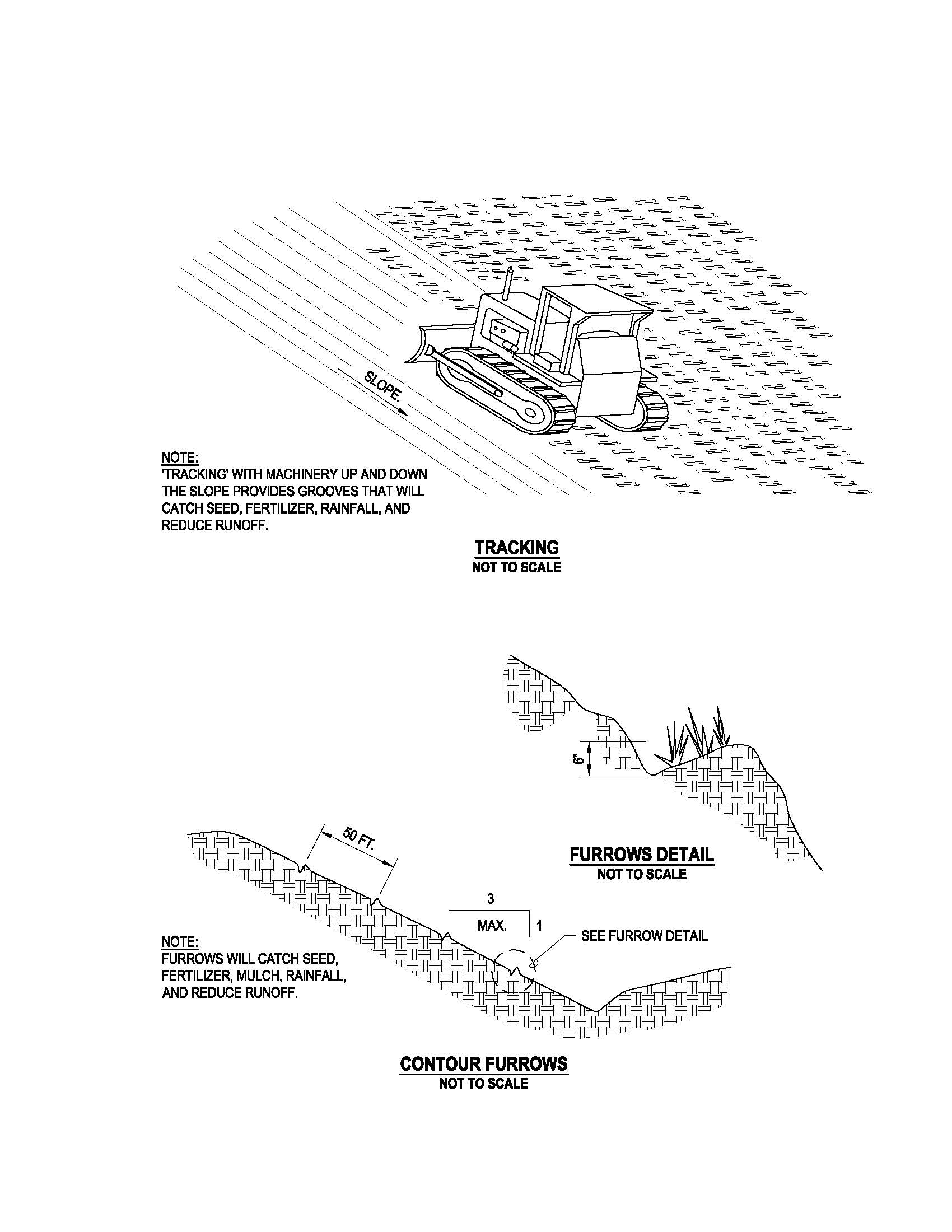
- Grooving or tracking shall be used to roughen slope faces as necessary.
- Apply seed, fertilizer, and mulch. Track or punch in the mulch. See section EC-14 Mulching and section EC-12 Seeding and Planting for additional information.
- The final slope face shall not be bladed or scraped.
CUTS, FILLS, AND GRADED AREAS
- Slopes that will be maintained by mowing shall be no steeper than 3:1 (H:V).
- Create shallow grooves by normal tilling, disking, harrowing, or use of a cultivator-seeder. Final pass of tillage shall be along the contour. Spacing between grooves shall be 10 inches or less. Groove depth shall be a minimum of 1 inch.
ROUGHENING WITH TRACKED MACHINERY
- Roughening with tracked machinery is only applicable to soils with a sandy texture. Other types of soil may be over-compacted by tracked machinery.
- Application is best for slope grades 3:1 (H:V) or flatter.
- Leave horizontal depressions in the soil by operating tracked machinery up and down the slope. During the final grading operation, do not back blade.
- Minimize the number of passes the tracked machinery makes to avoid over-compaction.
- Roughened areas shall be seeded and mulched for optimum seed germination and growth.
TERRACING
- Slope grades of 5:1 (H:V) shall include terraces or benches when slope heights exceed 30 feet. Steeper slope or highly erosive soil conditions may warrant terraces or benches for slope heights of 15 feet or higher.
- Runoff collected along terraces and benches shall be routed to lined diversion ditches. Install lined diversion ditches at the intersection of the terrace and slope.
- Vertical cut shall be between 1 and 2 feet. Horizontal cut must be longer than the vertical cut and slope inward towards the face of the slope. Benching width is usually made wide enough for mowing equipment.
ROUNDING
- All slopes shall be rounded with no sharp breaks in plan or profile.
Considerations
- Since terracing is permanent, design and approval shall be under the direction of a licensed, qualified engineer.
- Design of terraces shall provide adequate drainage and stabilized outlets.
- Roughening may result in increased grading costs and sloughing in soil.
- Stair-step grading are for cut slopes only and may not be applicable to sandy, steep, or shallow soils.
- During intense rainfall events, roughening may not be an effective temporary erosion control measure.
- Surface roughening must not be used to keep an area under the qualification of “actively working” to prolong the stabilization deadline.
- Slopes need to be regraded and reseeded if rills and gullies form, creating channels for runoff.
- Excessive compaction with tracking machinery can inhibit vegetation growth and cause higher runoff rates.
What to Inspect
- Is there evidence of rills and gullies on seeded and planted slopes?
- Does the slope have adequate vegetation coverage?
- Are proper cuts and methods being used to reduce erosion?
Maintenance
- Regrade and reseed areas where rills or gullies have formed.
- Revegetate bare areas on slope.
BMP Examples
Are adequate BMPs installed to prevent the discharge of pollutants from the project site? Hover over each photo for an explanation of the situation presented and if BMPs have been installed properly.