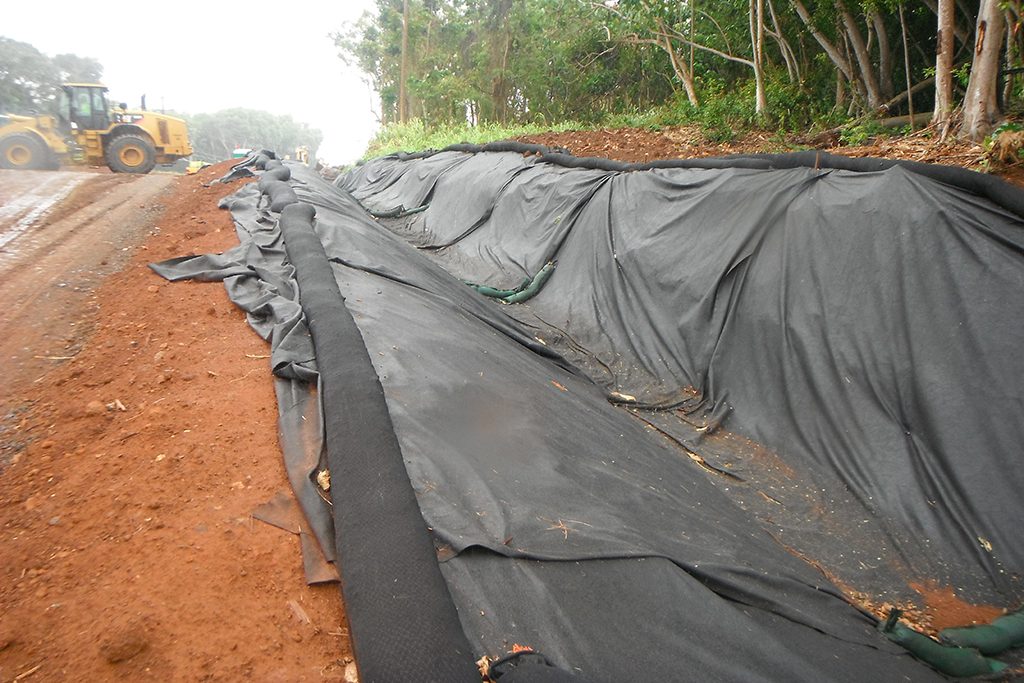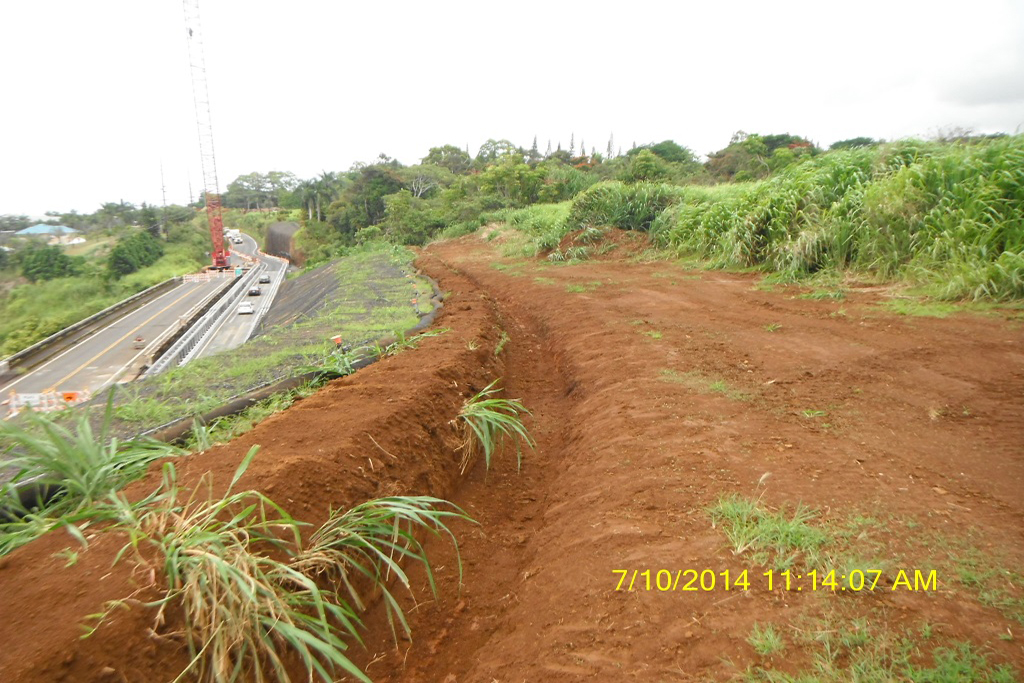

Description
Structures that prevent erosion by intercepting, diverting, and conveying surface run-on to a stabilized area or other sediment trapping device.
Applications
- Use earth dikes for drainage areas smaller than 10 acres.
- Use swales and ditches for drainage areas smaller than 5 acres.
- Direct runoff around unstable or disturbed areas to a stabilized water course, drainage pipe, or channel.
- Divert runoff to sediment basins or sediment traps.
- Along perimeter of the site or disturbed area to divert storm water run-on and runoff.
- Intercept runoff at the point of concentration.
- Supplement other sediment control measures.
- Intercept and divert runoff to prevent sheet flow over sloped surfaces.
- Convey surface runoff down sloping land.
- Provide containment for a specified and limited area including stockpiling or material storage areas within the project limits.
Installation and Implementation Requirements
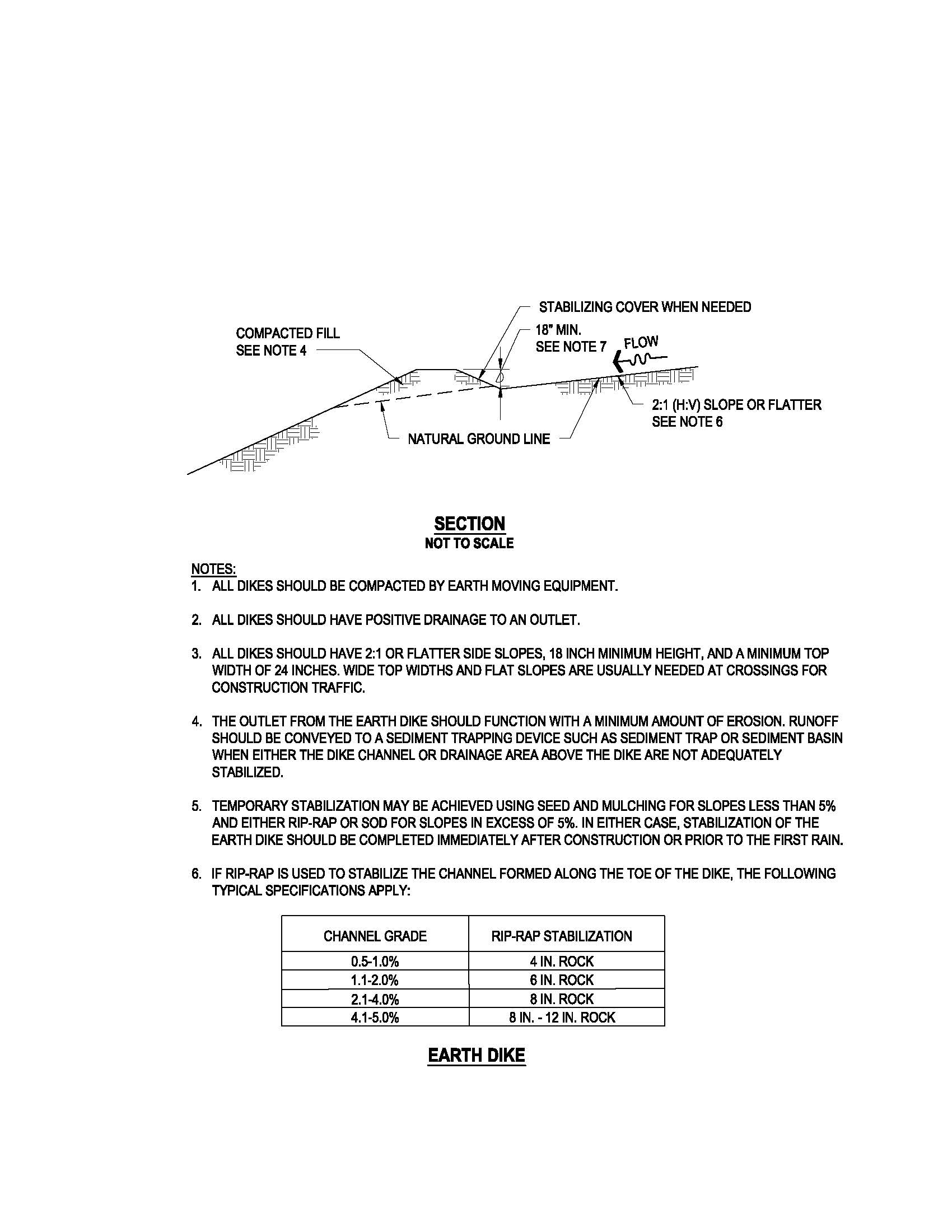
EARTH DIKES
- Firmly compact to minimize erosion and prevent unequal settling.
- Drain to a stabilized outlet.
- Divert sediment-laden runoff to a sediment trapping device.
- Ensure continuous, positive grade along dike to prevent ponding of runoff.
- Stabilize earth dikes with vegetation, chemicals, or other physical devices.
- Conform to predevelopment drainage patterns and capacities.
- Berm size is determined by factors including slope length and grade, soil characteristics, climate, and presence of existing vegetation.
- Obtain guidance from the District Maintenance Engineer or Highways Hydraulic Section and refer to Highways Standard Plans for dike design review. The review will evaluate structural stability and drainage capacity.
- Berms may be vegetated or unvegetated.
- Use velocity dissipation devices within and at the outlet of temporary drains and swales to minimize erosive flow velocities. See section EC-8 Outlet Protection and Velocity Dissipation Devices for more information.
- Determine design flow and safety factor by an evaluation of risks associated with overtopping, flow backups, or washout of structures.
- Evaluate potential run-on from off-site properties. Install before earth-disturbing activity on slopes.
- Determine flow velocity limit by on-site soil type and drainage flow patterns.
- Establish minimum flow velocity requiring lining (rip-rap, geotextile filter fabric, vegetation, concrete) for earthen diversion devices. Refer to Highways Statewide Uniform Design Manual for Streets and Highways for more information.
- Incorporate an emergency overflow section or bypass area into the design for storms exceeding the design storm.
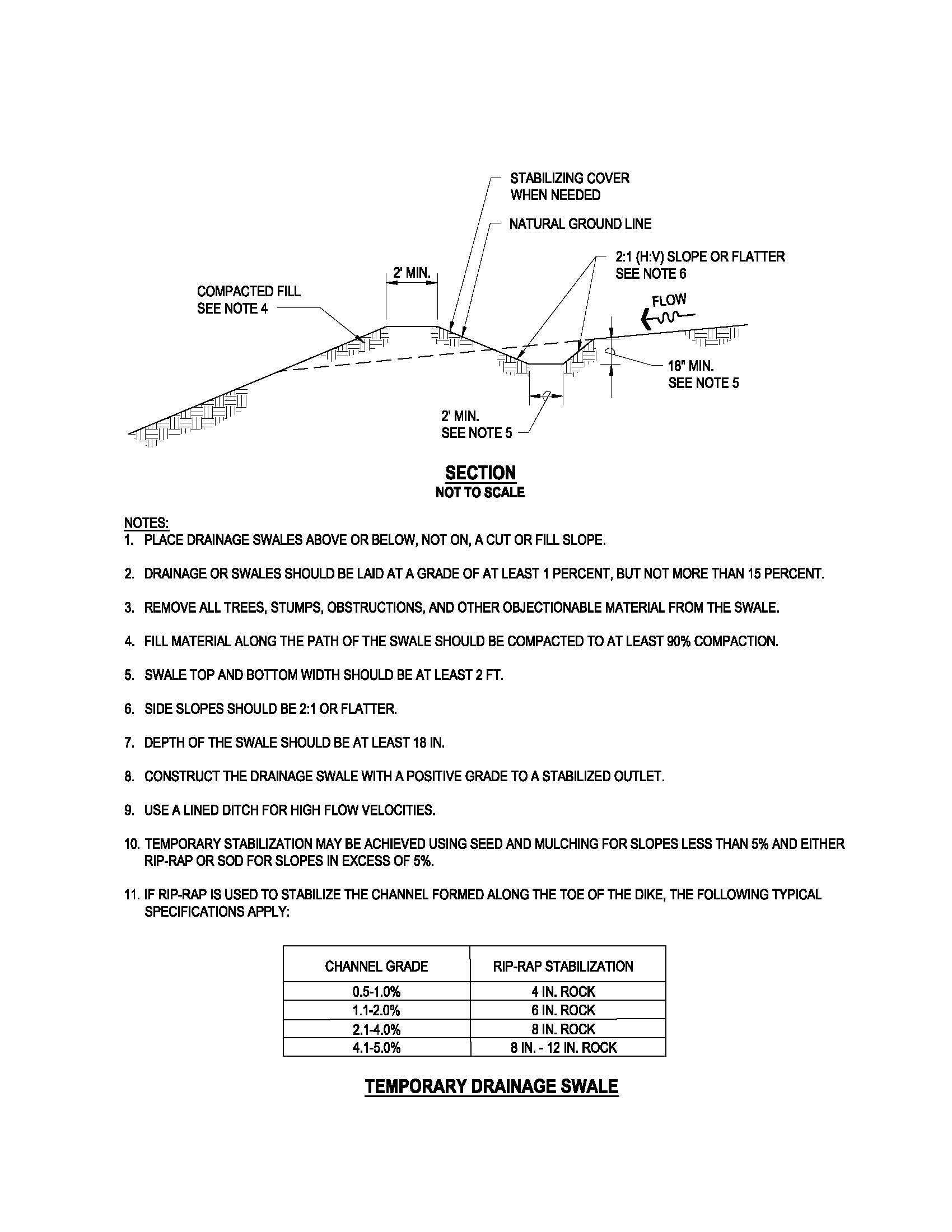
SWALES AND DITCHES
- If rip-rap is used, use 4- to 12-inch rock depending on the grade. Check with Highways Hydraulics Section.
- Stabilize earth dikes, drains, and swales with vegetation, chemicals, or other physical devices.
Considerations
- Access and space can prohibit or limit the installation of a dike.
- Despite simplicity of installation, improper design can limit effectiveness.
- Use of additional sediment and erosion control devices may be required to prevent scour and erosion in recently graded dikes, swales, and ditches.
- Select size and location to prevent unintended consequences such as erosion along steep and unlined ditches and ponding within the travelway or material storage areas.
- Alteration of existing waterways and clearing of existing vegetation are subject to permit requirements of the U.S. Army Corps of Engineers (USACE) and state or local agencies.
- Unsuitable for use as a sediment trapping device.
What to Inspect
- Is there erosion along berms, channel linings, embankments, beds of ditches and downgradient?
- Is there excess sediment/debris evident in the swale?
- Is there sediment accumulation along dike?
- Is proper size rip-rap used?
- Will runoff remain within diversion channel?
- Are embankments stabilized?
- Is there evidence of potential signs of failure for dike walls, embankments, compacted fills, and earthen channel sidewalls?
Maintenance
- Restore all bare areas with the appropriate lining material.
- Remove accumulated sediment and debris once it reaches one-half the height of the dike.
- As needed, reseed/stabilize the dike as needed to maintain stability.
- Remove dikes, swales, and ditches after stabilization of the surrounding drainage area or completion of construction.
- Restore any cracks, washouts, animal habitation, exposed materials, or other signs of potential failure. Coordinate restoration with Maintenance Engineer or Material Testing and Research Section as necessary. The Hydraulic Section shall also be consulted for problems associated with structural design or runoff flow patterns.
BMP Examples
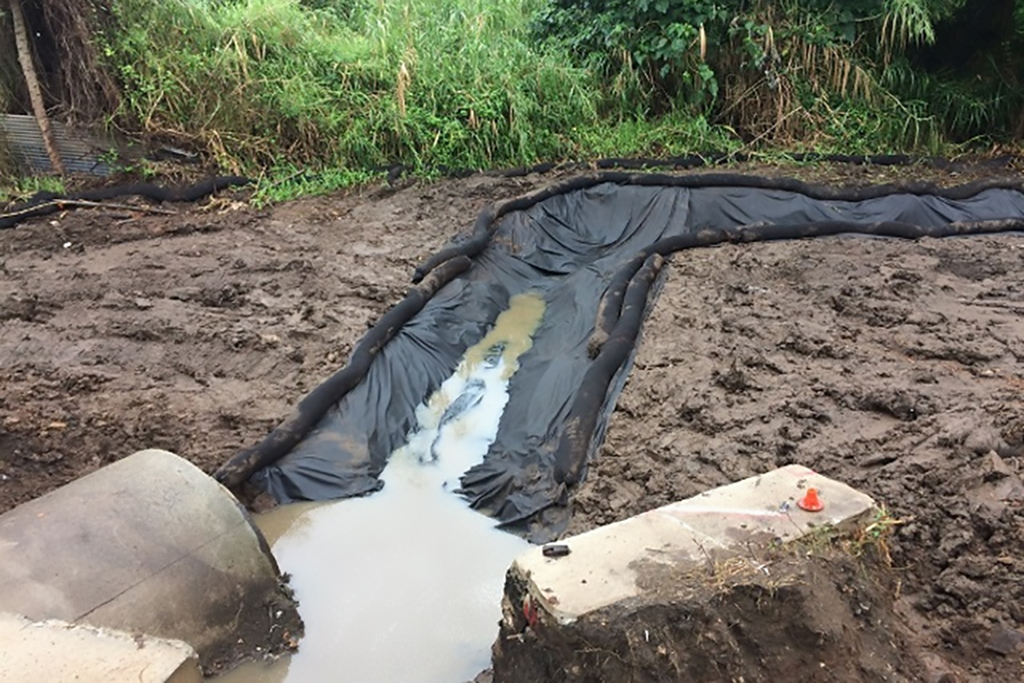
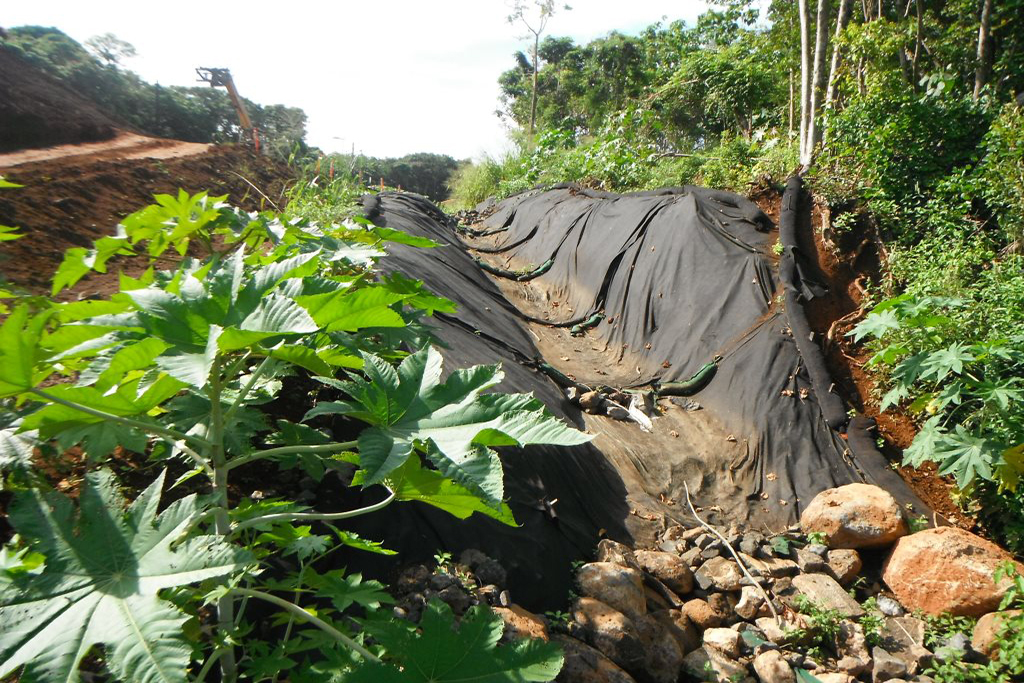
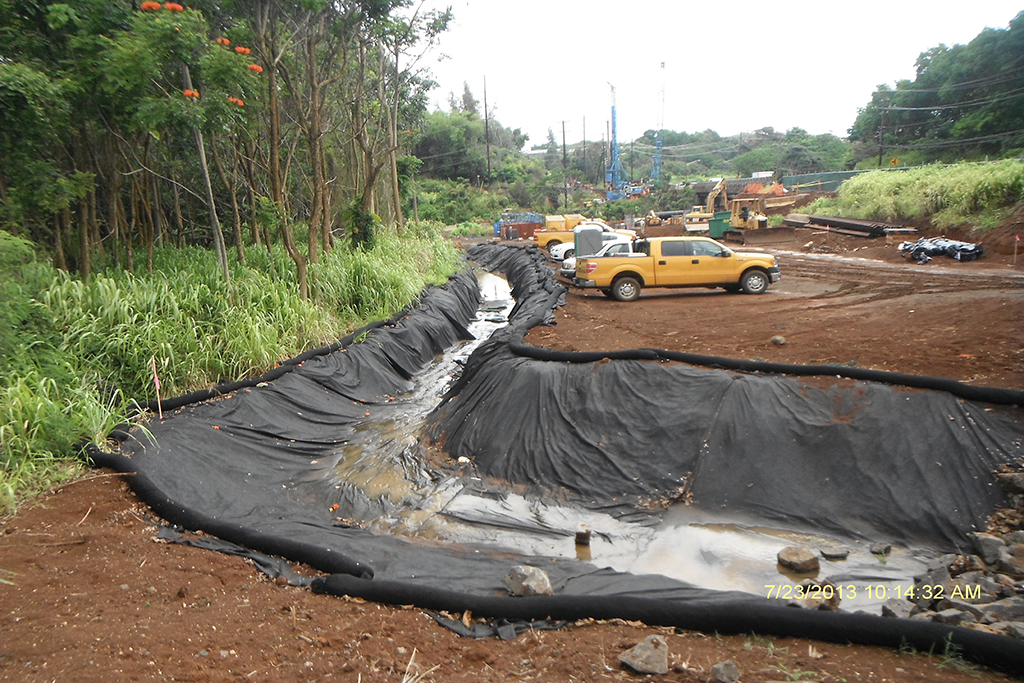
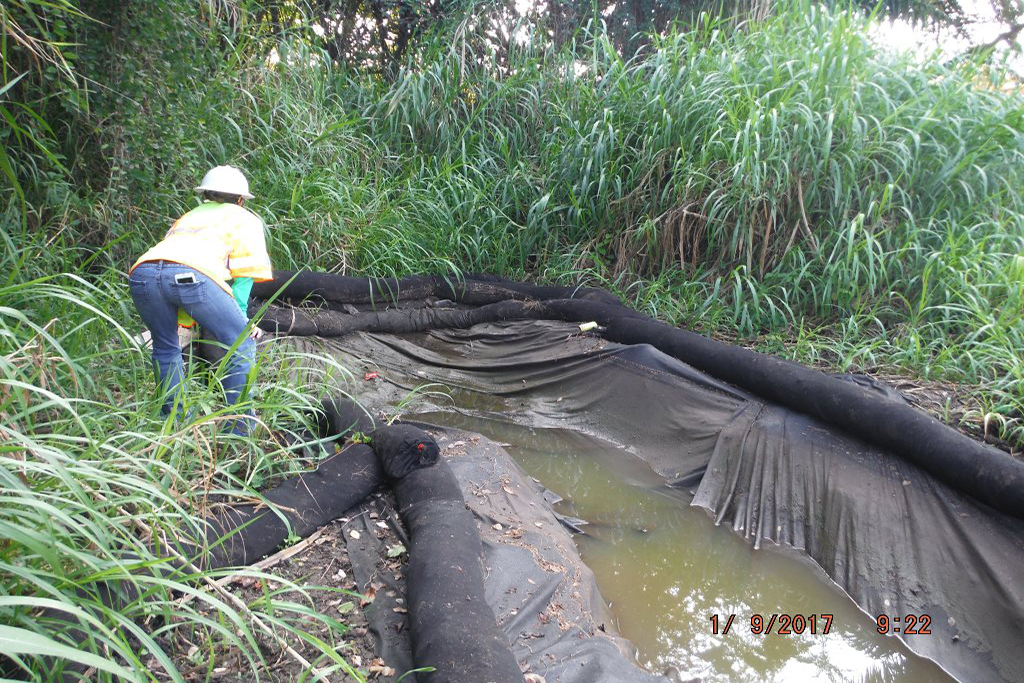
Are adequate BMPs installed to prevent the discharge of pollutants from the project site? Hover over each photo for an explanation of the situation presented and if BMPs have been installed properly.