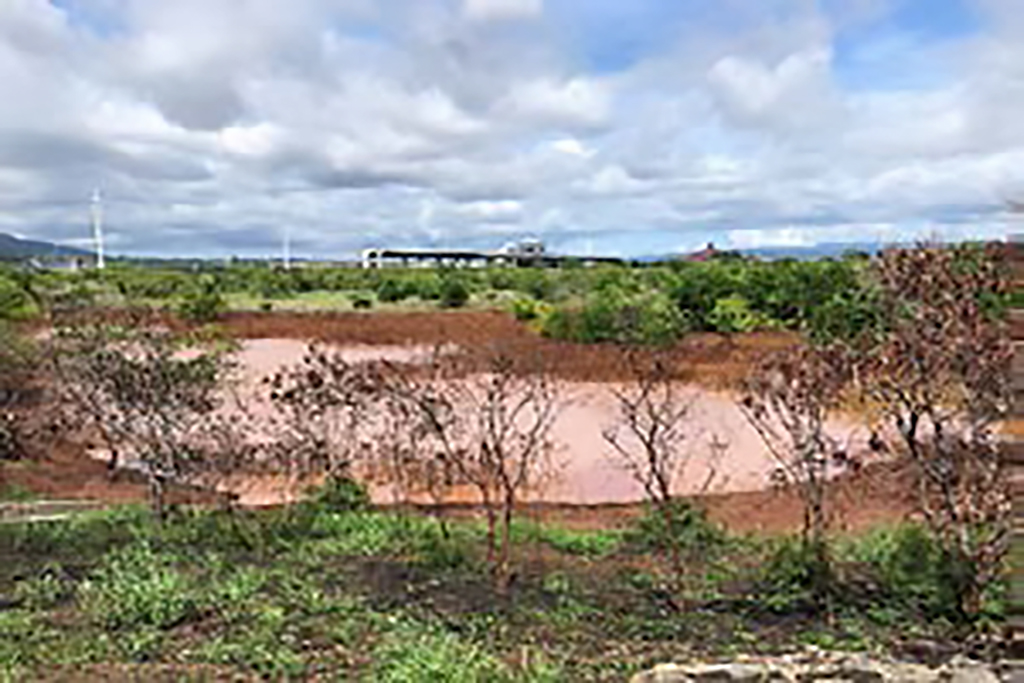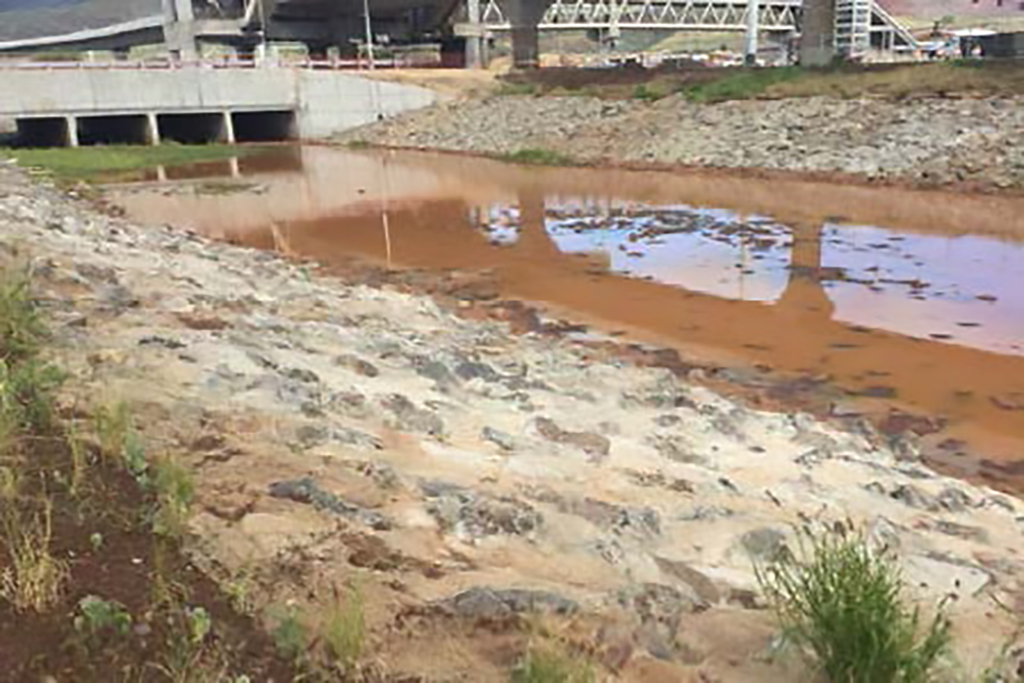

Description
Temporary basin that intercepts sediment-laden runoff and allows sediment to settle prior to discharge of runoff from the site.
Applications
- Drainage areas larger than 5 acres.
- Areas where sediment-laden runoff is discharged to the drainage system or watercourses.
Installation and Implementation Requirements
- Construct sediment basins prior to clearing, grubbing, or grading activities.
- Location shall be based on the following:
- Area where terrain forms a natural basin.
- Area which minimizes construction interference.
- Area where maximum benefit may be achieved from the existing terrain to minimize excavation or construction effort to install sediment basin.
- Area where failure of sediment basin will not cause property damage or loss of life.
- Area where maintenance crew may easily access sediment basin.
- Area where permanent detention basin will be constructed.
- Sediment basin shall be designed to allow 70% to 80% of the sediment to settle during a 24- to 40-hour detention time.
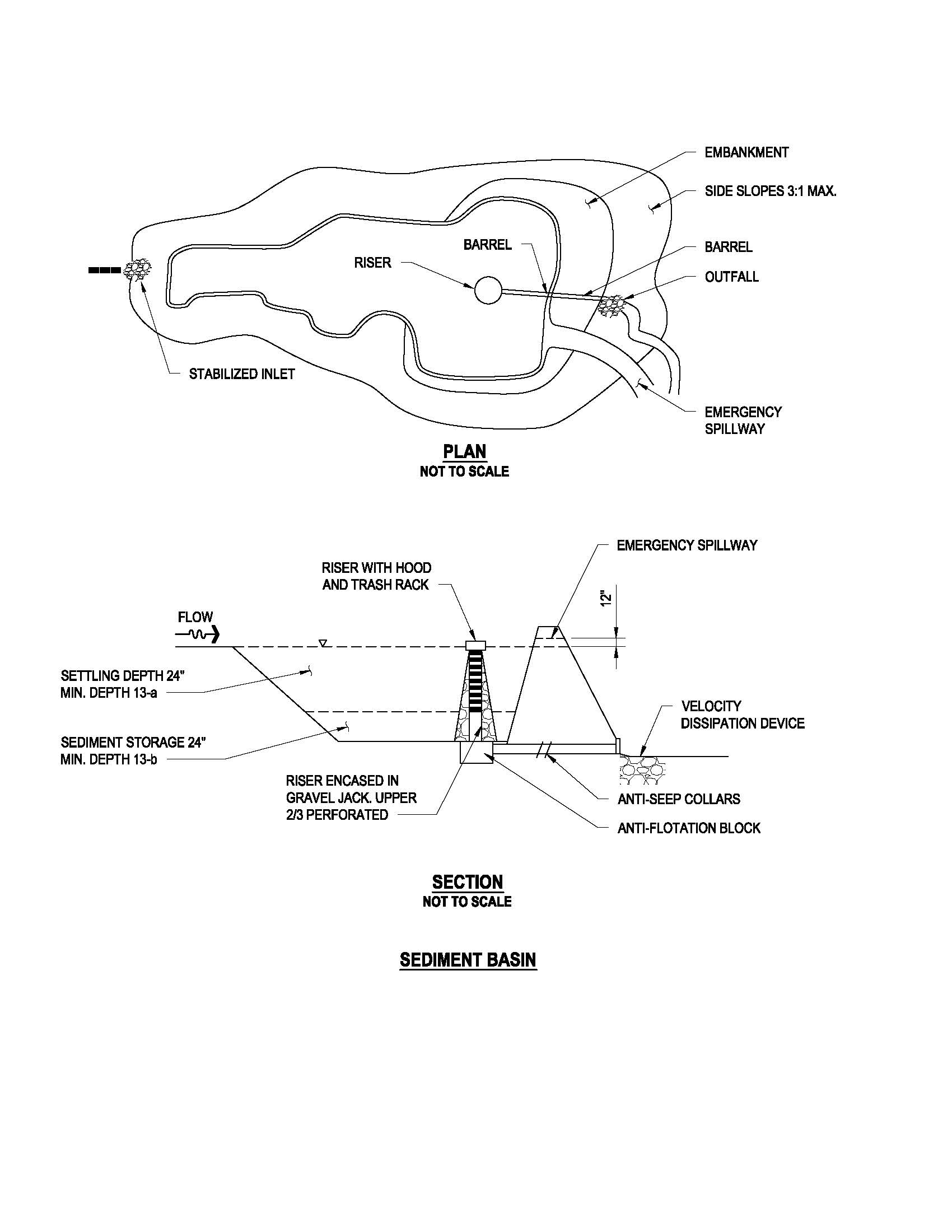
- The sediment basin is divided into 2 zones:
- Sediment storage zone with a minimum of 1 foot in depth.
- Settling zone with a minimum of 2 feet in depth.
- Sediment basin design shall be based on the following requirements:
- Settling zone volume shall be determined by the following equation:
V = 1.2(SD)Q/VSED
Where:
V = Settling zone volume.
SD = Settling depth, which shall be a minimum of 2 feet and greater than the average distance from inlet to outlet of the basin divided by 200.
VSED = Settling velocity of the design soil particle (medium silt). The settling velocity of a medium silt soil particle is 0.00096 feet per second.
Q = CIA
Where:
Q = Discharge rate measured in cubic feet per second.
C = Runoff coefficient.
I = Precipitation intensity for the 10-year, 1-hour rain event.
A = Area draining into the sediment basin in acres. - Basin geometry for the sediment storage zone shall be determined by a minimum depth of 1 foot and 3:1 (H:V) or flatter side slopes extending from the bottom of the basin. Basin bottom shall be level.
- Provide an emergency spillway with the top of the riser pipe 1 foot below the crest elevation.
- Sediment basin length to settling depth ratio (L/SD) shall not exceed 200.
- Sediment basin length to width ratio shall not be less than 6:1 or baffles shall be installed.
- Settling zone volume shall be determined by the following equation:
- Install and securely anchor anti-seep collar on the outlet pipe/riser.
- Construct sediment basin by excavating ground or constructing an embankment of compacted soil. Embankments should be stabilized.
- Sediment basin may have more than 1 inflow point.
- Stabilize inlet, outlet, and slopes of basin with rock or vegetation.
- Install fencing to prevent unauthorized entry and for safety purposes.
- Refer to the Storm Water Permanent Best Management Practices Manual for more information.
Considerations
- Limited design life of 12 to 18 months.
- Sediment basin removes medium size particles.
- Additional BMPs such as seeding, mulching, and diversion dikes may be used to reduce the amount of sediment intercepted by the basin.
- Requires protective fencing.
- Inappropriate for installation in live streams.
- Availability of right-of-way may limit size of sediment basin.
- Large basins may be subject to state and local requirements for dam safety.
What to Inspect
- Is there evidence of obstructions or damage to inlets and outlets?
- Is there erosion around outlets?
- Is fencing damaged?
Maintenance
- Remove obstructions from inlets and outlets and repair damage as necessary.
- Stabilize outlets and repair fencing as necessary.
- Remove sediment when the sediment storage volume is one-half full.
- Properly dispose of sediment and debris removed from sediment basin.
BMP Examples
Are adequate BMPs installed to prevent the discharge of pollutants from the project site? Hover over each photo for an explanation of the situation presented and if BMPs have been installed properly.