
Description
Practices and procedures to provide erosion and sediment control to preserve existing vegetation on a site with future land-disturbing activities.
Applications
- Areas on-site where no construction activity occurs or will occur at a later date.
- Areas where the existing vegetation should be preserved such as steep slopes, watercourses, and building sites in wooded areas.
- Natural resources or environmental protection areas requiring preservation by federal, state, and local governments such as wetlands and marshes.
Installation and Implementation Requirements
- Incorporate existing vegetation into landscaping plans when possible. Proper care of this vegetation before and after construction is required.
- Consider aesthetic and environmental values, tree/plant health, life span, sun exposure limitations, and space requirements when determining which vegetation to preserve.
- Avoid using vegetation which competes with the existing vegetation when preparing the landscaping plans.
- Phase construction activity to minimize the total amount of disturbed area to preserve existing vegetation.
- Clearly identify land to be disturbed to avoid damaging existing vegetation that is not meant to be disturbed.
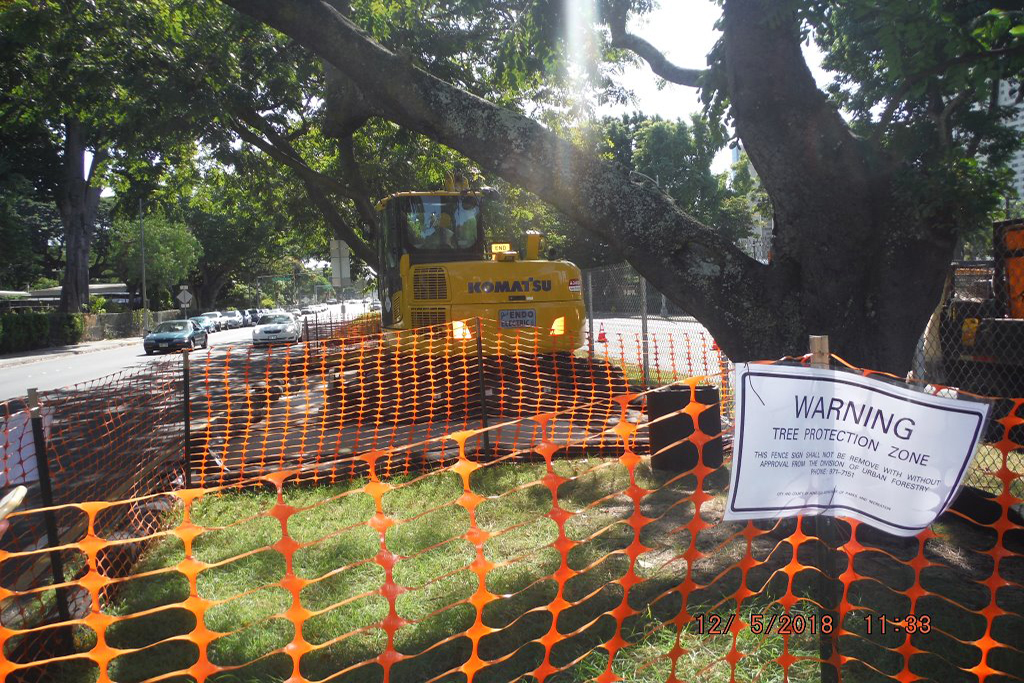
- Establish setback distances defined by devices such as berms, fencing, or signs. Setback distances are based on vegetation species, location, size, and age. Consider the type of construction activity in the vicinity of the vegetation. Construction activities are not permitted within the setback.
- Protect existing vegetation using the following methods:
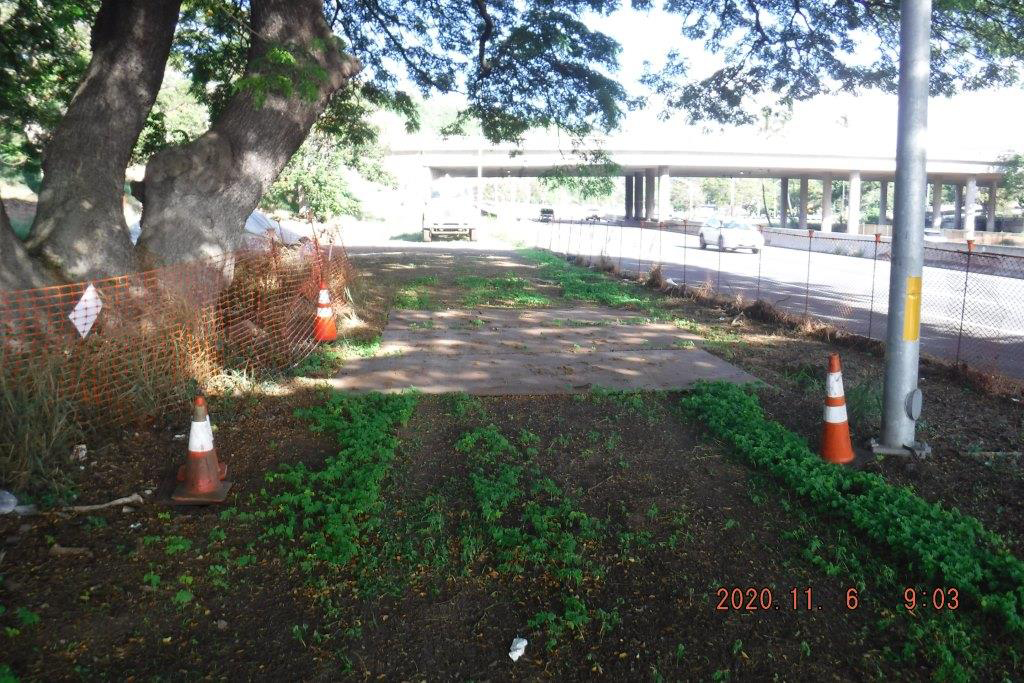
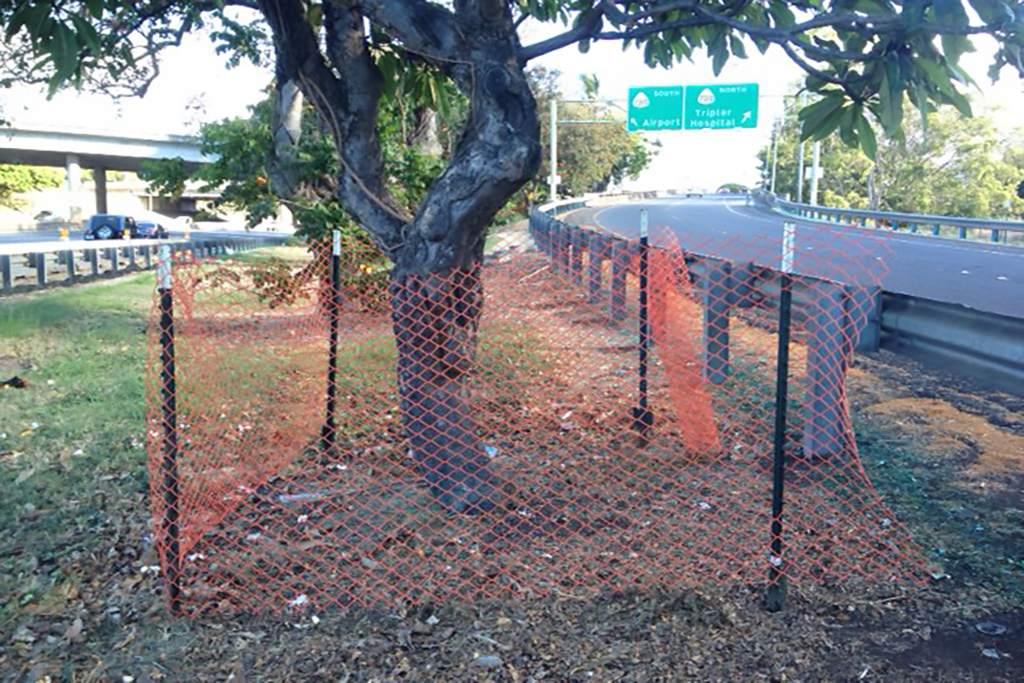
- Mark, flag, or fence areas of vegetation to be preserved.
- Designate limits of root system (tree drip line).
- Identify tree wells and retaining walls which are large enough to protect the root system.
- Limit grading to within 1 foot of the tree drip lines, if grading under the tree is necessary.
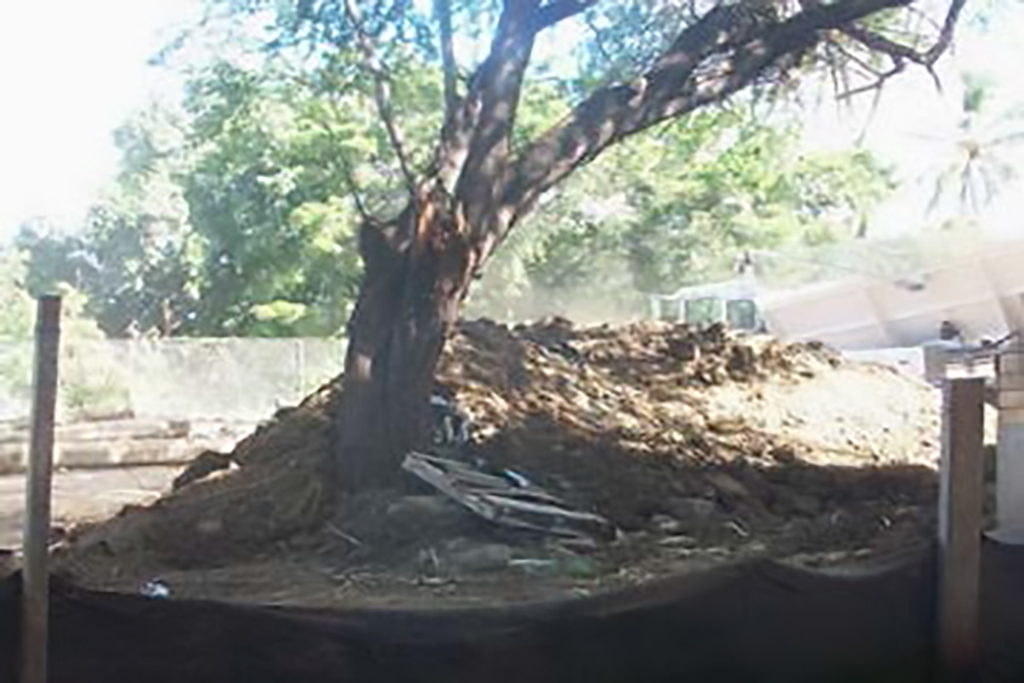
- Locate construction traffic routes, spoil piles, etc. away from existing vegetation.
- Consult with a licensed arborist to develop a plan if it is not possible, due to construction requirements, to provide a setback to the limits of the root system (tree drip line). This plan should include setback limits and other mitigation methods to provide protection for the subject tree or other vegetation.
- Do not park equipment on tree roots or near endangered species of vegetation.
- Consult with the appropriate agencies to approve any setbacks established if endangered species of vegetation are found within or adjacent to the project limits.
Considerations
- Requires advanced planning and coordination among the owner/developer, contractor, and designer.
- Limited use if final site design does not incorporate existing vegetation.
- Diverse site topography may result in additional expenses to satisfy vegetation preservation and the grading required for the site improvements.
- Limited space for construction activity makes it difficult to preserve existing vegetation.
What to Inspect
- Are any endangered species identified within the projects limits and protected prior to the start of construction?
- Is there construction equipment, materials, personal vehicles or spoil piles stored on a tree’s root system?
- Is construction activity occurring within vegetation setback limits?
Maintenance
- Immediately repair or replace damaged protection measures.
- Damage to existing trees should be examined and attended to by an arborist.
BMP Examples
Are adequate BMPs installed to prevent the discharge of pollutants from the project site? Hover over each photo for an explanation of the situation presented and if BMPs have been installed properly.