
Description
Temporary structures placed across a waterway to provide vehicular access while minimizing or reducing erosion and sedimentation.
Applications
- Streams or dry channels subject to frequent vehicular crossings.
- Detour roads on bridge replacement projects.
Installation and Implementation Requirements
- Design should be by a registered civil and/or structural engineer knowledgeable in stream flows, soil strength, and hydraulic and construction loading requirements.
- Provide stability in crossing and adjacent areas to withstand design flow. Choose a crossing site where erosion potential is low.
- Consider construction during dry periods to minimize disturbance and flow levels.
- Install means to trap sediment downstream of crossing.
- All materials used in construction should be clean, washed material with a cellular confinement system to prevent downstream contamination.
- Stabilize construction roadways (See section SC-10 Construction Roads and Parking Area Stabilization), adjacent work areas, and stream bottoms against erosion.
- Any temporary artificial obstruction within flowing water should be built with material that does not introduce sediment or silt into the watercourse.
- Temporary waterbody crossing should be built to minimize scour.
- Minimize disturbance to existing vegetation and immediately restabilize the waterway once construction activity is completed.
- Equipment operations that will encroach on the waterbody within the project must be free of grease, oil, fuel, and residues.
- Construction in waterbodies may require temporary stream diversion and dewatering.
- Restrain from excavating in waterways or embedding crossings.
- Minimize or eliminate the need to cross streams by using alternative routes, as applicable.
- Vehicle and equipment maintenance, fueling, storage and cleaning should not be conducted on temporary bridges.
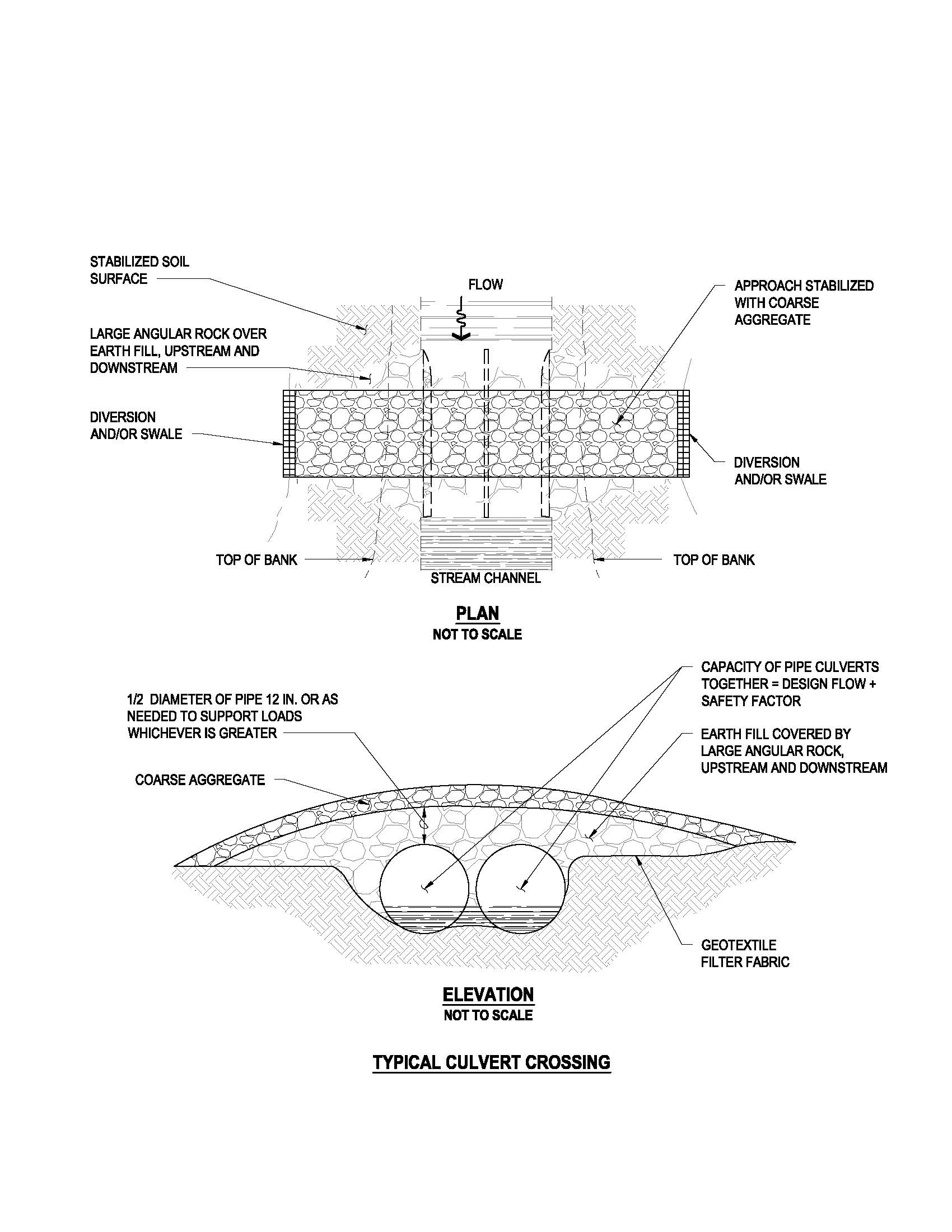
CULVERTS
- Applicable to perennial or intermittent streams.
- Effective in controlling erosion.
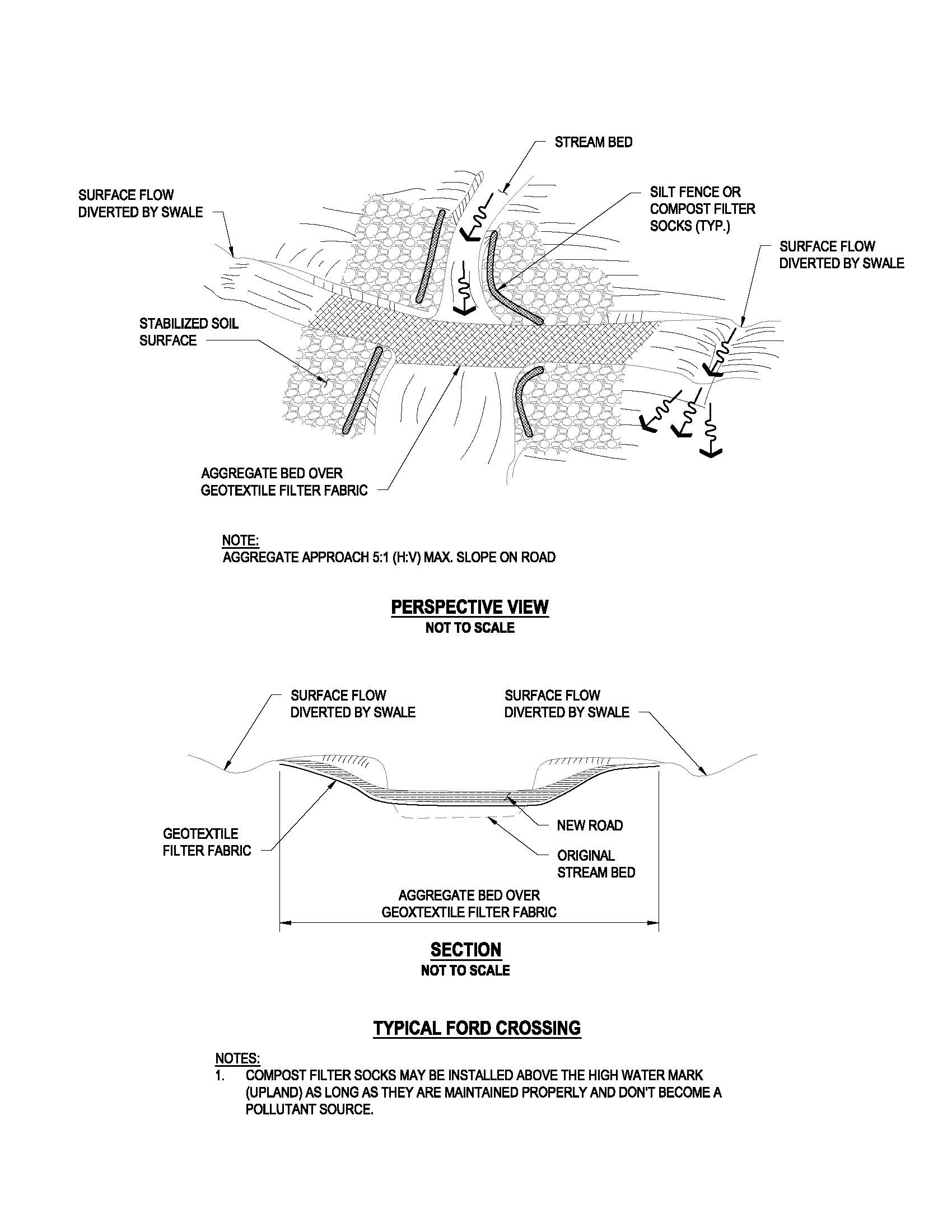
FORDS
- Applicable to arid areas during the dry season.
- Low maintenance.
- Provides minimal erosion and sediment control.
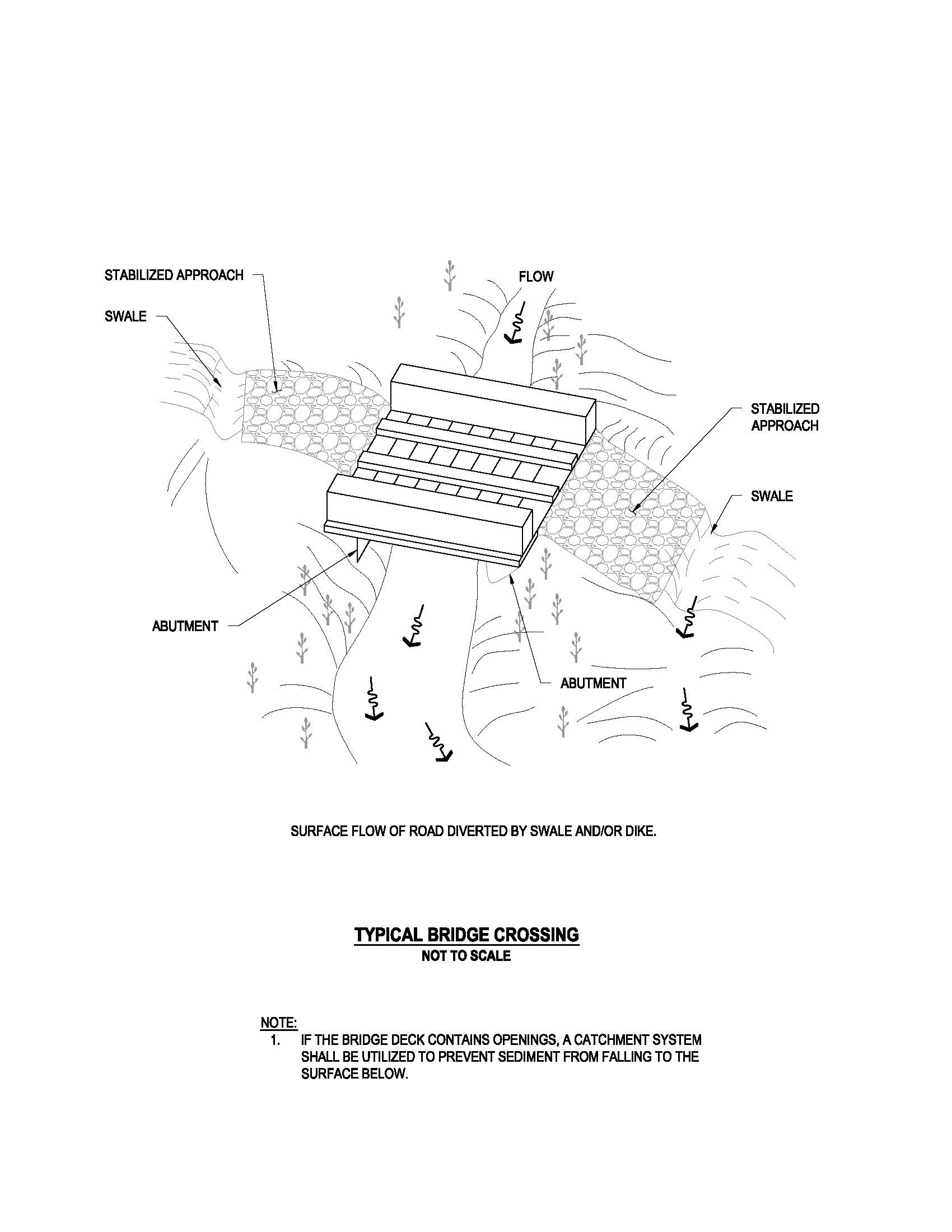
BRIDGES
- Applicable to high velocity, steep gradient conditions.
- Where temporary restrictions in the channel are not allowed.
Considerations
- Duration of construction projects shall not exceed 1 year.
- Not applicable for general traffic use.
- Additional BMPs will be necessary during installation and removal to minimize soil disturbance.
- Subject to permit requirements of the U.S. Army Corps of Engineers (USACE) and State of Hawaii Department of Land and Natural Resources (DLNR):
- USACE 404 Permits
- State of Hawaii Department of Health, Clean Water Branch (CWB) 401 Certifications
- DLNR, Commission on Water Resource Management (CWRM)
- Stream Channel Alteration Permit (Refer to Hawaii Administrative Rules (HAR) Title 13, Chapter 169-50, Protection of Instream Uses).
- Waterways will be disturbed during installation and removal.
- For construction traffic only. Not intended for public use.
- Bridges generally cost more than alternative methods, but cause the least amount of disturbance to existing conditions.
What to Inspect
- Are channels blocked from stream crossing during rain events?
- Is there debris accumulated in culverts, behind fords, or under bridges?
- Is there evidence of abutment erosion, rip-rap displacement, channel scour, piping in soil and/or structural degradation?
- What is the turbidity of water downstream?
Maintenance
- Remove silt and debris periodically.
- Replenish aggregate from culvert inlets and outlets as necessary.
- Remove temporary crossings once no longer needed.
BMP Examples
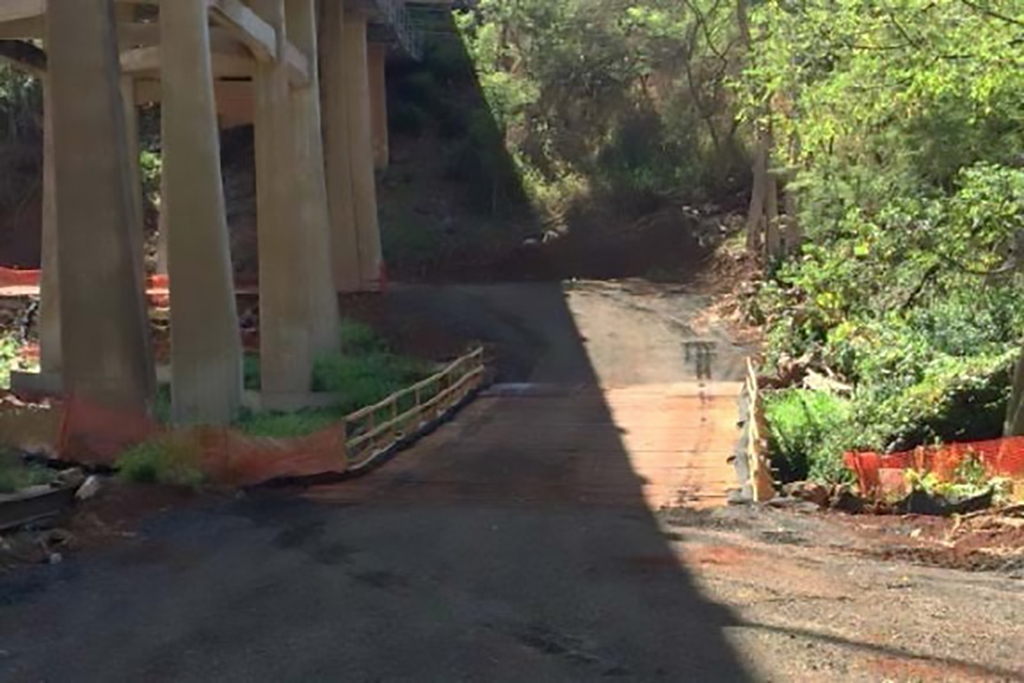
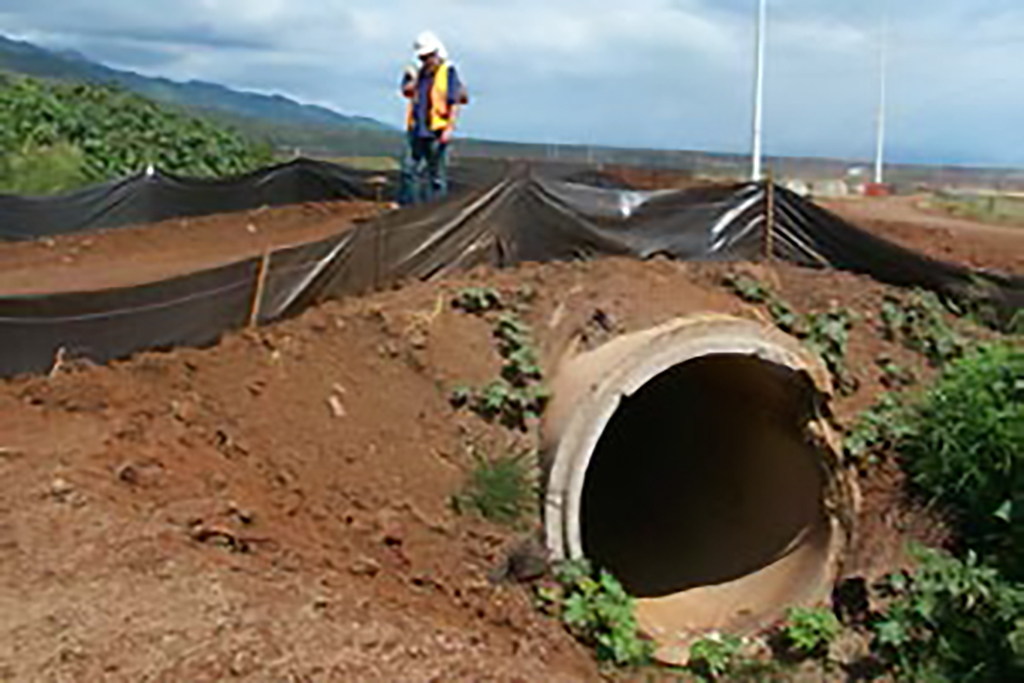
Are adequate BMPs installed to prevent the discharge of pollutants from the project site? Hover over each photo for an explanation of the situation presented and if BMPs have been installed properly.