
Description
Devices to protect soil surfaces from erosion by stabilizing slopes, and slowing the velocity of concentrated runoff.
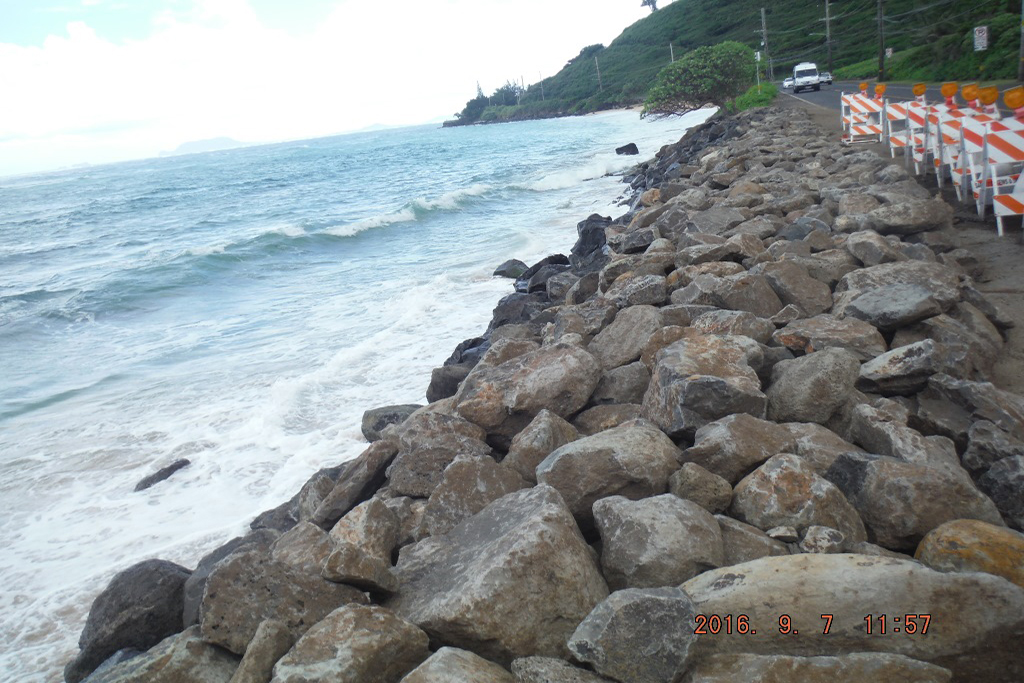
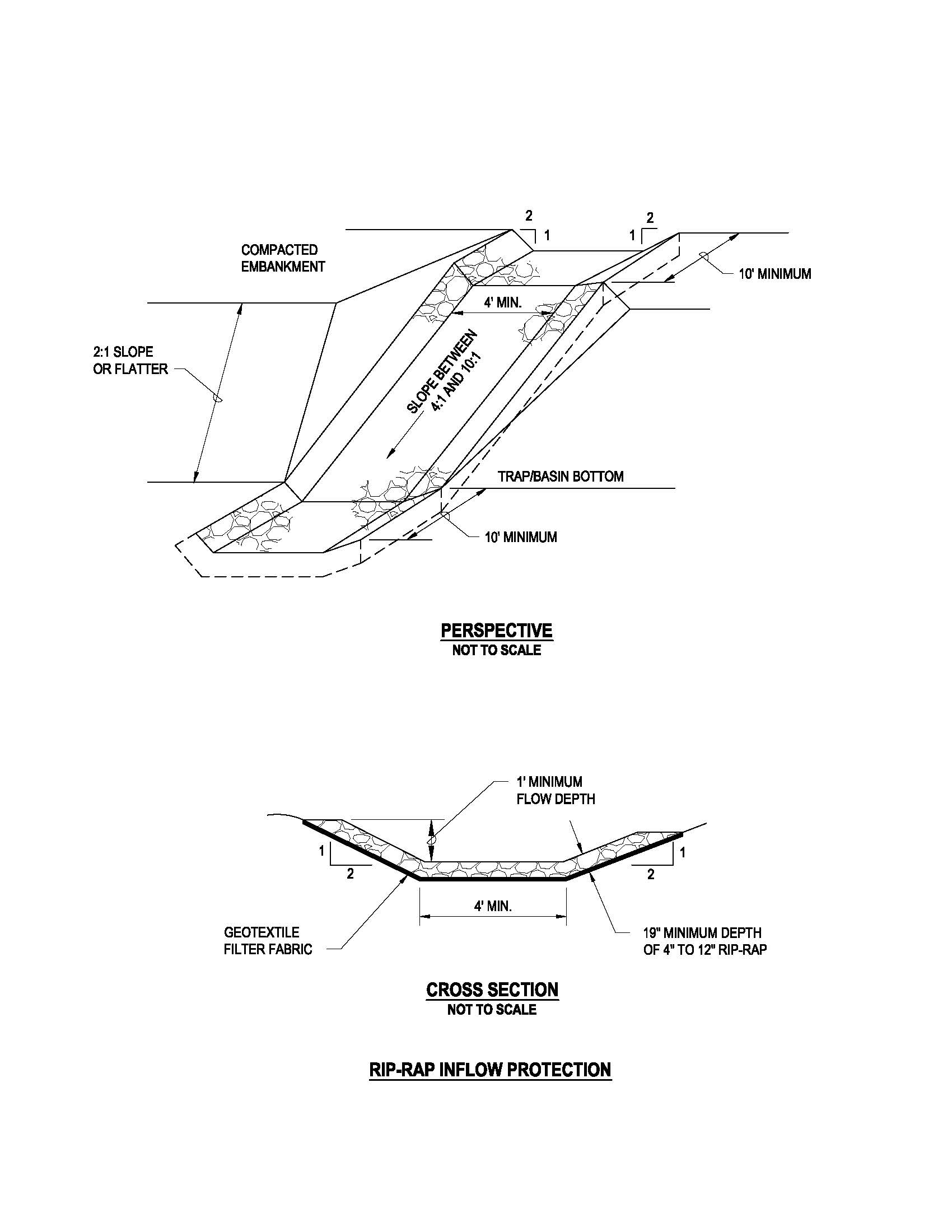
Rip-rap is large, irregular shaped rocks that fit into place to provide erosion control and slow the velocity of concentrated runoff.
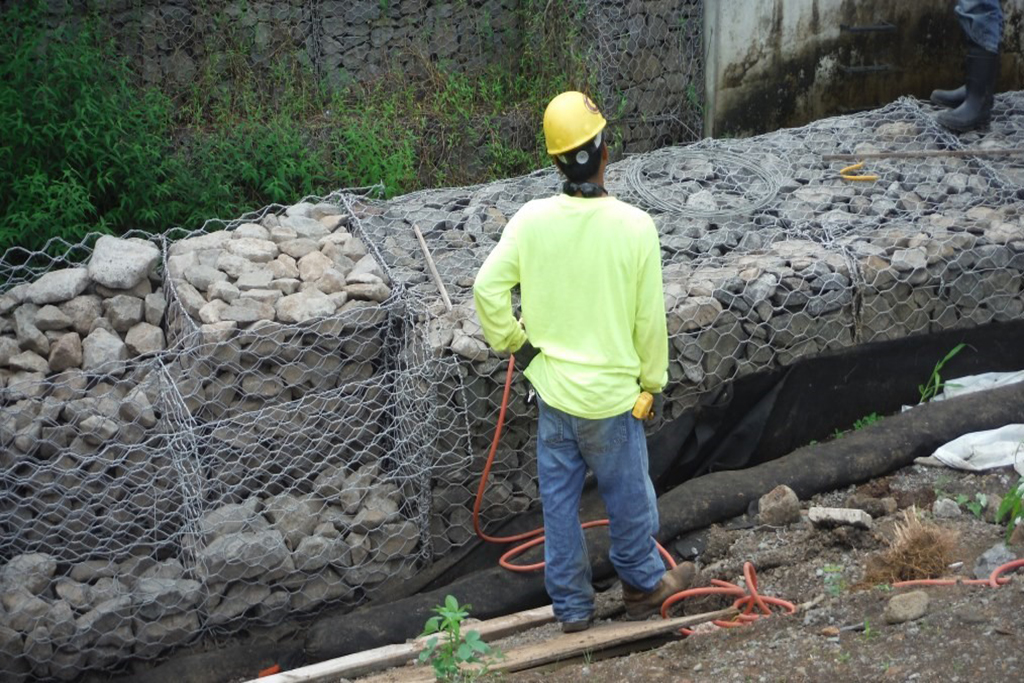
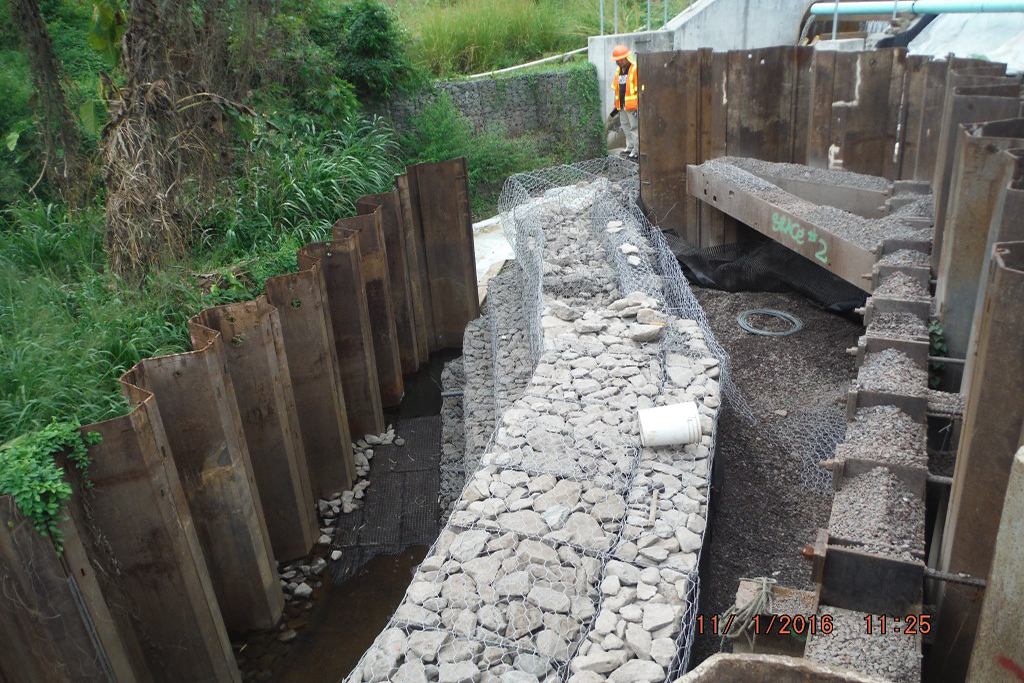
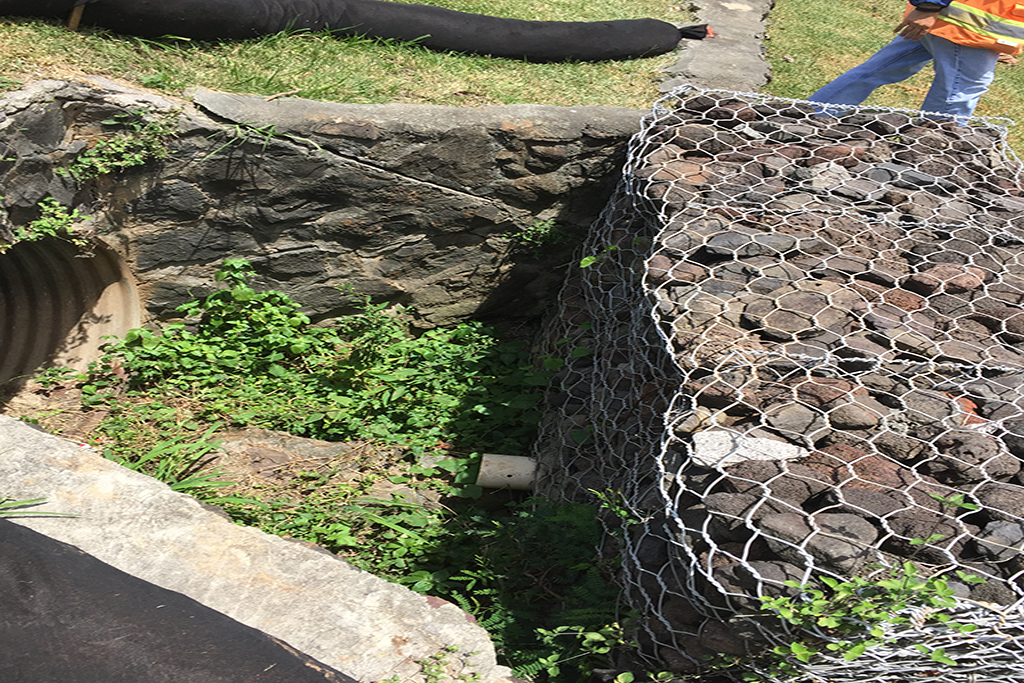
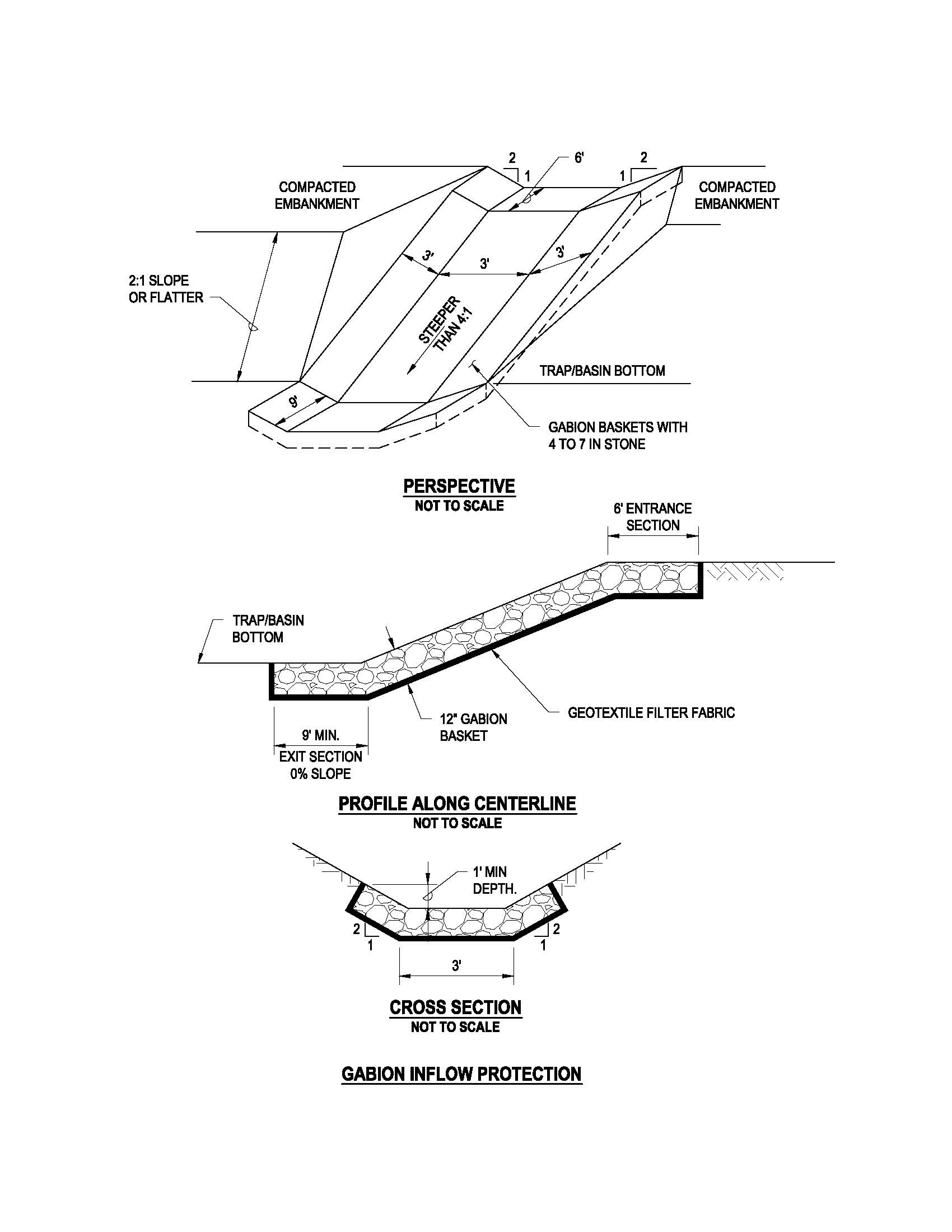
Gabions are wire baskets filled with rock, concrete, or other materials that lines drainageways to stabilize the flow channel along steep slopes, shorelines, and stream banks against erosion.
Applications
RIP-RAP
- Use of rip-rap inflow protection applies to slopes between 10:1 and 4:1 (H:V)
- Erosion-resistant ground cover
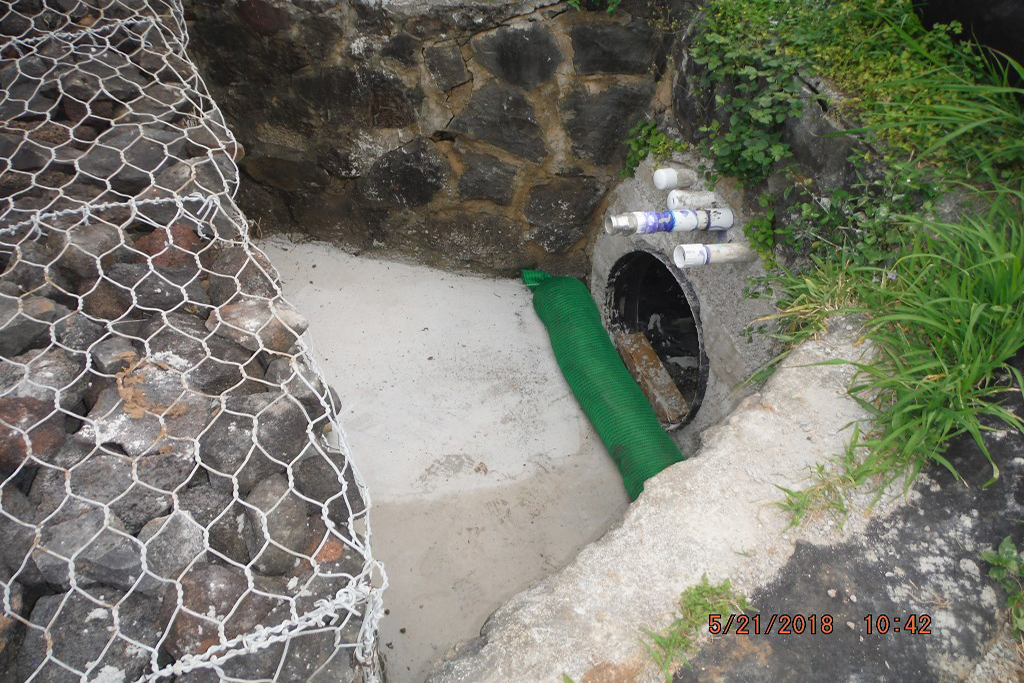
- Pipe outlet protection
- Channel lining
- Stabilized slopes
- Shoreline stabilization
- Dissipates high velocities or concentrations of storm water
GABIONS
- Use of gabion inflow protection applies to slopes exceeding 4:1 (H:V)
- Retaining structures
- Foundation construction e.g., dams
- Aesthetic purposes
- Rip-rap and gabions are relatively maintenance free and long lasting
- These devices can be used as a temporary or permanent BMP
- Temporary flood walls
- Shoreline stabilization
- Change direction of source water
- Energy dissipation device in channels
Installation and Implementation Requirements
RIP-RAP
- A licensed civil Engineer must provide a design and calculations for HDOT’s approval prior to installation.
- 2:1 (H:V) side slopes, 3-foot minimum bottom width, and 1-foot minimum depth.
- Line channel with 4- to 12-inch rip-rap at a depth of 18 inches. The larger stones must be predominant, while the smaller stones fill the voids.
- Install geotextile filter fabric under all rip-rap to separate rocks with underlying soil. Prior to placing geotextile filter fabric, provide a 3-day notice to the Engineer for inspection of foundation.
- Blend rip-rap into existing ground at uniform thickness so the stream width is not radically narrowed.
- Stones shall be clean, sound, durable, and angular in shape, resistant to weathering and water action, and free from organic material. Stones shall be shaped so that neither their breadth nor thickness are less than one-third their length, not rounded, and have minimum unit weight of 155 pounds per cubic foot. Refer to 2005 Hawaii Standard Specifications for Road and Bridge Construction, Standard Specifications & Special Provisions Section 655.
GABIONS
- A licensed Civil Engineer must provide a design and calculations for HDOT’s approval prior to installation.
- Gabion inflow may be used in lieu of rip-rap inflow protection.
- Gabions are prefabricated wire baskets filled with a well-graded mixture of aggregate. The larger stone must be predominant, while the smaller stones fill the voids.
- Baskets must be made of hexagonal triple twist mesh with heavily galvanized steel wire.
- Construct 2:1 (H:V) side slopes, 3-foot bottom width, and 1-foot deep from 9-foot × 3-foot × 1-foot gabion baskets. Install geotextile filter fabric under all gabion baskets.
- A bedding layer of aggregate can be placed before the gabion baskets are installed to level the surface and maximize stability.
- Fill gabion baskets with 4- to 7-inch clean (no fines) stone.
- Hand place rocks in gabion baskets to minimize voids and/or bulges. Rock edges must not poke through the gabion basket. Install gabions in accordance with manufacturer’s recommendations.
- The wire mesh of the gabion basket will eventually fail due to corrosion. The designer must consider this and plan for overall stability when the basket fails.
Considerations
- Gabion installation is labor intensive (hand installation).
- Costly compared to vegetative devices.
- Not always aesthetically pleasing.
- Scour tends to occur at toe and end of rip-rap.
- If gabions or rip-rap is used within a U.S. Army Corps of Engineers (USACE) jurisdictional waterbody that coordination with the USACE is required.
What to Inspect
- Is there evidence of scour around rip-rap or gabions?
- Has debris and/or sediment accumulated around or in rip-rap?
- Has an underlying filter fabric/geotextile been installed?
- Has the BMP device been installed correctly?
- Are rocks displaced?
- Does the gabion structure show signs of bulging or gaps?
- Is there damage to the gabion basket?
- Is there evidence of rock failure?
- Does the BMP need to be cleaned out or replaced?
Maintenance
- Remove accumulated sediment lodged between rip-rap that is affecting filtration purposes.
- Replace/refresh rocks that have been displaced.
- Repair damage to filter fabric/geotextile under rip-rap.
- Any evident damage or abnormalities to the gabion must be repaired.
BMP Examples
Are adequate BMPs installed to prevent the discharge of pollutants from the project site? Hover over each photo for an explanation of the situation presented and if BMPs have been installed properly.