
Description
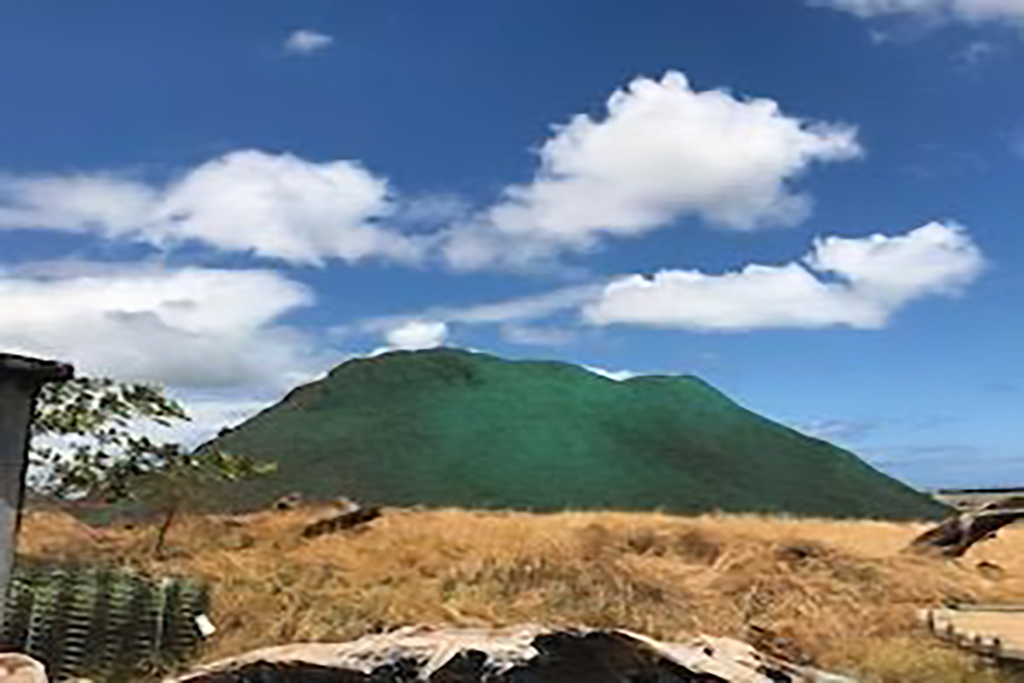
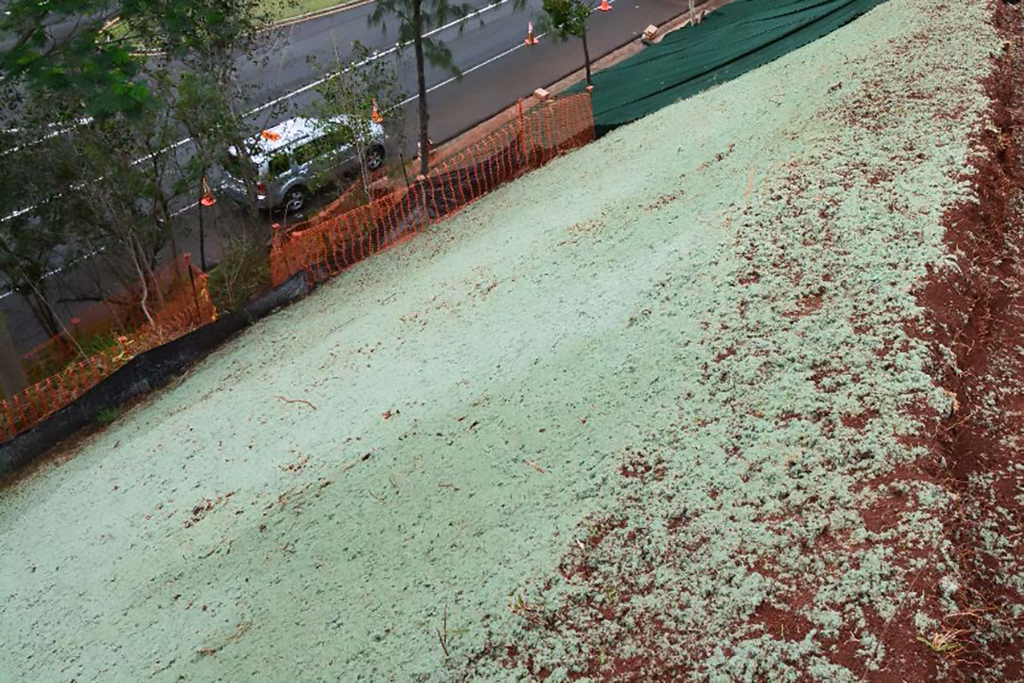
Application of soil binders to exposed soil to temporarily prevent water- and wind-induced erosion.
Applications
- Disturbed areas requiring short-term temporary protection.
- Good alternative to mulches in areas where grading activities will soon resume.
- Suitable for use on stockpiles.
- Applied in conjunction with mulching or seeding applications.
Installation and Implementation Requirements
- Soil types will dictate appropriate soil binders to be used.
- A soil binder must be environmentally benign (non-toxic to plant and animal life), easy to apply, easy to maintain, economical, and must not stain paved or painted surfaces. Soil binders must not pollute storm water. Prior to application, submit the manufacturer’s material product data sheets to the Engineer for review and approval.
- Performance of soil binders depends on temperature, humidity, and traffic across treated areas.
- Avoid overspray onto roads, sidewalks, lined drainage channels (i.e., concrete swales and concrete culverts), existing vegetation, etc.
SELECTING A SOIL BINDER
- Properties of common soil binders used for erosion control are provided in the table following the “Maintenance” section. Use the Table to select an appropriate soil binder.
- Consult with the Engineer if soil binders are an appropriate option for temporary stabilization.
- Factors to consider when selecting a soil binder include the following:
- Suitability to situation
- Consider where the soil binder will be applied, if it needs a high resistance to leaching or abrasion, and whether it needs to be compatible with any existing vegetation. Determine the length of time soil stabilization will be needed, and if the soil binder will be placed in an area where it will degrade rapidly. In general, slope steepness is not a discriminating factor for the listed soil binders.
- Soil types and surface materials
- Fines and moisture content are key properties of surface materials. Consider a soil binder’s ability to penetrate, likelihood of leaching, and ability to form a surface crust on the surface materials.
- Frequency of application
- The frequency of application can be affected by subgrade conditions, surface type, climate, and maintenance schedule. Frequent applications could lead to high costs. Application frequency may be minimized if the soil binder has good penetration, low evaporation, and good longevity. Consider also that frequent application will require frequent equipment cleanup.
- Suitability to situation
PLANT-MATERIAL BASED (SHORT-LIVED) BINDERS
- Guar: Guar is a non-toxic, biodegradable, natural galactomannan (or plant carbohydrates/sugars) based hydrocolloid treated with dispersant agents for easy field mixing. It must be mixed with water at the rate of 11 to 15 pounds per 1,000 gallons. Recommended minimum application rates are as provided in the table below.
- Psyllium: Psyllium is composed of the finely ground mucilloid coating of seeds (from Plantago plant) that is applied as a dry powder or in a wet slurry to the surface of the soil. It dries to form a firm but rewettable membrane that binds soil particles together but permits germination and growth of seed. Psyllium requires 12- to 18-hours drying time. Application rates must be 80 to 200 pounds/acre, with enough water in solution to allow for a uniform slurry flow.
- Starch: Starch is non-ionic, cold water soluble (pre-gelatinized) granular cornstarch. The material is mixed with water and applied at the rate of 150 pounds/acre. Approximate drying time is 9 to 12 hours.
Slope Gradient (H:V) | Pounds/Acre |
|
|
|
|
|
|
|
|
|
|
- Pitch and Rosin Emulsion: Generally, a non-ionic pitch and rosin emulsion has a minimum solids content of 48%. The rosin must be a minimum of 26% of the total solids content. The soil stabilizer must be non-corrosive, water dilutable emulsion that upon application cures to a water insoluble binding and cementing agent. For soil erosion control applications, the emulsion is diluted and must be applied as follows:
- For clayey soil: 5-parts water to 1-part emulsion.
- For sandy soil: 1-part water to 1-part emulsion.
- Application can be by water truck or hydraulic seeder with the emulsion and product mixture applied at the rate specified by the manufacturer.
POLYMERIC EMULSION BLEND BINDERS
- Acrylic Copolymers and Polymers: Polymeric soil stabilizers must consist of a liquid or solid polymer or copolymer with an acrylic base that contains a minimum of 55% solids. The polymeric compound must be handled and mixed in a manner that will not cause foaming or must contain an anti-foaming agent. The polymeric emulsion must not exceed its shelf life or expiration date; manufacturers should provide the expiration date. Polymeric soil stabilizer must be readily miscible in water, non-injurious to seed or animal life, non-flammable, must provide surface soil stabilization for various soil types without totally inhibiting water infiltration, and must not reemulsify when cured. The applied compound should air cure within a maximum of 36 to 48 hours. Liquid copolymer must be diluted at a rate of 10-parts water to 1-part polymer and the mixture applied to soil at a rate of 1,175 gallons/acre.
- Liquid Polymers of Methacrylates and Acrylates: This material consists of a tackifier/sealer that is a liquid polymer of methacrylates and acrylates. It is an aqueous 100% acrylic emulsion blend of 40% solids by volume that is free from styrene, acetate, vinyl, ethoxylated surfactants, or silicates. For soil stabilization applications, it is diluted with water in accordance with manufacturer’s recommendations and applied with a hydraulic seeder at the rate of 20 gallons/acre. Drying time is 12 to 18 hours after applications.
- Copolymers of Sodium Acrylates and Acrylamides: These materials are non-toxic, dry powders that are copolymers of sodium acrylate and acrylamide. They are mixed with water and applied to the soil surface for erosion control at rates that are determined by slope gradient, as described in the table below.
- Polyacrylamide and Copolymer of Acrylamide: Linear copolymer polyacrylamide is packaged as a dry flowable solid. When used as a standalone stabilizer, it is diluted at a rate of 11 pounds/1,000 gallons of water and applied at the rate of 5 pounds/acre.
- Hydro-Colloid Polymers: Hydro-Colloid Polymers are various combinations of dry flowable polyacrylamides, copolymers and hydro-colloid polymers that are mixed with water and applied to the soil surface at rates of 55 to 60 pounds/acre. Drying time is 0 to 4 hours.
Slope Gradient (H:V) | Pounds/Acre |
|
|
|
|
|
|
- Gypsum: This is a formulated gypsum-based product that readily mixes with water and mulch to form a thin protective crust on the soil surface. It is composed of high purity gypsum that is ground, calcined and processed into calcium sulfate hemihydrate with a minimum purity of 86%. It is mixed in a hydraulic seeder and applied at rates of 4,000 to 12,000 pounds/acre. Drying time is 4 to 8 hours.
APPLYING SOIL BINDERS
- After selecting an appropriate soil binder, the untreated soil surface must be prepared before applying the soil binder. The untreated soil surface must contain sufficient moisture to assist the agent in achieving uniform distribution. The following steps shall be followed:
- Follow manufacturer’s specifications for application rates, pre-wetting of application area, and cleaning of equipment after use.
- Prior to application, roughen embankment and fill areas.
- Consider the drying time for the selected soil binder and apply with sufficient time before anticipated rainfall. Soil binders shall not be applied during or immediately before rainfall.
- Avoid overspray onto roads, sidewalks, drainage channels (i.e., concrete swales and concrete culverts), sound walls, existing vegetation, etc. Soil binders shall not be applied to areas with standing water, under rainy conditions, or when the temperature is below 40° Fahrenheit during the curing period.
- More than 1 treatment is often necessary, although the second treatment may be diluted or have a lower application rate.
- Generally, soil binders require a minimum curing time of 24 hours before they are fully effective. Refer to manufacturer’s instructions for specific cure time.
- For liquid agents:
- Crown or slope ground to avoid ponding.
- Uniformly pre-wet ground at 0.03 to 0.3 gallons/yard2 or according to manufacturer’s recommendations.
- Apply solution under pressure. Overlap solution 6 to 12 inches.
- All treated area to cure for the time recommended by the manufacturer; typically, at least 24 hours.
- Apply second treatment before first treatment becomes ineffective, using 50% application rate.
- In low humidity, reactivate chemicals by rewetting with water at 0.1 to 0.2 gallons/yard².
Considerations
- Soil binders are temporary in nature and may need reapplication.
- Some soil binders may not be compatible with existing vegetation.
- Soil binders require a minimum curing time until fully effective, as prescribed by the manufacturer.
- Soil binders may need reapplication after a rain event.
- Soil binders will generally experience spot failures during heavy rainfall events. If runoff penetrates the soil at the top of a slope treated with a soil binder, it is likely that the runoff will undercut the stabilized soil layer and discharge at a point further down slope.
- Soil binders do not hold up to pedestrian or vehicular traffic across treated areas.
- Soil binders may not penetrate soil surfaces made up primarily of silt and clay, particularly when compacted.
- Some soil binders may not perform well with low relative humidity. Under rainy conditions, some agents may become slippery or leach out of the soil.
- Soil binders may not cure if low temperatures occur within 24 hours of application.
- A sampling and analysis plan should be incorporated into the Storm Water Pollution Prevention Plan (SWPPP), as soil binders could be a source of non-visible pollutants.
What to Inspect
- Has soil binder broken down due to natural elements?
- Is there evidence of erosion?
- Does the soil binder need to be reapplied?
- Are the soil binders an effective BMP for the area?
Maintenance
- Repair areas where erosion is evident and reapply BMPs as soon as possible. Care must be exercised to minimize the damage to protected areas while making repairs, as any area damaged will require reapplication of BMPs.
- Reapply the selected soil binder as needed to maintain effectiveness.
Evaluation Criteria | Binder Type | |||
Plant Material Based (Short-lived) | Plant Material Based (Long-lived) | Polymeric Emulsion Blends | Cementitious-Based Binders | |
Relative Cost | Low | Low | Low | Low |
Resistance to Leaching | High | High | Low to Moderate | Moderate |
Resistance to Abrasion | Moderate | Low | Moderate to High | Moderate to High |
Longevity | Short to Medium | Medium | Medium to Long | Medium |
Minimum Curing Time Before Rain | 9 to 18 hours | 19 to 24 hours | 0 to 24 hours | 4 to 8 hours |
Compatibility with Existing Vegetation | Good | Poor | Poor | Poor |
Mode of Degradation | Biodegradable | Biodegradable | Photodegradable/ Chemically Degradable | Photodegradable/ Chemically Degradabe |
Labor Intensive | No | No | No | No |
Specialized Application Equipment | Water Truck or Hydraulic Mulcher | Water Truck or Hydraulic Mulcher | Water Truck or Hydraulic Mulcher | Water Truck or Hydraulic Mulcher |
Liquid/Powder | Powder | Liquid | Liquid/powder | Powder |
Surface Crusting | Yes, but dissolves on rewetting | Yes | Yes, but dissolves on rewetting | Yes |
Clean Up | Water | Water | Water | Water |
Erosion Control Application Rate | Varies | Varies | Varies | 4,000 to 12,000 pounds/acre |
BMP Examples
Are adequate BMPs installed to prevent the discharge of pollutants from the project site? Hover over each photo for an explanation of the situation presented and if BMPs have been installed properly.