
Description
Practices and procedures to prevent or reduce the discharge of pollutants to storm water from vehicle and equipment fuel leaks or spills.
Applications
- Construction or maintenance activities involving fueling of vehicles or equipment.
Installation and Implementation Requirements
- Use off-site fueling sites when practical. Off-site fueling sites may be better equipped to service and handle spills due to multiple vehicles or pieces of equipment.
- If on-site fueling is necessary, locate designated fuel areas away from storm water run-on and runoff, and locate fueling areas at least 50 feet, or as far as practicable, from downstream drainage facilities and watercourses to prevent contamination of storm water. If impracticable, consider implementing additional BMPs or secondary containment when fueling.
- Avoid “topping-off” of fuel tanks.
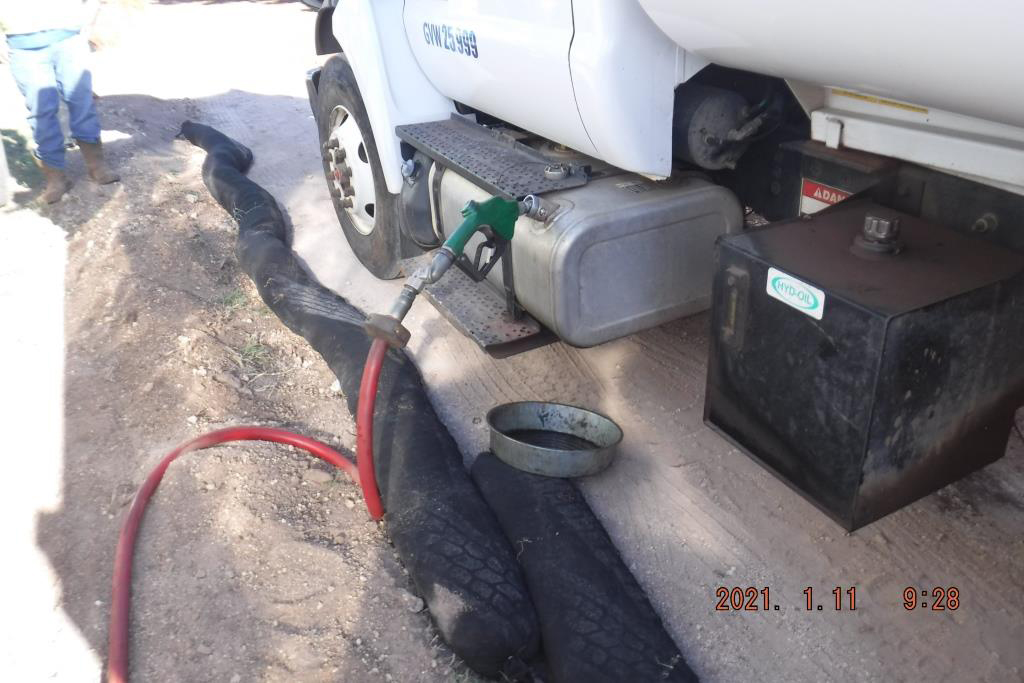
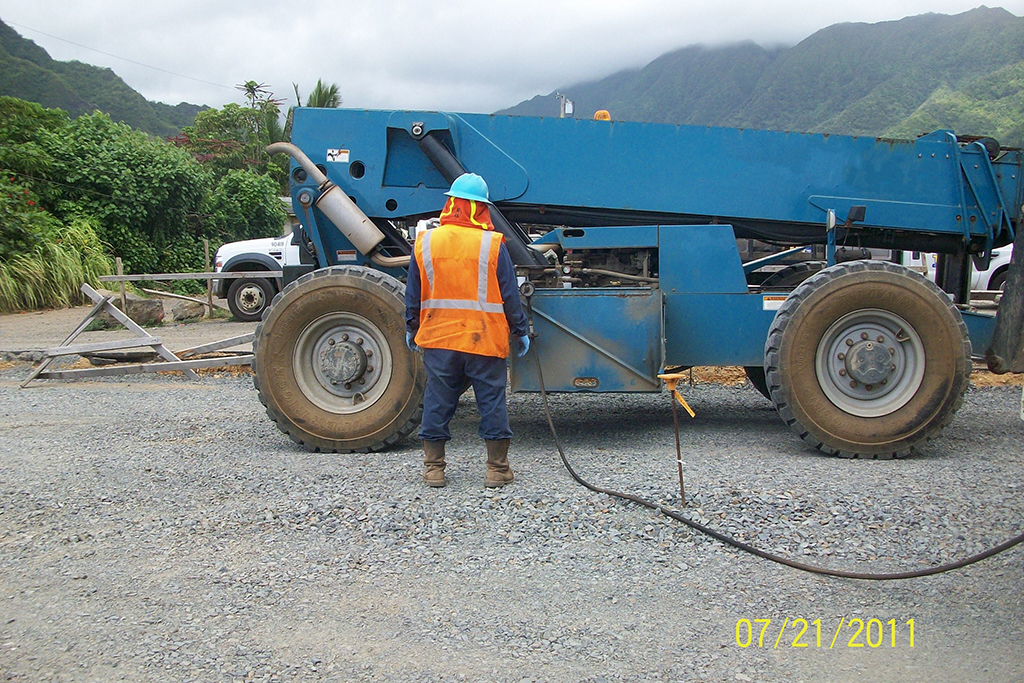
- Drip pans or absorbent pads shall be used to absorb leaks or spills during fueling.
- Fueling must be performed on a leveled area.
- Protect fueling areas with berms and dikes to prevent run-on, runoff, and to contain spills.
- Have absorbent spill cleanup materials located in fueling areas.
- Use absorbent materials on small spills. Do not hose down or bury the spill. Promptly remove and properly dispose the absorbent materials. See section SM-10 Spill Prevention and Control for more information.
- Clean up spills or contaminated surfaces immediately, using dry cleanup measures where possible, and eliminate the source of the spill to prevent a discharge or a furtherance of an ongoing discharge. Store hazardous materials and fluids under cover and in secondary containment. See section SM-9 Hazardous Materials and Waste Management for more information.
- Minimize mobile fueling of construction equipment by transporting equipment to designated areas for fueling.
- Train employees on proper fueling and cleanup procedures.
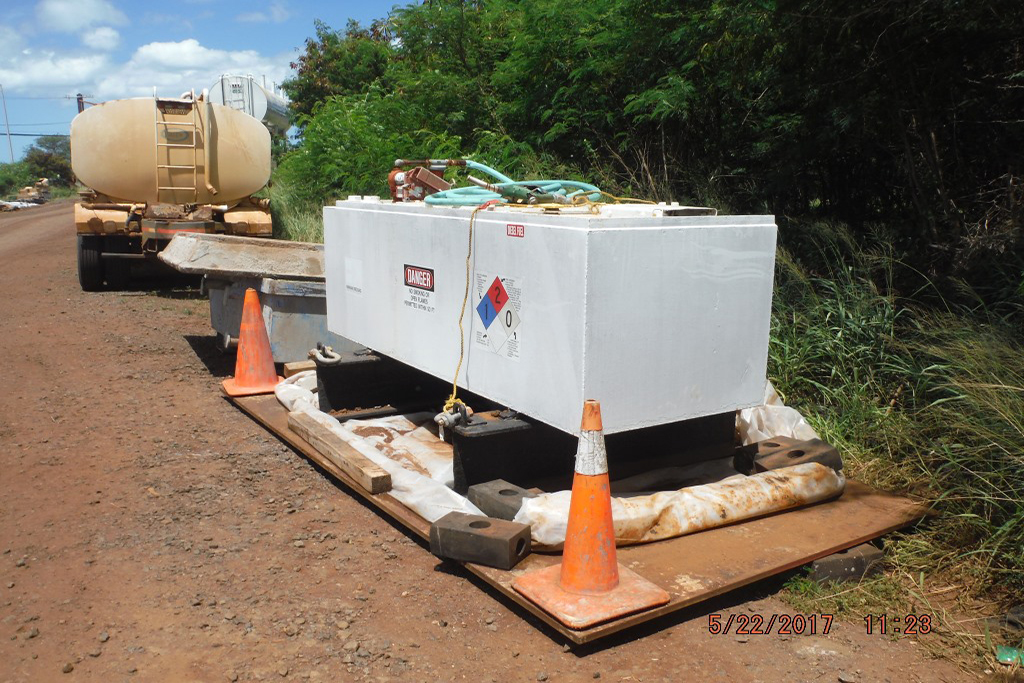
- Put fuel pods and hoses in secondary containment to prevent hoses/nozzles from leaking.
- Store diesel fuel, oil, hydraulic fluid, or other petroleum products or other chemicals in watertight containers and provide cover or secondary containment. If container is metal, cover is required.
- Containers shall be properly labeled.
- Comply with federal and state requirements regarding stationary, above ground storage tanks.
- Comply with the Spill Prevention Control Countermeasures (SPCC) requirements in 40 CFR 112 and section 311 of the Clean Water Act (CWA).
What to Inspect
- Is there evidence of fuel spills or leaks on the ground?
- Are any vehicles and/or equipment leaking fuel?
- Are hoses/nozzles in secondary containment?
- Are berms and absorbent pads well-maintained and effective?
- Is there an ample amount of spill cleanup materials on-site?
- Are hazardous fluids properly stored?
Maintenance
- Keep an ample supply of materials for fuel spill control and cleanup located on-site near fueling areas available at all times.
- Properly dispose of absorbent pads, hazardous material and contaminated soil.
BMP Examples
Are adequate BMPs installed to prevent the discharge of pollutants from the project site? Hover over each photo for an explanation of the situation presented and if BMPs have been installed properly.