
Description
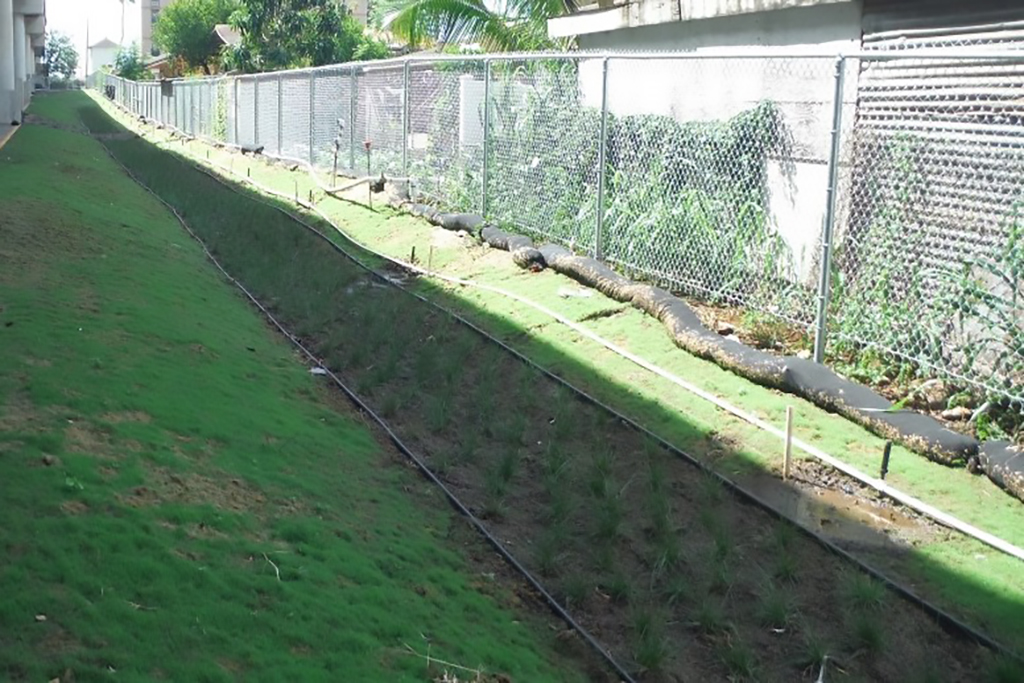
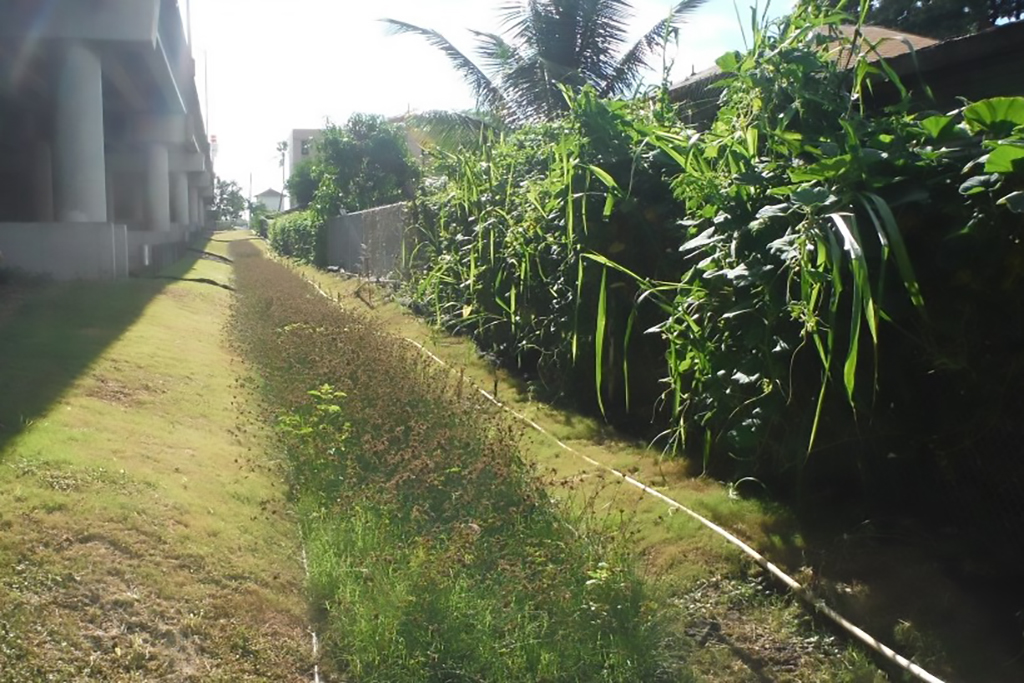
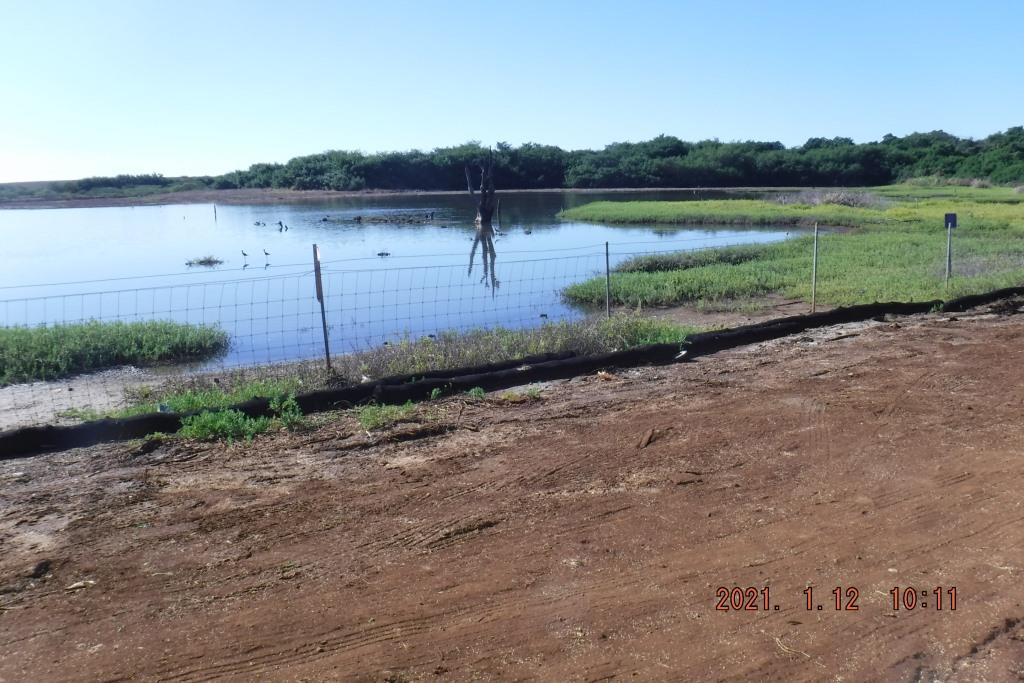
Vegetative buffer strips and channels help to protect ditches and banks from erosion, increase infiltration, and remove pollutants from surface runoff providing protection to downstream receiving inlets and waterbodies.
Applications
- Any site suitable for establishment of vegetation.
- Vegetated buffer strips are appropriate for uncurbed, paved areas; steep slopes; potentially unstable slopes; and areas adjacent to sensitive waterbodies and state waters.
- Vegetated channels are appropriate for surface runoff conveyed by channels to downstream inlets or receiving waters.
Installation and Implementation Requirements
- Minimize the disturbance to existing vegetation at the site when installing a filter strip. Proper care of existing vegetation before and after construction is required. See section SM-17 Preservation of Existing Vegetation for more information.
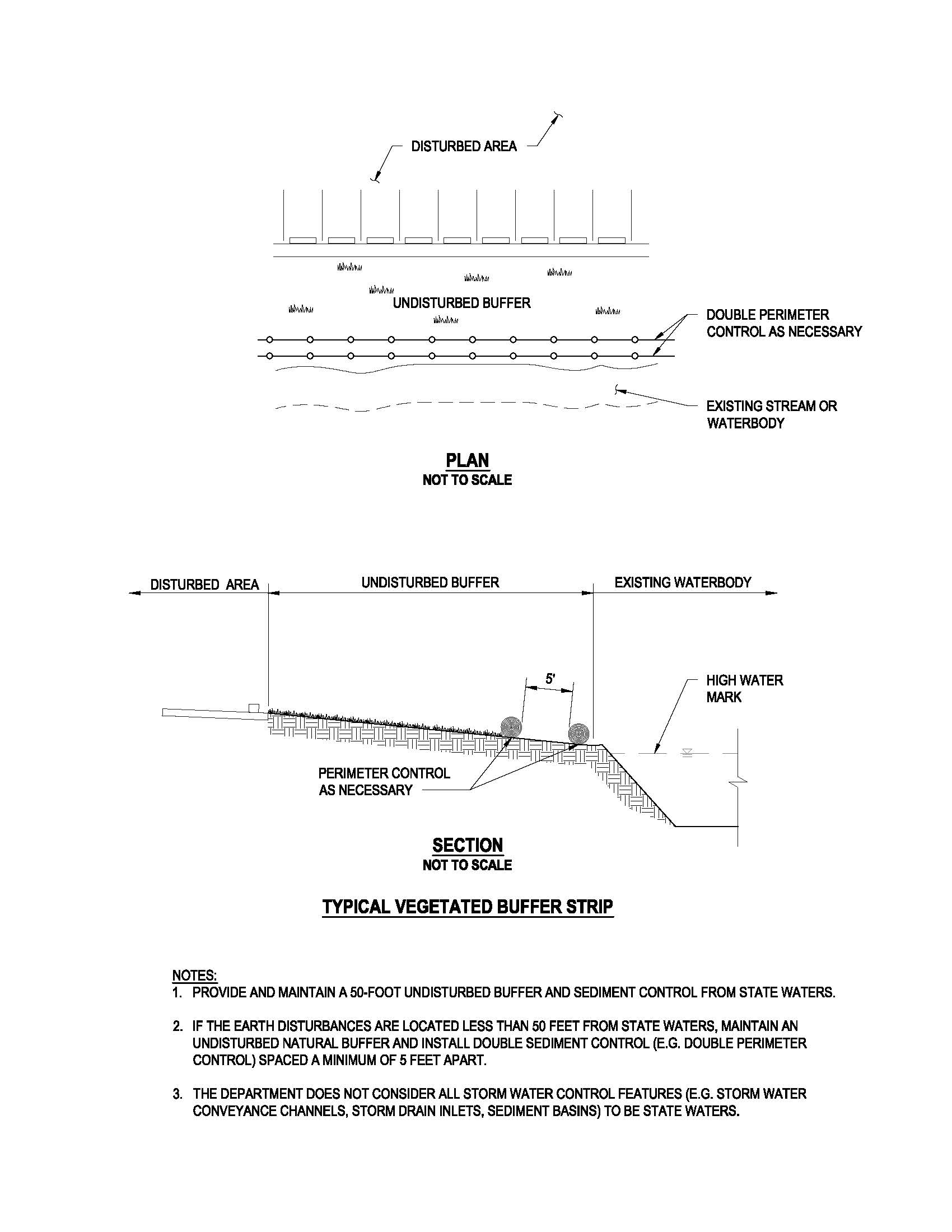
- If a boundary of the disturbed area is within 50 feet of state waters, comply with 1 of the following:
- Provide and maintain a 50-foot undisturbed natural buffer and sediment control.
- Provide and maintain an undisturbed natural buffer that is less than 50 feet and double sediment control (e.g., double perimeter control) spaced a minimum of 5 feet apart.
- If it is infeasible to provide and maintain an undisturbed natural buffer of any size, provide and maintain double sediment control (e.g., perimeter control) spaced a minimum of 5 feet apart and complete stabilization within 7 calendar days of the temporary or permanent cessation of earth-disturbing activities.
- Hawaii Revised Statutes Title 13. Planning and Economic Development 205A. Coastal Zone Management defines “shoreline” as “the upper reaches of the wash of the waves at high tide during the season of the year in which the highest wash of the waves occurs, excluding storm surge or seismic action”. The shoreline is considered the starting point for any buffer/filter strips employed during construction. Perimeter control BMPs must be placed according to where the shoreline has been defined.
- Vegetation must be fully established before storm water flows through the buffer. Vegetation used should be competitive with common weed species in area.
- Installation of a buffer strip with new vegetation shall comply with the following:
- Prior to cultivation of the designated buffer strip area, remove and dispose of all weeds and debris in accordance with the following:
- During construction, strip and stockpile good topsoil for surface preparation purposes prior to planting activities.
- Plant the area upon completion of grading in the area.
- Do not remove trees to create an area for vegetated filter strips.
- Vegetated filter strips shall be sloped 5% or less. This allows the storm water to be pulled down the slope by gravity, while moving slow enough to allow sediment and pollution removal.
- Fine grade and roll areas to be planted after cultivating soil and, if applicable, installing the irrigation system.
- Provide additional watering or irrigation of vegetation to supplement rainfall until vegetation has been established.
- Fertilize vegetation in accordance with manufacturer’s instructions and grass/soil requirements determined by testing of the soil.
- Soil should not be compacted. Loosen soil and add top soil as needed before seeding.
- Vehicular traffic passing through vegetated buffer strips or channels shall be avoided to protect vegetation from damage and maximize its effectiveness.
- Comply with applicable regulations and manufacturer’s instructions when applying fertilizers, pesticides, soil amendments, or chemicals.
- Wider filter strips will be more effective and remove finer sediments.
- Vegetated filter strips should be a minimum width of 5 feet.
- Buffer strip edges should have dense growth to breakup concentrated flow.
- Seeding activities shall comply with the following:
- Add soil amendments such as fertilizer when preparing seedbed. Apply mulch after seeding to protect vegetation during establishment. Select an appropriate seed mixture based on site conditions.
- Seed mixture should receive HDOT approval in writing prior to installation.
- Native plants are required, but non-native plants can be used if accepted by the Engineer.
- Dense grasses are more effective in reducing flow velocities and removing sediment. Thick root structures are necessary for erosion control.
- Use proper equipment and methods to ensure uniform distribution and appropriate seed placement.
- Overseed, repair bare spots, and apply additional mulch as necessary.
- Sodding activities shall comply with the following:
- Protect sod with tarps or other types of protective covering during delivery and do not allow sod to dry between harvesting and placement.
- Restore any irregular or uneven areas observed prior to or during the plant establishment period to a smooth and even appearance.
- Ensure ground surface is smooth and uniform prior to placing sod.
- Areas which will be planted with sod and are adjacent to paved surfaces such as sidewalks and concrete headers, shall be 1.5 ± 0.25 inches below the top grade of the paved surface after fine grading, rolling, and settlement of the soil.
- Stagger the ends of adjacent strips of sod a minimum of 24 inches apart.
- Place edges and ends of sod firmly against paved borders.
- Lightly roll sodded area to eliminate air pockets and ensure close contact with the soil after placement of the sod.
- Water the sodded area to moisten the soil to a depth of 4 inches after rolling.
- Do not allow sod to dry.
- Avoid planting sod during extremely hot or wet weather.
- Sod shall not be placed on slopes steeper than 3:1 (H:V) if the area will be mowed.
- Prior to cultivation of the designated buffer strip area, remove and dispose of all weeds and debris in accordance with the following:
Considerations
- Site conditions such as availability of land.
- Flow depth and vegetative condition determine BMP effectiveness.
- May require irrigation to maintain vegetation.
- High maintenance requirements may exist depending on the design condition of the vegetation.
- Unless existing vegetation is used as a buffer strip, an area will need to be provided specifically for a buffer strip and vegetation will need to be established.
- Maintaining sheet flow in buffer strips may be difficult.
- Vegetated channels require a larger area than lined channels.
- Vegetated channels require gradual slopes since runoff with high flow velocity may flow over grass rather than through it. Buffer zones do not replace the requirement for site sediment control.
- BMP performance depends on topography and climate conditions for the specific site.
What to Inspect
- Is there an excess amount of sediment buildup in buffer strips?
- Are buffer strips wide enough to be effective?
- Are rills and gullies formed from runoff?
- Is unwanted vegetation growth observed?
- Are vegetated filter strips fully established prior to receiving flow?
- Have native grasses/plants been planted?
Maintenance
- Maintenance activities include mowing, weeding, and verification of properly operating irrigation system, if applicable.
- Properly remove and dispose of clippings from mowing and trimming.
- When installed correctly, filter strips require minimal maintenance.
- Unwanted growth should be removed without disrupting existing vegetation.
- Maintain vegetated filter strips so it remains dense and healthy.
- If check dams are installed, repair/replace as necessary.
BMP Examples
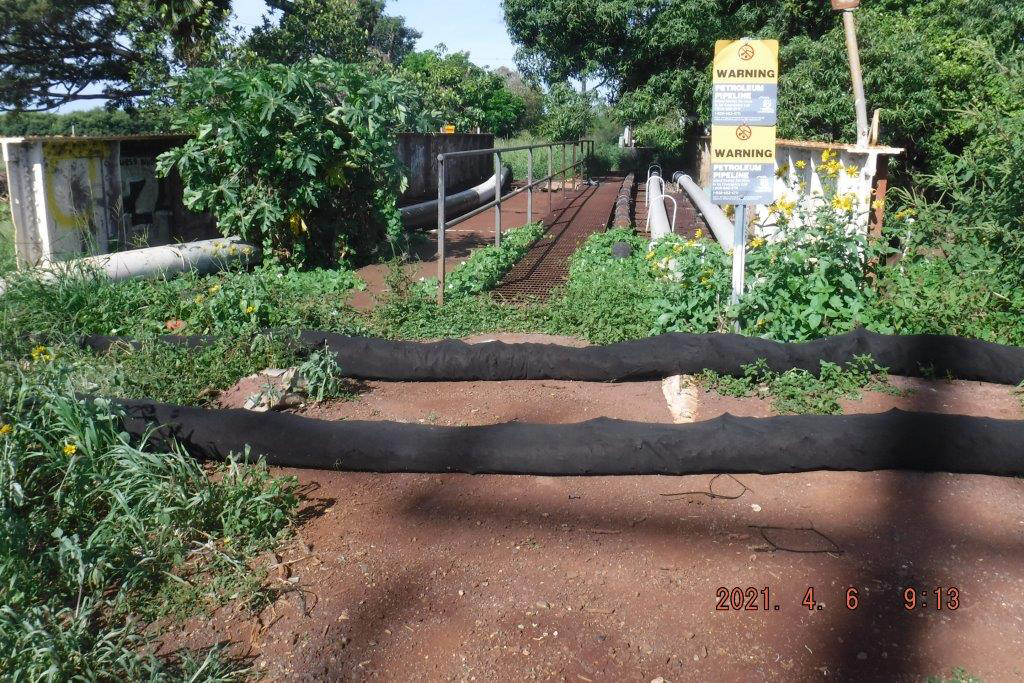
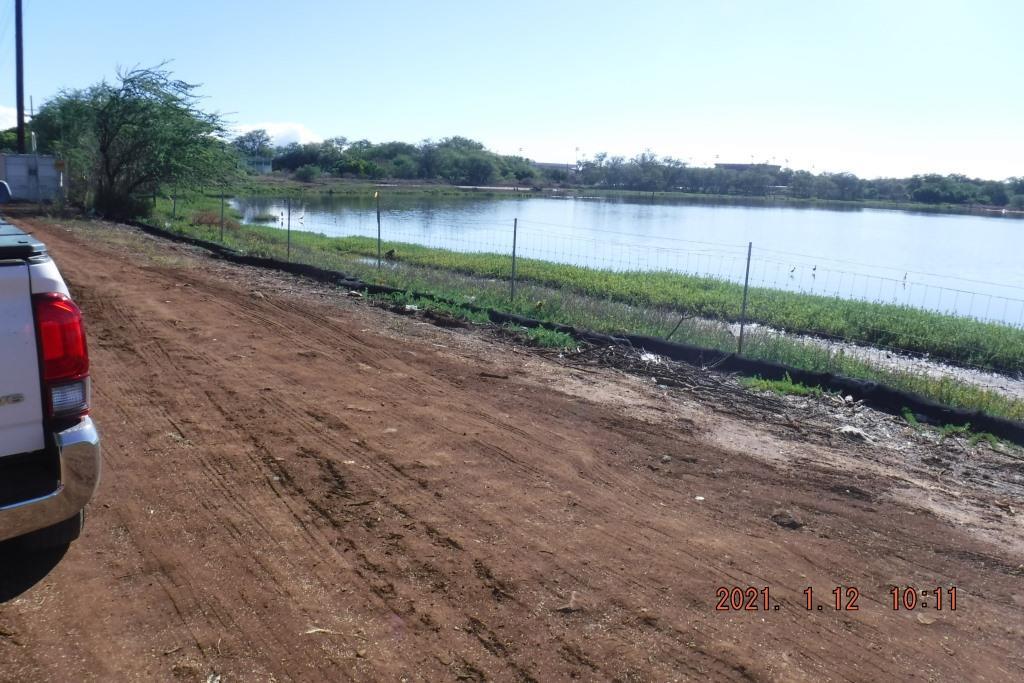
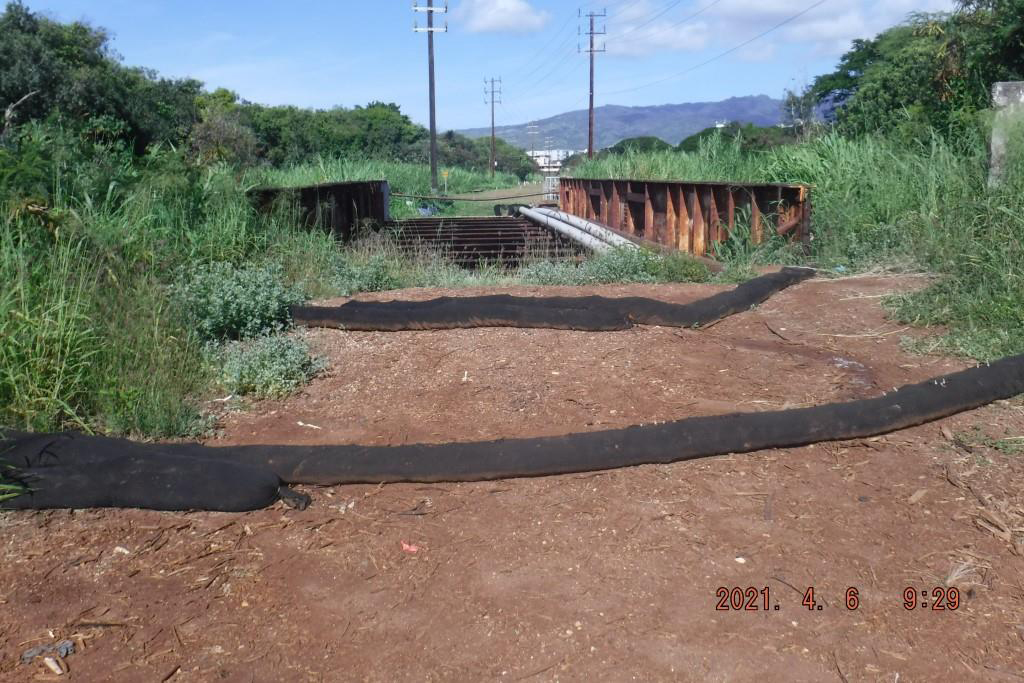
Are adequate BMPs installed to prevent the discharge of pollutants from the project site? Hover over each photo for an explanation of the situation presented and if BMPs have been installed properly.