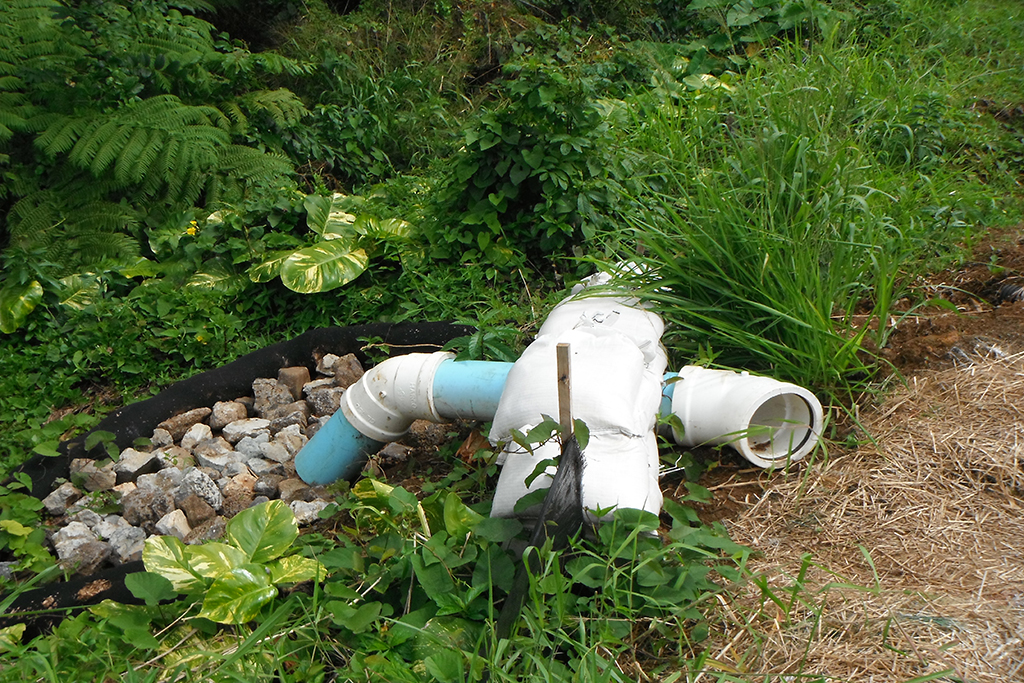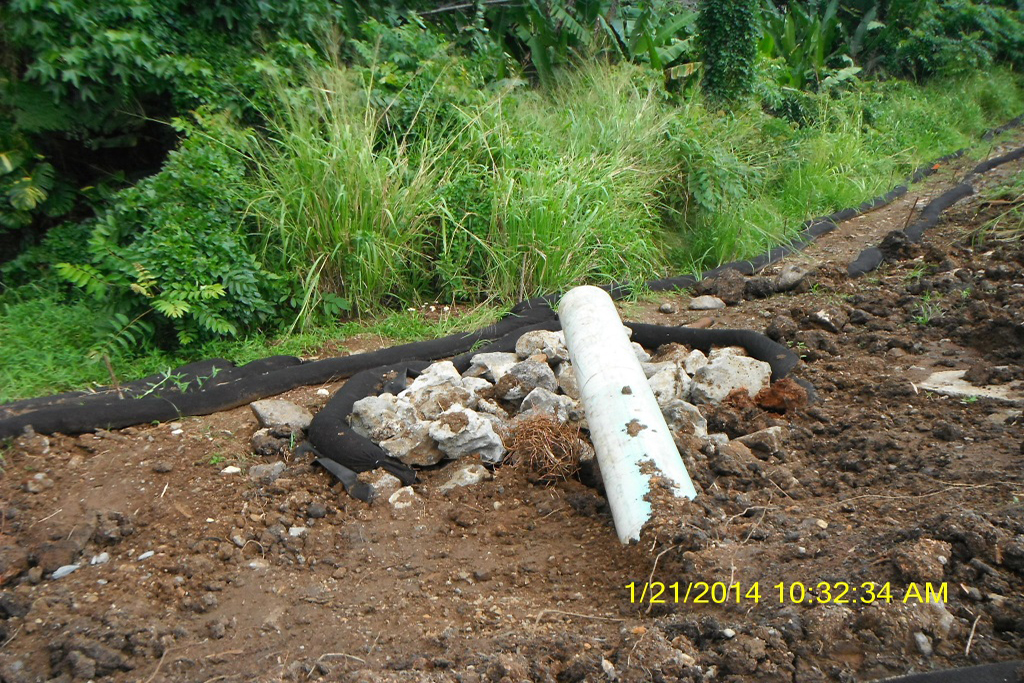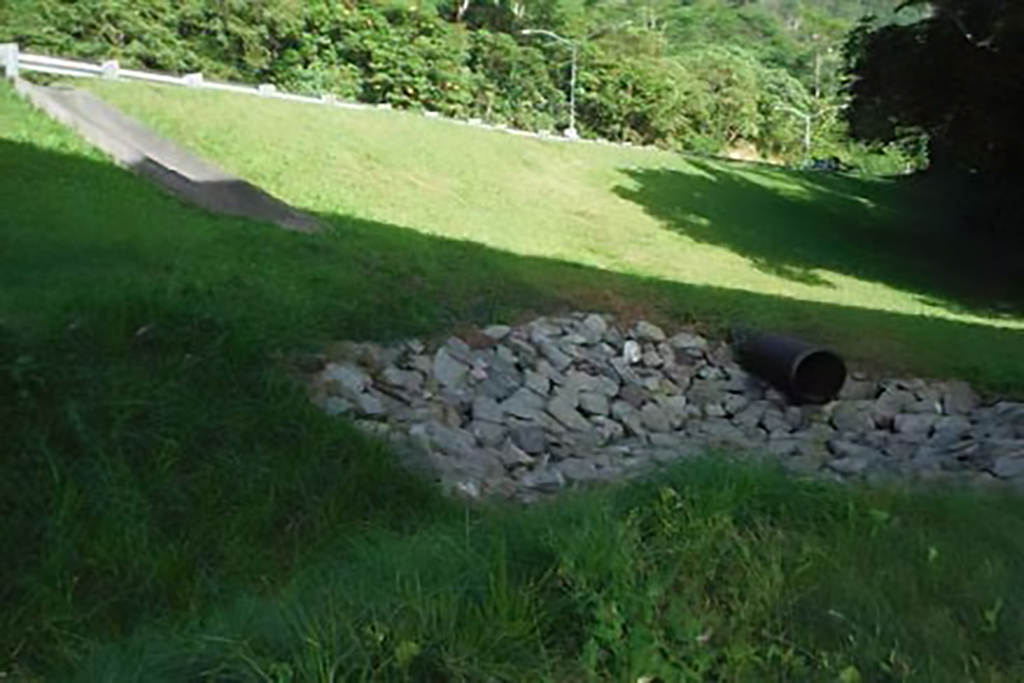

Description
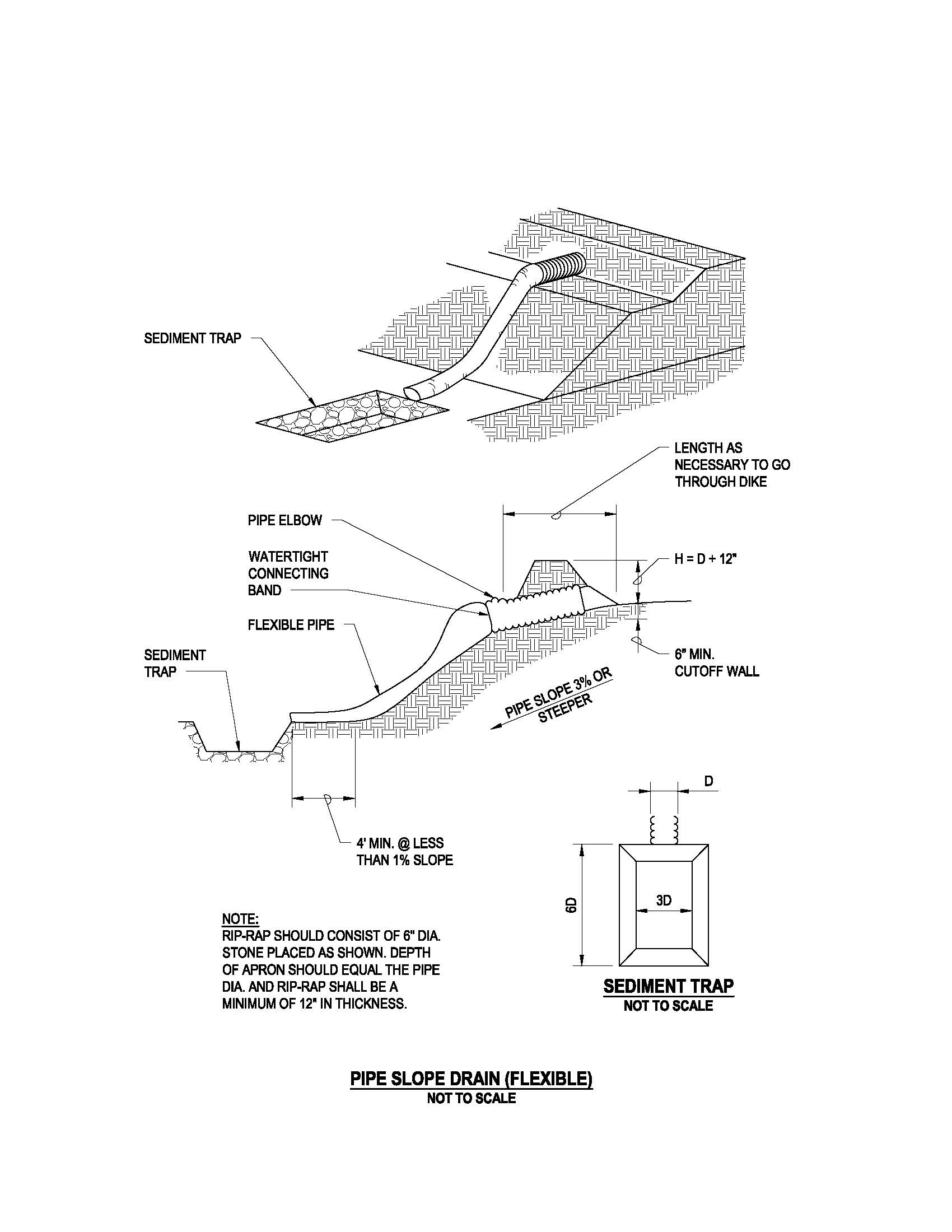
Pipes to prevent erosion along slopes by intercepting and conveying runoff or groundwater from the top of the slope to a stabilized discharge point located at the bottom of the slope. Slope drains are primarily used to convey runoff down cut or fill slopes. Subsurface drains are primarily used to remove water from the soil in sloped areas.
Applications
- Use of slope drains is applicable to the following:
- Drainage of concentrated runoff from within swales or behind dikes located at the top of slopes.
- Drainage of surface runoff to prevent erosion along the slope.
- Emergency spillways for sediment basins.
- Use of subsurface drains is applicable to areas where water must be removed from the soil to lower the groundwater table or to prevent excessive soil saturation.
Installation and Implementation Requirements
SLOPE DRAIN DESIGN CONSIDERATIONS
- Consult with a hydrogeologist or qualified engineer regarding design flows.
- Limit drainage area discharging to slope drain to 5 acres.
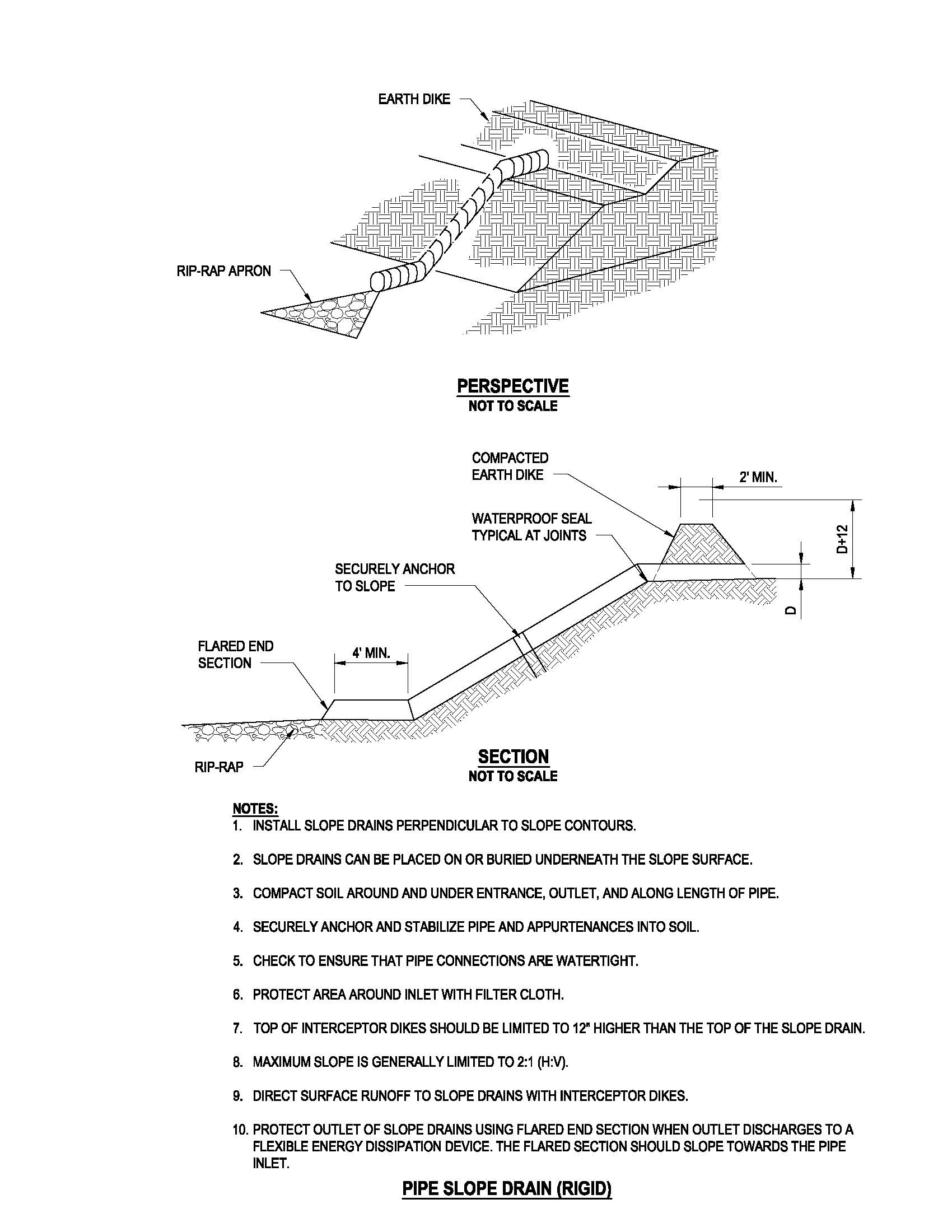
- Direct surface runoff into slope drain using interceptor dikes at the top of slope. See section EC-5 Earth Dikes, Swales, and Ditches for more information.
- Pipe slope drains exceeding 12 inches in diameter require a standard flared end section or headwall constructed at the inlet and outlet.
- Common materials used for slope drains is plastic lining, fiber matting, flexible plastic pipe, metal pipe, rigid pipe, and half round pipe.
- Install lining such as vegetation or geotextile filter fabric to protect area around inlet.
- Install rip-rap or other energy dissipation device at outlets.
- Place rip-rap so it extends to the maximum flow depth, or to a point where vegetation will be satisfactory to control erosion.
- Compact soil under and around inlet, outlet, and along the pipe.
- Slope drain must be installed on a slope gradient of 3% or greater.
- Slope drains may be installed above-ground or buried beneath the slope surface.
- Drains that are buried beneath the slope surface must have an earth dike, a minimum of 12 inches, on top of the pipe at the top of slope.
- Above-ground installation shall utilize pipe anchors to secure pipe to ground and be spaced a maximum of 10 feet apart.
- Align slope drain perpendicular to contours of slope. Generally, limit maximum slope to 2:1 (H:V). For slopes exceeding 2:1 (H:V), velocity dissipation is required at the pipe outlet.
- A half round pipe, fiber matting or plastic lining can be installed for shorter slopes that have a gradient flatter than 2:1 (H:V).
- Berms must remain relatively low and vegetated. Limit berm height to no more than 24 inches in height.
- The pipe should have a minimum diameter of 12 inches and should be equal over the entire length. Maximum pipe diameter is 24 inches due to height limitations of berms.
- Direct sediment-laden storm water to a sediment trap or sediment basin.
Considerations
- Drainage area discharging to slope drains shall not exceed 5 acres. For larger areas, use multiple pipes, paved chute, or rock lined channel.
- Clogged slope drains direct runoff around pipe which may result in erosion along the slope.
- High flow velocities at the pipe outlet require implementation of velocity dissipation devices to prevent downstream erosion. See section EC-8 Outlet Protection and Velocity Dissipation Devices for more information.
- High flows may wash away velocity dissipation devices at the outlet, which leaves the area susceptible to erosion.
- Severe flooding and erosion may result from failure of slope drains and storm water overtopping the berm.
What to Inspect
- Are slope drains accumulating debris and sediment?
- Is there evidence of scour or erosion at the outlet?
- Is the pipe damaged or leaking?
- Are the pipe connections watertight?
- Is the pipe anchored to the slope?
- Is ponding occuring in active traffic lanes or material storage areas?
Maintenance
- Repair damage caused by erosion and scour, and install energy dissipation devices as necessary.
- Remove sediment and debris from entrances, outlet, and within drains to maintain flows.
- Repair/replace pipe if it is leaking or damaged.
BMP Examples
Are adequate BMPs installed to prevent the discharge of pollutants from the project site? Hover over each photo for an explanation of the situation presented and if BMPs have been installed properly.