
Description
Devices installed at storm drain inlets that detain large objects and sediment-laden runoff prior to entering the storm drain system. These devices are often the last treatment measure, so a layered BMP approach is crucial to mitigating sediment-laden runoff from entering the State of Hawaii Department of Transportation (HDOT) Highways MS4 or storm drainage system, including surface waters.
Applications
- All storm drain inlets, both within the project limits and beyond the project limits, that may intercept sediment-laden runoff from the construction site shall be protected prior to commencing land-disturbing activity.
- Where disturbed areas have not been stabilized.
Installation and Implementation Requirements
- Install inlet protection devices prior to upgradient land-disturbing activity.
- Inlet protection causes ponding, which is necessary to allow the sediment to settle. The storm drain inlet must not be completely blocked when public safety is of concern.
- The contractor shall monitor the weather for rainfall events and coordinate with the Engineer to adjust inlet protection to prevent hazardous conditions and flooding.
- For maximum effectiveness, minimize the demand on inlet protection devices by installing and maintaining erosion and sediment control devices upslope of the inlet.
- Immediately stabilize slopes and disturbed areas that are no longer active to reduce potential runoff. Inlet protection shall only be removed once disturbed areas upgradient of the catch basin has been stabilized.
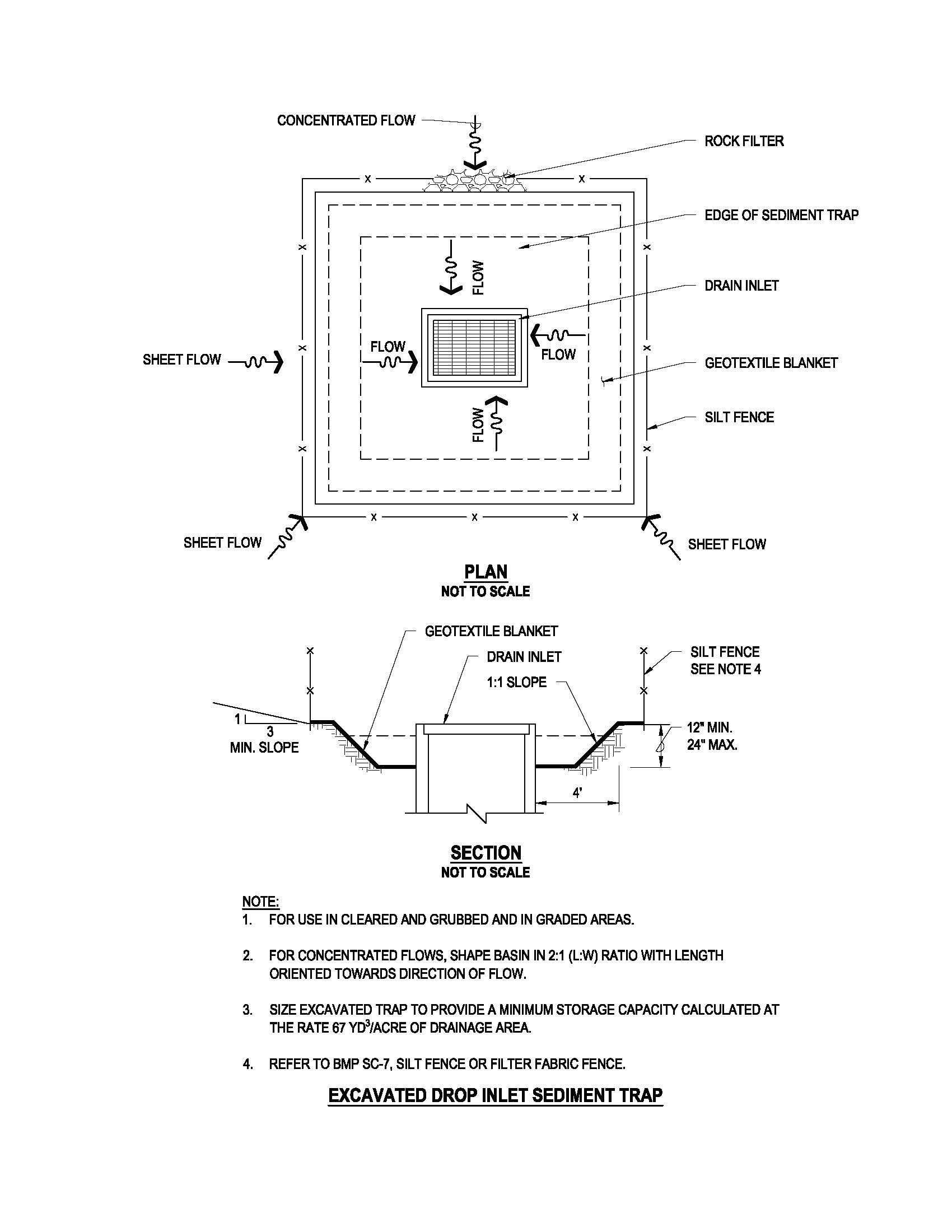
- Grated drop inlets and curb inlets/catch basins are the 2 types of inlets most present on construction sites. There are various types of BMP devices that are applicable in protecting these inlets from accepting sediment-laden runoff.
GRATED DROP INLET (GDI)
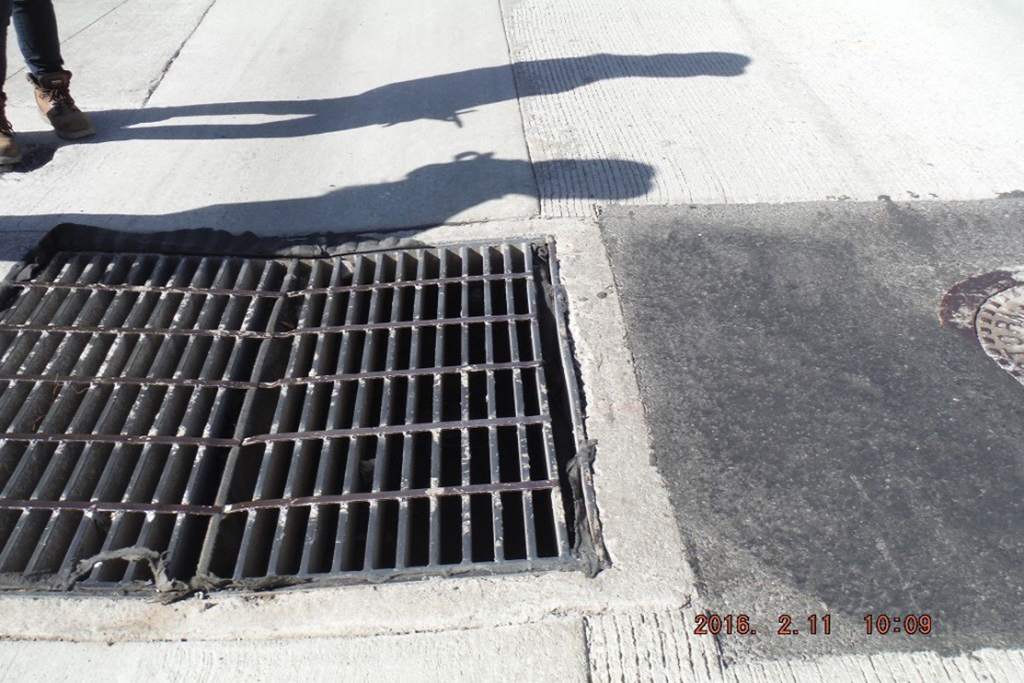
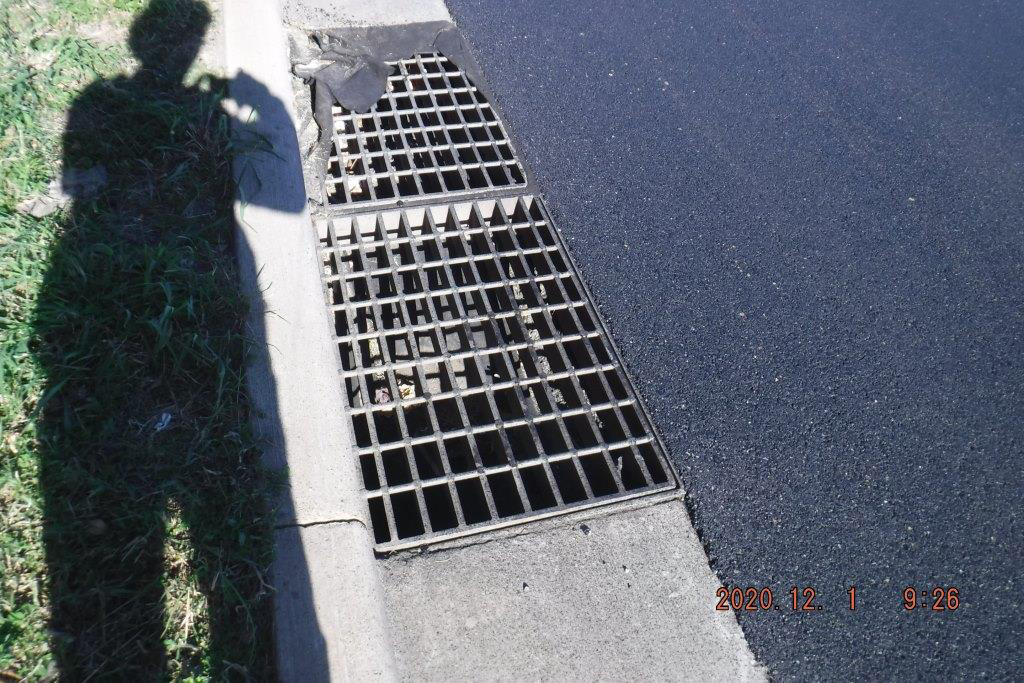
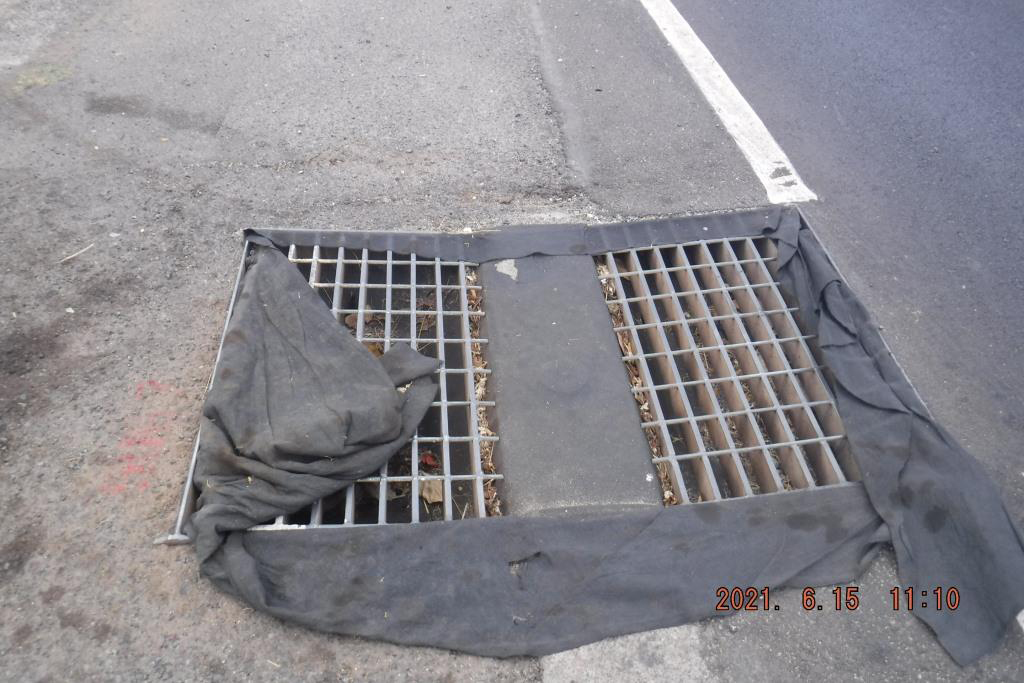
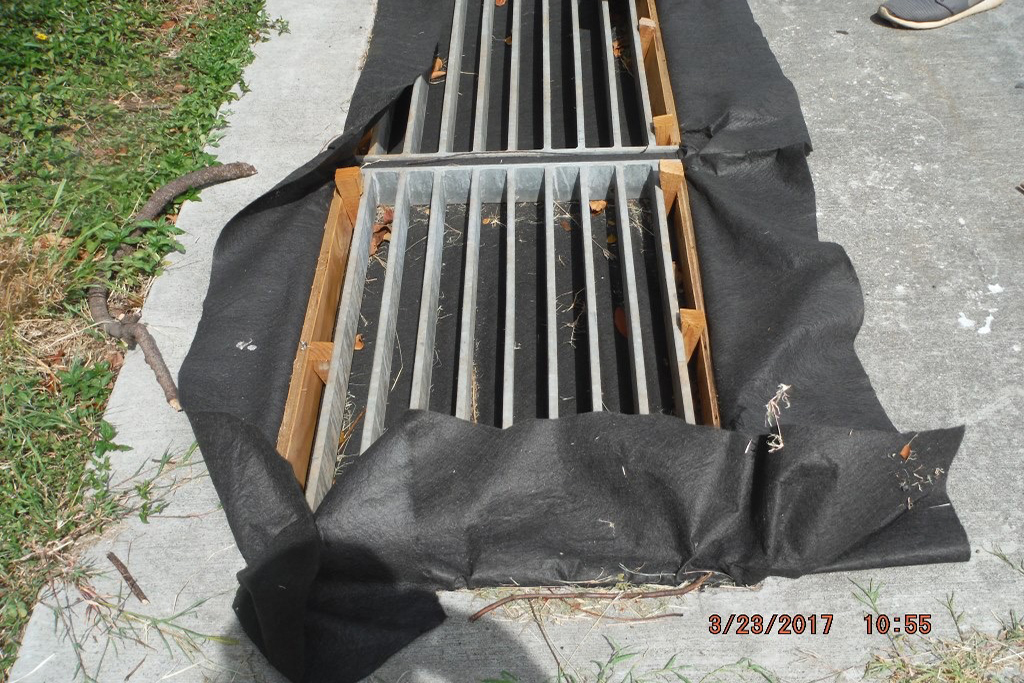
- Installing a geotextile filter fabric under the grate to
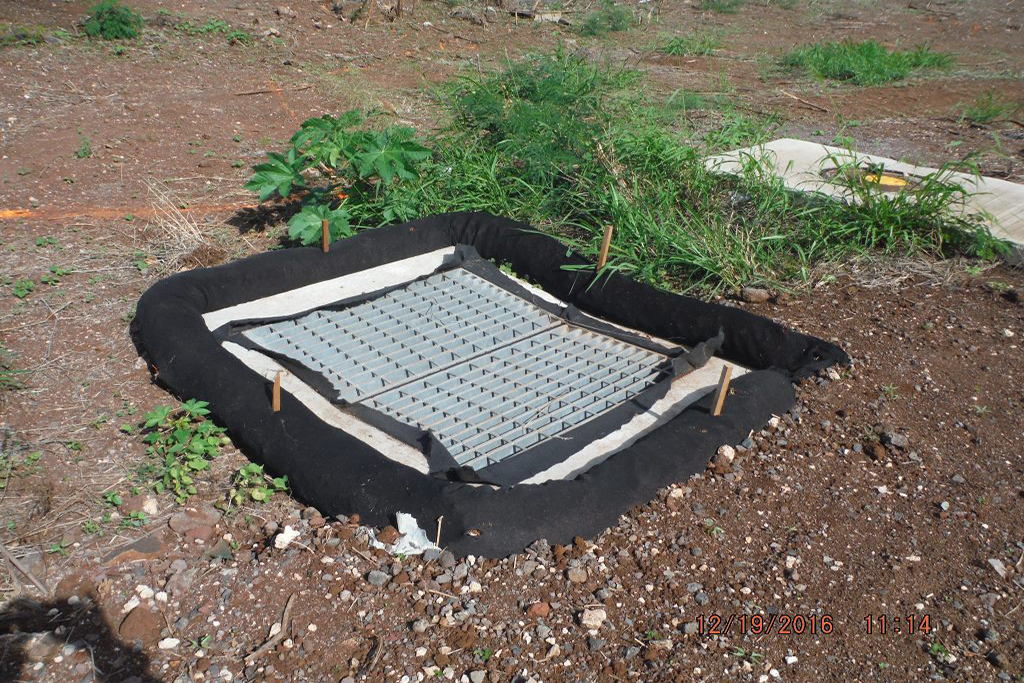
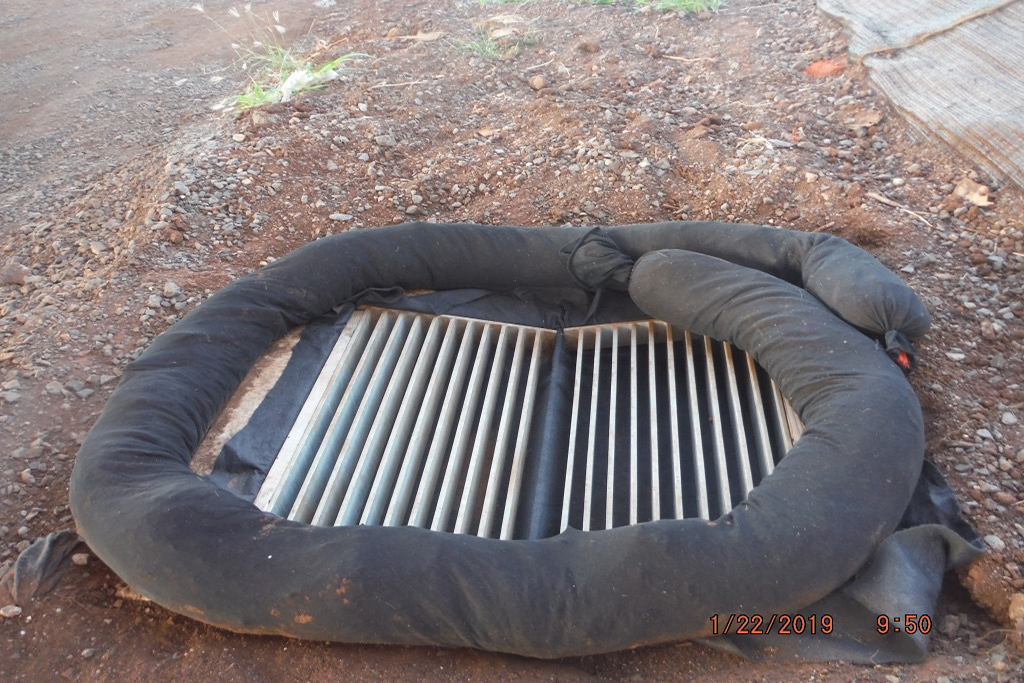
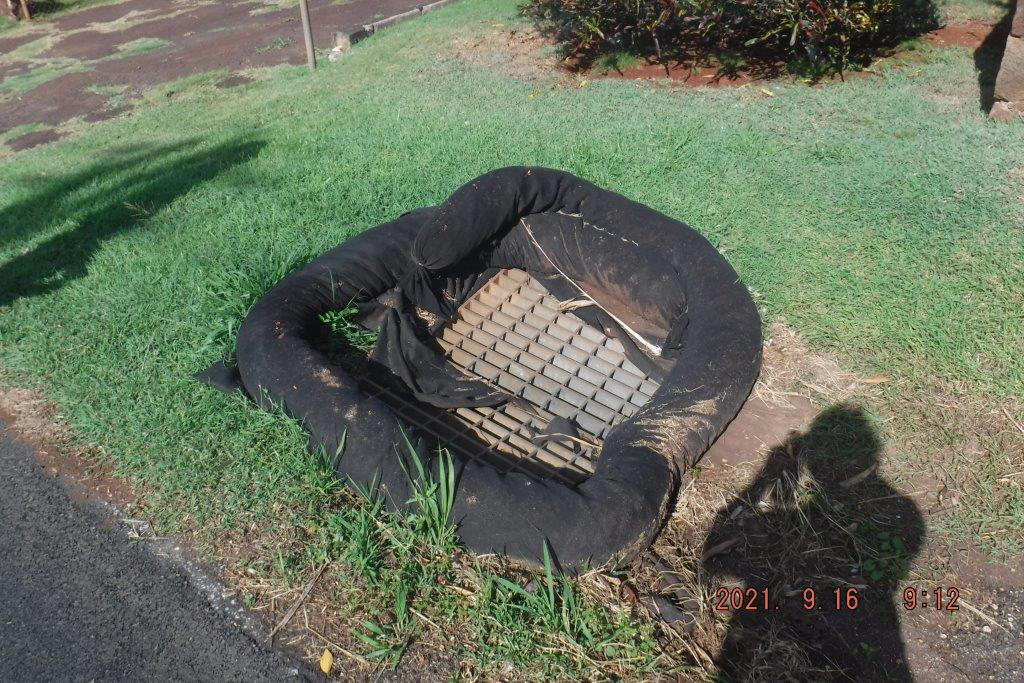
cover the insert is a common inexpensive practice to prevent sediment from entering the GDI. The fabric should be placed fully under the grate to completely shield the inlet. Allow 6 inches, minimum, of excess fabric to extend past the grate on all sides. The fabric is easily clogged by sediment. Other methods are preferred such as a witch’s hat, which will facilitate drainage while filtering sediment. - Compost filter socks or sand bags can be placed around the perimeter of the GDI, to divert and/or detain storm water before it enters the inlet. See section SC-6 Compost Filter Berm/Sock and section SC-8 Sandbag Barrier for more information.
- The following list below are applicable devices for GDI’s:
- Geotextile filter fabric fence.
- Geotextile filter fabric under grate.
- Witch’s hat
- Inbox protection.
- Fiber roll with additional in box protection.
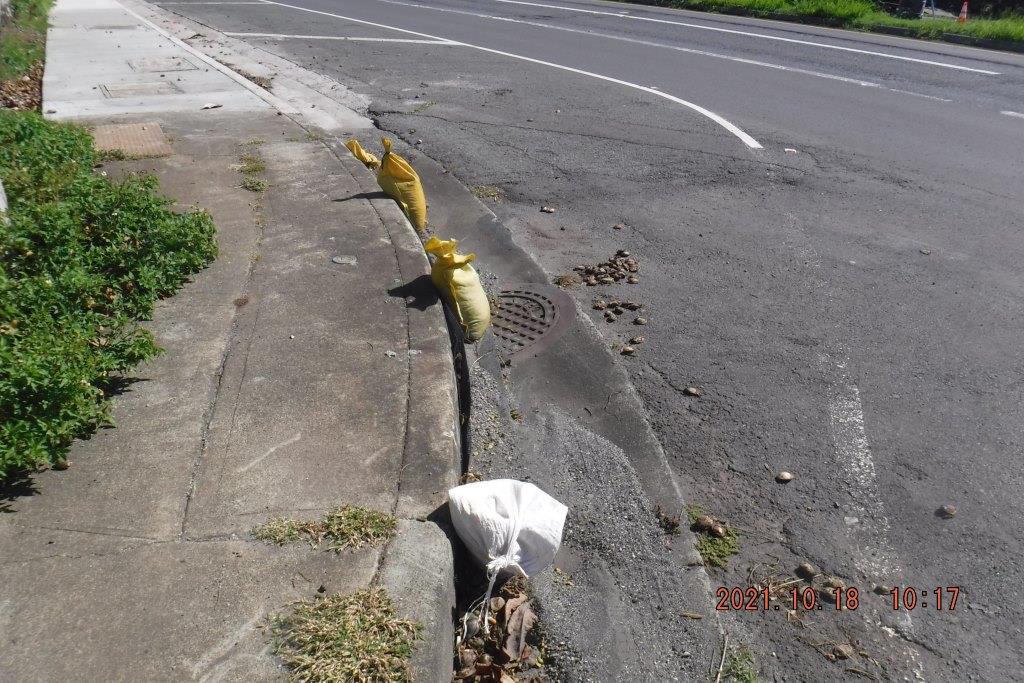
- Sand bag, rock bag, or snake bag.
CURB INLET/CATCH BASIN
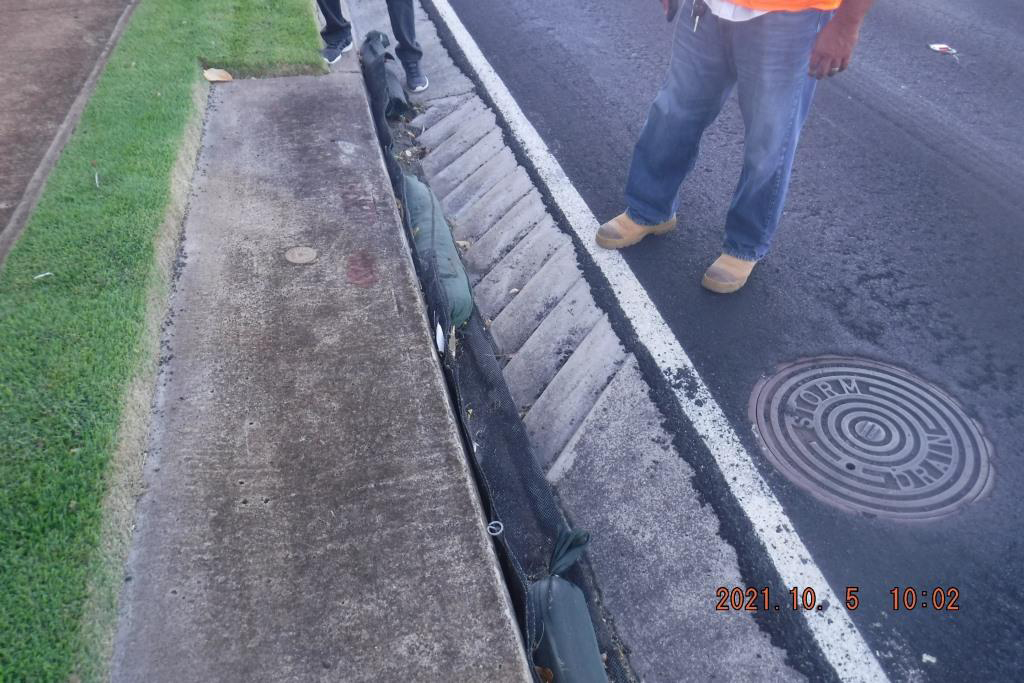
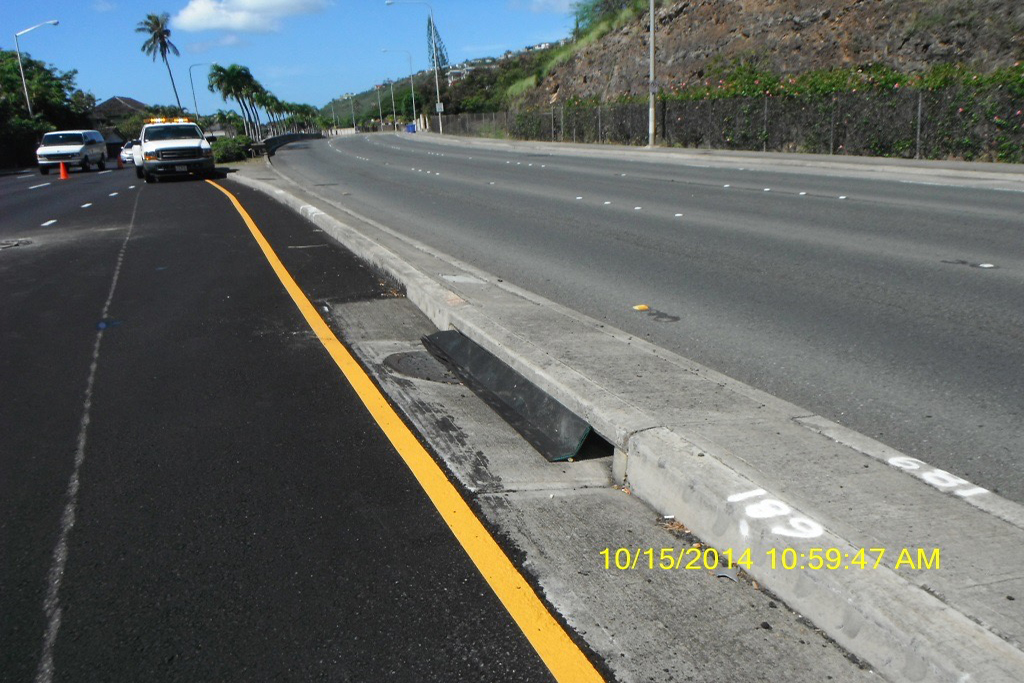
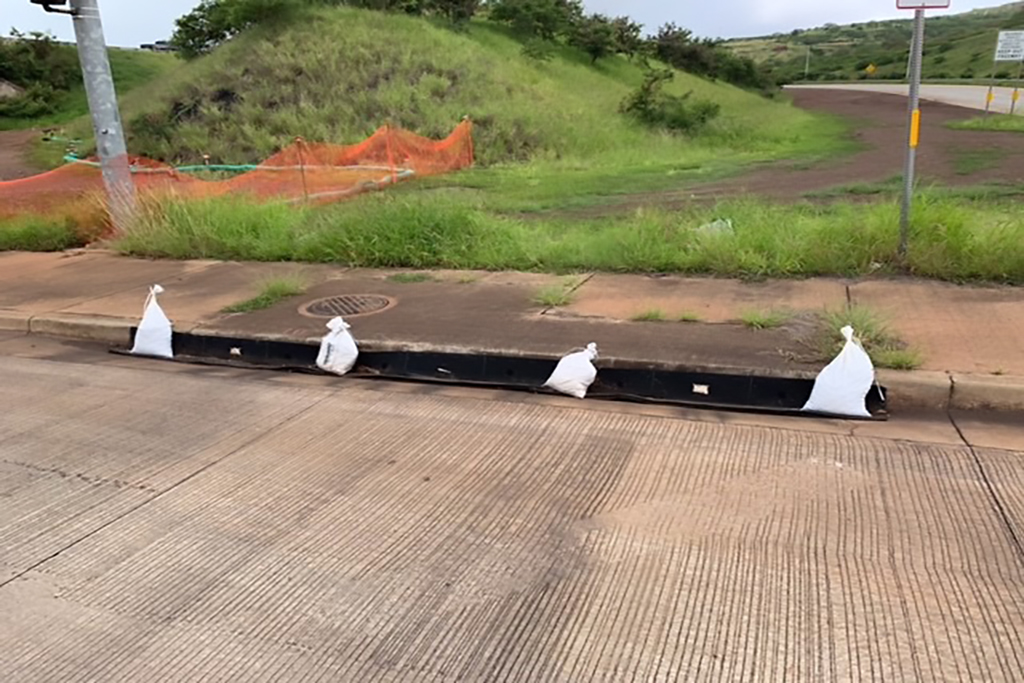
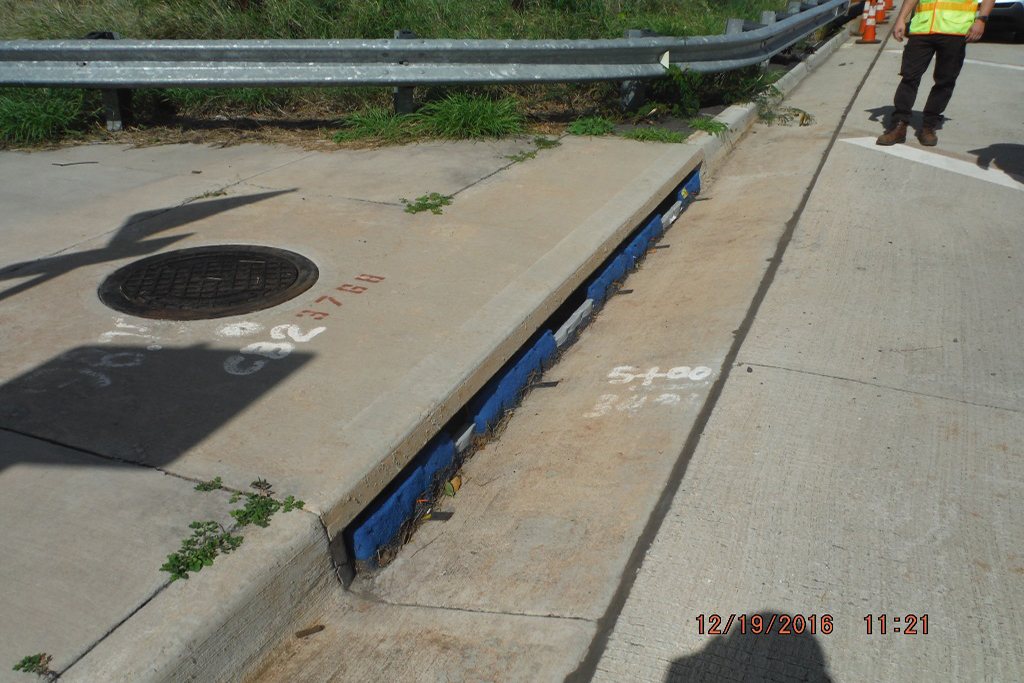
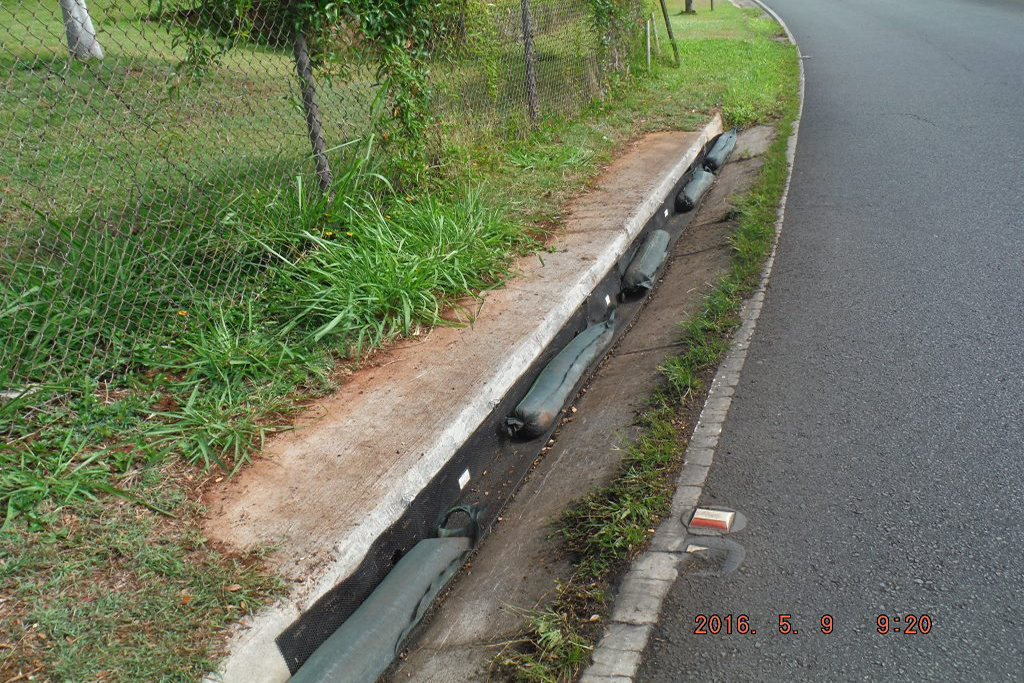
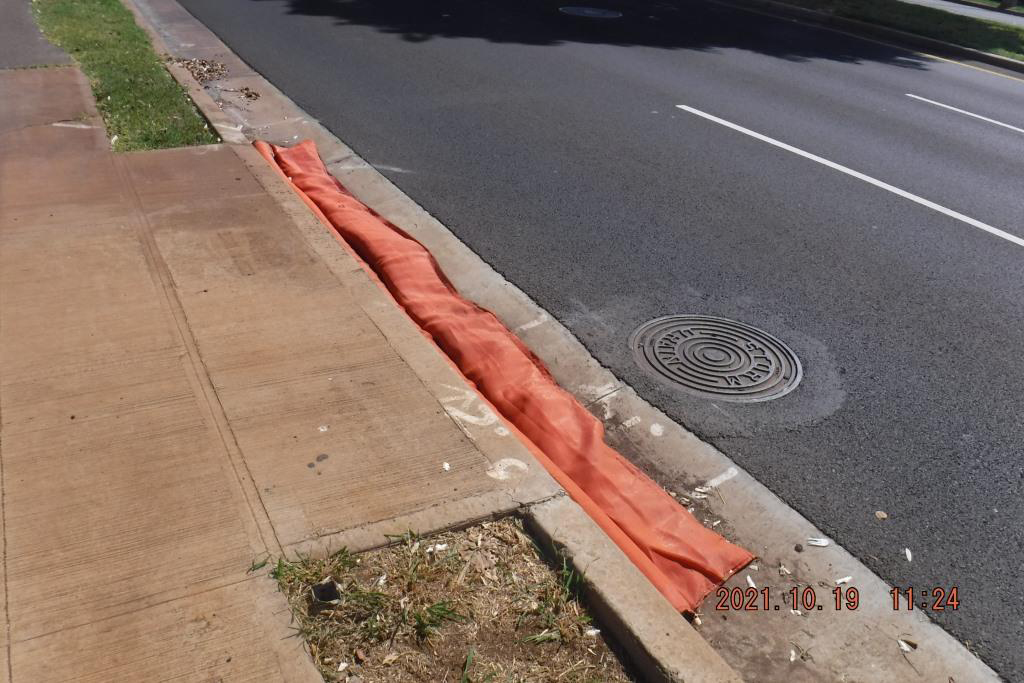
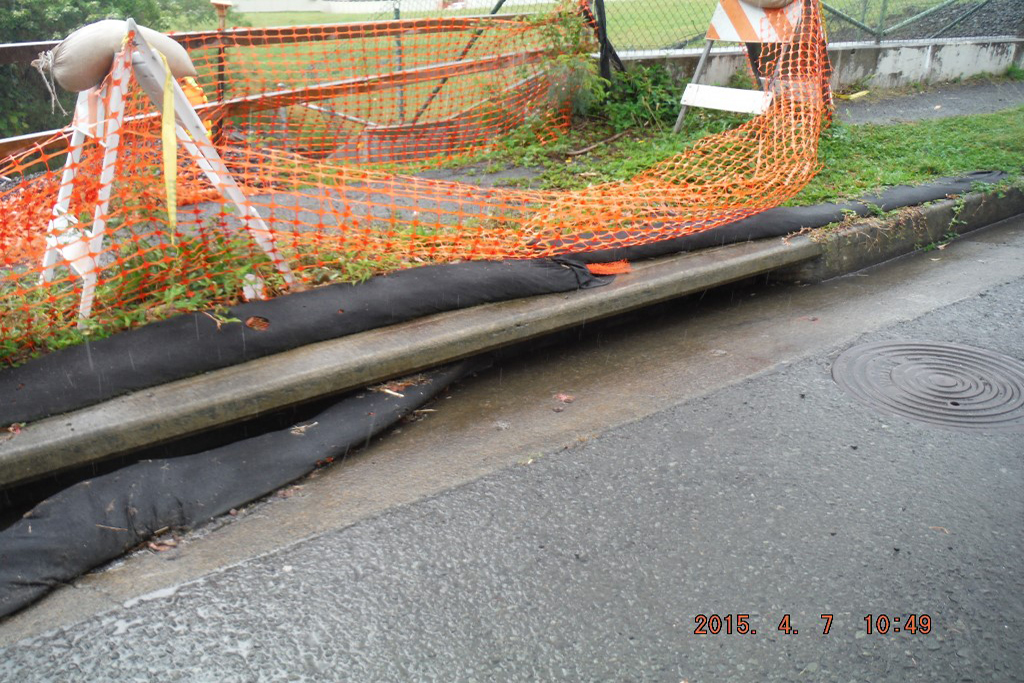
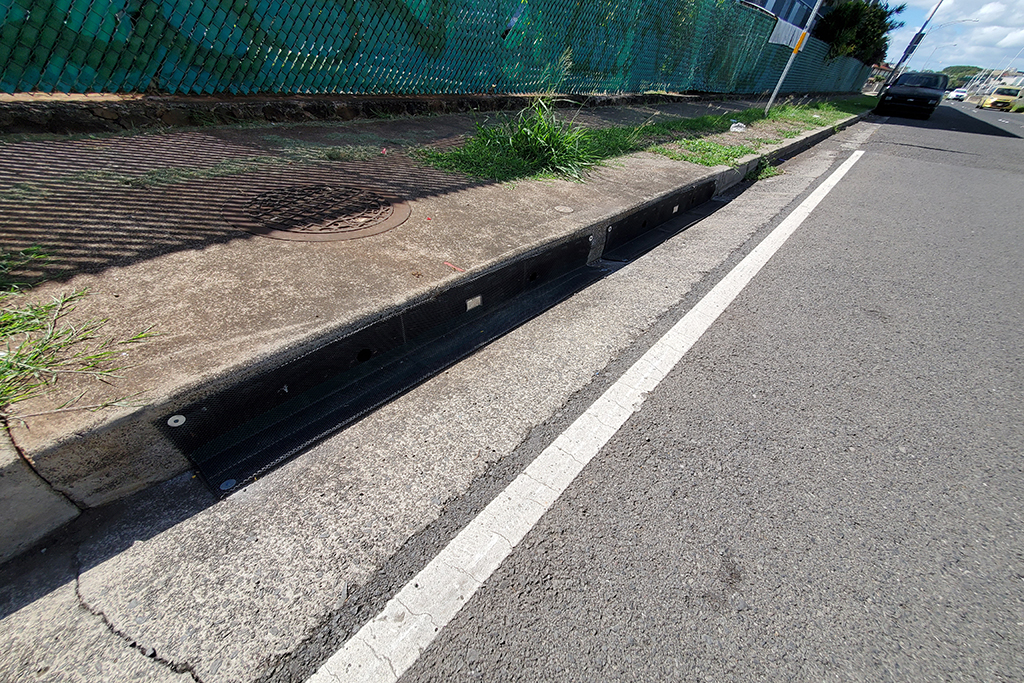
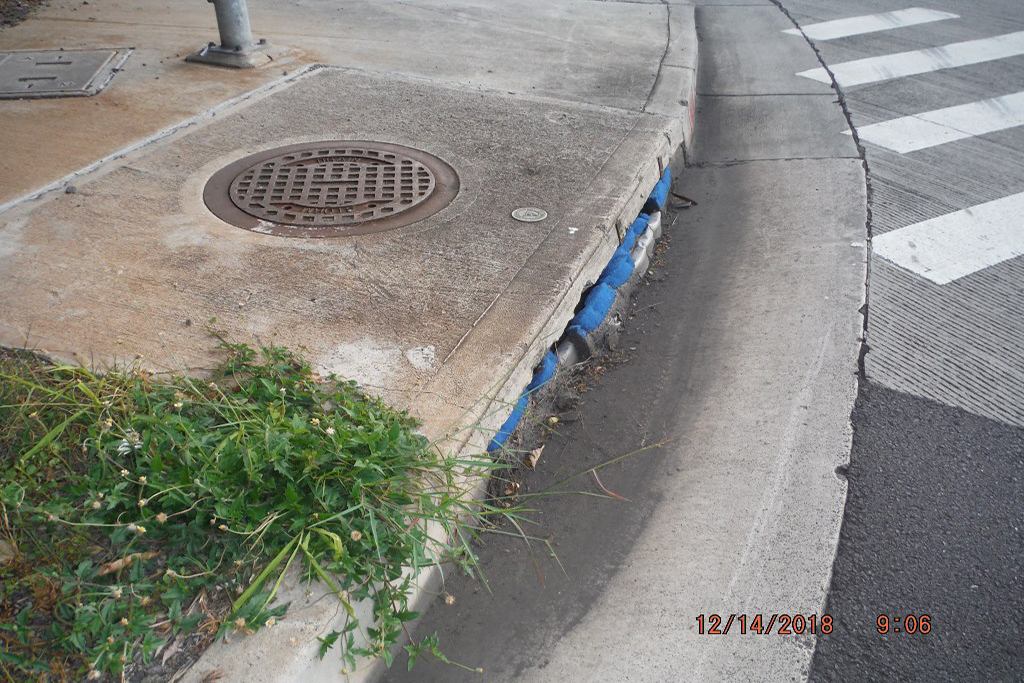
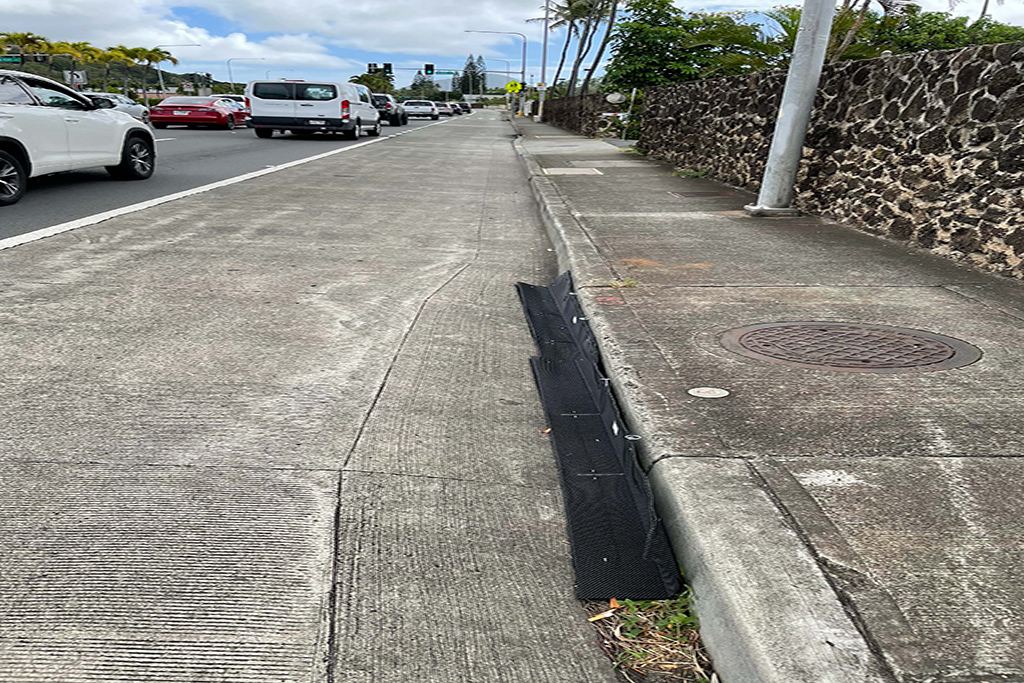
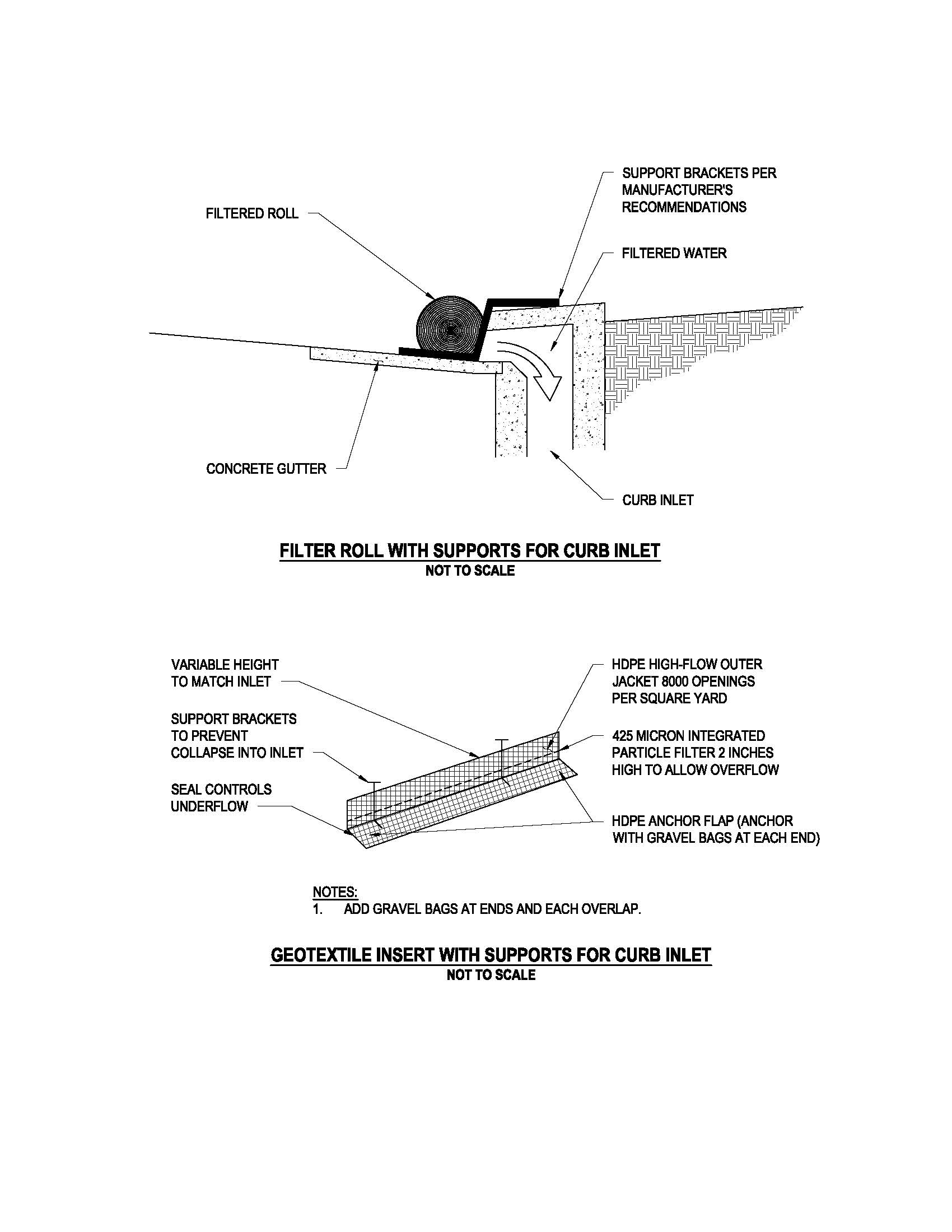
- Devices installed at curb inlets are in place to prevent sediment-laden runoff from entering the storm drain. An ample amount of space must be provided to allow water to pond around the inlet. This allows the sediment to settle, as the storm water slowly enters the MS4.
- Devices must extend at least 1 foot past the inlet insert on both sides, unless manufacturer’s specifications differ.
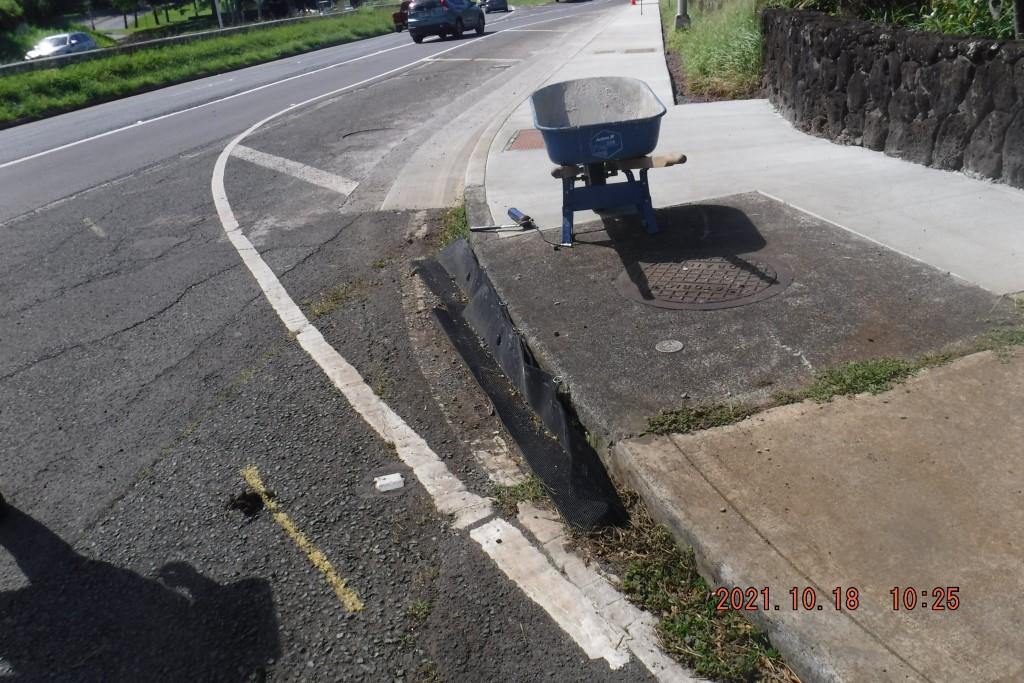
- Non-destructive supporting brackets may be used to prevent inlet protection devices from falling into the curb inlet/catch basin.
- Ensure flooding of nearby properties or impeding traffic is avoided.
- Use check dams to reduce the demand of sediment-laden runoff flowing towards a curb inlet. See section SC-3 Check Dams for more information.
- In addition to the methods of inlet protection described above, there are other effective methods and proprietary devices, which may also be used. These are limited to drainage areas that are less than 1 acre, unless a sediment trap intercepts the runoff prior to reaching the inlet protection device.
- Other proprietary devices may be used and shall be installed per manufacturer’s recommendations.
Considerations
- Short-term flooding at a protected inlet will occur but must not become a traffic or pedestrian hazard.
- Drainage area is limited to 1 acre or less.
- Straw bales shall not be used for inlet protection.
- Runoff on slopes may bypass protected inlets.
- In the event of a severe storm event where flooding conditions will likely be an issue; the contractor may be directed by the Engineer to remove inlet protection. The inlet protection must be reinstalled immediately following the event.
- Geotextile filter fabric used to protect GDI inserts must be cleaned or replaced often due to the limited capacity of sediment the device can hold.
- Inlet protection devices can be tedious to maintain and become ineffective when sediment accumulates. Regular maintenance is required.
- Inlet protection is the last line of defense, which requires proper erosion and sediment controls in place upgradient.
- Inlet protection BMPs that completely block the insert will cause ponding that could create a traffic and pedestrian hazard or cause damage to nearby properties.
- Some GDI grates require heavy machinery to remove the grate to install geotextile filter fabric.
What to Inspect
- Is proper contact made against curb and gutter to prevent water from undercutting or bypassing inlet protection?
- Can sediment enter catch basin from the top or backside of the structure?
- Is sediment accumulated in front or inside of the inlet protection?
- Is the catch basin insert installed properly and being maintained per manufacturers guidelines?
- Is BMP falling into the inlet?
- Does sediment need to be removed?
- Are there rips/tears in BMP that will allow sediment to bypass it?
- Are compost filter socks damaged with rips/tears that expose the compost media?
- Is there evidence of sediment settling in front of the storm drain following a rain event?
Maintenance
- Routine maintenance should be initiated the same day the deficiency is identified and completed by the end of the same business day.
- Installation of a new erosion or sediment control device or a significant repair to a device shall be completed within 7 calendar days.
- Immediately replace clogged geotextile filter fabric or stone filters.
- Devices must be inspected, and all accumulated sediment removed before and after each rainfall event.
- During prolonged rainfall events, remove accumulated sediment when depth reaches one-half of the filter height or one-half of the sediment trap depth.
- Remove inlet protection only after stabilization of upstream soils and sweeping of streets is completed. Properly dispose of trapped sediment.
- Clean, remove, or replace protection measures as sediment accumulates, filter becomes clogged, and/or performance is compromised.
- When there is evidence of sediment accumulation adjacent to the inlet protection measures, remove deposited sediment by the end of the same day in which it is found or by the end of the following work day if removal by the same day is not possible.
- Devices that fall into inlets must be pulled out and repositioned. Devices must be installed per the manufacturer’s specifications and procedures for proper effectiveness.
- Address devices experiencing flow bypasses over, underneath, or around the sides of the BMP.
- Regularly maintain inlet protection devices to abide by manufacturer’s specifications.
BMP Examples
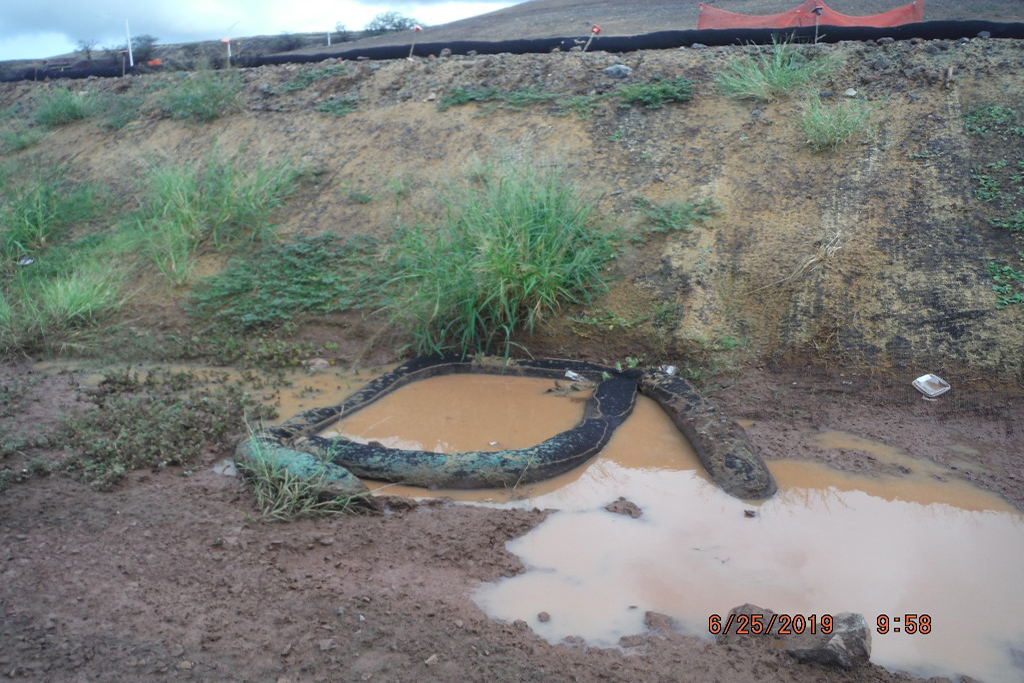
Are adequate BMPs installed to prevent the discharge of pollutants from the project site? Hover over each photo for an explanation of the situation presented and if BMPs have been installed properly.