
Description
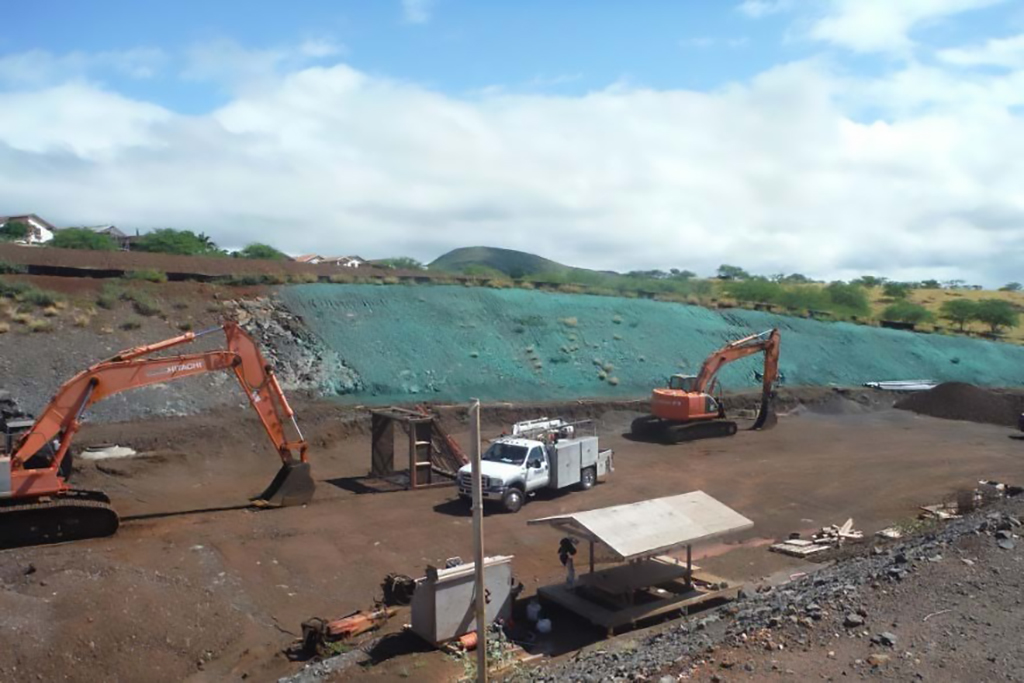
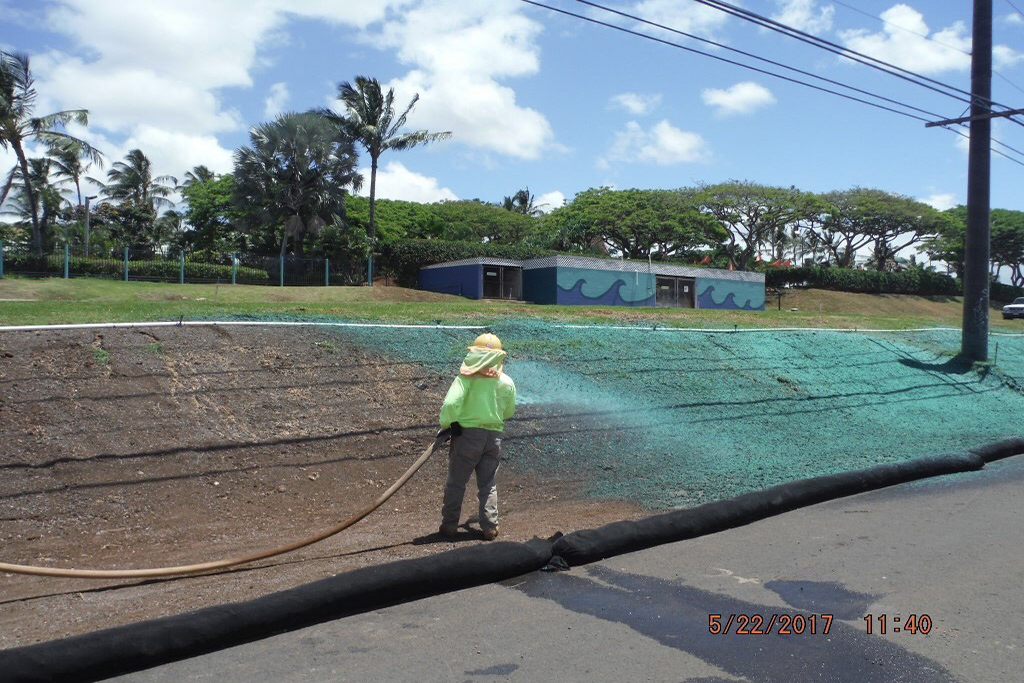
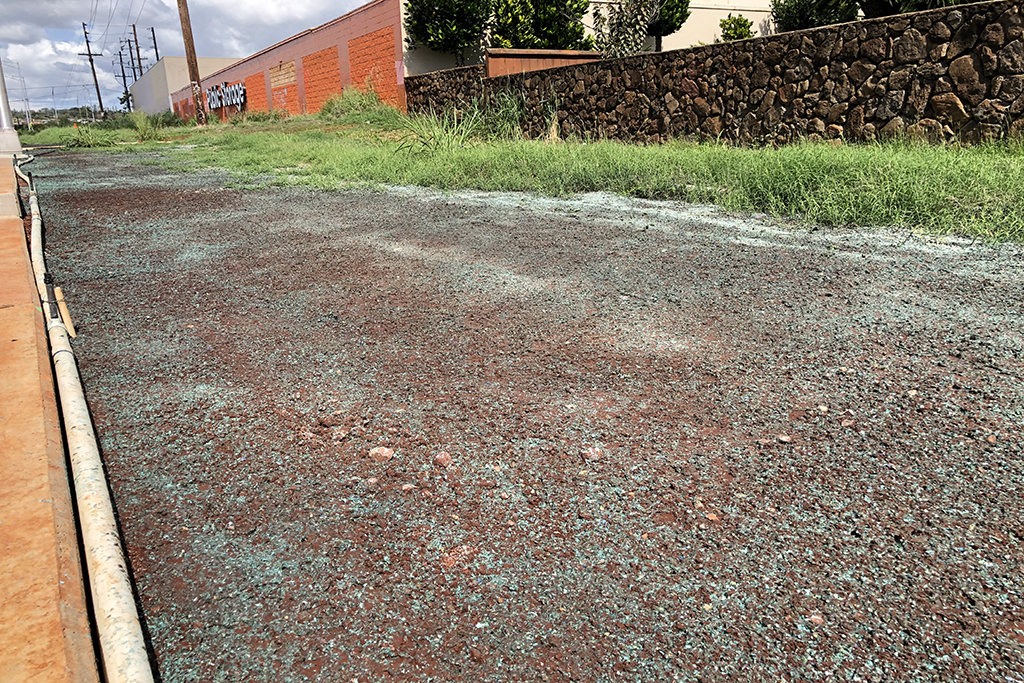
Application of a mixture of wood fiber, seed, fertilizer, and stabilizing emulsion with hydromulch equipment to temporarily protect exposed soils from wind and water erosion.
Applications
- Temporary ground cover until permanent vegetation has been established.
- Suitable for disturbed areas that will be redisturbed following an extended period of inactivity.
Installation and Implementation Requirements
- Seed type must be carefully selected based upon anticipated soil type and future irrigation. All seeds must be in conformance with the State of Hawaii Department of Agriculture (HDOA). For information on appropriate seed mixes, visit the Hawaii office of the United States Department of Agriculture, Natural Resources Conservation Service (NRCS) website.
- Avoid use of hydroseeding in areas where future earthwork activities will commence.
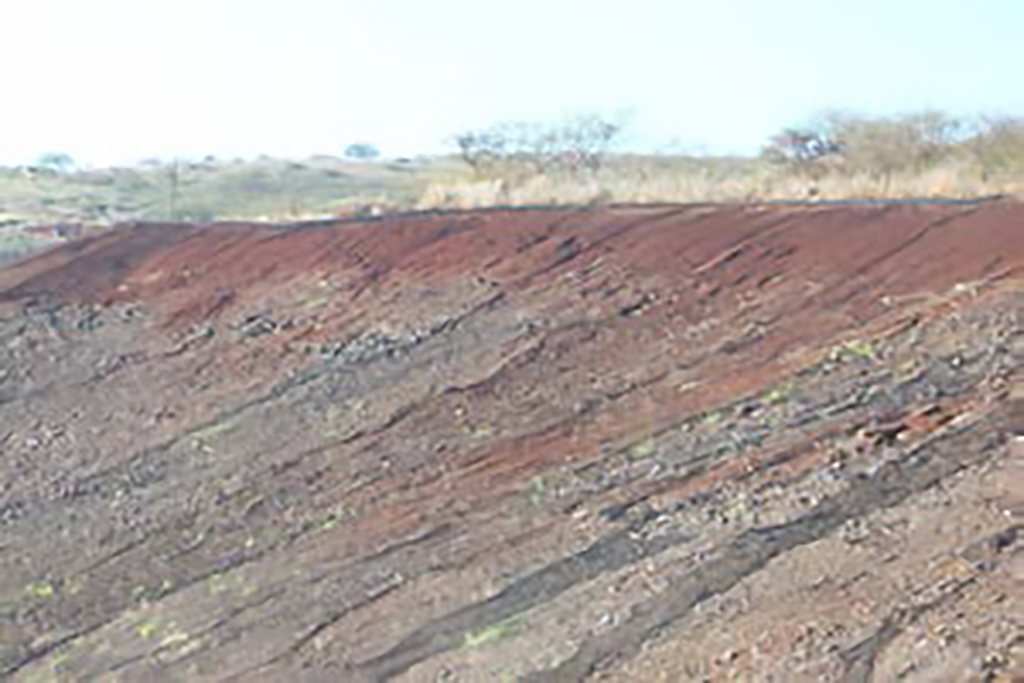
- Roughen the slope, fill area, or area to be seeded with the furrow trending along the contours prior to application of hydroseed. Rolling with a crimping or punching type roller or track walking is required on all slopes prior to hydroseeding. See EC-4 Slope Roughening, Terracing, and Rounding for more information.
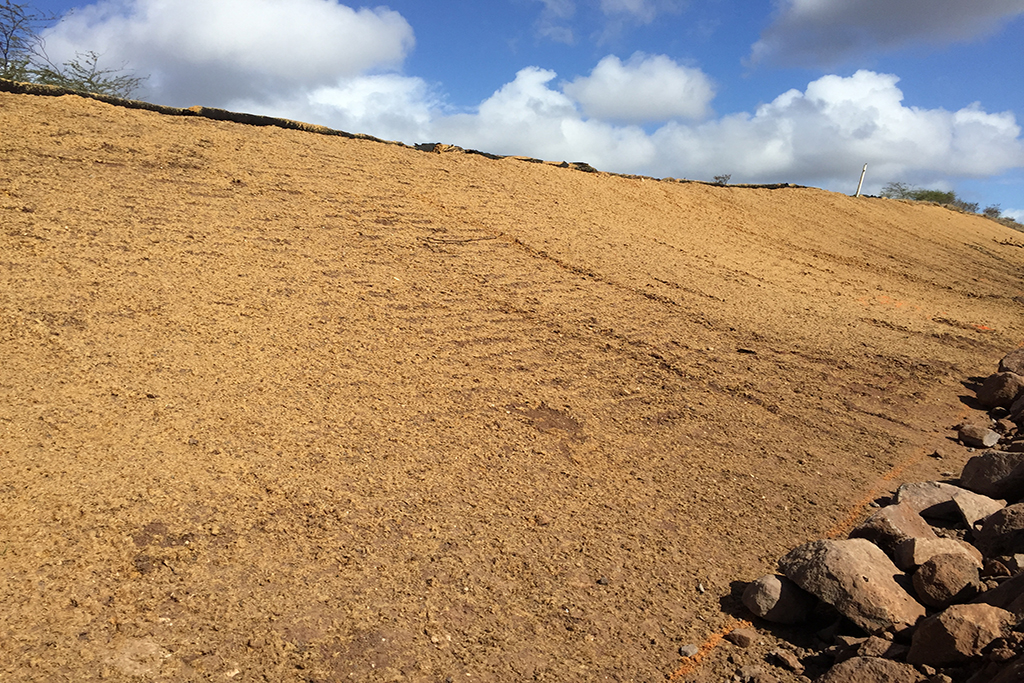
- Apply mulch to keep seeds in place and to moderate soil moisture and temperature until the seeds germinate and grow.
- Avoid spraying hydroseed onto sidewalks, lined drainage channels, roads, and existing vegetation.
EVALUATION OF SITE CONDITIONS CONSIDERATIONS TO SELECT APPROPRIATE HYDROSEEDING MIXTURES
- Soil conditions
- Site topography
- Season and climate
- Vegetation types
- Maintenance requirements
- Sensitive adjacent areas
- Water availability
- Plans for permanent vegetation
Considerations
- Steep slopes are difficult to protect with temporary seeding.
- Hydroseeding shall only be used when there is sufficient time to ensure adequate vegetation establishment and provide adequate erosion control.
- Temporary seeding may not be appropriate without supplemental irrigation.
- Temporary vegetation may have to be removed before permanent vegetation is applied.
- Hydroseeding shall not be used in areas subject to heavy traffic.
- To ensure complete coverage over roughen terrain, hydroseeding may have to be applied from multiple angles and sides.
What to Inspect
- Is there evidence of erosion?
- Are there bare areas that need to be reseeded?
- Is an irrigation system installed?
- Does the irrigation system apply complete coverage to the desired areas?
- Is the irrigation system working?
- Are there any areas of exposed soil showing?
Maintenance
- Mulches applied to seeded areas may be disturbed due to wind or runoff. Recover exposed areas until permanent vegetation has been established.
- Replace ornamental and landscape mulches of bark or wood chips if soil is visible in more than 75% of the designated area.
- Follow-up applications must be made as needed to cover weak spots and to maintain adequate soil protection.
- If erosion has occurred, additional mulch may be required. Eroded areas need to be repaired prior to additional mulch being added.
BMP Examples
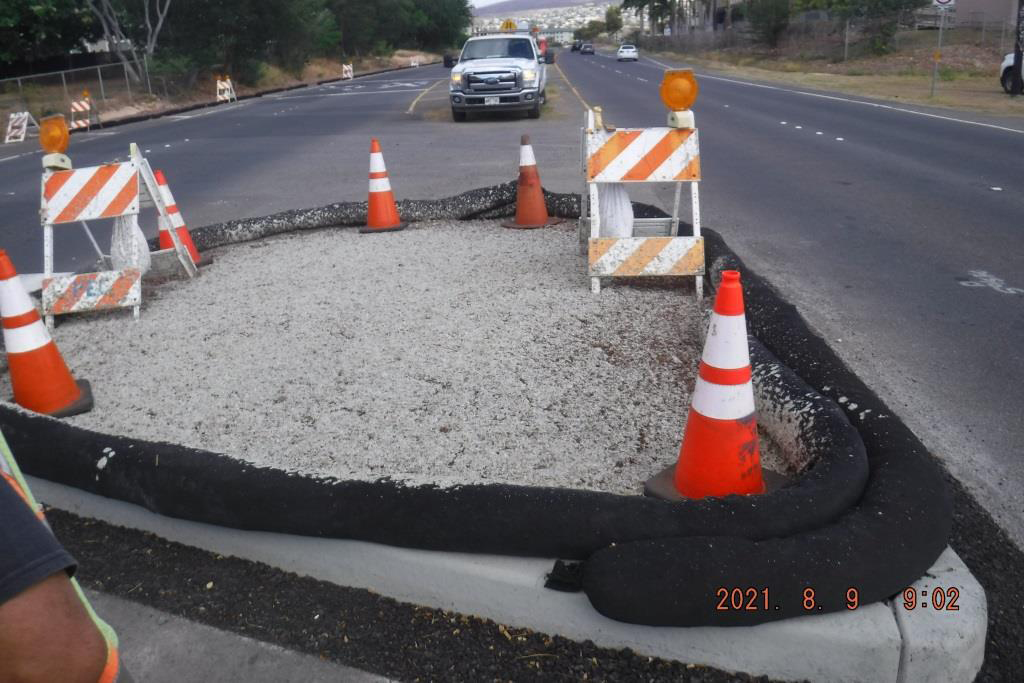
Are adequate BMPs installed to prevent the discharge of pollutants from the project site? Hover over each photo for an explanation of the situation presented and if BMPs have been installed properly.