
Description
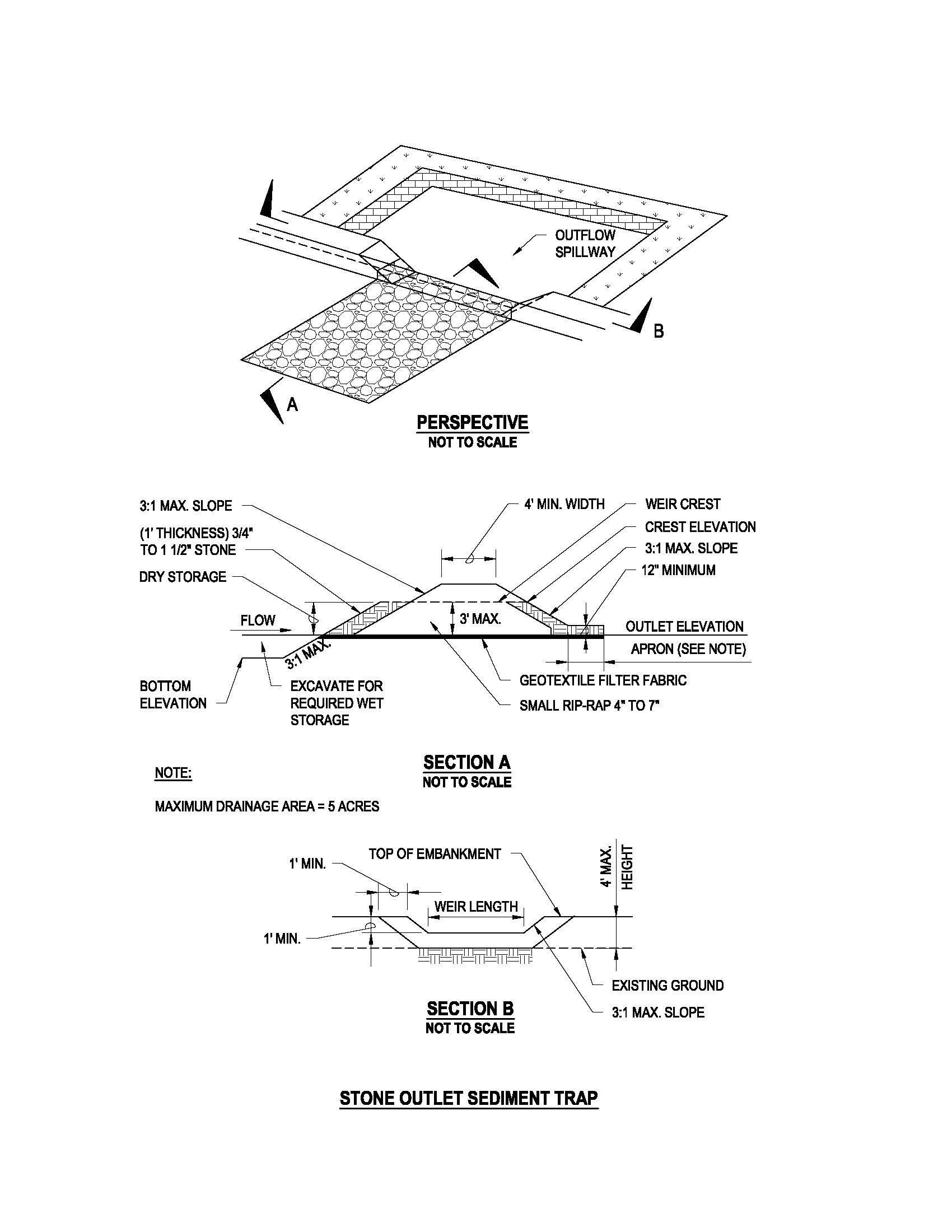
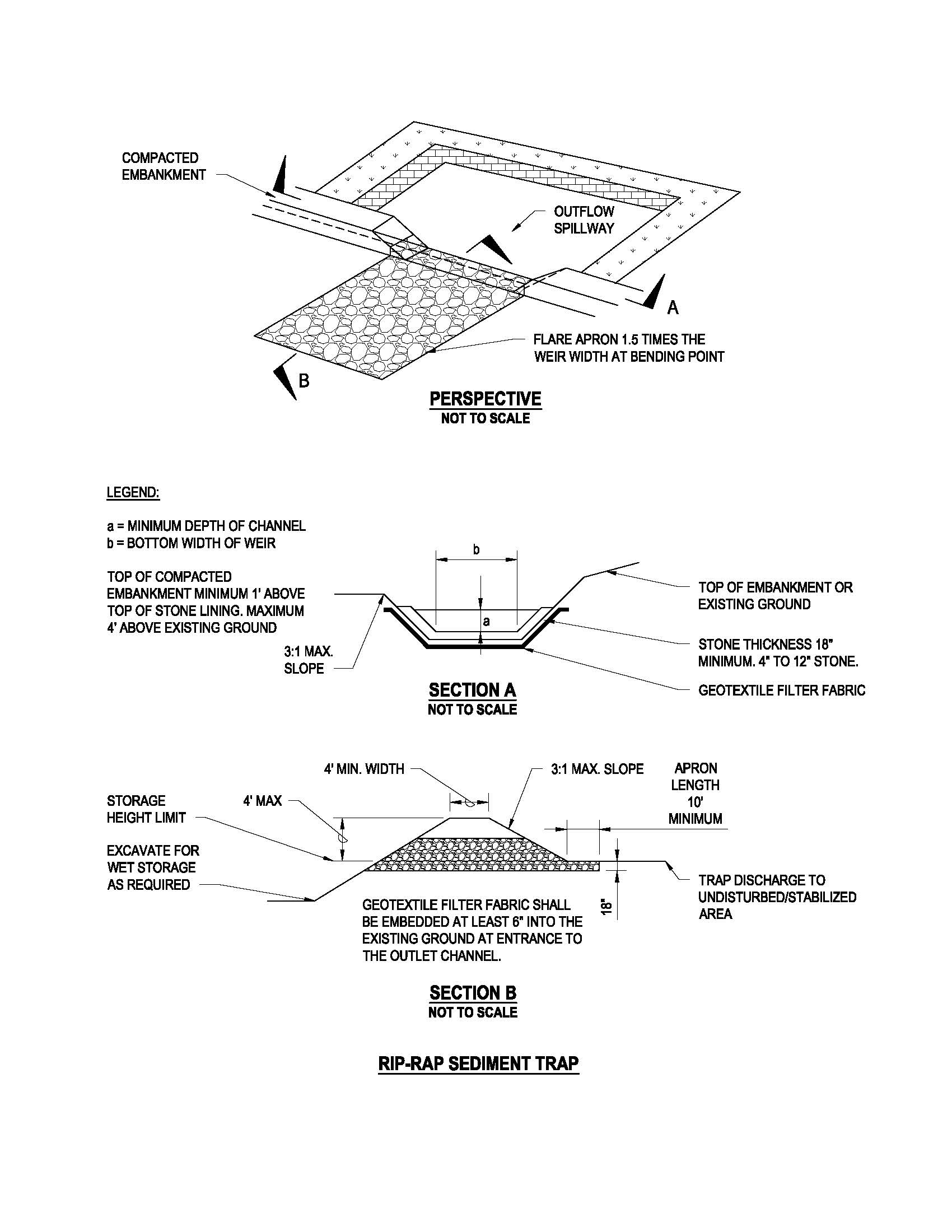
A temporary runoff containment area to promote sedimentation prior to discharge of the runoff through a stabilized spillway.
Applications
- Drainage areas less than 5 acres.
- Areas along the perimeter of the site where sediment-laden runoff is discharged off-site.
- Areas requiring additional sediment containment measures such as bodies of water or discharge points to a drainage system.
- On-site discharge points to a stabilized or natural area or waterway.
Installation and Implementation Requirements
- Construct sediment trap prior to engaging in clearing, grubbing, or grading activities.
- Location shall be based on the following:
- Area where a low embankment may be constructed across a swale.
- Area where failure of sediment trap will not cause property damage or loss of life.
- Area where maintenance crew may easily access sediment trap.
- Sediment trap size shall be based on the following:
- Minimum trap settling volume of 133 cubic yards per acre.
- Minimum trap sediment storage volume of 33 cubic yards per acre.
- Trap width shall be less than one-half of the trap length.
- Flood volume.
- Construct sediment trap by excavating ground or constructing an earthen embankment to create a containment area.
- Area under embankment shall be cleared, grubbed, and stripped of vegetation and root mat.
- Fill material for embankment shall be free of roots, woody vegetation, oversized stones, rocks, organic material, or other objectionable material. Compact embankment by traversing with construction equipment.
- Stabilize trap outlet with stone or vegetation.
- Install fencing to prevent unauthorized entry and for safety purposes.
- All pipe joints shall be watertight when a riser is used.
- The top two-thirds of the riser shall be perforated with holes 1 to 4 inches in diameter. The holes shall be vertically spaced at 8-inch intervals and horizontally spaced at 10- to 12-inch intervals.
- Outlet crest elevation of an earth or stone outlet shall be a minimum of 1 foot below the top of the embankment.
- If the sediment trap is to remain in place for 14 calendar days or more, the embankments, berms, and other areas of exposed soil must be temporarily stabilized.
Considerations
- Applies to maximum drainage area of 5 acres. Drainage areas exceeding 5 acres shall implement Sediment Basins. See section SC-5 Sediment Basin for more information.
- Only removes large and medium size particles.
- Requires protective fencing.
- Do not install in live streams.
- Availability of right-of-way may limit size of sediment trap.
What to Inspect
- Are spillways or outlets obstructed or damaged?
- Is there evidence of erosion at the outlets?
- Are the areas stabilized around outlets?
- Is fencing damaged?
Maintenance
- Remove obstruction and repair damage as necessary.
- Remove sediment which has accumulated to within 1 foot of the maximum storage elevation.
- Properly dispose of sediment and debris removed from sediment trap.
BMP Examples
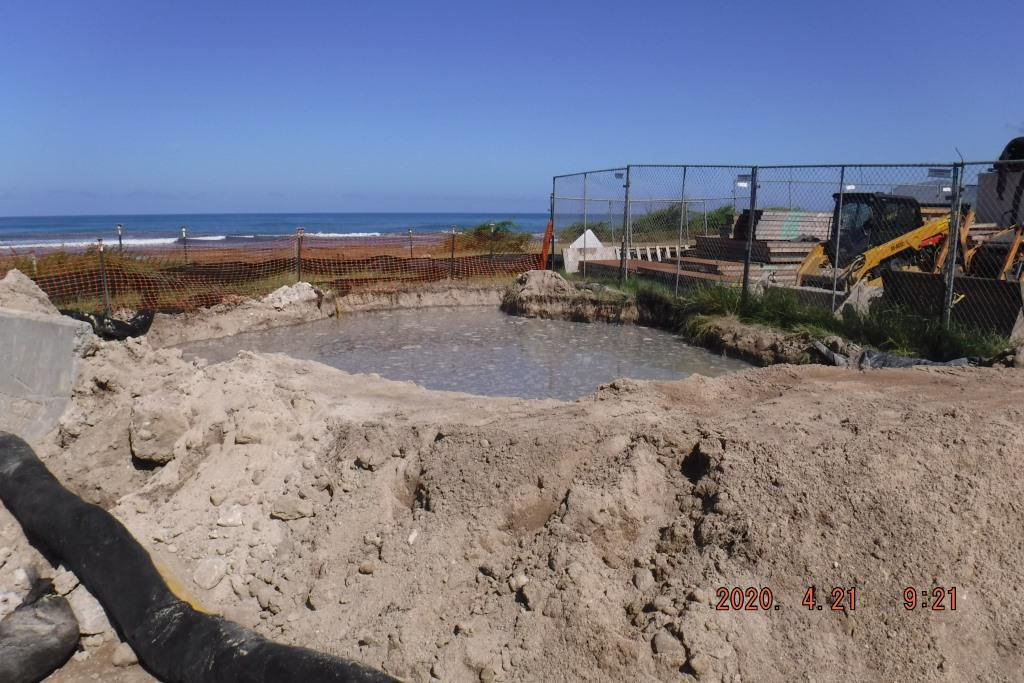
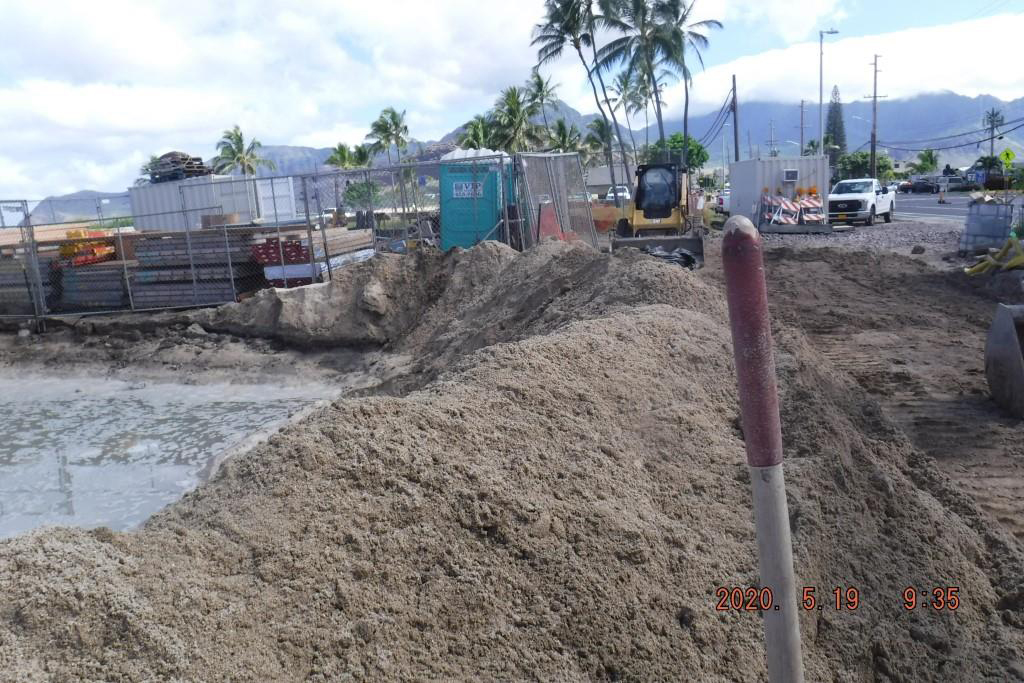
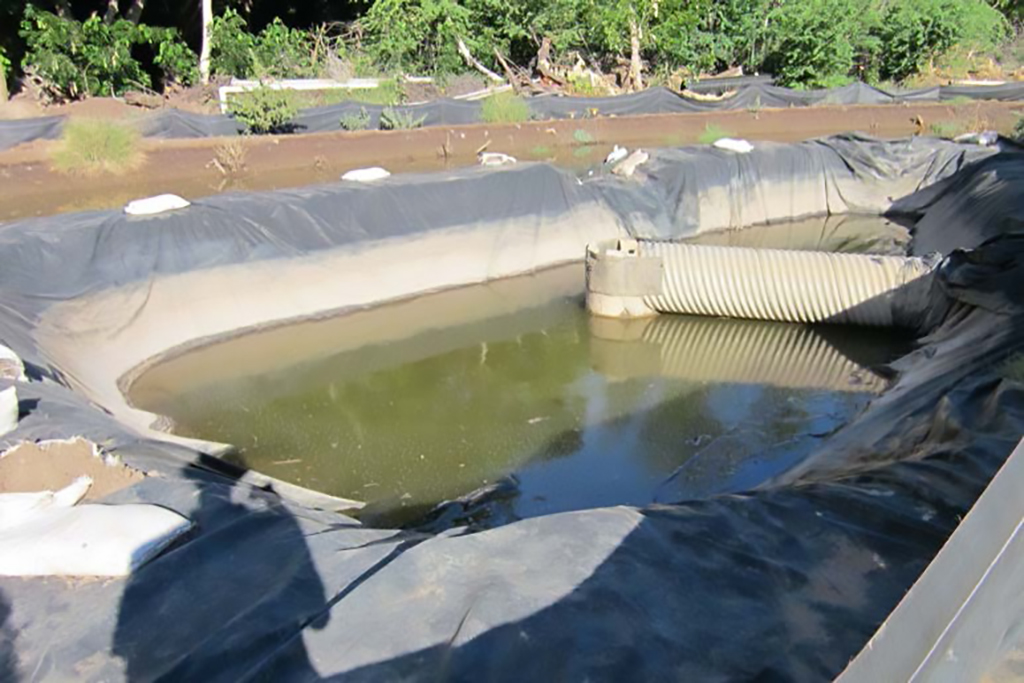
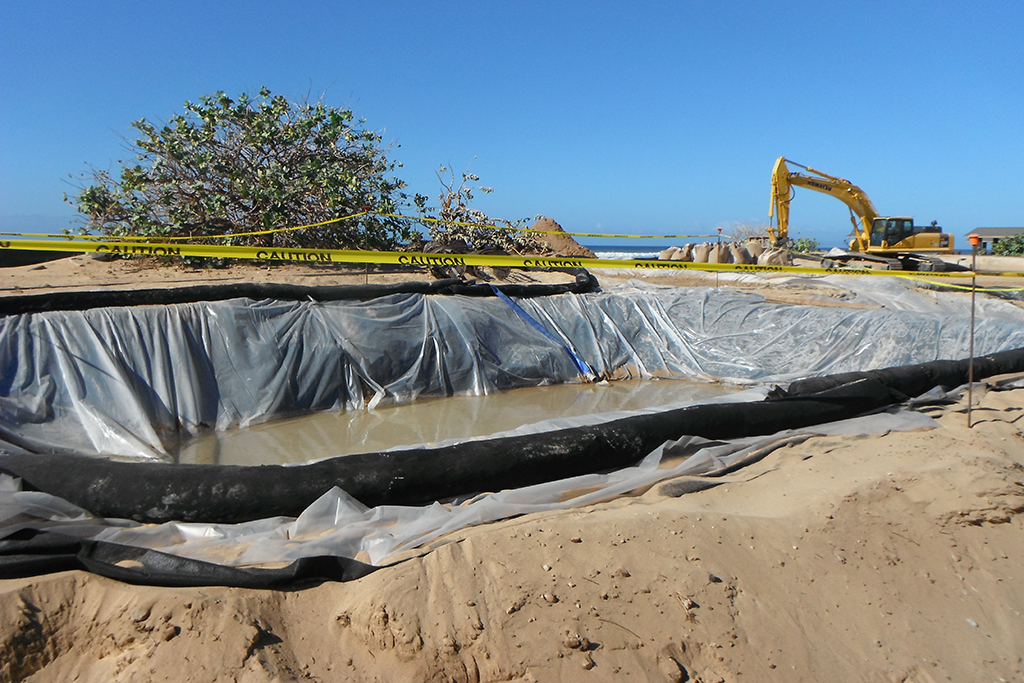
Are adequate BMPs installed to prevent the discharge of pollutants from the project site? Hover over each photo for an explanation of the situation presented and if BMPs have been installed properly.