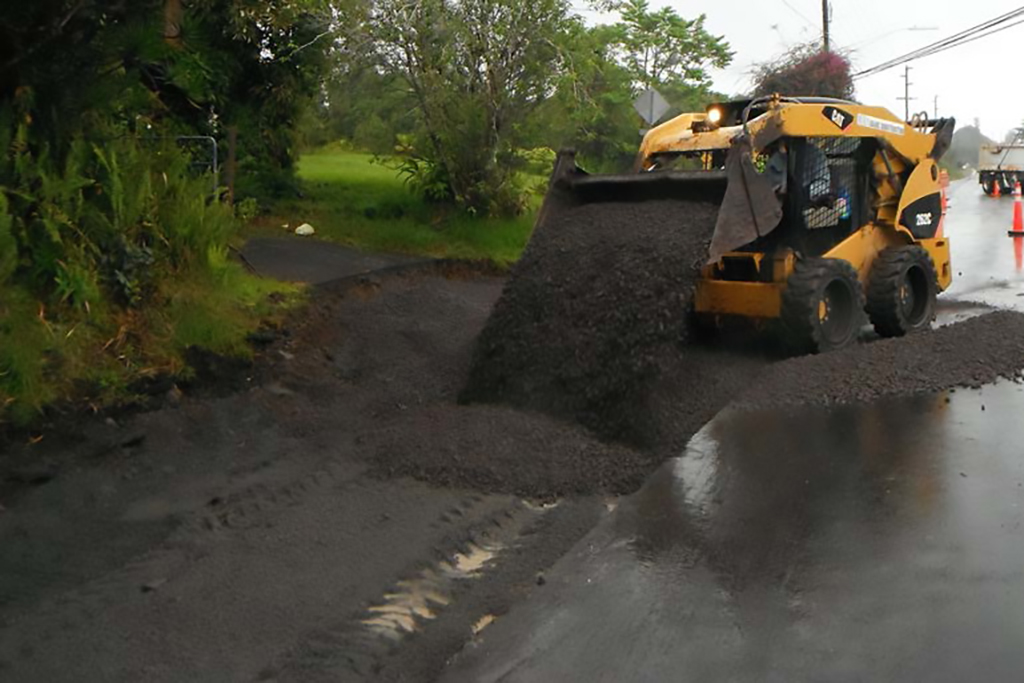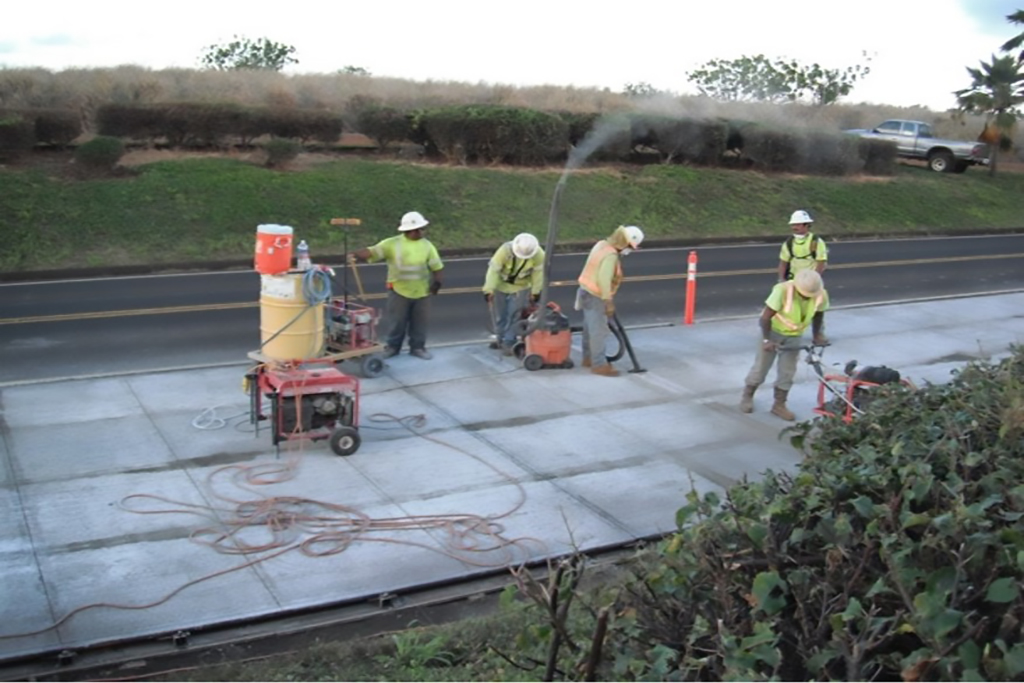

Description
Practices and procedures to prevent or reduce the discharge of pollutants into the storm drain system or adjacent waterbodies from paving, sawcutting, or grinding activities.
Applications
- Paving operations and activities including the following:
- Paving equipment storage
- Asphalt cleaning
- Removal of existing asphalt or concrete
- Concrete, asphalt, seal coat, tack coat, or slurry applications
- Recycling of pavement
Installation and Implementation Requirements
- Limit paving operations during wet weather when possible.
- Store materials for paving activities away from concentrated runoff.
- Place drip pans/drip pads under paving equipment to contain leaks and spills. Clean up spills with absorbent materials immediately.
- Drip protection must be placed under entire asphalt hopper, roller assemblies and spray arms that are not being used. Place a layer of geotextile filter fabric on top of 10 mil plastic sheeting. Perimeter controls must be placed along the perimeter, underneath the impermeable material, to create a berm able to contain any possible spills and/or leaks.
- Ensure full inlet and scupper protection per the Storm Water Pollution Prevention Plan (SWPPP) during application of tack coat, seal coat, slurry seal, and fog seal.
- Do not remove inlet protection until paving and striping operations are complete.
- Clean any asphalt from inlet protection immediately following paving to allow water to drain.
- Remove saw cuts or boring slurry from site by vacuuming.
- Provide storm drain inlet protection during sawcutting to prevent slurry from entering the
storm drains. See section SC-1 Storm Drain Inlet Protection for more information. - Use asphalt emulsions as prime coat when possible.
- Clean asphalt-coated equipment off-site.
- Clean up asphalt millings by the end of the working day and properly dispose of or recycle, as necessary.
- See section SM-5 Concrete Wash and Waste Management for activities involving Portland cement concrete (PCC).
- Keep an ample supply of cleanup material in case of a spill or leak. See section SM-10 Spill Prevention and Control for more information.
ASPHALT CONCRETE PAVING
- Properly dispose of old or spilled asphalt. Collect and remove broken asphalt. Recycle asphalt when possible.
- If waste asphalt (new) must be stored, rather than removed, it must be stored on an impervious material, covered with impervious material such as 10 mil plastic sheeting and have full perimeter control. It cannot be stored in dirt or rubble spoil piles.
- Sweep excess sand and gravel to prevent discharge into the storm drainage system or adjacent waterbodies.
- Comply with storm water permitting requirements for industrial activities if paving requires an on-site mixing plant.
Considerations
- Restrict paving operations during wet weather to prevent contact between storm water and paving materials.
- Limited space to stage paving equipment.
What to Inspect
- Is there drip protection under paving equipment?
- Is inlet protection installed and well-maintained?
- Is there drip protection under paving equipment not being used?
- Are asphalt millings cleaned up at the end of the work day?
- Is paving equipment properly staged within project limits?
- Is there evidence of saw cut slurry entering the storm drain?
Maintenance
- Keep an ample supply of drip pans and absorbent materials on-site.
- Regularly maintain paving equipment to minimize potential leaks or drips.
BMP Examples
Are adequate BMPs installed to prevent the discharge of pollutants from the project site? Hover over each photo for an explanation of the situation presented and if BMPs have been installed properly.