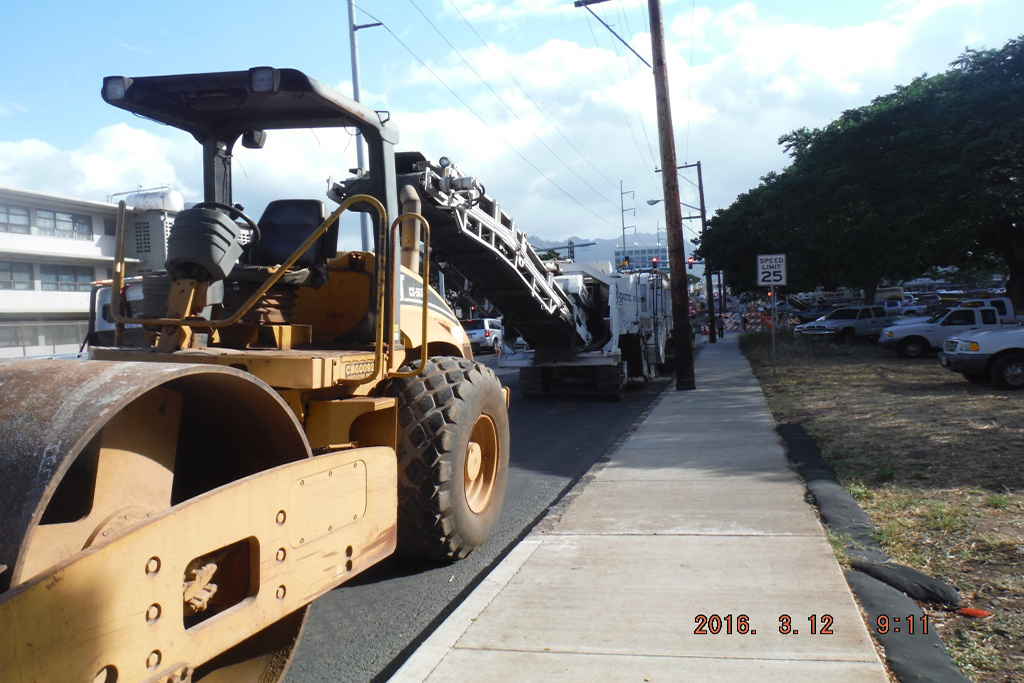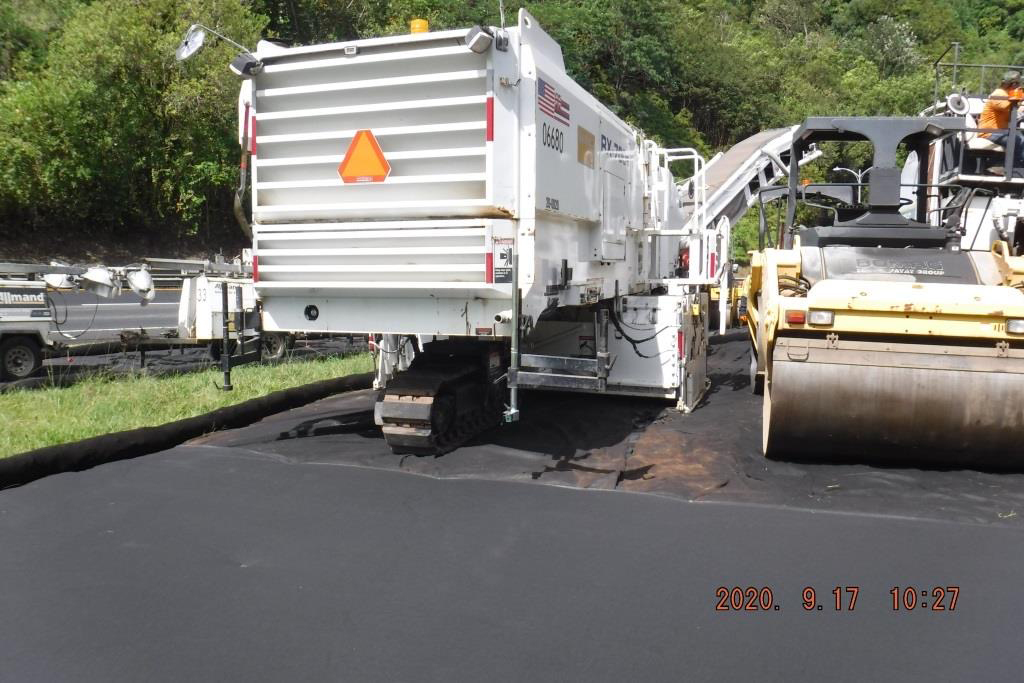

Description
Practices and procedures to prevent asphalt cement millings and waste from discharging into the drainage system or adjacent waterbodies.
Applications
- Paving operations.
- Milling road and highway surfaces that generate dust and debris.
- Asphalt cement pavement patching and repair.
Installation and Implementation Requirements
- Ensure all inlets at risk of receiving pollutants are protected with inlet protection during milling operations. See section SC-1 Storm Drain Inlet Protection for more information.
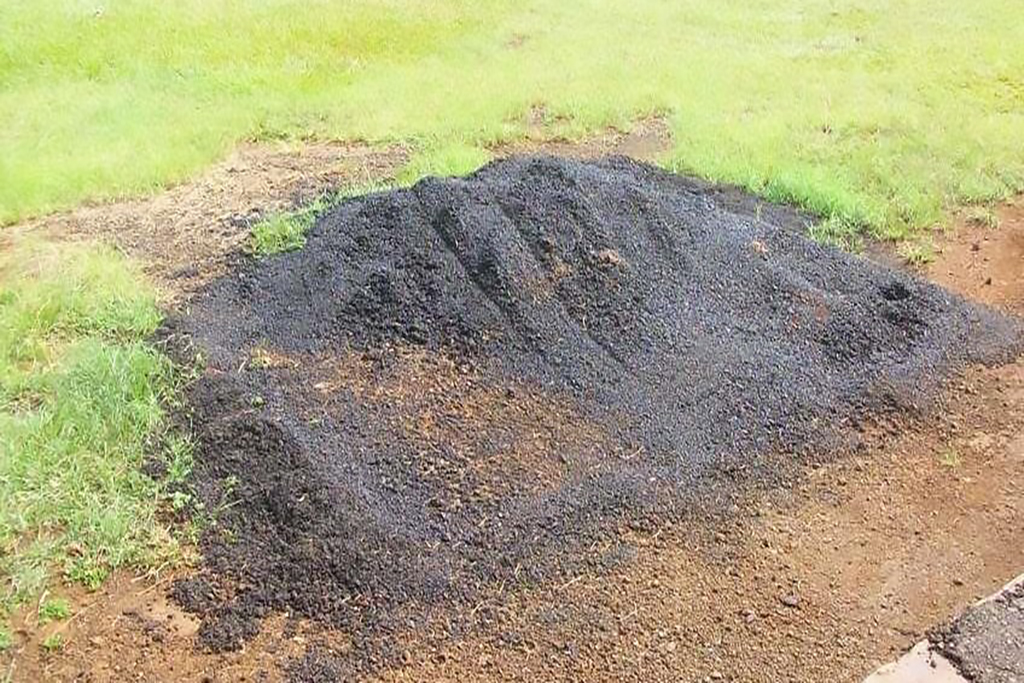
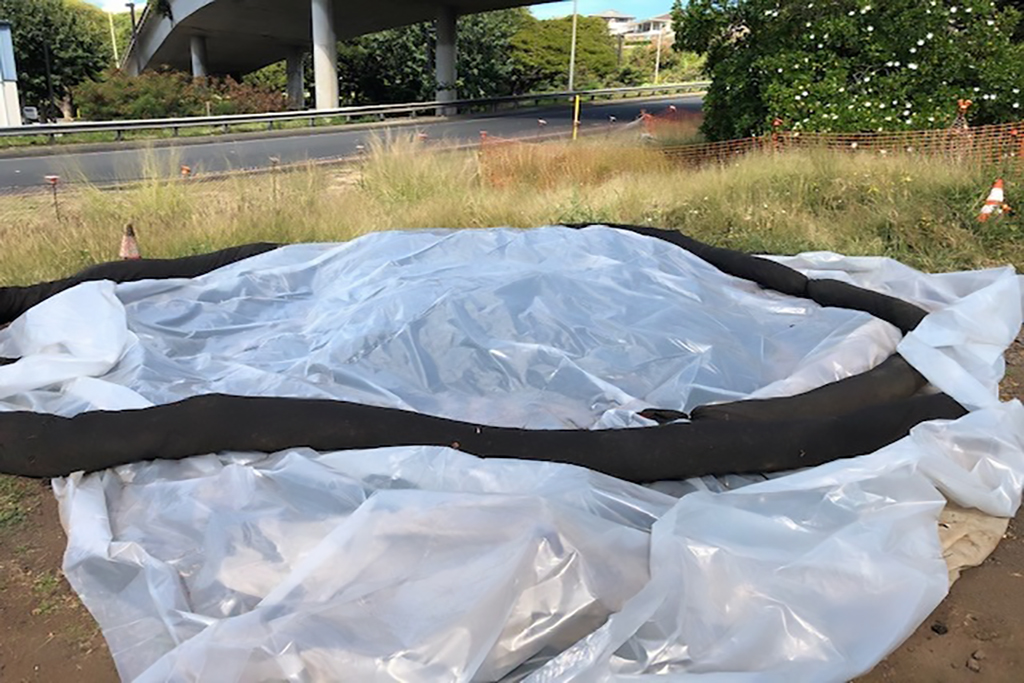
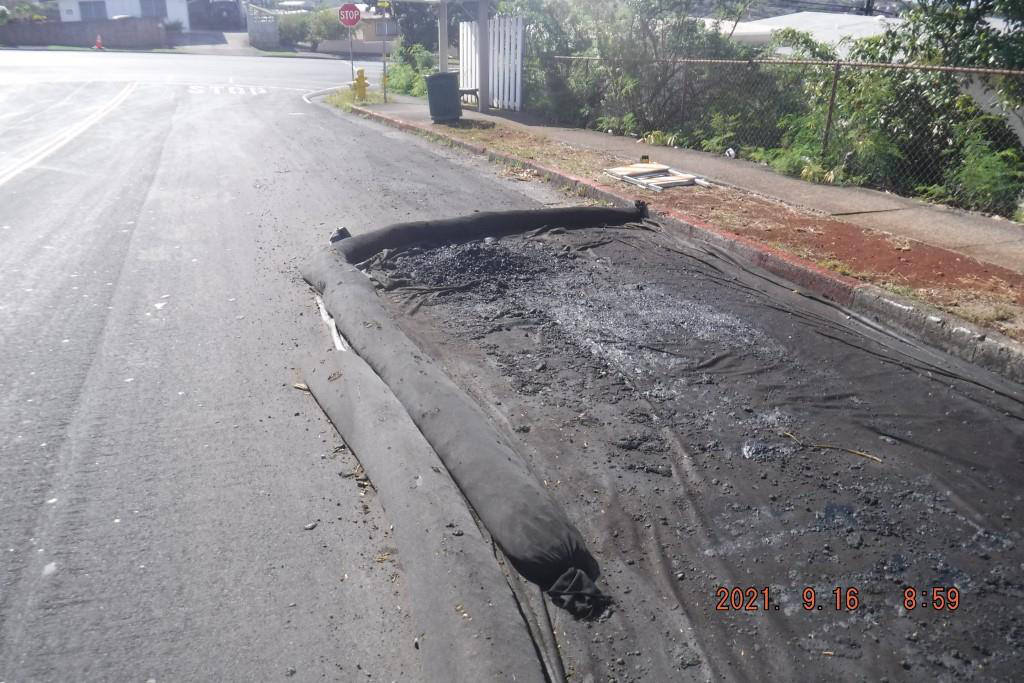
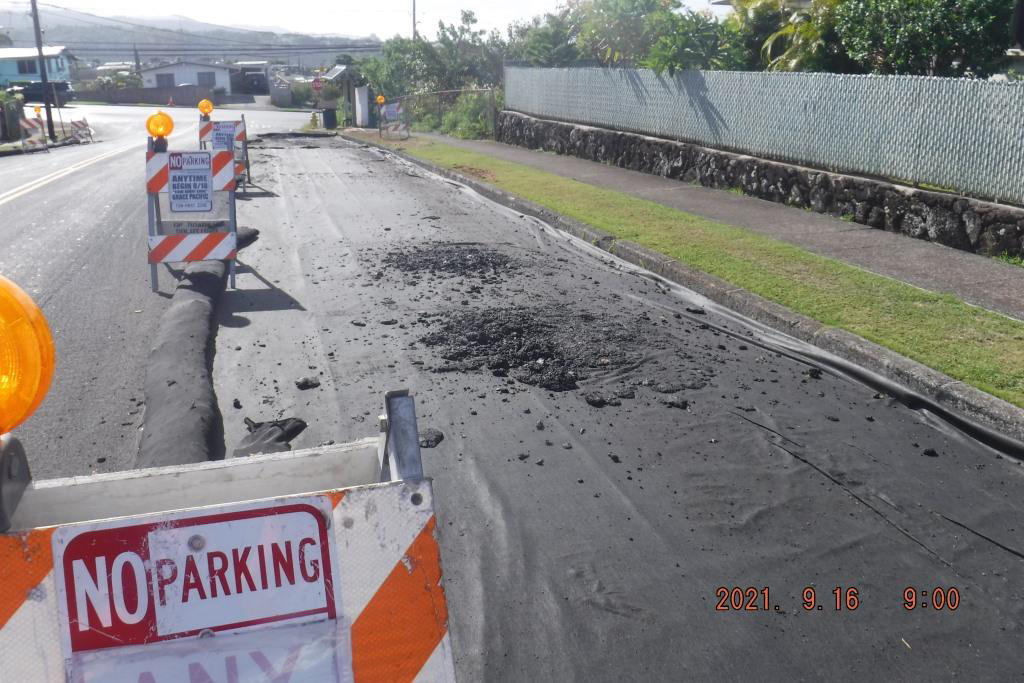
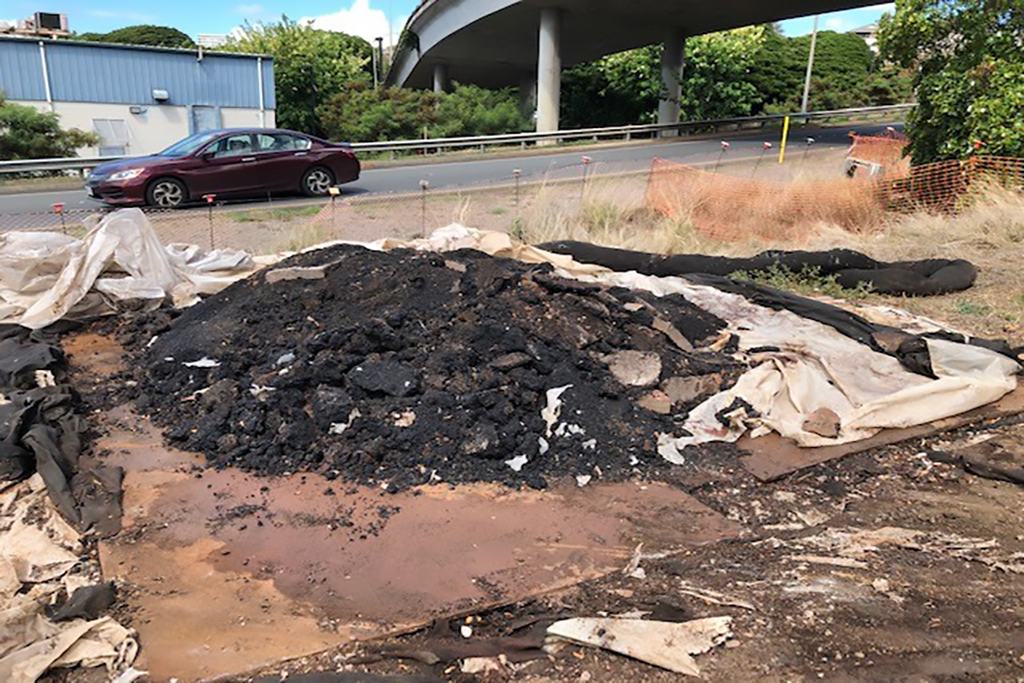
- Place temporary cold patch spoil piles or waste asphalt piles on impervious material, cover with impermeable material, and surround with full perimeter control.
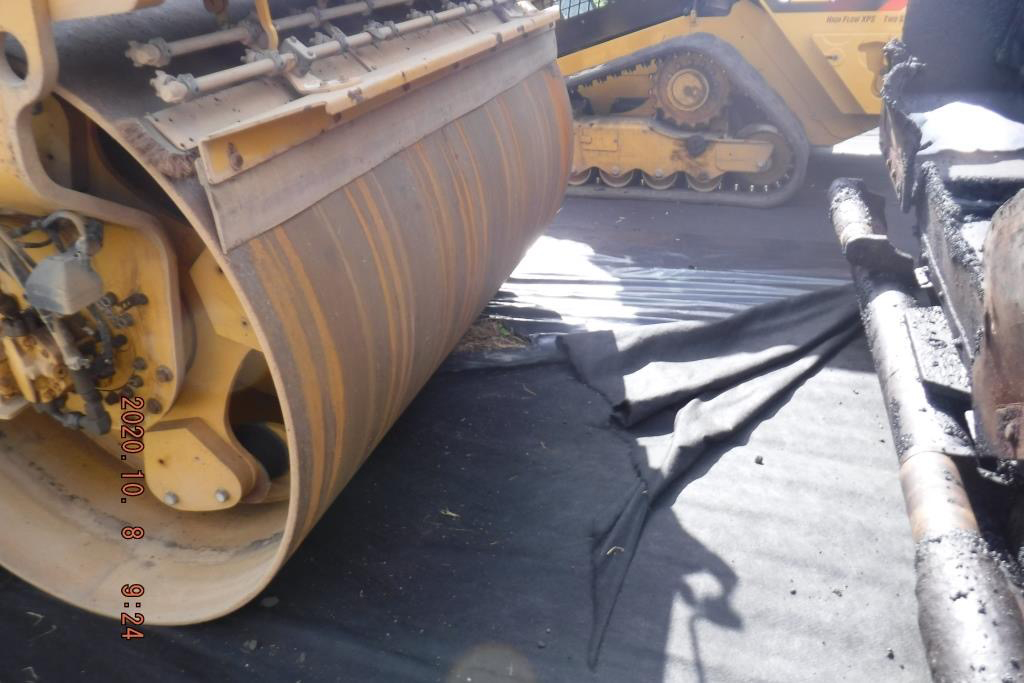
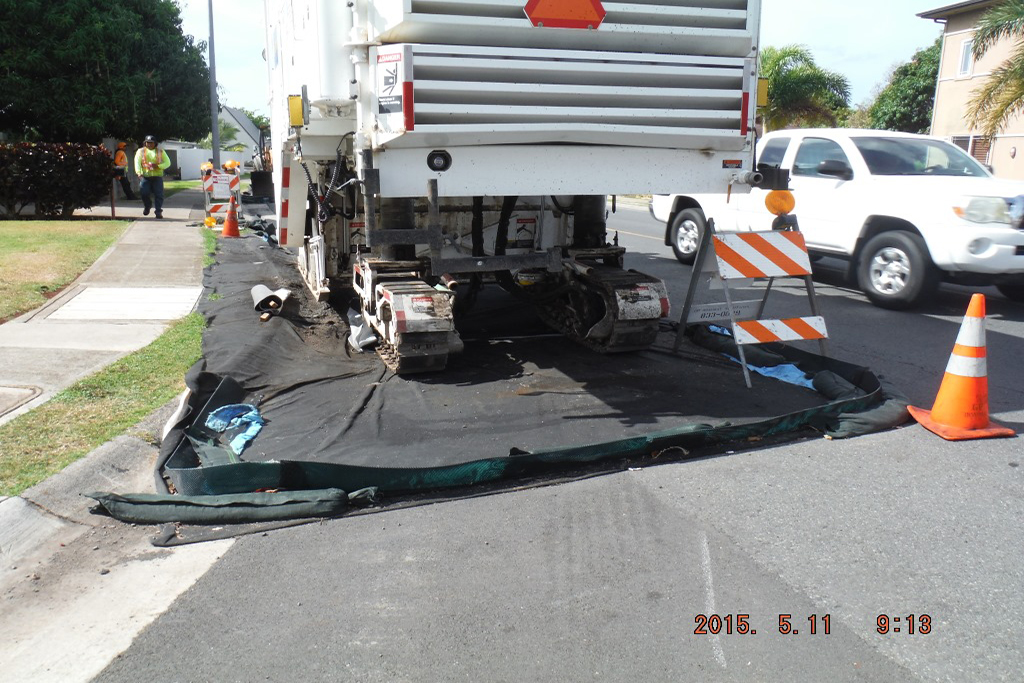
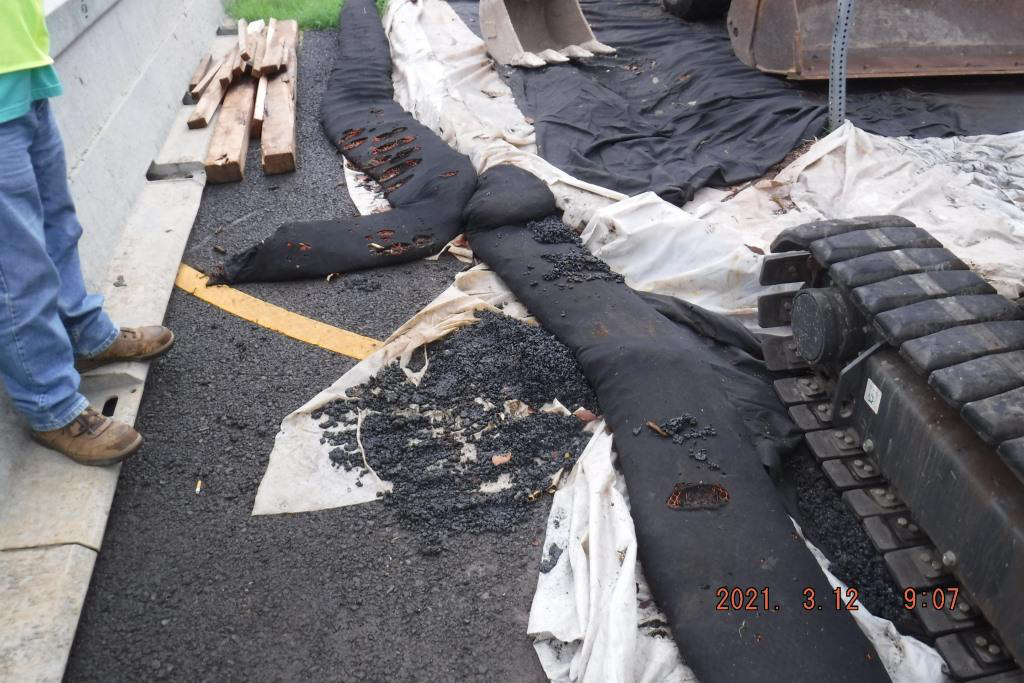
- Store paving vehicles and equipment in an approved staging area and fully park on a layer of geotextile filter fabric on top of 10 mil plastic sheeting. See section SM-16 Staging Area for more information.
- Seed pervious areas disturbed by paving operations within 14 days (7 days if runoff drains to impaired waters) of completing paving to initiate stabilization per Hawaii Administrative Rules (HAR) Title 11, Chapter 55, Appendix C, section 5.2 or per project specifications.
- Clean roads of loose debris by the end of the work day by sweeping or vacuuming.
- Remove waste asphalt from site, including contaminated soil that may be mixed in material, and dispose of properly based on HDOT policies, as well as other applicable federal, state, and local regulations. See section SM-8 Contaminated Soil Management for more information.
Considerations
- Staging area may have limited amount of space to store milling and paving vehicles/equipment.
- Contractors may need to implement dust control measures during milling operations.
- Storm water can cause fines from milling to enter into storm drains and open bodies of water.
What to Inspect
- Is there evidence of asphalt waste on bare ground?
- Is the asphalt cement spoil pile properly stored on impermeable material and covered with 10 mil plastic sheeting?
- Has perimeter control been installed at the base of the pile?
- Is milling debris cleaned up at the end of the day?
- Are inlets at risk of receiving pollutants protected?
- Are leaks observed from paving machinery and construction vehicles?
- Does paving equipment have drip protection?
Maintenance
- Storage areas shall be clean and well organized.
- Remove any significant residual materials remaining on the ground and properly dispose of immediately. If the residual materials contaminate the soil, then the contaminated soil shall also be removed and disposed of properly.
- Maintain an adequate supply of spill cleanup materials on-site and readily available.
- Maintain covers on any materials that should not come into contact with storm water. All containers must have proper Globally Harmonized System
(GHS) Labels, including secondary containers. - Provide periodic training to all employees responsible for material storage and handling.
BMP Examples
Are adequate BMPs installed to prevent the discharge of pollutants from the project site? Hover over each photo for an explanation of the situation presented and if BMPs have been installed properly.