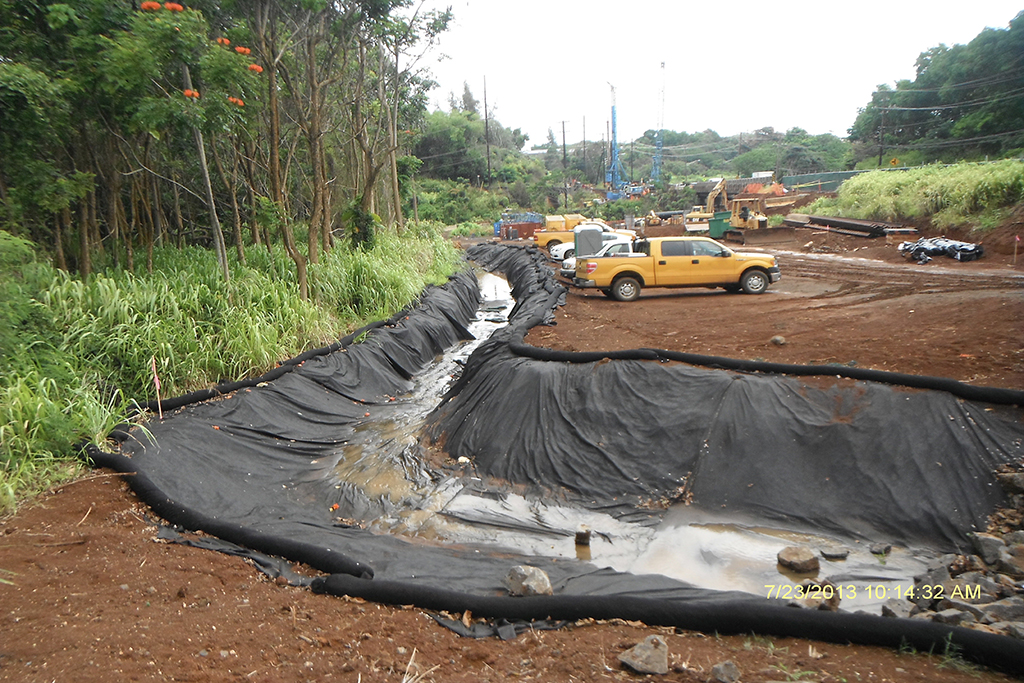

Description
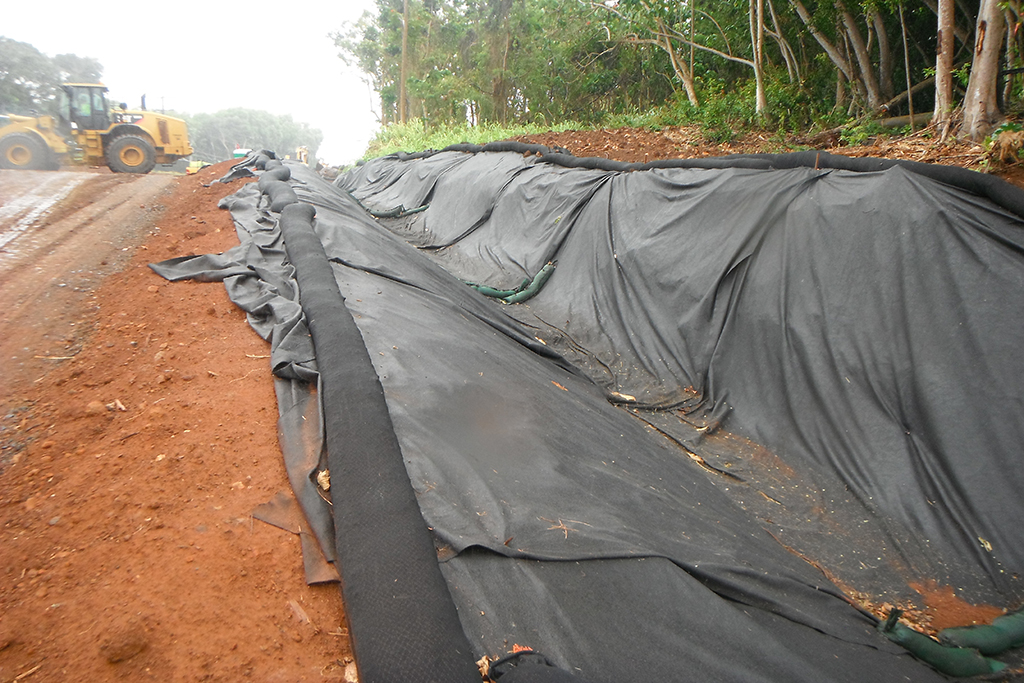
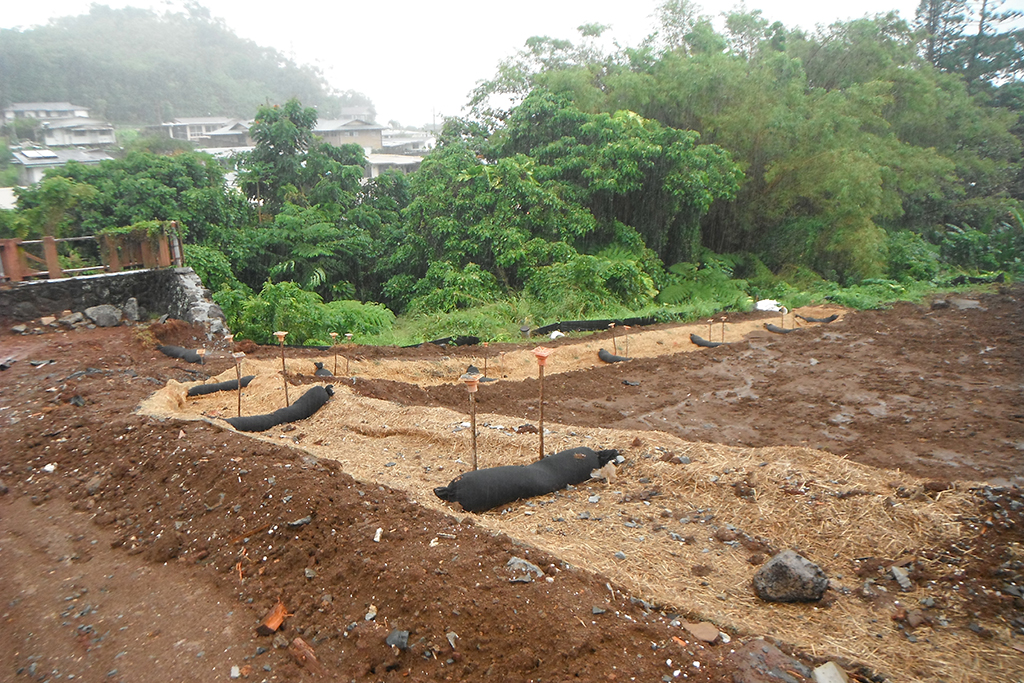
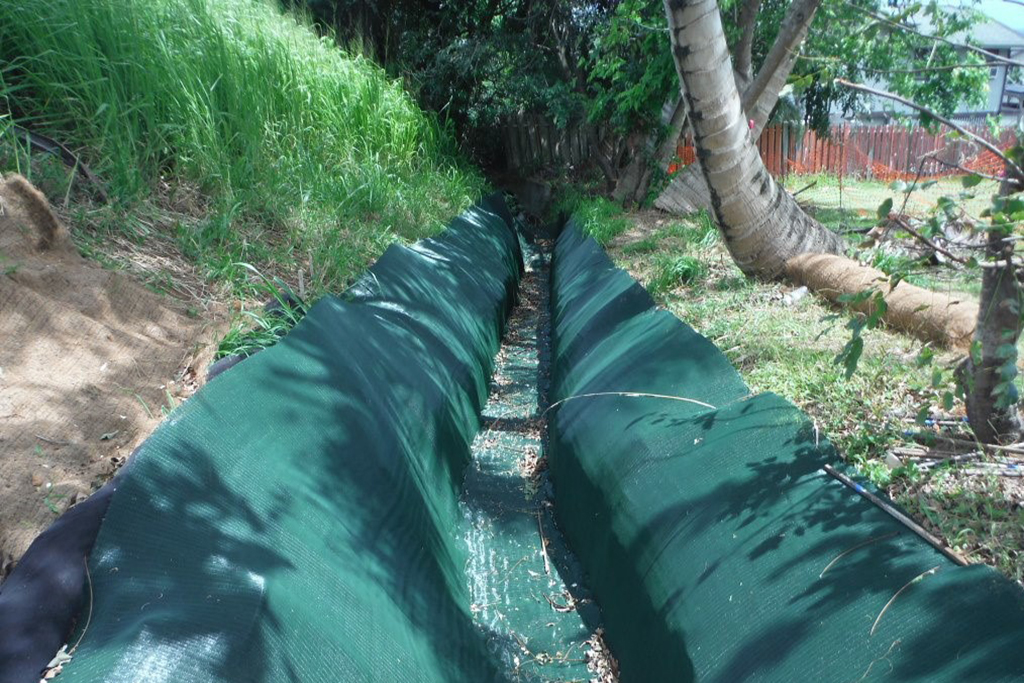
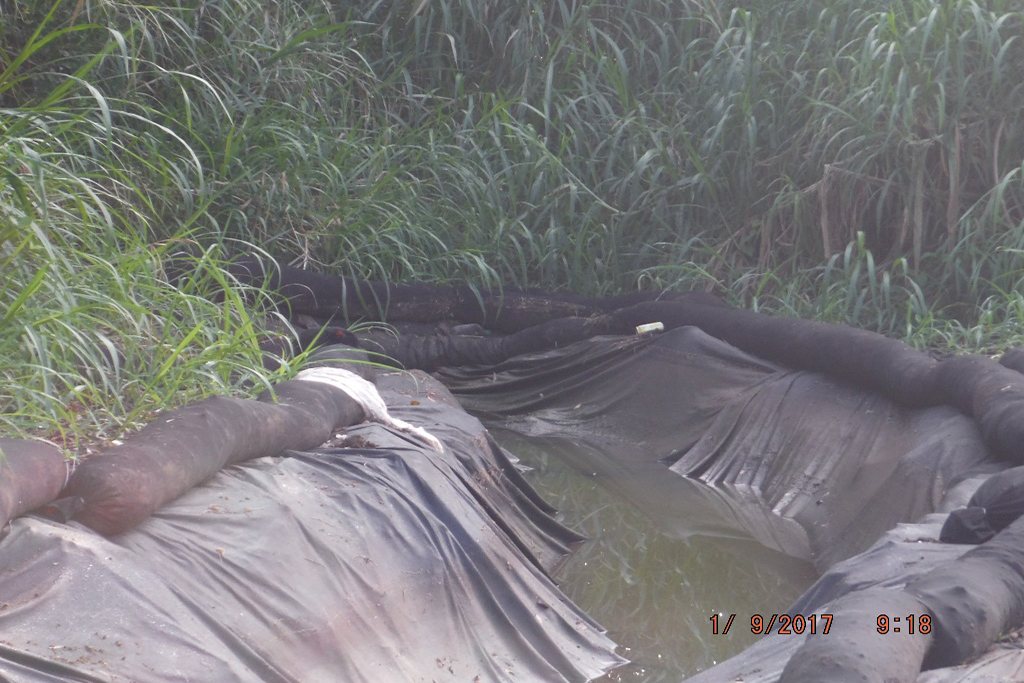
Devices that intercept, divert, and convey off-site surface run-on around or through the project site to prevent site erosion. Run-on (storm water entering the site) diversion devices include dikes, swales, compost filter berms, sandbags, check dams and slope drains.
Applications
- Along paved surfaces to intercept runoff.
- Upslope from project site to prevent erosion of disturbed areas located on-site.
- Downslope of project site to convey runoff to a sediment control device such as a sediment trap or sediment basin.
- Around material storage areas, maintenance and fueling areas, or areas with runoff containing contaminants or pollutants.
- Below steep grades to intercept concentrated runoff.
- Diversion devices can provide protection from storm water runoff when located around adjacent property and buildings.
- Devices can be used to divert run-on storm water through the construction site without eroding disturbed areas.
Installation and Implementation Requirements
- A designer should provide flow rate calculations to the Engineer for approval before installation to ensure the size of the diversion device is effective.
- Use a layered approach to divert storm water run-on and minimize sediment from leaving the site.
- Select flow velocity based on evaluation of potential risks due to erosion, overtopping, flow backup, washout, and drainage flow patterns of the project.
- Immediately stabilize earth dikes and swales. See section EC-5 Earth Dikes, Swales, and Ditches for more information.
- See section EC-7 Slope Drains and Subsurface Drains for more information.
Considerations
- Run-on diversion devices do not remove sediment from runoff.
- If run-on cannot be diverted around the construction site it will need to be directed through the project without causing erosion.
- Ditches and swales may require check dams or lining to prevent erosion.
- All diversions shall have stabilized outlets that will convey concentrated runoff without erosion.
- Once storm water run-on enters a construction site, it becomes the contractor’s responsibility to effectively manage.
- Not all devices are effective individually. A layered approach is more appropriate.
What to Inspect
- Is there evidence of sediment buildup at inlets?
- Is there erosion at channel embankments, washouts, or ditch beds?
- Is there evidence of erosion or scour at outlets and/or perimeter of site?
- Are there signs of storm water run-on entering the construction site?
- Is sediment accumulating at perimeter control devices?
- Are additional BMPs needed to prevent run-on?
Maintenance
- Remove accumulated sediment and debris and repair damages as necessary.
- Temporary diversions shall be completely removed and area stabilized at the completion of construction.
- Repair/replace BMP devices that are not properly performing.
BMP Examples
Are adequate BMPs installed to prevent the discharge of pollutants from the project site? Hover over each photo for an explanation of the situation presented and if BMPs have been installed properly.