
Description
Methods to minimize sheet flow over slopes and reduce erosion by intercepting and conveying runoff to sediment removing structures or a protected drainage system.
Applications
- Protecting slopes from sheet flow runoff.
- Areas which must be protected from runoff flowing down slopes.
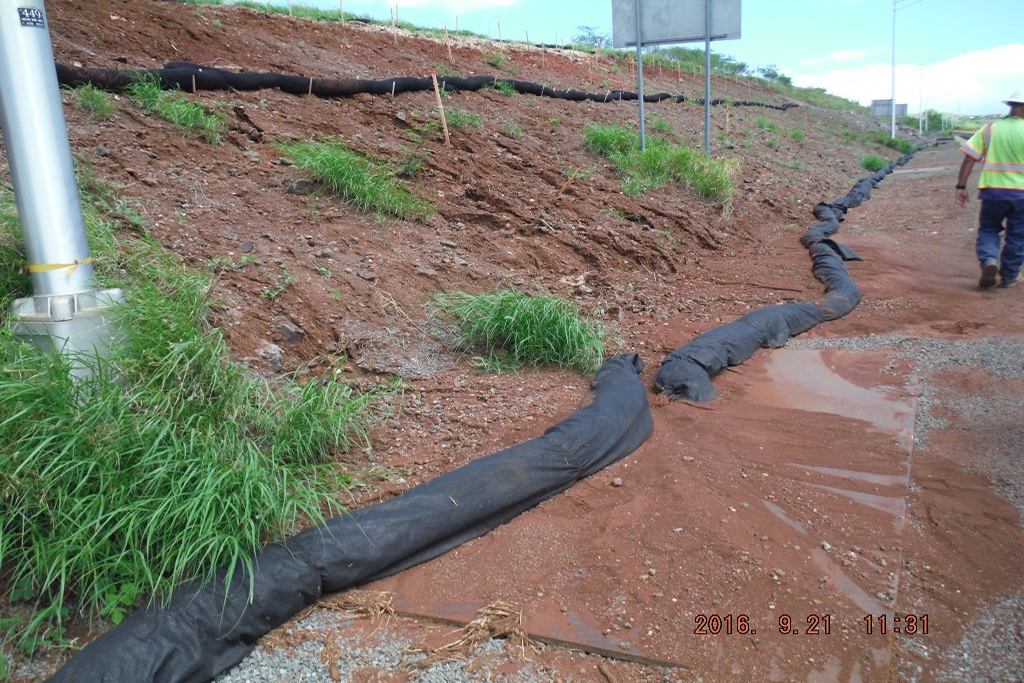
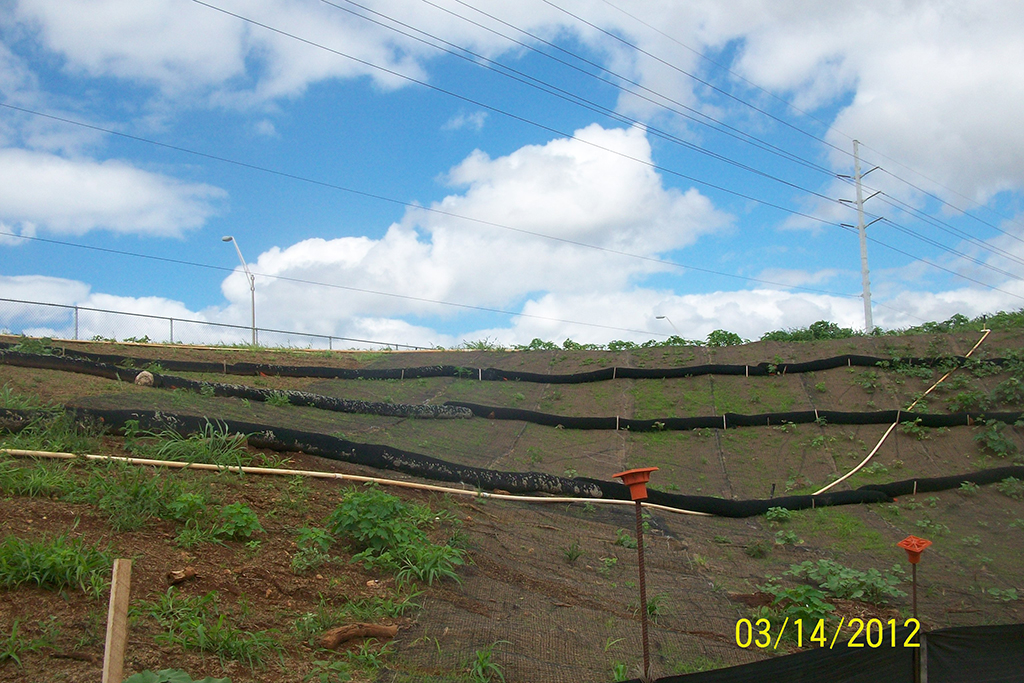
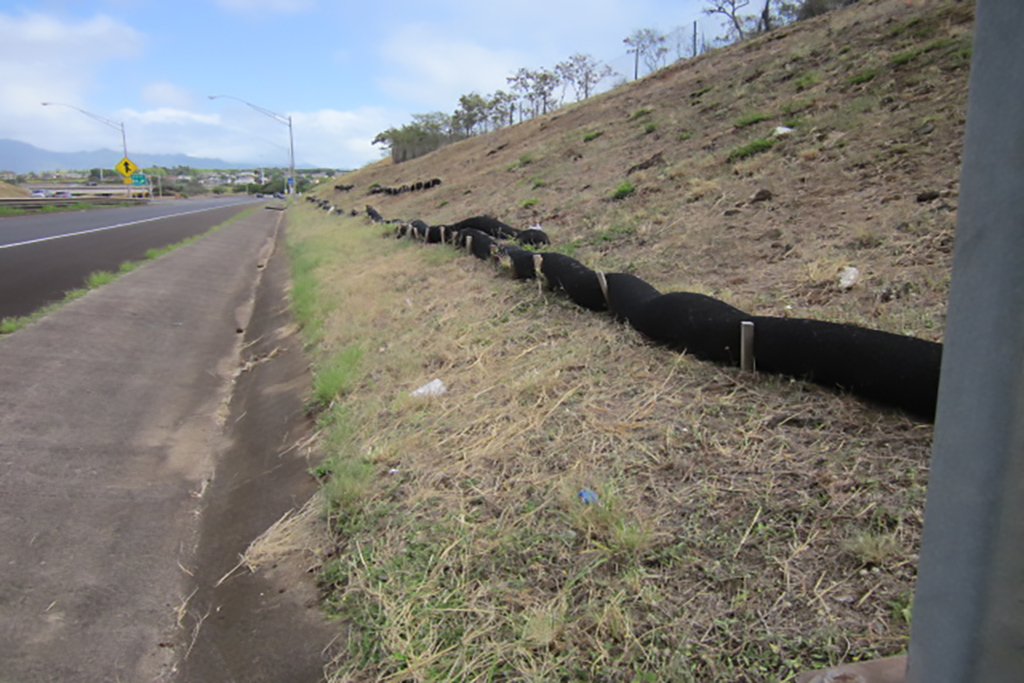
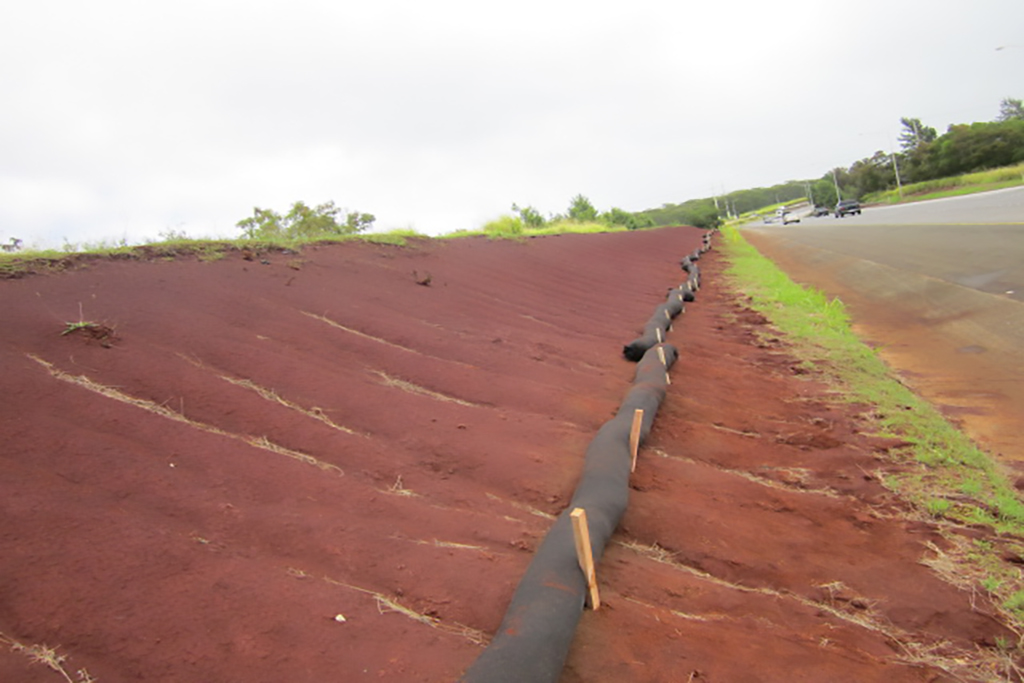
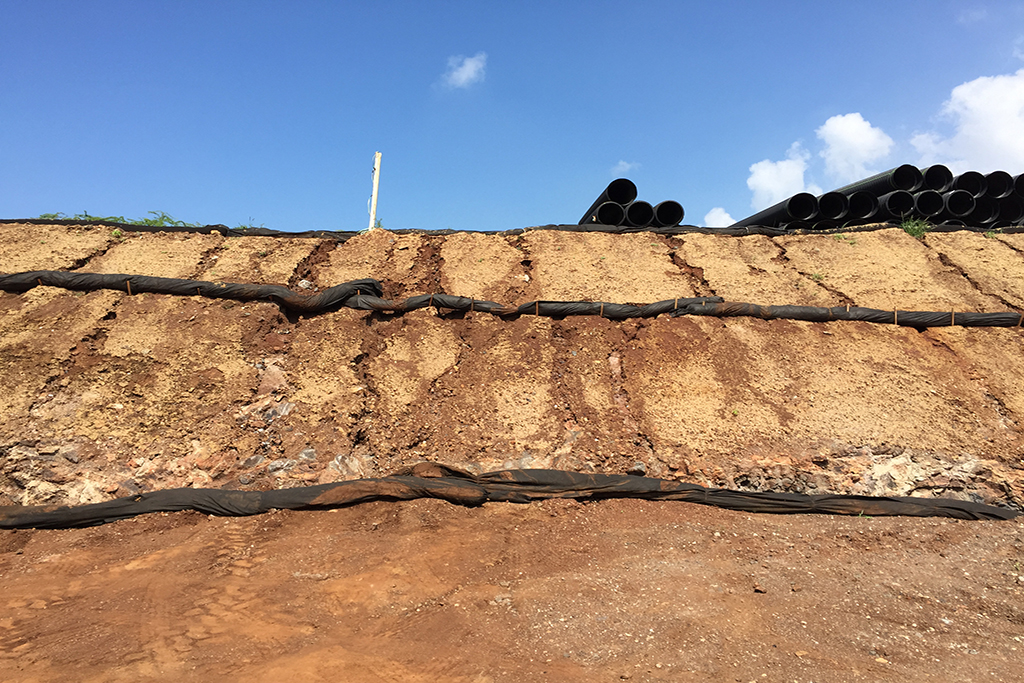
- Installed horizontally across disturbed slopes to reduce runoff velocity.
- Slopes where runoff must be intercepted at bottom of slope.
- Terraced areas on large/long slopes.
- Remove runoff to treatment area.
- A built-in ditch/swale at the base or top of the disturbed slope to divert storm water to an area where erosion control is prevalent.
Installation and Implementation Requirements
- Design flows and safety factors shall be determined by an evaluation of risks associated with erosion and overtopping, flow backups, or structure washouts. Consult with the District Maintenance Engineer or Highways Hydraulic Section to determine these values.
- Ditches with high flow velocities shall be lined or stabilized. Consider use of rock check dams to slow flow.
- Direct flows at top of slopes to slope drains or a sediment trap. See sections EC-7 Slope Drains and Subsurface Drains and SC-4 Sediment Trap for more information.
- A BMP device (dike, berm, compost filter sock) should be installed at the top of disturbed slopes until the slope is revegetated or temporary erosion control is installed on the face of the slope.
- Protect outlets from erosion.
- Place slope interceptors as follows:
- Slope inclination of 4:1 (H:V) or flatter: Fiber rolls should be placed at a maximum interval of 20 feet.
- Slope inclination between 4:1 and 2:1 (H:V): Fiber rolls should be placed at a maximum interval of 15 feet.
- Slope inclination 2:1 (H:V) or greater: Fiber rolls should be placed at a maximum interval of 10 feet; a closer spacing is more effective.
- Stakes should be installed to secure compost filter berms. Drive stakes at least 12 inches into the ground. See section SC-6 Compost Filter Berm/Sock for more information.
Considerations
- Additional sediment trapping BMP devices may be necessary for sediment-laden runoff.
- Slope interceptors on steeper slopes will need to be spaced closer due to faster flows.
- Slopes made up of a higher percentage of clay will increase the velocity of sheet flow.
What to Inspect
- Are washouts evident in ditches or berms?
- Are structures accumulating sediment and/or debris?
- Is there evidence of rill or gully erosion?
- Is sediment discharging into outlets?
- Are berms correctly trenched and staked?
- Are berms properly spaced on slope?
- Is a BMP device installed at the top of the disturbed slope?
- Are additional BMPs required to prevent erosion and undermining?
Maintenance
- Repair or replace rip-rap as needed.
- Repair damaged lining as needed.
- Use soil stabilizers.
- Compact fill berms and revegetate.
- Compact and revegetate ditches as needed.
- Remove accumulated sediment when it reaches one-half the height of the berm.
• Repair/replace compost filter berms that have rips and tears.
BMP Examples
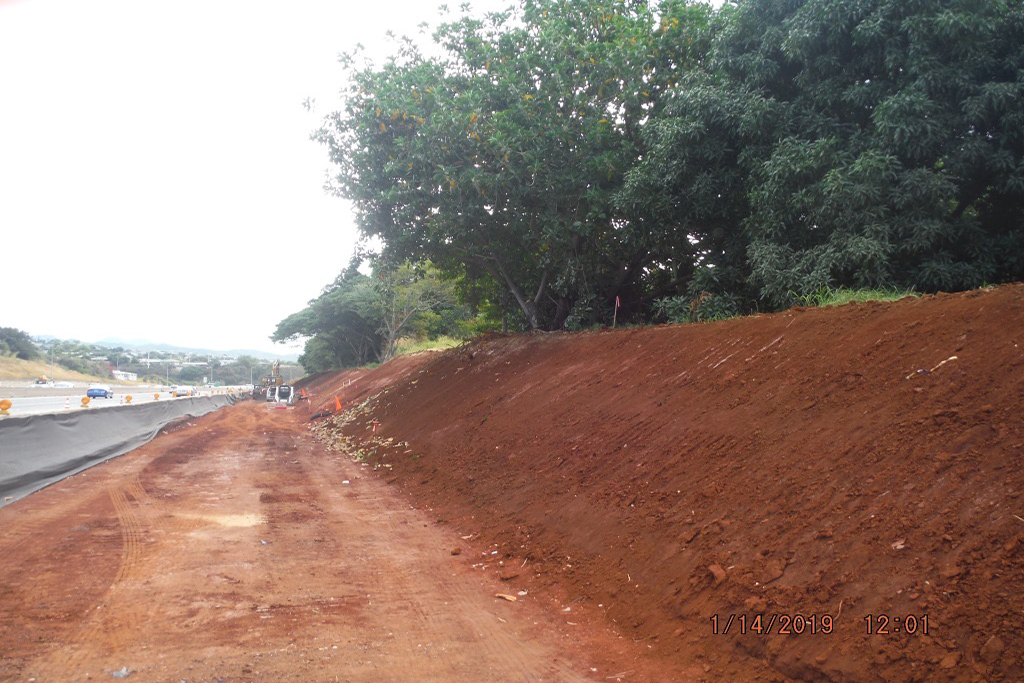
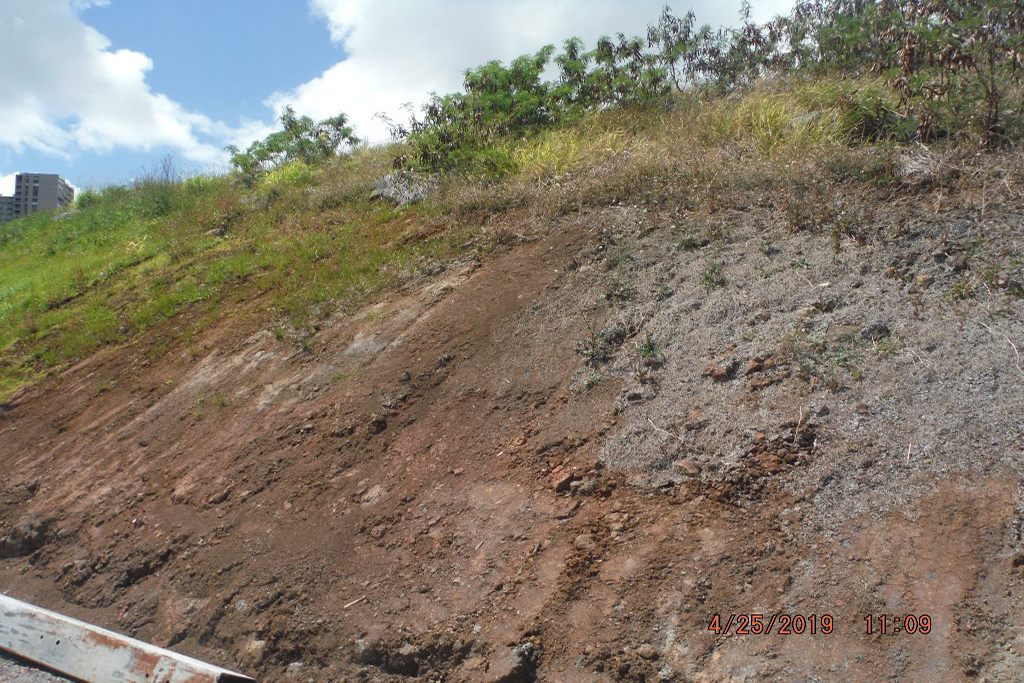
Are adequate BMPs installed to prevent the discharge of pollutants from the project site? Hover over each photo for an explanation of the situation presented and if BMPs have been installed properly.