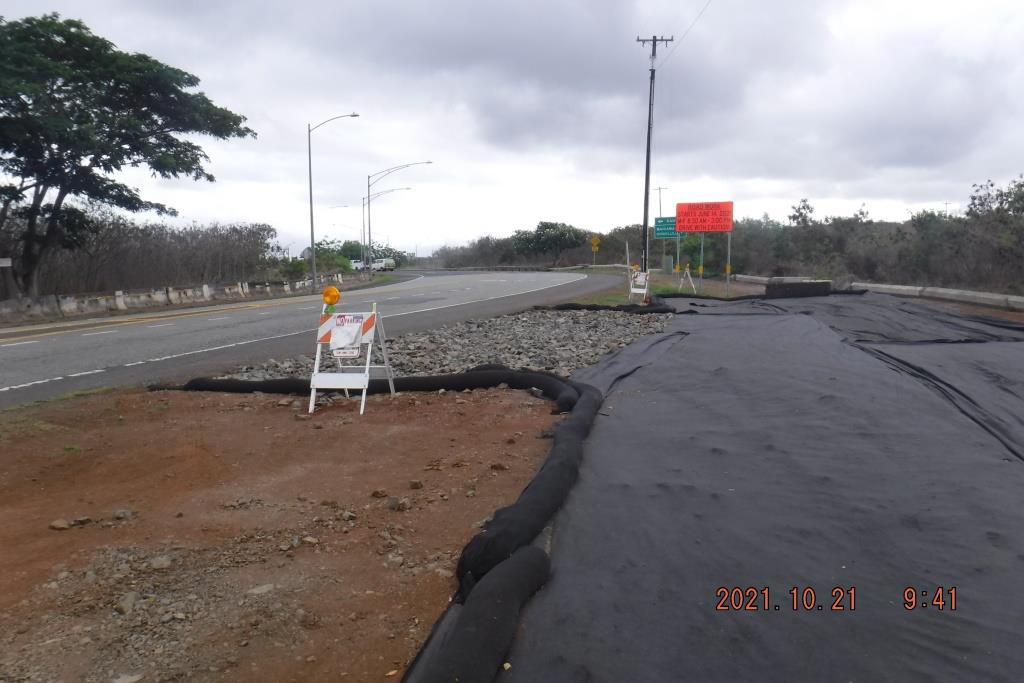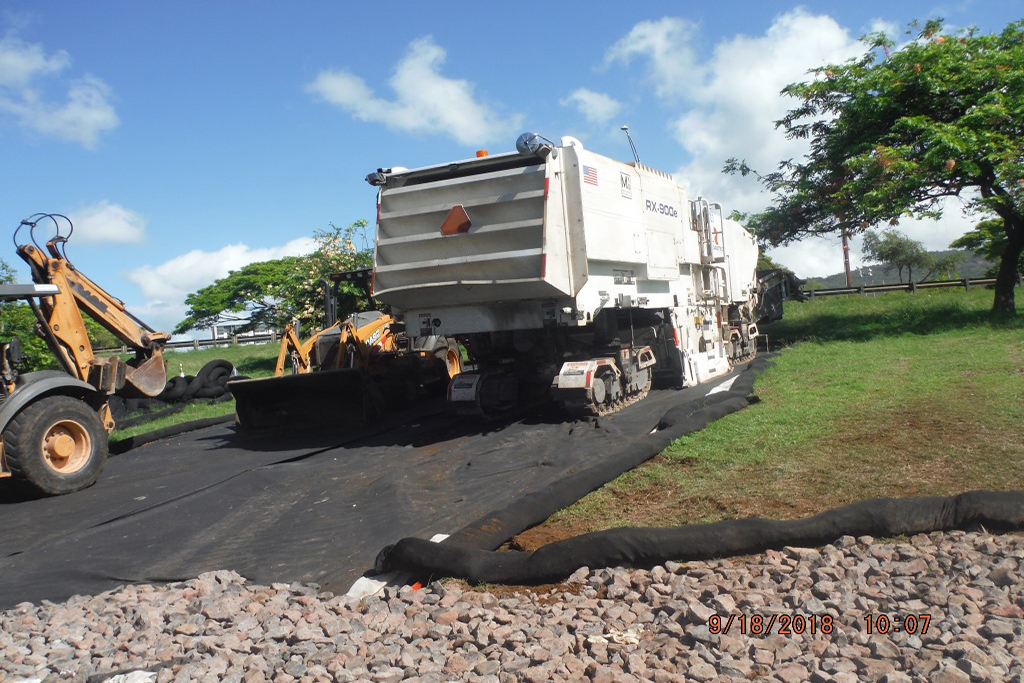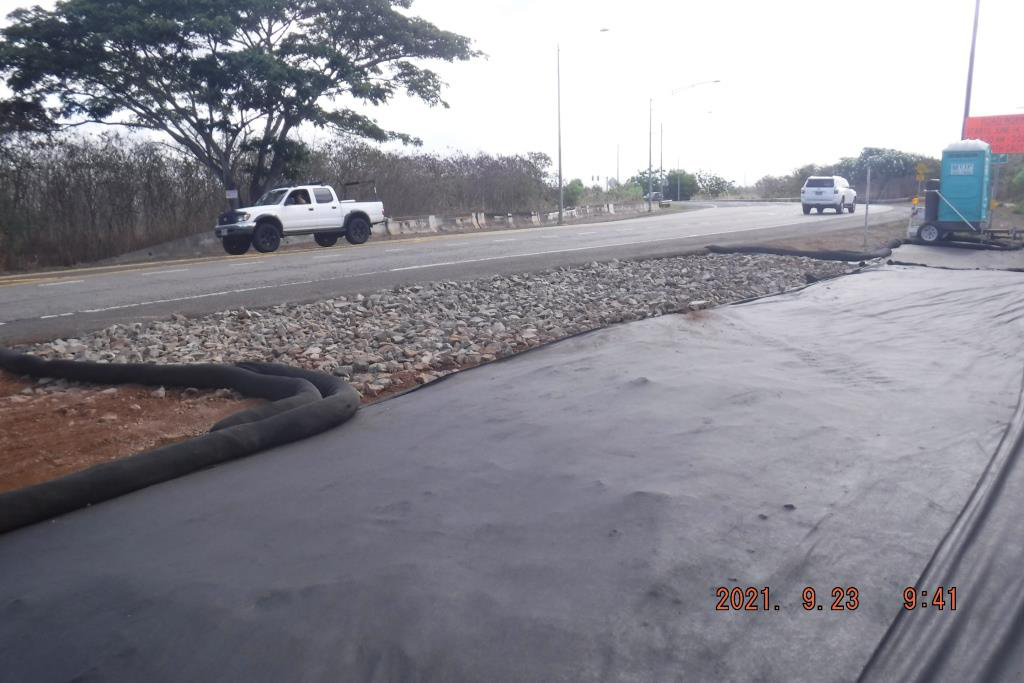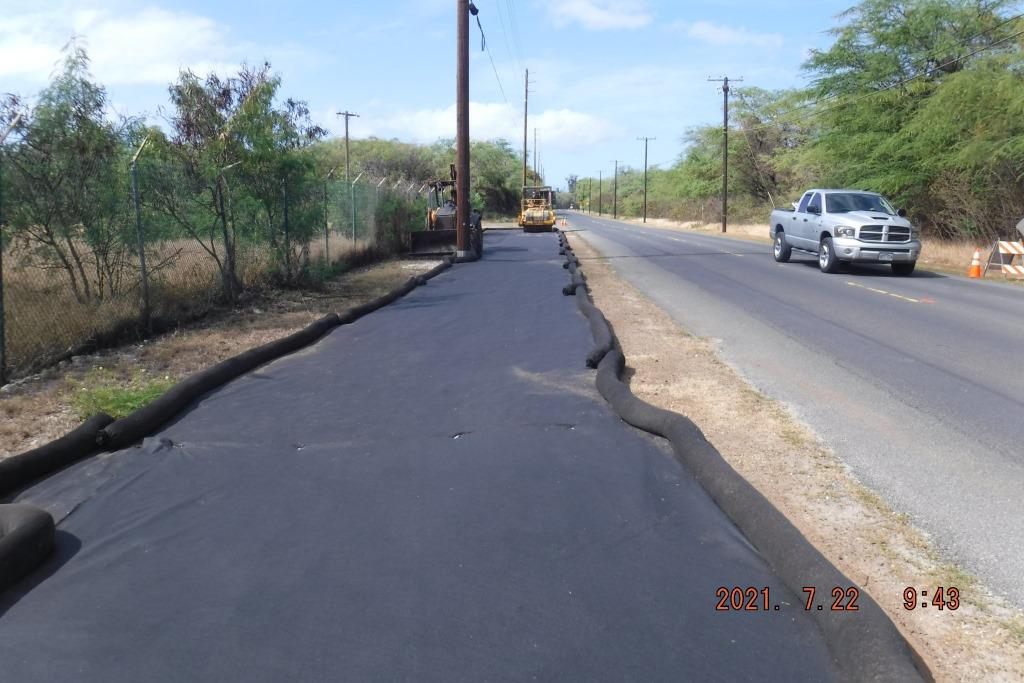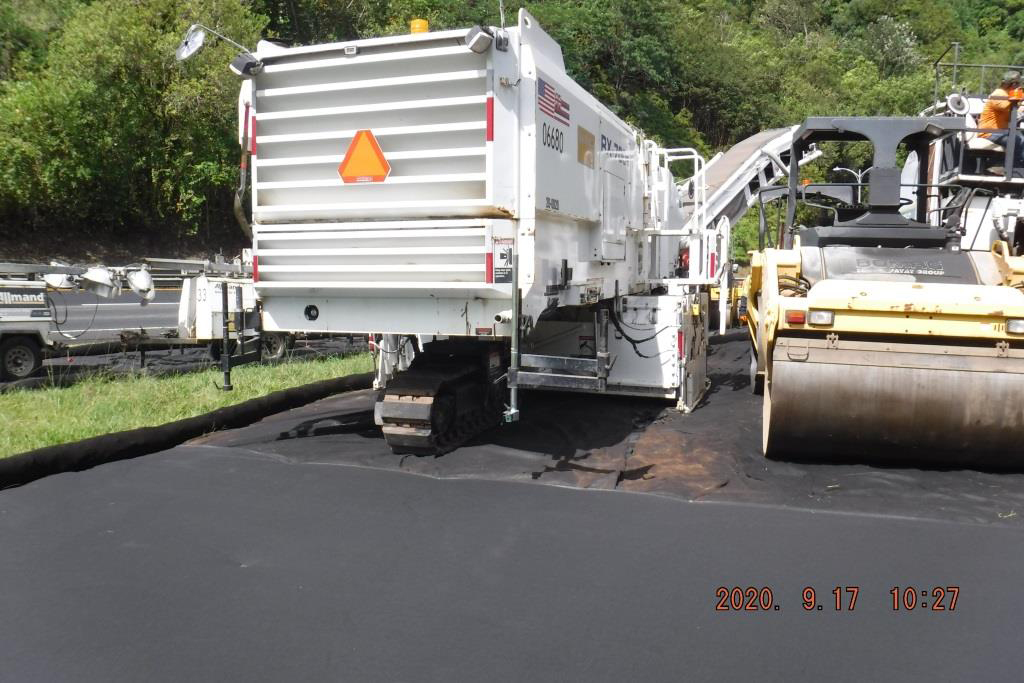

Description
An approved location, designated in the Storm Water Pollution Prevention Plan (SWPPP), where construction equipment, vehicles, materials, and other construction-related materials are stored. Staging areas can be a significant point source for pollution, so BMPs are necessary to ensure no contaminated storm water exits the site.
Applications
- Flat areas with ample space for equipment and materials to be stored.
- Paved areas and/or land already disturbed within project boundaries.
Installation and Implementation Requirements
- Staging areas must be defined in the plans of the project’s SWPPP and approved prior to using the area. The approved locations and layout/detailing of the staging area must be included in the SWPPP or included by amendment process. In the case of roadside staging areas for paving equipment, a generic layout may be provided for multiple roadside identified locations. The approved staging area plan shall designate the locations of the equipment/material to be stored within the staging area, as well as, any BMPs to be implemented for the staging area.
- BMPs must be in place prior to using the staging area.
- Drip pans can be used to catch potential leaks from idle vehicles and equipment.
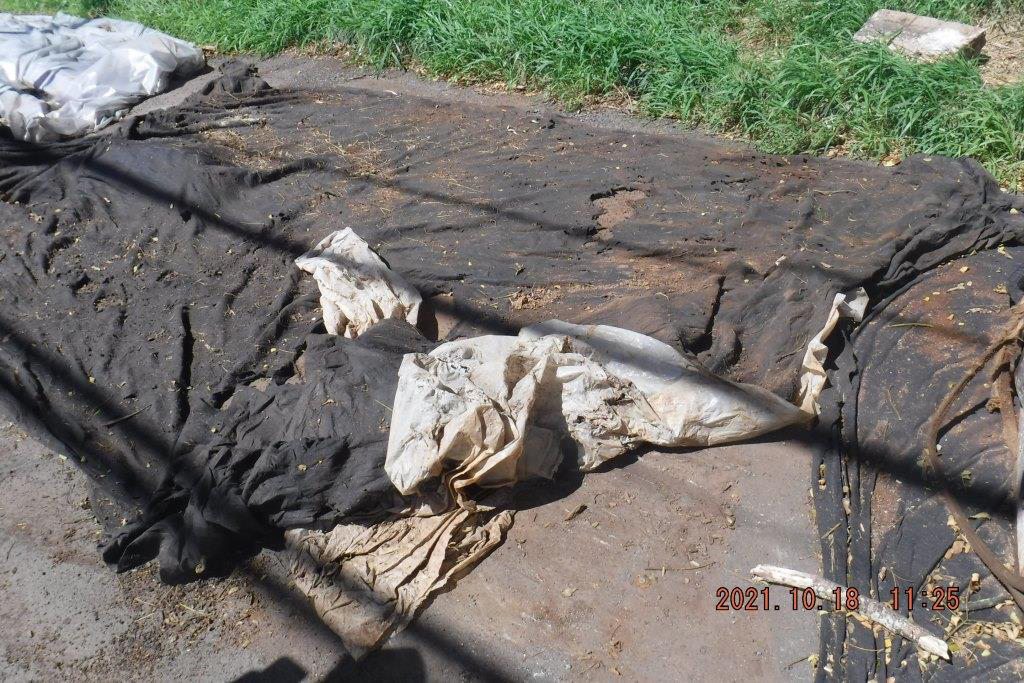
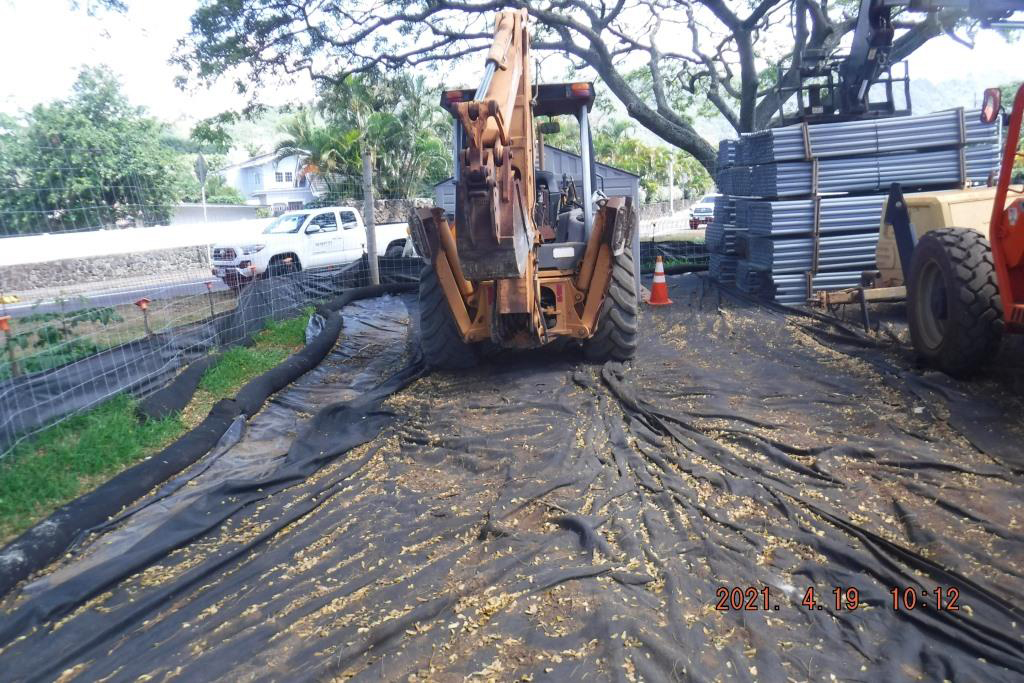
- Place drip protection/pads with absorbent and impermeable materials under all vehicles and equipment with the potential to leak/spill when not in use.
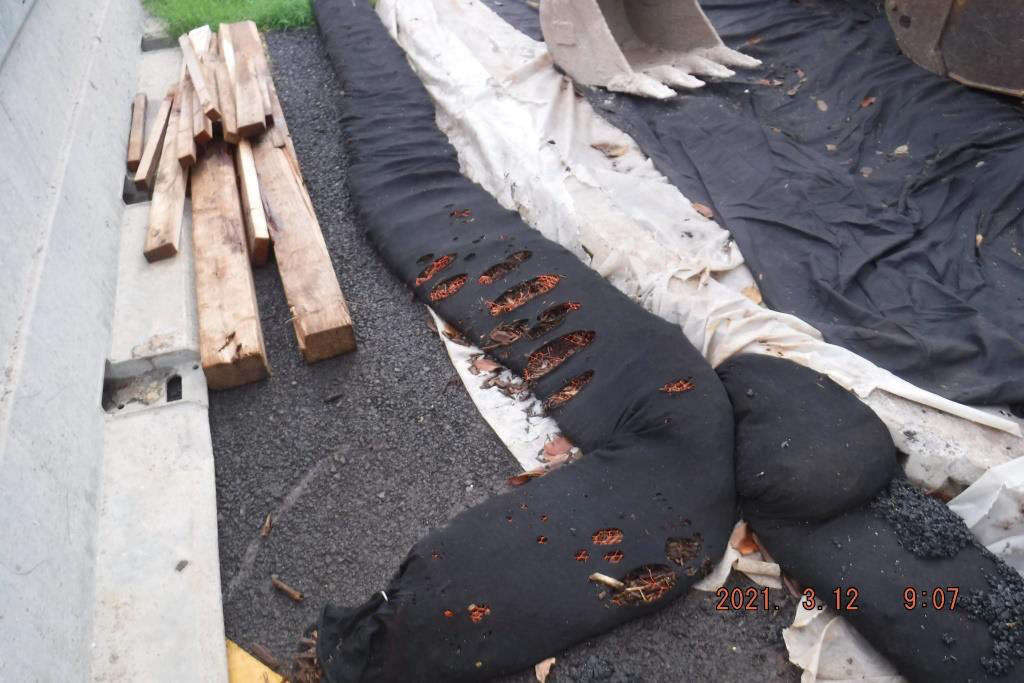
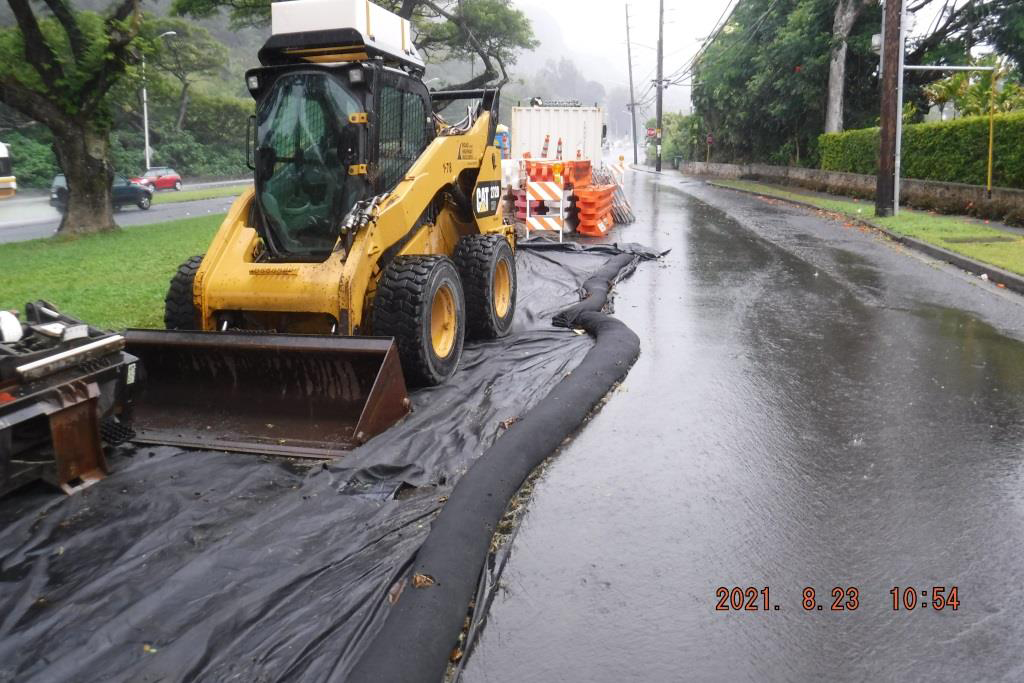
- Perimeter controls must be placed along the perimeter of the staging area and underneath the impermeable material, to create a berm able to contain any possible spills and/or leaks.
- Perimeter control devices installed along the perimeter of the staging area diverts storm water run-on and runoff. For sloping areas where storm water can run onto the project site, consider installing a diversion to prevent off-site storm water from entering the project site.
- Do not store materials or equipment on perimeter controls. Material and equipment must be stored away from the perimeter controls to allow access for inspection and maintenance of the controls.
- Commonly used BMPs include:
- Silt fences
- Compost filter socks or berms
- Berms
- Commonly used BMPs include:
- Consider phasing construction staging areas to minimize the duration of exposed soil. Dust control must be used on all exposed soils or any construction activity generating soil. See section SM-19 Dust Control for more information.
- When a phase of the project is complete and the staging area for the site is no longer required, immediately initiate stabilization at the disturbed areas. Once the area is deemed stabilized, the BMP devices can be removed. See section EC-12 Seeding and Planting for more information.
- Install a stabilized construction entrance/exit at the entrance of the staging area to prevent tracking onto adjacent paved roads and sidewalks. See section SC-11 Stabilized Construction Entrance/Exit for more information.
- All storm drain inlets that may intercept sediment-laden runoff from staging areas must be protected. See section SC-1 Storm Drain Inlet Protection for more information.
- Place drip pans or drop cloths under vehicles and equipment to absorb spills or leaks. See sections SM-10 Spill Prevention and Control and SM-12 Vehicle and Equipment Maintenance for more information.
- Store paving equipment and vehicles that are idle in a designated staging area on a layer of geotextile filter fabric on top of 10 mil plastic sheeting. Place drip pads/pans under paving equipment to contain leaks and spills. Drip protection is required under asphalt hopper and roller assembly. See section SM-20 Paving Operations for more information.
- Ensure that construction vehicles and equipment are not stored under tree drip lines or on top of existing tree roots. See section SM-17 Preservation of Existing Vegetation for more information.
- Metal (galvanized and ungalvanized) and rebar must be stored off of the ground on proper dunnage, pallet, or similar material and covered with 10 mil plastic sheeting to prevent material from coming into contact with storm water. See section SM-2 Material Storage and Handling for more information.
- Locate stockpiles a minimum of 50 feet, or as far as practicable, from concentrated runoff, drainage systems, or open waterbodies. Stockpiles must be entirely covered with an impermeable material and surrounded by a perimeter control device installed around the base of the pile. Staging area perimeter protection cannot be used as perimeter protection for stock/spoil piles. See section SM-3 Stockpile Management for more information.
- Sanitary facilities must be secured and located away from drainage systems and open waterbodies. See section SM-7 Sanitary Waste Management for more information.
- Waste bins must be covered by the end of each work day and emptied when they reach two-thirds capacity. See section SM-6 Solid Waste Management for more information.
- Hazardous materials and waste such as: creosote pipes, waste asphalt, contaminated soil and transite pipes must be properly stored and covered. See section SM-9 Hazardous Materials and Waste Management for more information.
- Concrete wash areas must be lined with an impervious material and disposed of in compliance with federal, state, and local standards. See section SM-4 Concrete Wash and Waste Management for more information.
- For shared staging areas, responsibilities must be clearly defined. If the staging area is divided by well-defined boundaries for each project, each area can be covered under its respective Notice of General Permit Coverage (NGPC)/National Pollutant Discharge Elimination System (NPDES) permit. If a staging area is shared in its entirety, a separate NGPC/NPDES permit may be obtained for the staging area.
- All areas within a shared staging area must be accounted for and there should be no overlapping areas for which responsibilities are shared by more than 1 contractor. Consult with the Engineer for review/approval.
- Off-site staging areas need to be included in the project’s SWPPP and are subject to NPDES requirements.
Considerations
- Staging area may have a limited amount of space to store vehicles and equipment due to local traffic and existing vegetation.
- Storm water run-on from a point source upgradient becomes the contractor’s responsibility to manage if it enters the staging area.
- Contractor may need to implement dust control measures if staging area is not stabilized.
- Runoff flows increase on paved and graded areas. Special attention will be needed during heavier rain events. Staging areas need to be secured prior to a severe storm event.
- Staging areas must be approved before storing materials and equipment in the area.
- Additional staging areas added to the project, outside of the project limits, may require a separate NPDES permit.
What to Inspect
- Are approved staging areas identified in the project’s SWPPP?
- Are BMPs installed prior to vehicles and equipment being stored in the staging area?
- Are there leaks and/or spills evident around construction vehicles, equipment or materials?
- Is the correct size aggregate being used in staging area for construction roads and entrances?
- Are waste bins covered when not in use?
- Are portable toilets secured to prevent tipping or knocking over?
- Is rebar and steel under cover/covered with 10 mil plastic sheeting and properly stored on dunnage, pallet, or similar material?
- Are construction vehicles stored under existing tree drip lines or on top of tree roots?
- Are vehicles tracking sediment onto public roads?
- Are there traces of run-on or runoff around the perimeter of the staging area?
- Has the contractor initiated stabilization in disturbed areas no longer required for staging?
Maintenance
- Immediately clean up spills using dry cleanup methods where possible, and dispose of used materials properly.
- Clean up leaks and spills with an absorbent material. Do not clean surfaces or spills by hosing the area down.
- Provide an ample supply of readily available spill cleanup materials.
- Repair/replace plastic sheeting and/or geotextile filter fabric when torn or ripped.
- Replenish surface and construction entrance aggregate periodically.
- Repair/replace perimeter control devices that are tampered with and not functioning as designed.
- Place drip pans under idle construction vehicles.
- Adjust, repair, and/or reinstall inlet protection devices that are damaged, out of position, or not fully functional according to manufacturer’s specifications.
- Regularly dispose of garbage and waste material.
- Amend the project’s SWPPP when additional staging areas are needed or existing staging areas are no longer required.
BMP Examples
Are adequate BMPs installed to prevent the discharge of pollutants from the project site? Hover over each photo for an explanation of the situation presented and if BMPs have been installed properly.